
Today’s Current Affairs: 10th Oct 2026 for UPSC IAS exams, State PSC exams, SSC CGL, State SSC, RRB, Railways, Banking Exam & IBPS, etc
Table of Contents
Diamondback Terrapin:
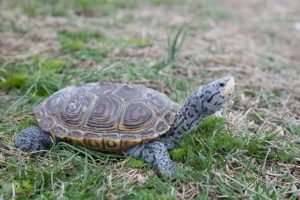
A rare two headed diamondback terrapin hatchling has been discovered on Cape Cod, Massachusetts.
- The Diamondback terrapin (Malaclemys terrapin) is a species of turtle.
- It inhabits saltwater habitats, including brackish channels, lagoons, tidal flats, marshes, estuarine areas, and coastlines.
- It is native to the Northeastern and southern United States, and in
- It occurs along parts of the eastern coast of the United States from as far north as Cape Cod, Massachusetts, to the southernmost Florida Keys.
- These terrapins have large webbed feet are very strong swimmers.
- These turtles spend the majority of their life in water, however, they do leave the water to bask and lay eggs.
- Adult Diamondback terrapins hibernate in the colder months in most of their range, in the mud of creeks and marshes.
- These terrapins are carnivores. They typically feed on fish, marine snails clams, mussels, and other mollusks.
- Conservation Status:
- IUCN Red List: Vulnerable
SAREX-2026:

The Indian Coast Guard conducted the 12th National Maritime Search and Rescue Exercise (SAREX-2026) off Paradip, Odisha.
- SAREX-2026 is a multi-agency exercise aim to strengthen maritime safety and rescue operations aligned with “India’s ‘SAGAR’ and ‘Mahasagar’ visions.”
- It is being conducted by the Indian Coast Guard.
- SAREX-2026 Theme: “Leveraging Technology to Strengthen SAR Preparedness and Maritime Safety.”
- It had participants from 30 countries.
- Their participation facilitated exchange of best practices, enhanced global interoperability and reaffirmed India’s role as a dependable maritime Search and Rescue partner in the region.
- Participating forces and Assets: The assets deployed included Coast Guard ships, three Dornier aircraft, three Advance Light Helicopters, one Chetak helicopter, IAF C-130J and Mi-17 aircraft, two Indian Navy ships, along with civil and state resources and shore-based support units.
Living Planet Report 2026:

The Living Planet Report 2026 was released which found that there is a 73 per cent decline in the average size of monitored wildlife populations between 1970 and 2022.
- Living Planet Report 2026 is published biennially by the World Wide Fund for Nature (WWF).
- It is a comprehensive study of trends in global biodiversity and the health of the planet.
- This year it is the 16th edition of the report.
- It utilises the Living Planet Index (LPI) to track average trends in wildlife populations.
- The LPI is a measure of the state of the world’s biological diversity based on population trends of vertebrate species from terrestrial, freshwater and marine habitats.
- It measures the average rate of change in population size across the species monitored.
Key Highlights of Living Planet Report 2026
- Global Trend: The average size of monitored vertebrate populations declined 73% over 52 years between 1970 and 2022.
- Ecosystem-wise Decline: The strongest declines were seen in freshwater ecosystems with average population sizes plunging 85%, followed by terrestrial ecosystems, at 69% and marine ecosystems at 59%.
- Region wise decline: At a regional level, the steepest declines since 1970 have been recorded in Latin America and the Caribbean (-95%), Africa (-80%), and Asia and the Pacific (-49%).
- Recovery of Biodiversity: The report highlights recoveries in populations of green turtles, bluefin tuna, tigers and southern African elephants,
- The report noted rise in global wild tiger numbers between 2010 and 2025 — from 3,200 to around 5,700 individuals.
- Causes of Wildlife Decline: Habitat loss and degradation, overexploitation of resources, climate change, and impact of invasive species, pollution and disease are some of the dominant drivers of changes across ecosystems and wildlife populations.
Mangrol- Anti-Submarine Warfare Shallow Water Craft:

The Indian Navy will commission Mangrol, the third Anti-Submarine Warfare Shallow Water Craft (ASW-SWC) built by Cochin Shipyard Limited (CSL), at the Naval Dockyard in Mumbai.
- Mangrol Mangrol- Anti-Submarine Warfare Shallow Water Craft:
- It is the third Anti-Submarine Warfare Shallow Water Craft (ASW-SWC) built by Cochin Shipyard Limited (CSL), Kochi.
- It is named after Mangrol, a coastal town and prominent fishing harbour in Gujarat’s Junagadh district.
- It is designed to detect and counter underwater threats in coastal and shallow waters.
- Features of Mangrol:
- Armaments: It is equipped with modern weapons and sensors, including the Abhay Hull-Mounted Sonar, lightweight torpedoes, an indigenous anti-submarine rocket launcher and the Maareech Advanced Torpedo Decoy System.
- Propulsion: It is powered by three diesel engines with waterjet propulsion, the ship offers high manoeuvrability for operations in shallow waters.
- It is also capable of undertaking underwater surveillance, Low-Intensity Maritime Operations and mine warfare-related tasks.
- The ship can operate alongside maritime patrol aircraft, helicopters and other warships to detect and counter submarine threats.
- Its induction will enhance the Navy’s ability to protect ports, harbours and coastal approaches while supporting wider fleet operations.
New Species of Springtails:
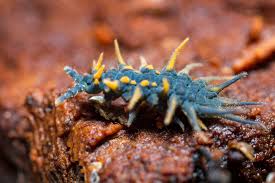
Scientists recently discovered two new species of tiny soil-dwelling creatures called springtails named Folsomia ciega and Folsomia unioculata in the Nilgiri Hills of the Western Ghats, taking the number of known species of the genus Folsomia in India to 13.
- Folsomia ciega and Folsomia unioculata are two new species of tiny soil-dwelling creatures called springtails.
- They were discovered in the Nilgiri Hills of the Western Ghats.
- Both species belong to the genus Folsomia.
- Folsomia ciega, named after the Spanish word for ‘blind’, lacks eyes entirely.
- It is a small, pale, and elongated springtail and is distinguished by the arrangement of bristles and a two-pronged tail structure called a mucro.
- Folsomia unioculata, meaning ‘one-eyed’ in Latin, has a single eye on each side of its head.
- It differs from related species that either have multiple eyes or are completely blind.
- Springtails are tiny insect-like creatures.
- They are one of the world’s tiniest arthropods.
- They lack wings, and the body is divided into three parts: head (with short antennae), thorax, and abdomen.
- They are creamy white or grey in colour, with some having yellow, orange, metallic green, or red scales.
- Their skin has comb-like hexagonal or rhombic granules that are water repellent and self-cleaning.
RBI MPC Raises Repo Rate to 5.50%:
The Reserve Bank of India (RBI) Monetary Policy Committee (MPC) raised the policy repo rate by 25 basis points to 5.50%. Marking its first rate hike since February 2023, the MPC also officially shifted its policy stance to “calibrated tightening” to address persistent inflationary pressures.
- Alongside the repo rate hike to 5.50%, the Standing Deposit Facility (SDF) rate has been adjusted to 5.25%, while the Marginal Standing Facility (MSF) rate and Bank Rate stand at 5.75%.
- The RBI raised its inflation forecast for FY27 by 20 basis points to 5.2%.
- The MPC noted that headline consumer price index (CPI) inflation rose to 4.8% in August 2026, driven primarily by food and fuel costs. Core inflation was projected at 4.4% for FY27.
- Despite inflationary pressures, the RBI revised its real GDP growth projection for FY 2026–27 from 6.7% to 7.1%, reflecting resilient domestic demand and economic activity.
- ‘Calibrated Tightening’: It implies a tightening of monetary policy (raising interest rates or reducing liquidity) in a measured, step-by-step manner rather than adopting aggressive rate hikes.
- It serves as forward guidance to the market that the central bank’s next move will not be a rate cut. The RBI will carefully assess the impact of previous hikes, underlying inflation data, and second-round effects of supply shocks before deciding on further increases.
Strategy for Environmental-Economic Accounts in India 2026–2030:

The Ministry of Statistics and Programme Implementation (MoSPI) released the Strategy for Environmental-Economic Accounts in India 2026–2030, a roadmap to strengthen environmental-economic accounting in India.
- The Strategy for Environmental-Economic Accounts in India 2026–2030, released by the National Statistics Office (NSO) under the Ministry of Statistics and Programme Implementation (MoSPI), provides a strategic roadmap for strengthening environmental accounting in India, improving data quality, addressing data gaps and expanding the coverage of environmental accounts.
- It builds upon the Strategy for Environmental-Economic Accounts in India 2022–2026, which prioritised Material Flow Accounts (MFAs), Ocean Accounts, Energy Accounts, and thematic accounts for biodiversity and urban areas.
- It is envisaged as a dynamic, self-evolving guidance framework, identifying priority areas, implementation milestones and potential data sources to support the systematic development and monitoring of environmental accounts.
- The strategy follows the UN-endorsed System of Environmental-Economic Accounting (SEEA) framework, which integrates environmental and economic data to measure the relationship between natural resources, ecosystems and economic activities.
- The strategy seeks to develop new accounts and expand existing coverage of forests, minerals, soil resources, land, water, carbon stocks, environment-related activities, biodiversity and environmental statistics.
- These areas are guided primarily by the recommendations of Green National Accounts in India – A Framework and the SEEA Central Framework (SEEA-CF).
- Strategic Focus: The roadmap identifies two broad areas:
- Strategic Area A – Quality Improvements, Coverage and Bridging Data Gaps: Improving the quality, timeliness and comparability of environmental accounts by identifying potential data sources, addressing data gaps, standardising methodologies and strengthening data collection.
- Strategic Area B – Communication and Outreach: Improving awareness, accessibility and utilisation of environmental accounts among policymakers and other stakeholders.
- The strategy complements the System of National Accounts (SNA) 2025, which strengthens the recognition of natural resources and non-produced assets within national wealth accounting, facilitating better integration of environmental and economic statistics.
India-Ghana Advance Strategic Cooperation:

India’s External Affairs Minister S. Jaishankar visited Ghana to strengthen bilateral cooperation in trade, investment, pharmaceuticals, defence and technology, while deepening engagement with the African Union and ECOWAS.
- Ghana lies in West Africa on the Gulf of Guinea. It borders Côte d’Ivoire in the west, Burkina Faso in the north and Togo in the east. Its capital is Accra.
- In 1957, it became the first sub-Saharan African nation to gain independence from colonial rule.
- The Prime Meridian (0° longitude) passes through Tema in Ghana, placing the country in both the Eastern and Western Hemispheres.
- Physical Features:
- River and Lake System: The Volta River system and Lake Volta, formed by the Akosombo Dam, support hydropower, irrigation and inland transport.
- Mineral Wealth: Ghana is Africa’s leading gold producer. It also possesses manganese, bauxite, diamonds, iron ore and lithium resources.
- Regional Importance: Ghana is a founding member of ECOWAS. Accra hosts the African Continental Free Trade Area Secretariat, enhancing its importance for India’s engagement with West Africa and continental trade integration.
Study Flags Widespread Illegal GM Cotton Cultivation:

A field study found that cotton hybrids with unapproved genetically modified (GM) traits were grown on 24–30% of India’s cotton-growing area in 2025–26. Around 26.2-29 lakh hectares out of India’s 114.8 lakh hectares under cotton had such hybrids.
- GM Traits Found: The hybrids carried:
- cp4-epsps, which makes cotton tolerant to the herbicide glyphosate.
- Vip3A, which protects the crop from a wider range of bollworm larvae.
- India allows farmers to grow GM cotton hybrids and varieties containing only cry1Ac and cry2Ab genes, obtained from the soil bacterium Bt
- These genes help cotton plants produce proteins that are toxic to certain bollworm pests.
- In India, Bt cotton is the only GM crop approved for commercial cultivation. The unapproved traits found in these hybrids have not been cleared by the Genetic Engineering Appraisal Committee (GEAC).
- GEAC functions in the Ministry of Environment, Forest and Climate Change (MoEF&CC).
- It assesses the environmental safety of using hazardous microorganisms and genetically modified organisms on a large scale in research and industry.
GPS Tracking of Elephants in Assam:
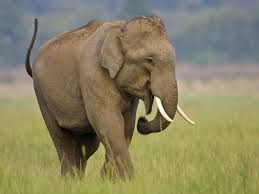
The Assam Forest Department and World Wide Fund for Nature–India (WWF-India) released Tracking the Giants: Movement and Habitat-Use Patterns of GPS-Collared Elephants in Assam during the 72nd Wildlife Week.
- The study underscores the need to strengthen conservation of the Asian elephant amid rising habitat fragmentation and human-elephant conflict.
- Asian Elephants
- India is home to more than 60% of the global wild Asian elephant population.
- Over half of India’s elephants reside in the Western Ghats. State-wise, Karnataka has the highest elephant population, followed by Assam and Tamil Nadu.
- India released its scientific baseline DNA-based All India Elephant Estimation (SAIEE), marking a major shift from traditional visual counts.
- Asian elephants receive Schedule I protection under the Wild Life (Protection) Act, 1972.
- The mainland Asian elephant was added to Appendix I of the Convention on Migratory Species (CMS) at the CMS COP13 summit in Gandhinagar, India.
- Conservation Projects & Frameworks
- Project Elephant: Launched in 1992 to conserve elephants, habitats and corridors and mitigate human-elephant conflict (HEC).
- Elephant Reserves: India has 33 notified Elephant Reserves across 14 states, including Singhbhum (first), Terai and Agasthyamalai.
- MIKE Programme: A CITES-linked monitoring system tracking illegal elephant killings and population trends.
- Gajraj: Refers to an AI-based railway safety system for detecting elephants near railway tracks.
- Elephants modify habitats, disperse seeds, create water sources and open dense vegetation, supporting wider ecosystem health
2026 Nobel Prize in Literature:

Canadian poet, essayist and translator Anne Carson won the 2026 Nobel Prize in Literature. The Swedish Academy honoured her for her bold and inventive writing, which combines classical traditions with new forms of modern literature.
- Anne Carson Born in Toronto, Canada, in 1950, she is also a classicist and translator known for drawing on ancient Greek and Roman literature.
- Writing Style: Her works often combine poetry, prose, essays, dialogue and translation, making them difficult to fit into a single literary genre.
- Her notable books include:
- Eros the Bittersweet (1986): Explores desire through ancient Greek tradition.
- Autobiography of Red (1998): A verse novel based on the Greek myth of Geryon.
- Other prominent works include Men in the Off Hours and Nox (2010).
- Prize: 12 million Swedish kronor, awarded by the Swedish Academy.
- The Academy selects the Nobel Prize in Literature laureate and has awarded the prize since 1901, as directed by Alfred Nobel’s will.
- It was founded in 1786 by Swedish King Gustav III.



