
Today’s Current Affairs: 10th Sep 2026 for UPSC IAS exams, State PSC exams, SSC CGL, State SSC, RRB, Railways, Banking Exam & IBPS, etc
Table of Contents
Bhoramdev Wildlife Sanctuary:

Wildlife and bird monitoring at the renowned Bhoramdev Wildlife Sanctuary in Chhattisgarh is set to receive a technological boost, with the Forest Department preparing to introduce a “bird hearing” technology to track the presence and activities of birds and other wildlife.
- Bhoramdev Wildlife Sanctuary is located in Chhattisgarh.
- It is part of the larger Maikal range of the Satpura hills.
- It is part of the Kanha-Achanakmar Corridor, which connects Kanha National Park in Madhya Pradesh with Achanakmar Wildlife Sanctuary in Chhattisgarh.
- It is named after the famous Bhoramdeo Temple.
- Bhoramdeo Temple, an ancient temple complex dating back to the 7th to 11th centuries, was built by the Nagvanshi dynasty.
- The temple is dedicated to Lord Shiva and is often referred to as the “Khajuraho of Chhattisgarh.”
- The sanctuary’s terrain is characterized by undulating hills, dense forests, and numerous streams.
- The region surrounding Bhoramdev Wildlife Sanctuary is inhabited by various tribal communities, including the Baiga, Gond, and Kanwar
- The river Sakari flows through the sanctuary and is the source of drinking water for the wild animals.
- It contains tropical moist and dry deciduous woodland with trees such as saaj, sal, tendu, and eucalyptus.
- Its habitats support Bengal tiger, leopard, sloth bear, sambar, gaur, wild boar, monitor lizard, and many bird species.
Saqqara : Ancient Tomb
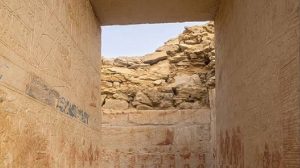
Archaeologists in Egypt recently discovered an ancient tomb belonging to the “keeper of the secrets of royal decrees,” they announced following an excavation at Saqqara.
- Saqqara is part of the necropolis of the ancient Egyptian city of Memphis.
- In 1979 the ancient ruins of the Memphis area, including Ṣaqqārah, Abū Ṣīr, Dahshūr, Abū Ruwaysh, and the Pyramids of Giza, were collectively designated a UNESCO World Heritage site.
- Saqqara contains numerous pyramids, tombs, mastabas, temples, and other funerary monuments.
- A mastaba is an ancient Egyptian rectangular tomb structure with a flat roof and sloping sides.
- Saqqara is where the transition from the use of the mastaba as a burial site to the pyramid design that is more popularly known today took place.
- Kings and noblemen from the very first two dynasties (c.3040–2686 BC) were buried here, and this is also the location of the Step Pyramid of Djoser (c.2686–2667 BC).
- It is the oldest surviving pyramid in the world.
- Designed by the architect Imhotep, its distinctive six-tiered form marked a crucial stage in the development of pyramid construction and paved the way for the great pyramids that followed.
- The pyramids of some of the most important kings of the Old Kingdom Fifth (c.2494–2345 BC) and Sixth (c.2345–2181 BC) Dynasties are located in Saqqara.
- One of these, the pyramid of Unas (also known as Wenis; (c.2375–2345 BC), features the oldest pyramid burial chamber decorated with texts.
- Among the most important of Saqqara’s monuments is the Serapeum, a series of underground galleries in which the Apis Bulls were buried from the Eighteenth Dynasty (c.1550–1295 BC) to the Ptolemaic Period (332–30 BC).
- The Apis Bull was considered an incarnation of Ptah himself, one of the most important gods of Memphis.
Shivneri Fort:
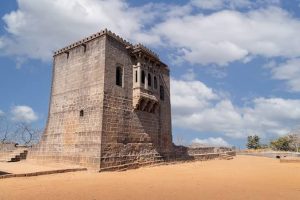
The Union Minister of Culture recently directed the authorities to conduct an “objective assessment” of unauthorised constructions and other structures, including graves and dargahs, in and around Shivneri Fort and take appropriate action.
- Shivneri Fort is a very old and important hill fort located near the town of Junnar in the Pune district of Maharashtra.
- This fort is famous because it is the birthplace of Chatrapati Shivaji Maharaj.
- The Shivneri Fort was built during the time of Satavahanas.
- After the Satavahanas, the Shivneri Fort was occupied by the Shilaharas and the Yadavas.
- This fort was very important for protecting an old trading route. This route connected the region of Desh to the port city of Kalyan.
- In the 15th century, it came under the Bahmani Sultanate. Later, in the 16th century, it was taken over by the Ahmadnagar Sultanate.
- In 1595, a Maratha chief named Maloji Bhosale was honored by the Ahmadnagar Sultan, Bahadur Nizam Shah.
- Maloji Bhosale was the grandfather of Shivaji Maharaj.
- The Sultan gave him control of Shivneri and Chakan forts.
- Shivaji Maharaj was born at Shivneri Fort on February 19, 1630. Some records suggest he was born in 1627. He spent his early childhood years growing up within the fort’s walls.
- An English traveler named Fraze visited the fort in 1673. He wrote that the fort was very strong and could not be easily defeated.
- It is a triangular-shaped hill fort and has its entrance from the southwest side of the hill.
- It has winding gates that are very well protected. All around the fort, there are strong mud walls.
- At the very center of the fort, there is a water pond called ‘Badami Talav’. To the south of this pond, you can see statues of Jijabai and a young Shivaji.
- In the fort there are water springs, called Ganges and Yamuna, which have water throughout the year.
Atherosclerosis : New Study
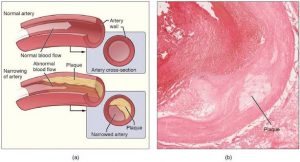
A new study in mice and patients shows that atherosclerosis meets the criteria for an autoimmune disease.
- Atherosclerosis is a condition in which plaque builds up inside the arteries.
- Arteries are blood vessels that carry oxygen-rich blood to organs and tissues throughout your body.
- Plaque is a sticky substance made up of cholesterol, fat, blood cells, calcium, and other substances found in the blood.
- Over time, plaque hardens and causes arteries to narrow. That limits the flow of oxygen-rich blood to the body.
- Arteriosclerosis is hardening of the arteries, which means that the arteries thicken and become less flexible. It can have several different causes.
- Atherosclerosis, which develops from plaque buildup, is a common type of arteriosclerosis.
- Causes:
- Plaque often starts to build up during childhood and gets worse with age.
- The exact cause is unknown, but researchers believe that this buildup happens when there is damage to the arteries. This damage may be caused by unhealthy lifestyle habits, medical conditions, and your genes.
- Recent studies also point that atherosclerosis meets the criteria for an autoimmune disease.
- Atherosclerosis can affect most of the arteries in the body. It has different names, based on which arteries are affected:
- Coronary artery disease (CAD) is plaque buildup in the arteries of your heart.
- Peripheral artery disease (PAD) is plaque buildup in the arteries that carry blood away from the heart to other parts of the body. It most often affects the arteries of legs, but it can also affect the arteries of arms or pelvis.
- Carotid artery disease is plaque buildup in the neck arteries. It reduces blood flow to the brain.
- Renal artery stenosis is plaque buildup in the arteries that supply blood to kidneys.
- Vertebral artery disease is plaque buildup in the arteries that supply blood to the back of brain.
- Mesenteric artery ischemia is plaque buildup in the arteries that supply intestines with blood.
- Symptoms usually depend on the arteries that are affected, and the most common include:
- chest pain (or angina)
- feeling confused, as a result of limited blood flow to your brain
- difficulty breathing
- feeling very tired (fatigued)
- pain in any of limbs, where there may be a blocked artery weak muscles
- Atherosclerosis can cause other health problems, or complications.
- Treatment: Treating atherosclerosis may include having a heart-healthy lifestyle and taking medicines.
TRISHNA Mission: Scheduled To Launch Next Year
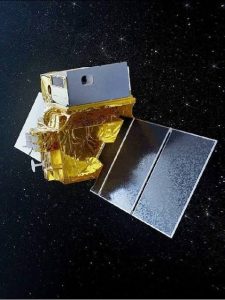
The PSLV is scheduled to launch the Indo-French TRISHNA mission next year which is a collaborative endeavor between ISRO and CNES.
- The TRISHNA (Thermal Infra-Red Imaging Satellite for High-resolution Natural Resource Assessment) mission, is a collaborative endeavor between the Indian Space Research Organisation (ISRO) and the French Space Agency Centre National d’Etudes Spatiales (CNES).
- It is engineered to deliver high spatial and high temporal resolution monitoring of Earth’s surface temperature, emissivity, biophysical and radiation variables for surface energy budgeting at regional to global scale.
- Objectives:
- Detailed monitoring of the energy and water budgets of the continental biosphere for quantifying terrestrial water stress and water use.
- High-resolution observation of water quality and dynamics in coastal and inland waters.
- A comprehensive assessment of urban heat islands detection of thermal anomalies linked to volcanic activity and geothermal resources.
- Precise monitoring of snow-melt runoff and glacier dynamics.
- Provide valuable data on aerosol optical depth, atmospheric water vapor, and cloud cover.
- Payloads: TRISHNA satellite is equipped with two primary payloads.
- The Thermal Infra-Red (TIR) Payload: It is provided by CNES and features a four-channel long-wave infrared imaging sensor capable of high-resolution surface temperature and emissivity mapping.
- The Visible – Near Infra-Red – Short Wave Infra-Red (VNIR-SWIR) payload: It is developed by ISRO, includes seven spectral bands designed for detailed mapping of surface reflectance of VSWIR bands for generating important biophysical and radiation budget variables.
- The satellite will operate in a sun-synchronous orbit at an altitude of 761 km.
- This orbit will provide a spatial resolution of 57 meters for land and coastal areas and 1 km for oceanic and polar regions. The mission is designed for a 5-year operational life.
- TRISHNA’s data will contribute to several global initiatives, such as GEOGLAM for agricultural monitoring, the UN’s Sustainable Development Goals and targets, and the Global Water Watch.
- Some of the mission’s outputs will serve as Essential Agricultural Variables (EAVs), and Essential Climate Variables (ECVs) for the global community.
Financial Intelligence Unit- India:
The Director, Financial Intelligence Unit-India (FIU-IND) has issued notices for non-compliance to following fifteen (15) Virtual Digital Assets Service Providers (VDA SPs) under Section 13 of the Prevention of Money Laundering Act, 2002(PMLA).
- It was set by the Government of India in 2004.
- It is the central national agency responsible for receiving, processing, analyzing and disseminating information relating to suspect financial transactions.
- FIU-IND is an independent body reporting directly to the Economic Intelligence Council (EIC) headed by the Finance Minister.
- Function of Financial Intelligence Unit-India:
- Collection of Information: It acts as the central reception point for receiving Cash Transaction reports (CTRs), Non-Profit Organisation Transaction Report (NTRs), Cross Border Wire Transfer Reports (CBWTRs) from various reporting entities.
- Analysis of Information: Analyze received information in order to uncover patterns of transactions suggesting suspicion of money laundering and related crimes.
- It shares information with national intelligence/law enforcement agencies, national regulatory authorities and foreign Financial Intelligence Units.
- It establishes and maintains a national database on the basis of reports received from reporting entities.
- It coordinates and strengthens collection and sharing of financial intelligence through an effective national, regional and global network to combat money laundering and related crimes.
- Monitor and identify strategic key areas on money laundering trends, typologies and developments.
India-Japan Defence Ties: Transition to Operational Convergence
A recent analysis highlighted Japanese Defence Minister Shinjiro Koizumi’s visit to India, where both sides discussed operational interoperability, naval shipbuilding and defence technology transfers under Make in India.
- India and Japan share a Special Strategic and Global Partnership, historically anchored in diplomatic frameworks such as the Annual Summit mechanism, the ministerial 2+2 Dialogue (involving Foreign and Defence Ministers), and mutual logistics arrangements under the Acquisition and Cross-Servicing Agreement (ACSA).
- While political convergence on a Free and Open Indo-Pacific (FOIP) has matured, practical defense cooperation has historically lagged.
- Both nations agreed to explore joint development in naval warship design, integrating Japan’s advanced marine engineering with India’s domestic shipyard manufacturing capacity.
- Deepening discussions on utilizing Indian production infrastructure under ‘Make in India’ and establishing reciprocal access to military ship repair and maintenance facilities.
- Unified Complex Radio Antenna (UNICORN): A stealth integrated mast system that houses multiple communication and radar antennas within a single composite structure, drastically reducing a warship’s radar cross-section (RCS).
- Building on the November 2024 Memorandum of Understanding involving Bharat Electronics Limited (BEL), both governments committed to early implementation, marking Japan’s first major defense equipment transfer to India under Tokyo’s revised Three Principles on Transfer of Defence Equipment and Technology.
- Institutionalizing co-development pipelines between India’s Defence Research and Development Organisation (DRDO) and Japan’s Acquisition, Technology and Logistics Agency (ATLA) to overcome the implementation bottlenecks that hampered the 2015 Defense Technology Transfer Agreement.
- Exercise Veer Guardian 2026: Japan Air Self-Defense Force (JASDF) fighter aircraft deployed to India for the first time in September 2026.
- Agreement to introduce unmanned combat systems (drones), conduct short-notice contingency drills to test operational readiness, and integrate Japan’s Self-Defense Forces with India’s upcoming Integrated Theatre Commands.
- Shared Maritime Domain Awareness (MDA): Linking real-time operational feeds between the Indian Ocean Region (IOR) and the Western Pacific/East China Sea, creating an end-to-end maritime operating picture across critical Sea Lines of Communication (SLOCs).
The Asian-Pacific Postal Union (APPU):
Dr. Vinaya Prakash Singh, a senior Indian Postal Service (IPoS) officer, was re-elected unopposed as the Secretary-General of the Asian-Pacific Postal Union (APPU) for a second consecutive four-year term (2027–2030).
- An intergovernmental organisation comprising 32 member countries across the Asia-Pacific region, functioning as a Restricted Union (regional union) under Article 8 of the Universal Postal Union (UPU)—a specialised agency of the United Nations. It is headquartered in Bangkok, Thailand (relocated from Manila in 2002).
- Originated on April 1, 1962, following the Manila roundtable of 1961 as the Asian-Oceanic Postal Union (AOPU).
- It took its modern form as the Asian-Pacific Postal Union (APPU) through the Asian-Pacific Postal Convention signed in Yogyakarta on March 27, 1981 (entering into force on July 1, 1982).
- Aim is to extend, facilitate, and improve postal relations among member states, coordinate cross-border logistics and regulatory standards, and promote mutual technical cooperation and modernisation of postal networks across the Asia-Pacific.
Key Functions:
- Regional Policy Harmonisation: Harmonises postal regulations, rate structures, and customs transit standards among member administrations to align with broader global UPU frameworks.
- Regional Execution of UPU Initiatives: Acts as the regional execution hub for technical and operational projects initiated by the Universal Postal Union, facilitating seamless integration of Asia-Pacific networks into the global mail stream.
- Capacity Building via APPC: Administers the Asian-Pacific Postal College (APPC) in Bangkok, the region’s largest intergovernmental postal training facility providing specialised leadership and technical training to postal personnel.
- Cross-BorderE-Commerce & Logistics: Modernises express parcel, terminal dues, supply chain logistics, and cross-border digital tracking systems to accommodate burgeoning e-commerce volumes.
- Advancing Postal Financial Inclusion: Facilitates regional frameworks for remittance transfers, postal banking, and modern fintech services through member post office branch networks.
Nicotine Pouches:
An ICMR study found nicotine pouches rapidly entering Indian urban markets through e-commerce, delivery platforms and hookah shops, raising WHO-backed concerns over regulatory and enforcement gaps.They Are Small, tobacco-free, permeable sacks containing pharmaceutical or synthetic nicotine, food-grade plant fibers, water, and flavorings. Users place the pouch between the gum and upper lip, where nicotine is absorbed directly through the oral mucosa into the bloodstream without combustion, smoke, vapor, or spitting.Unlike chewing tobacco, gutkha, or snuff, nicotine pouches contain no actual tobacco leaf, stem, or dust, relying instead on lab-synthesized or chemically extracted pure nicotine.
The Eiffel Tower:
The Eiffel Tower was temporarily closed after monument staff staged a walkout over directives instructing female employees to step aside and swap workstations with male colleagues during a private visit by a BAPS Hindu delegation.An iconic 19th-century wrought-iron lattice tower, recognized globally as a technological masterpiece of structural engineering, a primary symbol of Paris, and one of the world’s most-visited paid cultural monuments.Located in The Champ de Mars along the banks of the Seine River in Paris, France.
The UNESCO International Literacy Prizes 2026:
UNESCO presented the 2026 International Literacy Prizes during the International Literacy Day global celebrations held in Chiapas, Mexico, under the theme Literacy for people, the planet and prosperity.The premier global awards honoring excellence, innovation, and measurable impact in advancing foundational and functional literacy worldwide. Each laureate receives a cash endowment of US$ 30,000, along with a medal and a diploma.Nodal Organisation: United Nations Educational, Scientific and Cultural Organization (UNESCO).
Winners of 2026:
UNESCO King Sejong Literacy Prize:
- ‘Escuelas LEO’ Programme (BibloRed, Colombia): Provides intercultural, multilingual literacy pathways for marginalized communities in Bogotá—including Indigenous peoples, Deaf populations (sign language), migrants, and displaced groups.
- ‘Language Friendly School’ Programme (Rutu Foundation, Netherlands): Operates across ~70 schools in 12 countries, integrating students’ native/home languages alongside the official language of instruction to bridge educational inequalities.
- ‘Project PAL’ – Primary Accelerated Literacy (WAER Waters Charity Foundation, Nigeria): Delivers foundational literacy to out-of-school children in conflict-affected regions of the Niger Delta using solar-powered Literacy Hubs, Teaching at the Right Level (TaRL), and indigenous-to-English transition models.
UNESCO Confucius Prize for Literacy:
- ‘Accelerated Education for Out-of-School Displaced Youth’ (Alsama Project, Lebanon): Compresses 12 years of formal education into six years for refugee and displaced youth, deploying an intensive curriculum combining literacy, numeracy, and life skills.
- ‘Chiapas Puede’ State Literacy Programme (State Government of Chiapas, Mexico): Deploys the phonics-based Matías de Córdova model across 121 municipalities, blending community study circles and digital tools to deliver bilingual instruction in Spanish and indigenous tongues.
- ‘Language for Life’ Programme (Hat Yai City Municipality, Thailand): Integrates multilingual literacy (Thai, Malay, English, Chinese) with real-life functional community resilience, specifically training citizens in disaster communication and climate awareness.
Badingilo-Boma Landscape:
The Boma-Badingilo Migratory Landscape was officially inscribed as South Sudan’s first-ever UNESCO World Heritage Site.A contiguous transboundary wilderness and wildlife corridor network centered on Boma National Park and Badingilo National Park. Managed under a 10-year co-management agreement between the Government of South Sudan and the conservation nonprofit African Parks, it anchors the broader Great Nile Migration Landscape (GNML). Situated across the eastern and southern savanna plains of South Sudan, stretching northeast toward the vast Sudd wetlands and eastward to connect with Gambella National Park in neighboring Ethiopia. Inscribed on the UNESCO World Heritage List in July 2026 as South Sudan’s first World Heritage property under the natural heritage criteria.
Mount Anak Krakatau:
A series of intense volcanic eruptions at Indonesia’s Mount Anak Krakatau blanketed Jakarta and surrounding provinces in dense ash clouds.An active volcanic island and stratovolcano featuring a pyroclastic cone. Its name translates to Child of Krakatoa in Indonesian.Located in Situated in the Sunda Strait between the major islands of Java and Sumatra, within the protected waters of Ujung Kulon National Park.Originated within the deep marine caldera created by the catastrophic 1883 VEI-6 eruption of Krakatoa, which annihilated two-thirds of the original island.Following submarine eruptive activity that started in early 1927, repeated cycles of basaltic accumulation breached the ocean surface, permanently rising above sea level on August 11, 1930.
Cell Broadcast System: Resumed

The Cell Broadcast System (CBS) has been resumed in India, by the Centre for Development of Telematics (C-DoT).
- Cell Broadcast System is a telecom-enabled public warning system that enables authorities to broadcast simultaneous, geo-targeted alerts to mobile devices within a defined area.
- It is indigenous technology developed by the Centre for Development of Telematics (C-DOT) under the Department of Telecommunications (DoT), in collaboration with the National Disaster Management Authority and the Ministry of Home Affairs (MHA).
- It uses common messaging protocols that have been incorporated by all the major handset makers around the world.
- Unlike SMS alerts, CB messages are broadcast to all mobile phones in a specific area, ensuring rapid delivery even in congested networks.
- Messages are delivered in near real-time, reaching users within seconds without any queuing delays.
- It offers precise geo-targeting capabilities, enabling alerts to be disseminated at the level of individual cell towers or clusters.
- It provides universal reach by covering all mobile users within the targeted area, including those who are roaming.
- Supported across 2G to 5G networks, it ensures wide reach in both urban and rural areas, including last-mile and roaming populations.
- These alerts are delivered as priority notifications, appearing as pop-up messages accompanied by distinct loud tones, with text message with multilingual alerts read aloud on supported mobile handsets.
5th e-FAST India Summit 2026:
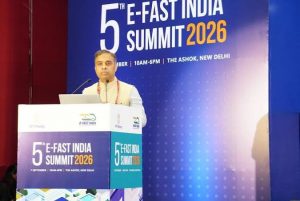
NITI Aayog launched the Platform for Aggregating Clean Transport (PACT) at the 5th e-FAST India Summit 2026.
- The e-FAST India (Electric Freight Accelerator for Sustainable Transport – India) is a NITI Aayog government–industry platform focused on moving medium- and heavy-duty freight towards zero-emission vehicles.
- It brings together government and industry stakeholders.
- It includes OEMs, logistics service providers, financiers, shippers and charge point operators – to accelerate the transition to zero-emission freight in India, particularly in the medium- and heavy-duty vehicle segments.
- Platform for Aggregating Clean Transport (PACT) is a flagship initiative under the e-FAST India platform.
- It is designed to aggregate freight demand from shippers, Logistics Service Providers (LSPs) and other ecosystem stakeholders and translate it into deployment opportunities across identified freight corridors.
- It brings together shippers, LSPs, vehicle manufacturers, financiers, charge point operators (CPOs) to improve demand visibility, support charging infrastructure planning and strengthen the commercial case for electric medium- and heavy-duty vehicles (e-MHDVs).
Mindoro bleeding-heart Pigeon:

Mindoro bleeding-heart pigeon was reappeared after 20 years which confirmed that it is still surviving in the wild.
- Mindoro bleeding-heart Pigeon is a ground-dwelling pigeon endemic to Mindoro, Philippines.
- It is one of seven species of bleeding-hearts, or “bleeding-heart” doves, five of which are endemic to the Philippines.
- It is ground-dwelling and usually takes flight only when threatened.
- Males and females look almost identical.
- Conservation Status
- IUCN Red List: Critically Endangered (CR)
- Threats: It is threatened by hunting and habitat loss.
- Its habitat is affected by slash-and-burn agriculture, agricultural use, rattan harvesting, marble quarrying.
Digital Hawala:
The Financial Action Task Force (FATF) has flagged the growing use of digital hawala for money laundering and terror financing.Its latest report notes that nearly 70% of surveyed jurisdictions have detected the use of new technologies in underground banking networks.
- Digital hawala is the technology-enabled evolution of the traditional informal hawala system, where money or value is transferred through networks of intermediaries without necessarily moving funds directly through conventional banking channels.
- It combines traditional hawala settlement methods with encrypted messaging, fintech platforms, mobile wallets, virtual assets, AI tools and other digital services.
- A customer gives cash or digital funds to a hawala operator.
- Instructions are transmitted to another operator through encrypted apps, online platforms or shared digital ledgers.
- The recipient receives the equivalent amount through cash, wallets, fintech platforms or virtual assets.
- Hawala operators later settle balances through cash, trade, formal payment infrastructure or crypto-assets such as stablecoins.
- Transactions may be concealed through front businesses, mule accounts, charities or layered digital transfers.
FATF Report:
- Rapid Digitisation: Nearly 70% of surveyed jurisdictions reported integration of new technologies into hawala and underground banking networks.
- Six Digital Forms: FATF identified six configurations, ranging from digital coordination and customer interfaces to virtual-asset settlement, fintech integration, AI tools and dedicated hawala apps.
- Virtual Assets: Stablecoins and other virtual assets are increasingly being used to settle balances between hawala operators.
- AI-enabled Transactions: AI tools can automate transaction structuring, mule-account routing and rapid fiat-to-crypto conversion, making detection harder.
- Cash Remains Important: Digitalisation has supplemented rather than replaced traditional hawala, with cash continuing to dominate collection and final payout points.
The OPEC Plus:

Seven core OPEC+ nations decided in a virtual meeting to keep their crude oil output targets unchanged for October.The decision came amid global economic uncertainties and continuing supply disruptions across the Middle East and the Strait of Hormuz.
- OPEC+ is an expanded coalition comprising member states of the Organization of the Petroleum Exporting Countries (OPEC) and key non-OPEC oil-exporting nations, working collectively to regulate crude oil supply and manage global energy markets.
- Established in: Formed in late 2016 through the historic Declaration of Cooperation signed in Vienna, Austria.
- Origins of OPEC (1960): Founded at the Baghdad Conference by five founding members—Iran, Iraq, Kuwait, Saudi Arabia, and Venezuela—to counter the dominance of multinational oil companies (Seven Sisters) and secure fair oil prices.
- Birth of OPEC+ (2016): Between 2014 and 2016, a massive surge in US shale oil production caused crude prices to crash. Recognizing that OPEC alone could no longer effectively balance the global market, OPEC partnered with 10 non-OPEC producers, led by Russia, creating the broader OPEC+ alliance to coordinate output cuts and stabilize prices.
- Participating Countries:
- OPEC Members: Core producers including Saudi Arabia, Iraq, Kuwait, Algeria, Nigeria, Venezuela, and others.
- Non-OPEC Partners: Major crude producers including Russia, Kazakhstan, Oman, Azerbaijan, Bahrain, Brunei, Malaysia, Mexico, South Sudan, and Sudan.
Key Functions:
- Sets and adjusts country-specific crude oil extraction ceilings to align global oil supply with fluctuating worldwide demand.
- Intervenes during market shocks—such as demand contractions or geopolitical supply cuts—by applying voluntary production increases or cuts to prevent extreme price volatility.
- Harmonizes energy and export strategies between OPEC members and non-OPEC allies to ensure stable returns for producing nations.
- Monitors inventory balances to ensure regular, dependable, and economically viable supplies of petroleum to consuming nations.
- Conducts comprehensive market research and economic forecasting through bodies like the Joint Ministerial Monitoring Committee (JMMC) to guide global energy policy.
LORA Missile:
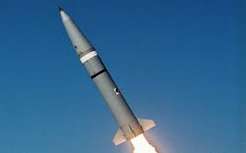
Germany successfully tested the LORA missile in the North Atlantic overnight, military officials said recently.
- The LORA (Long Range Artillery) is a short-range, road-mobile, ground- and sea-launched ballistic missile developed and operated by Israel.
- It is believed to have entered service in Israel in 2007.
- It is designed to strike high-value targets deep inside enemy territory.
- It is a single-stage, solid-propellant
- It can carry a payload of up to 600 kg and can deploy a single high explosive (HE) warhead or sub munitions.
- It has a range of 280 km.
- It uses Inertial Navigation System/Global Positioning System and TV for terminal guidance, with possible in-flight maneuvering capability.
The El Alamein International Airshow:

The Indian Air Force’s (IAF) Sarang Helicopter Display Team reached Egypt to participate in the second edition of the El Alamein International Airshow.
- A premier international aerospace, defence, and commercial aviation exhibition serving Africa and the Middle East, showcasing static and flying aircraft displays alongside high-level industry conferences.
- Host: Egypt.
- Aim is to accelerate regional industrialization, digitalization, and defense-space partnerships, positioning Egypt as a strategic aviation crossroads between Africa, the Middle East, and Europe.
Key Features:
- Features over 50 military, commercial, and private aircraft conducting live precision aerobatics, formation flying, and up-close static tarmac exhibitions.
- Unites diverse domains under one roof—encompassing commercial aviation, defence platforms, satellite and space exploration, avionics, and next-generation advanced air mobility.
- Hosts dedicated symposia and roundtables for defense chiefs, procurement leaders, and aviation policymakers to exchange market intelligence and technical breakthroughs.
- Facilitates targeted bilateral and commercial engagements connecting original equipment manufacturers (OEMs) with procurement heads and regional operators.
India’s Carbon Credit Trading Scheme (CCTS):
The United Kingdom has officially recognized India’s Carbon Credit Trading Scheme (CCTS) as a qualifying carbon pricing framework under its Carbon Border Adjustment Mechanism (CBAM).
- A national market-based mechanism designed to establish the Indian Carbon Market (ICM) by pricing greenhouse gas (GHG) emissions, issuing tradable Carbon Credit Certificates (CCCs), and driving industrial decarbonization.
- Notified by the Government of India in June 2023 under powers conferred by the Energy Conservation (Amendment) Act, 2022, with detailed compliance regulations adopted in July 2024.
- Aim is to accelerate the decarbonization of the Indian economy, fulfill India’s Nationally Determined Contributions (NDCs) under the Paris Agreement, and incentivize emission cuts across energy-intensive sectors through a transparent carbon-trading exchange.
Key Features:
- Dual-Track Framework: Combines an obligatory Compliance Mechanism for energy-intensive sectors with a Voluntary Offset Mechanism allowing non-obligated entities to register GHG reduction or removal projects.
- Governance Architecture: Governed by the National Steering Committee for the Indian Carbon Market (NSCICM), co-chaired by the Ministry of Power and MoEFCC, with the Bureau of Energy Efficiency (BEE) serving as the chief administrator.
- Transition from the PAT Scheme: Builds upon and gradually absorbs the existing Perform, Achieve, and Trade (PAT) energy efficiency mechanism, transitioning obligated industrial units from specific energy consumption targets to carbon emission intensity benchmarks.
- Carbon Credit Certificates (CCCs): Entities outperforming their assigned emission intensity benchmarks earn CCCs (denominated in units of 1 tonne of CO₂ equivalent), while underperforming entities must purchase certificates to meet compliance.
- Comprehensive Emission Scope: Follows a gate-to-gate approach covering Scope 1 (direct combustion and process emissions) and Scope 2 (indirect emissions from electricity and heat), initially targeting CO₂ and perfluorocarbons (PFCs).
Luxembourg:

During an official visit to India, Luxembourg Deputy Prime Minister and Foreign Minister strongly backed India’s bid for a permanent seat on the United Nations Security Council (UNSC).
- Luxembourg is small, landlocked sovereign grand duchy in northwestern Europe, functioning as a constitutional monarchy and parliamentary representative democracy.
- Capital: Luxembourg City.
- Border Nations: Bordered by three countries: Belgium, France, and Germany.
Key Geological Features:
- Oesling Highlands: The northern third of the country forms part of the Ardennes mountain plateau, featuring rugged, forested hills, incised river valleys, and schist and sandstone formations averaging 450 metres in elevation.
- Bon Pays (Gutland) Lowlands: The southern two-thirds of the nation, characterized by undulating agricultural lowlands, fertile soils, varied sandstone and limestone cuestas, and an average elevation of around 245 metres.
- River Drainage Network: Drained primarily by the Sûre (Sauer) River and its key tributary, the Alzette River, which forms the geographic and economic axis running directly through Luxembourg City.
- Moselle Valley Escarpment: A southeastern border region carved in chalk and calcareous clay, featuring sun-facing slopes along the Moselle River known for microclimates that support vineyards and wine cultivation.
India-China Border Management:
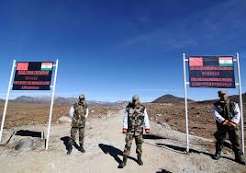
India and China held their first Corps Commander-level talks in the Eastern Sector at the Wacha-Damai Border Personnel Meeting (BPM) Point in Arunachal Pradesh, against the backdrop of increased People’s Liberation Army (PLA) patrol activity and localised stand-offs in Taksing, Upper Subansiri district of Arunachal Pradesh.
- This marks an expansion of the military dialogue mechanism beyond its earlier focus on Ladakh, bringing India-China border management and the broader Line of Actual Control (LAC) dispute into the spotlight.
- India-China border management is shifting toward institutionalised deterrence and dialogue, with new Eastern Sector military talks, strengthened infrastructure, forward deployment, and mechanisms such as BPMs, hotlines and SR-level dialogue to prevent escalation along the LAC.
- Persistent disputes over the LAC, Arunachal Pradesh and Aksai Chin remain unresolved, requiring India to combine border infrastructure, demographic consolidation through VVP, calibrated economic de-risking and strategic partnerships with sustained diplomatic engagement for long-term stability.
- Special Representatives (SR) on the Boundary Question: Established in 2003, it is the highest political-level mechanism to seek a final political settlement to the 3,488-km boundary dispute.
- Working Mechanism for Consultation and Coordination (WMCC): A diplomatic and military channel set up in 2012 to coordinate on incidents along the LAC and maintain peace, though it lacks the mandate to settle the boundary itself.
- Corps Commander-Level Meetings: High-level military negotiations utilized to achieve tactical disengagement, de-escalation, and buffer zone creation during intense border stand-offs.
- Border Personnel Meeting (BPM) Points: Designated geographical locations along the LAC where local military commanders from both sides meet to resolve ground-level friction.
- Institutional Hotlines: Direct communication channels between regional military commands to quickly defuse misunderstandings before they escalate up the chain of command.
- Foundational Treaties and Protocols: The 1993 Maintenance of Peace and Tranquillity Agreement (recognised the LAC and committed both sides to maintaining peace), 1996 Confidence-Building Measures Agreement (restricted military activities and use of weapons near the LAC), 2005 CBM Protocol (laid down procedures for handling face-to-face troop encounters), and 2013 Border Defence Cooperation Agreement (BDCA) (strengthened communication and coordination between border forces).
Swachh Vayu Sarvekshan 2026:
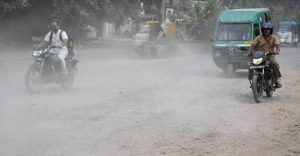
The Ministry of Environment, Forest and Climate Change (MoEFCC) organized Swachh Vayu Diwas 2026 on the occasion of the International Day of Clean Air for Blue Skies (7thSeptember).
- During the event, the 5th Swachh Vayu Sarvekshan Awards were conferred on the best-performing cities and wards under the National Clean Air Programme (NCAP). Additionally, a Compendium of Best Management Practices under NCAP was released to facilitate the replication of successful air quality interventions across states.
- Introduced in 2022-23, the framework evaluates cities on specific measures taken to curb air pollution.
- These include managing road dust, solid waste management (SWM), vehicular and industrial emissions, construction and demolition (C&D) waste, and commercial emissions (like DG sets), alongside public outreach activities.
- The assessment covers all 130 NCAP cities, dividing them into three distinct groups based on population size:
- Population above 10 Lakh
- Population between 3 to 10 Lakh
- Population below 3 Lak
Key Highlights of the 5th Swachh Vayu Sarvekshan (2026):
Top Performing Cities:
- Category 1 (Population > 10 Lakh): Lucknow secured the top rank for proactive measures like inducting EVs into municipal fleets, mechanized road sweeping, and remediating legacy waste. It was followed by Indore (2nd) and Jabalpur (3rd). Conversely, Chennai, Jamshedpur, Kota, Kolkata, and Madurai ranked in the bottom five. Delhi stood at the 30th spot.
- Category 2 (Population 3-10 Lakh): Rourkela (Odisha) emerged as the top performer.
- Category 3 (Population < 3 Lakh): Kalinganagar (Odisha) secured the first position.
Introduction of Ward-Level Awards: The Swachh Vayu Sarvekshan 2026 also introduced ward-level rankings across three population categories.
- Category I: Lucknow (Uttar Pradesh), Bhopal (Madhya Pradesh) and Nashik (Maharashtra) secured the top three ranks for wards with over 30,000 population.
- Category II: Bhubaneswar (Odisha) wards ranked first, followed by Vijayawada (Andhra Pradesh) and Prayagraj (Uttar Pradesh).
- Category III: Rourkela (Odisha) and Nalgonda (Telangana) secured the top two positions among wards with less than 10,000 population.
Data from 2025-26 indicates measurable progress compared to the 2017-18 baseline.
- Out of 130 NCAP cities, 108 recorded reduced PM10 levels. Notably, 72 cities achieved reductions of over 20%, and 26 cities achieved reductions exceeding 40%.
- The released document aggregates successful mitigation strategies in road dust control, vehicular/industrial pollution, solid waste, and construction & demolition (C&D) waste management to act as a blueprint for State Pollution Control Boards (SPCBs).
Consensus on Defining Lethal Autonomous Weapons Systems (LAWS):

128 countries reached a consensus in Geneva under the UN Convention on Certain Conventional Weapons (CCW) on a text defining Lethal Autonomous Weapons Systems (LAWS), or “killer robots.” The non-binding agreement marks an important step towards developing international regulations or a future treaty on autonomous weapons.
- Defining “Killer Robots”: Autonomous military systems capable of detecting, selecting and engaging targets based on pre-programmed parameters without meaningful human intervention or approval for each individual attack.
- Ethical and Humanitarian Imperatives: The International Committee of the Red Cross (ICRC) emphasized that unregulated deployment of autonomous weapons violates fundamental tenets of International Humanitarian Law (IHL), creating profound ethical, legal, and accountability vacuums on the battlefield.
- Geopolitical Divide on Binding Norms:
- Opponents of a legally binding ban/treaty: Major powers including the United States, Russia, India, and Israel oppose restrictive treaties, favoring non-binding codes of conduct or relying on existing laws of armed conflict.
- Proponents of strict regulation: A coalition led by Brazil, Ireland, and Norway is pushing for a mandatory, legally binding instrument to restrict autonomous targeting.
- Concerns Over Text Dilution: Watchdogs such as the Stop Killer Robots coalition have criticized the consensus text for being substantially watered down, arguing that core protections for civilian populations and strict operational limits were weakened to accommodate major military powers.
- Convention on Certain Conventional Weapons (CCW)
- Adopted in Geneva in 1980 and entering into force in 1983, the CCW (also known as the Inhumane Weapons Convention) is a UN framework treaty.
- It seeks to prohibit or restrict the use of conventional weapons considered to cause unnecessary suffering to combatants or indiscriminate harm to civilians.
- The treaty consists of a framework convention containing general provisions and five annexed protocols containing specific prohibitions.
- Its flexible structure allows new weapons and emerging technologies to be addressed by adding new protocols.
- India is a state party to the CCW and actively participates in the Group of Governmental Experts (GGE) discussions on LAWS, favoring discussions within this existing framework rather than creating separate parallel forums.
Striped Hyenas:
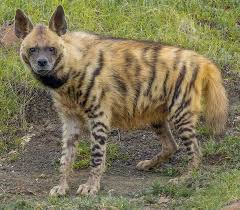
The conservation of the striped hyena has gained attention due to limited population data, conservation challenges, and the need for a coordinated national conservation strategy.
- The striped hyena (Hyaena hyaena) is a member of the Hyaenidae family and one of the three true hyena species, along with the brown hyena and spotted hyena.
- However, the hyena family (Hyaenidae) also includes the aardwolf.
- It is smaller and less social compared to the widely known spotted hyena and is primarily a nocturnal scavenger.
- The striped hyena is found across parts of Asia and Africa. Global estimates suggest around 5,000–14,000 striped hyenas, with approximately 1,000–3,000 individuals in India. India does not currently have a comprehensive official census for the species.
- Striped hyenas act as natural cleaners of ecosystems by consuming carrion and removing decaying animal remains. Their scavenging behaviour supports ecosystem health by preventing accumulation of organic waste.
- Protection Status:
- IUCN Red List: Near Threatened.
- Wildlife (Protection) Act, 1972: Schedule I
Khagantak-243 Long Range Glide Bomb:
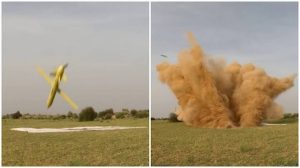
The Indian Air Force (IAF) successfully conducted the test drop of the indigenous Khagantak-243 Long Range Glide Bomb (LRGB), marking a significant advancement in India’s precision strike capabilities and defence self-reliance.
- The weapon has been developed by Nagpur-based start-up JSR Dynamics Pvt Ltd in collaboration with Bharat Electronics Limited (BEL) under the Development-cum-Production Partner (DcPP) model, highlighting public-private participation in defence manufacturing.
- Khagantak-243 is a 300 kg-class Long Range Glide Bomb equipped with a Mk-81 general-purpose blast fragmentation warhead containing around 125 kg explosive fill. It uses swivel-type glide wings and aft control surfaces to achieve a glide ratio of more than 12.
- The glide bomb can strike targets at a distance of 144–180 km when released from an altitude of around 12 km at Mach 0.8, allowing fighter aircraft to engage targets without entering hostile air defence zones.
- The weapon was initially tested from the Su-30MKI fighter aircraft at Pokhran and is planned for integration with platforms such as the MiG-29K and Mirage-2000.
- Glide Bomb Technology: Unlike cruise missiles, glide bombs do not have an onboard propulsion system. They use aerodynamic lift generated by wings to extend their range after release, making them a cost-effective precision weapon system.
- Khagantak-243 will enhance the IAF’s ability to conduct long-range precision strikes against targets such as enemy runways, hardened shelters and command centres while reducing risks to aircraft.
- The Khagantak series also includes heavier variants such as Khagantak-306 and Khagantak-225, designed for longer-range strike capabilities.
- The induction of indigenous glide bombs will reduce dependence on imported precision munitions and strengthen India’s goal of Aatmanirbhar Bharat in defence manufacturing.



