
Today’s Current Affairs: 12th Aug 2026 for UPSC IAS exams, State PSC exams, SSC CGL, State SSC, RRB, Railways, Banking Exam & IBPS, etc
Table of Contents
Amphora:
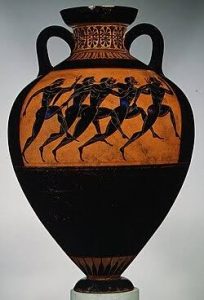
A Roman shipwreck over 2,100 years old has been recently located off the coast of Mazara del Vallo, Sicily, Italy, about five kilometers offshore and at a depth of 46 meters, with a cargo of around 500 amphorae.
- Amphora is an ancient vessel form used as a storage jar, particularly in Mediterranean cultures.
- It is a two-handled pot with a neck that is considerably narrower than the body.
- The term “amphora” originates from the Greek word meaning “carried on both sides.”
- There are two types of amphora:
- the neck amphora, in which the neck meets the body at a sharp angle;
- the one-piece amphora, in which the neck and body form a continuous curve.
- These vessels served both practical and ornamental purposes:
- While functional amphorae were designed for trade and typically had a pointed base for upright storage, decorative versions were crafted for display within homes, often featuring a flat base.
- Initially appearing in the late Iron Age, amphorae were crucial for transporting various goods, such as wine, oil, and grains and played a significant role in the development of the wine industry.
- Over time, the design of amphorae varied by region and era, leading to distinctive shapes that helped identify their origins.
- Archaeological discoveries of amphorae provide valuable insights into ancient trade, dietary practices, and societal structures, as they were commonly found in shipwrecks and excavation sites.
Sangeet Natak Akademi:
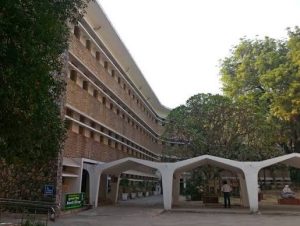
President Droupadi Murmu will confer the Sangeet Natak Akademi Fellowships (Akademi Ratna) and Awards (Akademi Puraskar) for 2024 and 2025 on 115 artists at a special investiture ceremony at Vigyan Bhawan in New Delhi.
- Sangeet Natak Akademi is India’s national academy for music, dance, and drama.
- It is the first national academy of the arts set up by the Republic of India.
- It was set up in 1952 and became functional the following year, with the appointment of its first chairman, Dr. P. V. Rajamannar.
- Rajendra Prasad, the first President of India, inaugurated it on 28 January 1953.
- Currently, it is an autonomous body of the Ministry of Culture, Government of India.
- Headquarters: New Delhi
- The academy functions as the apex body of the performing arts in the country to preserve and promote the vast cultural heritage of India expressed in music, dance, and drama.
- It also works with governments and art academies in states and territories of the country.
- The Sangeet Natak Akademi Awards are the highest national recognition conferred on practising artists.
- The Akademi also confers Fellowships on eminent artists and scholars of music, dance, and drama; and in 2006 instituted annual awards to young artists – the Ustad Bismillah Khan Yuva Puraskar.
- The Akademi’s archive, comprising audio and video tapes, photographs, and films, is one of the largest in the country and is extensively drawn upon for research in the performing arts.
- The management of the Akademi vests in its General Council.
- The Chairman of the Akademi is appointed by the President of India for a term of five years.
Pradhan Mantri National Dialysis Program:

The Pradhan Mantri National Dialysis Program (PMNDP) is presently implemented in all 36 States/UTs covering 751 districts (including 44 linked districts) through 1,856 haemodialysis centres equipped with 13,535 haemodialysis machines, according to the Union Health Ministry.
- It is a centrally-funded health scheme rolled out in 2016 with the objective to strengthen the district hospitals under National Health Mission (NHM) to make dialysis services affordable and accessible to the community.
- Under PMNDP, dialysis services are provided free of cost to all Below Poverty Line (BPL) beneficiaries at the public health facilities while non- BPL patients are benefitted of accessing the services close to the community at the subsidized rates.
- Initially, the Government recommended the setting up of haemodialysis centres in all district hospitals.
- Based on local requirements, States have been encouraged to scale down the facilities to Community Health Centres (CHCs) at the taluka level, especially in remote and tribal regions.
- The programme has two components namely Hemodialysis (HD) services & Peritoneal dialysis (PD) services.
- PMNDP supports establishment of dialysis centres (In-house & public private partnership/hybrid models) for HD service delivery as per the state/UT requirement.
- Currently, HD Services under PMNDP is operational in Private Public Partnership (PPP) mode in 14 States/UTs, in-house mode in 16 States/UTS and hybrid mode in 6 States/UTs.
- Under this initiative the PMNDP portal was launched in 2022.
- The portal will integrate all the dialysis centres operational in the state under NHM and facilitate building of renal registry and ensuring portability within the state (one state one dialysis) and later throughout the country (One Nation-One Dialysis).
- The NHM provides financial assistance to States and UTs for establishing and operating dialysis centres to ensure equitable access to kidney care services for all, regardless of geography.
- Nodal Ministry: Ministry of Health and Family Welfare.
Hallaniyat Islands:
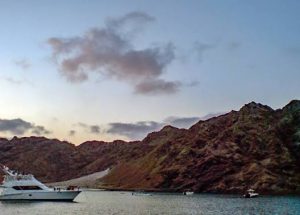
A recent crude oil spill from the tanker Caroline Bezengi is threatening the pristine nature reserve near Oman’s Hallaniyat Islands.
- The Hallaniyat Islands, also known as the Kuria Muria Islands, is an archipelago of five islands located off the southeastern coast of Oman in the Arabian Sea.
- From west to east, the islands are Al-Hasikiyah, Al-Sawda, Al-Hallaniyah, Qarzawit, and Al-Qibliyah.
- Al-Hallaniyah, the largest of the islands, is the only one inhabited.
- The habitat is characterised by rocky patches, coral reefs, and sandy substrates.
- The area overlaps with the Halaaniyaat Islands Key Biodiversity Area and the Oman Arabian Sea Ecologically or Biologically Significant Marine Area.
- The shallow water of the islands is characterized by high diversity of corals, sponges, seaweeds, algae, fish, and other species.
- The Arabian Sea here is defined by the Somali Current and seasonal upwelling that creates one of the most productive marine zones in the Indian Ocean.
- Cold, nutrient-rich water rises from the deep during and after the monsoon season, fuelling plankton blooms that attract everything from whale sharks to humpback whales.
- The islands have significant strategic importance, as they lie along sea routes connecting the Indian Ocean and Arabian Sea.
Namibia:
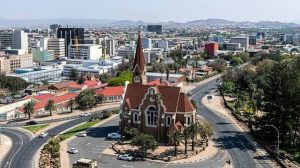
The Fourth Session of the India-Namibia Joint Trade Committee (JTC) was held in New Delhi.
- Namibia is located on the southwestern coast of the African continent.
- It is bordered by Zambia and Angola to the north, South Africa to the east and south, and Botswana to the east.
- A small stretch of the Zambezi River separates Namibia from Zimbabwe.
- Water Bodies: The Atlantic Ocean borders it to the west.
- Capital City: Windhoek
- Namibia’s extent can be divided into three topographic zones from west to east: the Namib Desert, the Central Plateau, and the Kalahari.
- The Central Plateau to the west with the Kalahari Desert located further inwards. The coastal Namib Desert runs along the country’s West coast on the Atlantic Ocean.
- It is drained by the rivers Kunene, the Okavango, the Mashi and the Zambezi on the northern border and the Orange on the southern.
- Brandberg, also known as Mount Brand is Namibia’s highest mountain and is located along the plateau’s western escarpment.
- It mainly consists of uranium, lithium, graphite, and manganese.
Colletes bhutanicus:
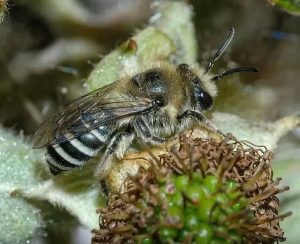
Colletes bhutanicus has been recorded for the first time in India from Tawang district of Arunachal Pradesh by scientists of the Zoological Survey of India (ZSI).
- Colletes bhutanicus is a rare solitary Himalayan plasterer bee, recorded from Arunachal Pradesh for the first time.
- It has been recorded from Bhutan and China, including the Xizang region.
- Unlike honeybees, Colletes bees are solitary and do not live in large colonies.
- Individual bees generally nest separately and play an important role in pollination by moving between flowers to collect pollen and nectar.
- Ecological Role of Bees:
- Honey bees are vital to agriculture because their pollination activities directly influence crop yields and quality.
- They are the main pollinators of plants.
- They contribute significantly to maintaining biodiversity. By pollinating a diverse range of wild plants, honey bees help sustain the balance of ecosystems.
- Bees are sensitive to environmental changes, making them excellent bioindicators.



