
Today’s Current Affairs: 13th Aug 2026 for UPSC IAS exams, State PSC exams, SSC CGL, State SSC, RRB, Railways, Banking Exam & IBPS, etc
Table of Contents
Shruti Patrol Vessel:
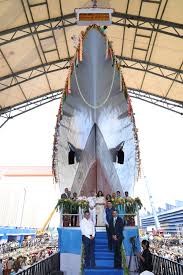
Recently the Next Generation Offshore Patrol Vessel (NGOPV) shruti was launched at M/s GRSE, Kolkata.
- Shruti Patrol Vessel is the Next Generation Offshore Patrol Vessel (NGOPV).
- The construction of NGOPVs is concurrently being undertaken at two shipyards — Goa Shipyard Limited (GSL) and Garden Reach Shipbuilders & Engineers Ltd (GRSE), Kolkata.
- These ships derive their name from India’s rich heritage, with this ship being named as ‘Shruti’, referring to four Vedas.
- The crest design of the ship depicts the constellation of Ursa Major and a red & white coloured light house.
- It is indigenously designed and will augment the existing OPVs/ NOPVs for multi domain operations, such as maritime surveillance, search and rescue, protection of offshore assets, HADR and anti-piracy missions.
- Key Features of NGOPVs:
- The NGOPVs are significantly larger and more capable than the Offshore Patrol Vessels
- They are with a displacement of 3,000 tonnes and achieve speeds of up to 23 knots and have an endurance of 8,500 nautical miles at a cruising speed of 14 knots.
- It helps Indian Navy’s pursuit towards indigenous shipbuilding and is in consonance with Government of India’s vision of ‘Aatmanirbhar Bharat’ and ‘Make in India’ initiative.
Binsar Wildlife Sanctuary: In News

A tiger sighting reported near Zero Point in Binsar Wildlife Sanctuary in Uttarakhand.
- Binsar Wildlife Sanctuary is located in the Kumaon region of the Himalayas, in the state of
- It is named after the Bineshwar Mahadev temple, a 16th-century temple dedicated to Lord Shiva.
- Western Himalayan sub-alpine coniferous forests; Western Himalayan alpine shrub and meadows.
- Highest Point: From Zero Point, also known as Jhandi Dhaar, this is the highest point in the sanctuary.
- Apart from protecting wildlife, the sanctuary was established with an aim to conserve the broadleaf oak forests, mainly located in the Central Himalayan region.
- It is covered by oak and rhododendron forests at higher altitudes and by chir pine forests at a lower height.
- It is home to Barking Deer, Himalayan bear, leopard, fox, musk deer, langur, porcupine, flying squirrel, chital, jungle cat, etc.
- It has been declared an Important Bird Area by Bird Life International.
NAVYA Programme:
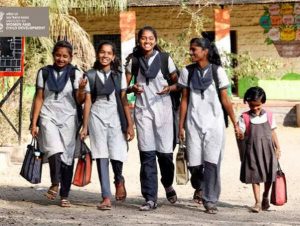
The Minister of State (Independent Charge), Ministry of Skill Development and Entrepreneurship (MSDE) informed the Lok Sabha about the NAVYA Programme.
- The NAVYA (Nurturing Aspirations through Vocational training for Young Adolescent Girls) was launched in 2025.
- It aims to empower adolescent girls (AGs) aged 16–18 years in aspirational districts by equipping them with relevant skills for socio-economic independence.
- It is a joint initiative of the Ministry of Skill Development & Entrepreneurship and the Ministry of Women & Child Development.
- It is being implemented under the Pradhan Mantri Kaushal Vikas Yojana 4.0 (PMKVY 4.0).
- It focuses on empowering trained candidates to pursue diverse career pathways by providing industry-relevant skill courses with embedded On-the-Job Training (OJT).
- Under NAVYA, special emphasis is placed on training in futuristic job roles, along with a mandatory Holistic Development Module covering digital literacy, financial literacy, career readiness, and entrepreneurship orientation etc.
- The Government monitors and evaluates the implementation and outcomes of this programme through a robust monitoring framework under the Pradhan Mantri Kaushal Vikas Yojana (PMKVY).
- The Skill India Digital Hub (SIDH) is leveraged for real-time tracking of beneficiary registration, attendance, training progress, certification and other key performance indicators.
- Regular review meetings are conducted with Project Implementing Agencies (PIAs), State Skill Development Missions (SSDMs) and other stakeholders to assess progress and address implementation-related issues.
Container Manufacturing Assistance Scheme:
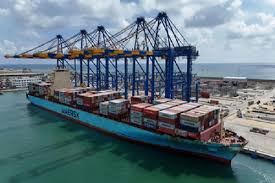
The Government has proposed a ₹10,000 crore Container Manufacturing Assistance Scheme (CMAS) to strengthen domestic production of shipping containers.
- Container Manufacturing Assistance Scheme is a targeted initiative to establish a competitive domestic container manufacturing industry through financial and institutional support.
- It supports establishment of new manufacturing facilities and expansion of existing units.
- It also aims to enhance manufacturing capacity to meet India’s growing demand for shipping containers.
- The initiative targets an annual domestic manufacturing capacity of around 10 times the existing container production capacity upto 7.5 lakh Twenty-foot Equivalent Units (TEUs).
- Financial Outlay: ₹10,000 crore over five years.
- To strengthen the container manufacturing value chain, the scheme provides:
- Capital assistance for establishing new Greenfield manufacturing facilities.
- Support for expansion of existing Brownfield manufacturing units.
- Operational support to improve the competitiveness of domestic container manufacturing.
- Support for testing infrastructure, skilling initiatives and capacity building.
- CMAS complements the Government’s initiatives under Make in India, Maritime Amrit Kaal Vision 2047, PM Gati Shakti, the National Logistics Policy and the Sagarmala Programme.
Betwa River: In News
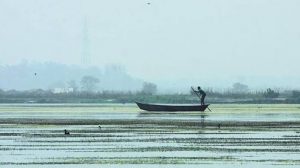
In Vidisha, Madhya Pradesh, the water level of the Betwa River has risen rapidly following continuous rainfall, increasing concerns in areas along the river.
- Betwa River is a significant river in central and northern India.
- It is an important right-bank tributary of the Yamuna River.
- It originates from Jhirri village in Raisen District, near Bhopal, Madhya Pradesh.
- It begins in the Vindhya Hills.
- It flows generally northeast through Madhya Pradesh and Uttar Pradesh states and empties into the Yamuna River near Hamirpur town in Uttar Pradesh.
- Nearly half of its course, which is not navigable, runs over the Malwa Plateau before it breaks into the upland of Bundelkhand.
- The river flows in Uttar Pradesh and Madhya Pradesh.
- In the active monsoon season, the Betwa River discharges exceptionally high levels, while in the summer; it discharges extremely low levels
- The Jamni and Dhasan rivers are its major tributaries.
- The Betwa is dammed at Dukwan and Deogarh for irrigation and water management.
- It has been mentioned in the Mahabharata and once supported the Chedi Kingdom, whose capital Suktimati stood on its banks.
- It is part of the Ken-Betwa Link Project, a major interlinking initiative designed to transfer surplus water from the Ken River to the Betwa River for irrigation and drinking purposes.
- The Indian Navy named one of its frigates INS Betwa in honour of the river.
- The historical little town of Orchha is famous for its architectural glory and graceful Betwa River.
- The town is landlocked and primarily fed by the Betwa River.
- Orchha Wildlife Sanctuary lies within the area through which the Betwa River flows.
Ship Recycling in India:

India became the world’s leading ship recycling nation in 2025, with its global market share rising to 35.4% and recycling volume increasing by nearly 60% to 2.99 million gross tons.
- This rise has been supported by regulatory reforms, Hong Kong Convention compliance, yard modernisation, and stronger safety and environmental standards.
- According to UNCTAD, India ranked first globally in ship recycling in 2025, with its share rising from 30.1% in 2024 to 35.4% in 2025.
- India’s ship recycling volume rose from 1.86 million GT in 2024 to 2.99 million GT in 2025, marking nearly 60% growth and reflecting expanding capacity and global competitiveness.
- India achieved the Maritime India Vision 2030 objective of becoming the world’s leading ship-recycling nation five years ahead of schedule.
- India aims to nearly double its ship recycling capacity to about 9 million light displacement tons (LDT) through the planned expansion of the Alang Ship Recycling Yard, supported by a comprehensive master plan.
- The Alang-Sosiya ship recycling cluster in Gujarat is the backbone of India’s ship recycling industry, accounting for about 98% of national recycling activity and having an annual capacity of around 6 million GT.
- Alang produces around 3.50 million metric tonnes (MMT) of steel annually through recycling, reducing the need for fresh extraction of natural resources and supporting the circular economy.
- The Alang-Sosiya cluster is supported by authorised recycling yards, downstream steel re-rolling mills, waste-management facilities and other allied infrastructure, strengthening India’s global competitiveness.
- The Safety Training and Labour Welfare Institute at Alang-Sosiya has cumulatively trained over 1.5 lakh workers in occupational safety, hazardous-material handling and emergency response.
Delimitation in India:
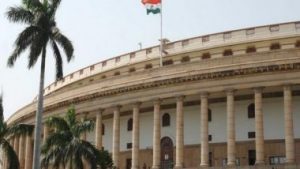
The delimitation of Lok Sabha constituencies has once again become a major political issue as the Centre seeks to revive its proposed electoral reforms ahead of the 2029 Lok Sabha elections.
- Delimitation is the process of fixing or redrawing the boundaries of territorial constituencies for the Lok Sabha and State Legislative Assemblies to ensure that each seat represents a roughly equal number of voters.
- Objective: To operationalize the democratic principle of “one person, one vote, one value” by adjusting boundaries as population densities shift over time.
- Determines reserved constituencies for Scheduled Castes (SC) and Scheduled Tribes (ST), ensuring political representation of marginalised communities.
- Article 82 mandates Parliament to enact a Delimitation Act after each census, readjusting Lok Sabha seat allocation to States and dividing States into territorial constituencies.
- Article 170 provides for a similar readjustment of seats and constituencies in State Legislative Assemblies.
- This ‘delimitation process’ is performed by the ‘Delimitation Commission’ that is set up under an act of Parliament.
- The primary objective of delimitation is to uphold the democratic principle of “One Person, One Vote, One Value”.
- However, strictly applying this principle based on current population data will severely penalize Southern states (like Kerala, Tamil Nadu, Karnataka, and Andhra Pradesh).
- These states successfully implemented national family planning policies and stabilized their populations.
- Conversely, states in the Hindi heartland (like Uttar Pradesh, Bihar, Madhya Pradesh, and Rajasthan) with historically higher population growth rates stand to gain a massive influx of new Lok Sabha seats.
- This could shift political power towards the North, reducing the South’s influence over national policies, constitutional amendments and resource allocation.
- The Nari Shakti Vandan Adhiniyam, 2023 provides 33% reservation for women in the Lok Sabha and State Assemblies, linked to the next delimitation exercise.
- This creates a challenge as women’s reservation is widely supported, while population-based delimitation faces strong federal concerns, particularly from southern States.
- Linking the two could delay women’s reservation if consensus on delimitation remains elusive.
- According to Articles 81 and 82, delimitation is contingent upon the publication of the first Census taken after 2026.
- However, the decadal 2021 Census was delayed indefinitely due to the Covid-19 pandemic.
- Attempts by the Union Government (via the failed Delimitation Bill of 2026 alongside the Constitution (131st Amendment) Bill, 2026) to bypass this delay by using the outdated 2011 Census for delimitation triggered intense political mistrust among opposition states.
- The delimitation process is historically time-consuming, with the previous Commission, constituted in 2002 after the 2001 Census, submitting recommendations that were implemented only in 2008 for the 2009 elections.
- However, the 2027 Census is fully digitalised, potentially allowing faster completion. If the exercise is not completed before the 2029 Lok Sabha elections, it could extend into the next government’s tenure, as seen during the previous delimitation cycle.
- The present elected strength is 543, while Article 81 permits up to 550 seats. The defeated 131st Constitutional Amendment Bill, 2026, proposed raising the constitutional ceiling to 850 seats.
- A larger Lok Sabha could accommodate population growth but may also create significant logistical, administrative and deliberative challenges.
- A significantly larger Lok Sabha means less time for individual Members of Parliament (MPs) to speak, debate bills, or raise matters of public importance. Maintaining order and managing disruptions in a much larger legislative body will be a formidable task.
- Gerrymandering and Sub-Nationalism: Delimitation is not just about allocating seats between states, but also drawing the boundaries of constituencies within states.
- This opens the door to potential gerrymandering – manipulating electoral boundaries to favor a specific political party (through tactics like “cracking” and “packing” voter demographics).
- Spreading an opposing party’s supporters across constituencies so they remain a minority in each, reducing their chances of winning seats.
- Concentrating opposing supporters in a few constituencies, where excess votes are wasted, allowing the rival party to win more seats elsewhere.
- Because delimitation fundamentally alters political destinies, any perceived unfairness can inflame sub-nationalism and regional grievances, leading to deep political ramifications and protests.
Agasthyamalai Evictions and the Forest Rights Act, 2006:
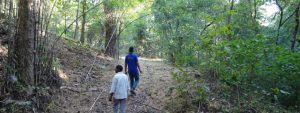
The Forest Department has issued eviction notices to thousands of households in the Agasthyamalai Biosphere Reserve (ABR), particularly in Tamil Nadu’s Theni district, following a Supreme Court directive based on the Central Empowered Committee (CEC) findings.
- The move has sparked controversy over whether the eviction drive adequately safeguards the forest rights guaranteed under the Forest Rights Act (FRA), 2006.
- In March 2025, the Supreme Court directed the CEC to conduct an extensive survey of the Agasthyamalai landscape to report on non-forestry activities violating the Forest Conservation Act, 1980, and the Wild Life (Protection) Act, 1972.
- Based on the CEC’s findings, the Supreme Court ordered the removal of non-forestry activities, commercial infrastructure, and encroachers within critical protected areas like the Kalakkad Mundanthurai Tiger Reserve and Srivilliputhur-Megamalai Tiger Reserve.
- The Court directed Tamil Nadu to prepare and implement a time-bound, division-wise encroachment eviction plan, including rehabilitation “wherever applicable” and ecological restoration.
- The administration and judiciary’s push for ecological restoration and strict conservation is being criticized for bypassing the legally mandated procedures of the FRA, which protects forest dwellers from arbitrary evictions.
NASA Invites ISRO to Join Moon Base Programme:

The National Aeronautics and Space Administration (NASA) has invited the Indian Space Research Organisation (ISRO) to join its ambitious Moon Base programme. The programme aims to establish a permanent human outpost near the Moon’s South Pole.
- The invitation was extended during the 9th meeting of the India-US Civil Space Joint Working Group (CSJWG) held at the ISRO headquarters in Bengaluru.
- The CSJWG meeting advanced civil and commercial space cooperation under the US-India TRUST (Transforming the Relationship Utilising Strategic Technology) initiative.
- The two countries also reviewed the successful NISAR (NASA-ISRO Synthetic Aperture Radar) mission and possibilities for further collaboration.
- They reaffirmed commitment to UN COPUOS guidelines on the long-term sustainability of outer space activities.
- The invitation significantly builds upon the expanding space partnership between the two nations under the Artemis Accords, which India joined in June 2023.
Moon Base Programme and the Artemis Framework - Artemis Program Led by NASA, the Artemis program aims to return humans to the Moon for the first time since the Apollo missions (1972) and establish a permanent lunar base to prepare for future crewed missions to Mars.
- The Moon Base Project: It is a three-phase programme aimed at building humanity’s first outpost near the lunar South Pole and establishing an enduring human presence there. The lunar South Pole is strategically important due to the presence of water ice in shadowed regions.
- Phase 1 (Through 2029): Focuses on robotic missions to explore the South Pole, demonstrate technologies, and lay the groundwork.
- Phase 2 (2029-2032): Involves building systems and critical infrastructure for long-term lunar presence.
- Phase 3: Begins the assembly of a permanent lunar outpost where astronauts can live, work, and conduct extensive scientific research.
- Artemis Accords Established in 2020 by NASA, the US Department of State and seven initial signatories, the Accords are a non-binding framework of principles guiding the peaceful, safe and sustainable civil exploration and use of outer space. India became the 27th signatory in 2023.
India’s ‘Peacock Diplomacy’ at the United Nations:
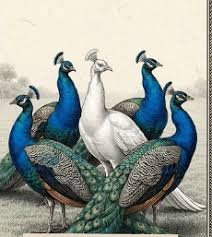
India donated five Indian male peafowls to the United Nations Office at Geneva highlighting India’s biodiversity heritage and its commitment to multilateralism and international cooperation.
- The group includes four blue peafowls and one white-feathered male, symbolically reflecting the blue and white colours of the UN.
- This marks the second instance of such a diplomatic gift from India to the UNOG. In 1981, then Prime Minister Indira Gandhi sent a breeding pair of peafowls from the Delhi Zoo to Geneva.
- Ariana Park: The 46-hectare park surrounding UN Geneva has hosted peacocks for over a century.
- The park was originally the estate of Swiss art collector Gustave Revilliod, who bequeathed it to Geneva in 1890.
- This donation acts as a potent tool of soft power (often dubbed “Peacock Diplomacy,” akin to China’s “Panda Diplomacy”), reinforcing India’s image as a committed, peaceful stakeholder in the UN system.
- The Indian peacock is India’s National Bird, symbolising grace, beauty and resilience, and its presence at UN Geneva represents India’s natural and cultural heritage.
- The gesture highlights India’s commitment to biodiversity conservation and environmental stewardship.
Indian Peafowl
- The Indian Peafowl (Pavo cristatus) belongs to the Phasianidae family, which includes pheasants and partridges. The male is called a peacock, while the female is called a peahen.
- Physical Characteristics: The species shows prominent sexual dimorphism.
- Males have metallic blue plumage and an elongated train with colourful eyespots (ocelli) used in courtship, while females have muted brown plumage that provides camouflage during ground nesting.
- The Indian Peafowl is native to the Indian subcontinent and is highly adaptable, inhabiting dry deciduous forests, scrublands, semi-desert areas, agricultural landscapes and human-dominated habitats.
- It is mainly ground-dwelling during the day and roosts in trees at night.
- The Indian Peafowl is omnivorous, feeding on seeds, fruits, insects, small mammals and reptiles, including small snakes.
- It therefore also contributes to natural pest control in agricultural ecosystems.
- Conservation Status:
- IUCN: Least Concern (LC).
- Wildlife (Protection) Act, 1972: Schedule I.
- CITES: Appendix III.
EVEREST: India’s 1st Private 800 kN FFSC LOX-Methane Engine:

Bengaluru-based Astrobase Space Technologies unveiled EVEREST, India’s first privately built 800 kN Full-Flow Staged Combustion (FFSC) LOX-Methane rocket engine, marking another major milestone for India’s private space sector after the launch of Vikram-1.
- The engine delivers 800 kN thrust, has a specific impulse of about 340 seconds, and offers a 50%-110% throttle range. It is being designed for reusable medium-lift launch vehicles.
- In a Full-Flow Staged Combustion engine, both the fuel and oxidiser pass through separate pre-burners before entering the main combustion chamber.
- The gases generated drive the turbopumps and are then fed into the main chamber, ensuring more complete utilisation of propellants and higher efficiency.
- LOX-methane’s relatively clean combustion, combined with an FFSC architecture designed for multiple cycles, makes the system well suited to reusable launch applications.
- Astrobase is developing the engine as part of a reusable launch system aimed at improving turnaround time, precision control and launch economics. Its published vehicle architecture targets about 3 tonnes to 500-km LEO with return-to-launch-site recovery.
- Development began in 2024 and engine subsystems have already undergone testing. Full-scale engine hot-fire testing at Astrobase’s Anantapur(Andhra Pradesh) facility is a key 2026 development milestone, followed by stage-level testing and vehicle integration.
- The company plans to manufacture and test around 20 engines before its first orbital flight, which is targeted for 2028.
- Astrobase is a recipient of IN-SPACe’s Technology Adoption Fund, which supports private-sector development of technically demanding space technologies such as advanced propulsion systems.
- According to Astrobase, India is the fourth country after Russia, the US and China to develop FFSC technology, and Astrobase is the fourth commercial company globally to develop a high-thrust FFSC engine.
- If successfully tested and operationalised, the engine could strengthen India’s capabilities in reusable launch vehicles, high-cadence launches, indigenous propulsion and commercial access to space, expanding opportunities in the global space economy.
Parliamentary Committee Report on Digital & Sustainable Bus Transport:
The Parliamentary Standing Committee on Transport, Tourism and Culture presented its 392nd Report, Enabling Inclusive, Digital and Sustainable Bus Transport: Policy, Regulation and Public-Private Partnership for Next-Gen Mobility.
- The 392nd Report of the Parliamentary Standing Committee on Transport, Tourism and Culture is a comprehensive roadmap for transforming India’s bus transport ecosystem through digitalization, regulatory reforms, safety enhancement, infrastructure modernization, and public-private partnerships (PPP) to build an inclusive, efficient, and sustainable mobility network.
Key Recommendations:
All India Passenger Permit:
- Replace the All India Tourist Permit with an All India Passenger Permit.
- Integrate permits with VAHAN, FASTag, and vehicle tracking.
National Bus Terminals Authority:
- Establish a National Bus Terminals Authority (NBTA) on the lines of the Airports Authority of India.
- Introduce a National Code for Bus Terminals.
National Bus Digital Grid:
- Create a nationwide interoperable digital bus platform.
- Develop a GIS-based National Bus Network Atlas.
Strengthening Safety Standards:
- Complete deployment of Automated Testing Stations (ATSs).
- Mandate checks for fire safety, emergency exits, and alert systems.
Electric & Leased Bus Transition:
- Promote scrap-and-lease fleet models.
- Develop recycling and end-of-life frameworks for EV batteries.
- Establish regional EV manufacturing and maintenance hubs.
Women & Tourist-Friendly Transport:
- Launch dedicated peak-hour services with women drivers and staff.
- Create a National Tourist Bus Grid with unified multimodal ticketing.
- Establish accredited Maintenance, Repair & Overhaul (MRO) systems.
Dedicated Public Transport Funding:
- Create a separate budget head for public transport infrastructure.
- Consider allocating around 25% of road infrastructure funding to public transport.
State Performance Ranking:
- Publish an annual State of the States Bus Transport Index.
National Bus Data Architecture:
- Integrate all states into the VAHAN platform.
- Develop a federated national database while retaining state ownership.
The Eco-Educational Hub:
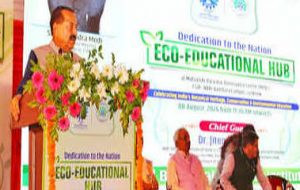
Union Minister of State for Science and Technology dedicated Prakriti Gyan Dham, India’s first-of-its-kind eco-educational hub, to the nation.
- Prakriti Gyan Dham (The Eco-Educational Hub) is an interactive, open-air eco-educational facility and living repository of India’s rich botanical wealth, heritage trees, and environmental research.
- It serves as a walkable classroom designed for students, researchers, nature enthusiasts, and farmers to engage directly with plant science and sustainable bio-resources.
- Location: Maharishi Parashar Bioresource Centre (MPBC) in Banthra, on the outskirts of Lucknow, Uttar Pradesh.
- Developing Agency: CSIR-National Botanical Research Institute (CSIR-NBRI), Lucknow.
- Aim is to extend scientific research beyond institutional laboratory walls into society, fostering experiential environmental education, preserving botanical-cultural heritage, promoting threatened plant conservation, and driving livelihood generation through bio-technologies.
The River Ganga Authorities Order, 2016:
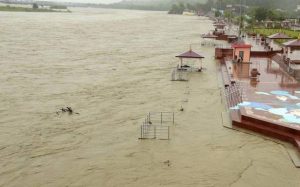
The National Mission for Clean Ganga (NMCG) amended the 2016 Ganga Authorities Order, removing the blanket construction-free zone tag on the Ganga flood plain.
- The River Ganga (Rejuvenation, Protection and Management) Authorities Order, 2016 is a statutory order issued under Section 3 of the Environment (Protection) Act, 1986.
- It grants statutory backing and mission status to the National Mission for Clean Ganga (NMCG) and creates a multi-tiered institutional framework for restoring the river.
- Aim is to ensure the effective abatement of pollution, maintain ecological flows (Aviral Dhara), and protect the ecological integrity (Nirmal Dhara) of the Ganga river basin using a unified, multi-state, and inter-sectoral approach.
Key Features of the 2016 Order:
- National Ganga Council: Created an apex authority chaired by the Prime Minister (replacing the NGRBA) to provide overall direction and superintendence over Ganga basin rejuvenation.
- Empowered Task Force: Established a task force chaired by the Union Water Resources Minister to coordinate specific action plans, milestones, and timelines across ministries and state governments.
- Statutory Status for NMCG: Declared the National Mission for Clean Ganga (NMCG) as a statutory authority empowered to issue binding directions under the Environment (Protection) Act, 1986.
- Decentralized Multi-Tier Governance: Set up State Ganga Committees and District Ganga Protection Committees across basin states to monitor local pollution threats and execute grassroots projects.
- Ecological Flows &Environmental Standards: Mandated maintaining minimum continuous ecological flows throughout the length of the river to facilitate natural self-rejuvenation.
- Original Flood Plain Prohibitions: Explicitly designated the banks and flood plains (defined by 100-year flood frequencies) as a construction-free zone to prevent pollution and protect groundwater recharge functions.



