
Today’s Current Affairs: 14th Sep 2026 for UPSC IAS exams, State PSC exams, SSC CGL, State SSC, RRB, Railways, Banking Exam & IBPS, etc
Table of Contents
What is Celiac Disease?
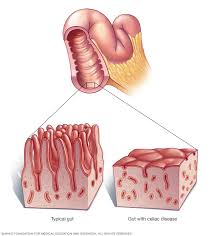
Celiac disease, traditionally regarded as a childhood disorder, is increasingly being diagnosed among adults and the elderly, with doctors at the PGIMS, Rohtak, reporting a growing number of atypical cases.
- Celiac disease is an autoimmune disease that causes the body to react to a protein called gluten.
- Gluten is a protein found in wheat, barley, rye, and other grains.
- It may also be in other products like vitamins and supplements, hair and skin products, toothpastes, and lip balm.
- When people with celiac disease eat gluten, it triggers an abnormal response from your immune system.
- The immune system attacks the gluten in digestive system, causing inflammation.
- This inflammation damages the small intestine.
- The damage may prevent body from absorbing vitamins, minerals, and other nutrients from the food.
- Without treatment, celiac disease can lead to malabsorption and malnutrition.
- Malnutrition has many serious side effects, especially in children. Children with celiac disease may have growth and development delays.
- The condition is also known as celiac sprue, nontropical sprue, or gluten-sensitive enteropathy.
- The exact cause of celiac disease is not known.
- Research suggests that celiac disease only happens in people who have certain genes and eat food that contains gluten.
- Researchers are studying other factors that may play a role in causing the disease.
- The only treatment for celiac disease is strict adherence to a gluten-free diet for life.
- Sticking with a gluten-free diet will treat or prevent many of the symptoms and other health problems caused by celiac disease.
- In most cases, it can also heal damage in the small intestine and prevent more damage.
Tso Kar Lake:
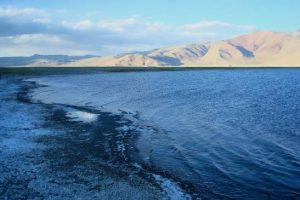
The Ladakh administration recently launched an ambitious project to revive and restore the shrinking Tso Kar Lake by diverting nearly 320 million litres of untapped glacier water daily from the glacial stream, Rupsho Kharnak.
- Tso Kar, meaning “White Lake” in Ladakhi, is a high-altitude salt lake located in the Rupshu Valley of Ladakh.
- It is the smallest of the three prominent lakes in the region, alongside Pangong Tso and Tso Moriri.
- The lake’s name derives from the white salt deposits that fringe its shores, remnants of its saline nature.
- The Tso Kar basin includes both Tso Kar Lake and Startsapuk Tso (a nearby freshwater lake), creating a rare wetland system.
- It experiences extreme winters with temperatures falling below -40 °C, while summers see a maximum of 30°C.
- The nomads, commonly known as Khampas, inhabit the Tso Kar area, and they make a living here by collecting the salt from the banks of Tso Kar Lake and selling it to the regions nearby.
- The lake is surrounded by marshlands, which host different types of birds. Some of these are Brahmi Ducks, bar-headed geese, and great crested grebe.
- The most commonly spotted birds at the lake, though, are the black-necked cranes, which visit the lake to lay eggs.
- Mammals like Kianga, the largest of the wild asses, can also be spotted. The area surrounding the lake is also home to ibex, snow leopards, and snow foxes.
- Ramsar Site: In 2020, Tso Kar was recognized as a Wetland of International Importance under the Ramsar Convention, highlighting its ecological significance.
Malabari Goat:
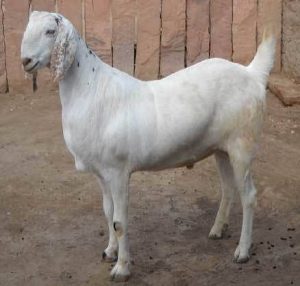
A new study suggested that ancient spice route networks may have shaped the maternal genetic history of the Malabari goat.
Key Highlights of the study:
- These Malabari goats belong to a rare maternal genetic group found in only about 3% of domestic goats globally.
- The goats were placed in mitochondrial haplogroup B1, a relatively uncommon lineage among domestic goats.
- It also showed close maternal genetic relationships with goats from Oman, Arabia and Gujarat.
- Malabari also known as Tellicherry or Cutch are native to Kerala.
- These goats are reared for milk and meat and their skin is popular in the tanning industry.
- The milk yield ranges from 0.5 to 1.5 litres a day with an average of 90 kg in a lactation period of 178 days.
- It exhibits exceptional adaptability to humid tropical stressors.
- The main threat to this goat is the invasion of Boer goats and also goats from other parts of the country to the breeding tract of Malabari resulting in the dilution of the breed.
Melanoma : Study
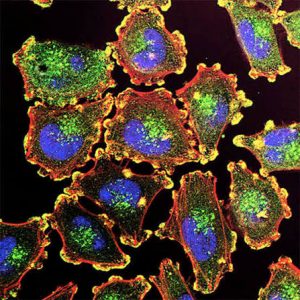
Melanoma, in India, most commonly presents on the soles of the feet or beneath the nails, sites that are rarely examined and even more rarely associated with cancer.
- Melanoma is a kind of skin cancer that starts in the melanocytes.
- Melanocytes are cells that make the pigment that gives skin its color. The pigment is called melanin.
- The exact cause of all melanomas isn’t clear.
- Most melanomas are caused by exposure to ultraviolet light. Ultraviolet light, also called UV light, comes from sunlight or tanning lamps and beds.
- Treatments for melanoma:
- Melanoma Surgery: In the early stages, surgery has a high probability of being able to cure melanoma.
- Lymphadenectomy: In cases where melanoma has spread, removal of the lymph nodes near the primary diagnosis site may be required.
- Metastasectomy: It is used to remove small melanoma bits from organs.
Java Sea : In News
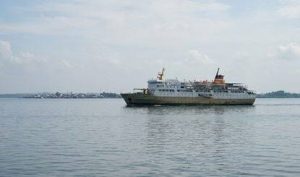
An Indonesian passenger ship carrying 243 people was reported missing after losing contact in the Java Sea early during bad weather.
- Java Sea is a portion of the western Pacific Ocean situated between the islands of Java and Borneo.
- It is bordered by Borneo (Kalimantan) on the north, the southern end of Makassar Straiton the northeast, Celebes and the Flores and Bali seas on the east, Java on the south, the Sunda Straits on the southwest and Sumatra on the west.
- It forms part of the Sunda Shelf, a shallow part of the continental shelf of Southeast Asia.
- The Java Sea experiences a typical monsoon climate.
- It is home to several protected national parks such as Ujung Kulon and Karimunjawa.
- It is home to a wealth of marine life, as well as petroleum and natural gas deposits that are instrumental to Indonesia’s export economy.
Moth Bean:
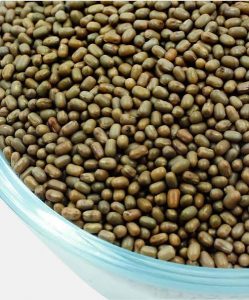
ICAR’s Central Arid Zone Research Institute (CAZRI), Jodhpur, has developed a new generation of moth bean varieties capable of withstanding highly variable weather conditions, including prolonged drought and excessive rainfall.
- Moth bean (Vigna aconitifolia), commonly called dew bean or matki, is one of the hardiest pulse crops cultivated in India.
- It is a creeping, annual herbaceous plant belonging to the Fabaceae family.
- Its fast-penetrating taproot system enables it to access moisture from lower soil layers, which is a key adaptation for survival in arid environments.
- It performs best at temperatures between 24-32°C but can tolerate daytime temperatures as high as 45°C.
- The ideal annual rainfall for production is 500-750 mm, the crop can sustain growth with just 200-300 mm.
- This legume thrives in well-drained sandy loam soils that are common across India’s western desert regions.
- It tolerates a remarkably wide pH range of 3.5 to 10 and can handle slight salinity.
- Grown primarily in the arid and semi-arid zones of Rajasthan, Maharashtra, Gujarat, and Haryana.
- It serves farmers as a source of protein-rich dal, nutritious fodder for livestock, and a natural green manure that enriches the soil.
INS Kulish:

Indian Navy’s guided missile corvette INS Kulish arrived at Ream Naval Base in Cambodia as part of the Eastern Fleet’s operational deployment.
- INS Kulish is a Kora-class corvette of the Indian Navy.
- Kulish meaning is Thunderbolt in Sanskrit.
- It was built from 1995-2001 and commissioned in 2001.
- It has been designed & built within India by Indian shipbuilders Garden Reach Shipbuilders and Engineers [GRSE] & Mazagon Dock Limited [MDL].
- Their primary weapon is the Russian-origin Kh-35 Anti-Ship Cruise missile.
- It has state-of-the-art sensors and electronic equipment, and be capable of operating at extended ranges up to 2,500 nautical miles without replenishment.
- The ship has a displacement of 1,500 tonnes.
- It is powered by twin diesel engines generating a maximum speed of 25 knots.
- The capability to operate Chetak Helicopter gives the ship extra flexibility in discharge of its duties.
- It is armed with modern weapon systems, which include surface-to-surface missiles, and long range guns for delivering attacks on enemy units at sea and surface to air missiles for self-defence.



