
Today’s Current Affairs: 15th Sep 2026 for UPSC IAS exams, State PSC exams, SSC CGL, State SSC, RRB, Railways, Banking Exam & IBPS, etc
Table of Contents
Paniya Tribe:
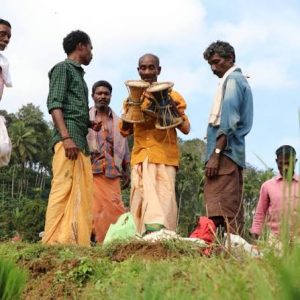
The Kerala State Human Rights Commission recently directed authorities to urgently rehabilitate Paniya tribal families living in makeshift tarpaulin shelters at Vaniyampuzha, across the Chaliyar River in Pothukal panchayat, Kerala.
- The Paniya (Paniyan) tribe is one of the major Scheduled Tribes of Kerala.
- They are predominantly found in Wayanad and also in parts of the Kannur, Kozhikode, and Malappuram districts of Kerala.
- Some are found in the Gudalur and Pandalur areas of the Nilgiris District of Tamil Nadu and in the southern part of the Kodagu District of Karnataka.
- The Paniya community is the largest single scheduled tribe population in Kerala.
- The word “Paniyan” is derived from “pani” which is a Malayalam word, meaning work.
- The Paniya speak the Paniya language, which belongs to the Dravidian family, closely related to Malayalam.
- They have developed a unique style of making their houses.
- A Paniyan village comprises rows of huts all constructed from bamboo with thatched roofs.
- These houses of Paniyan tribes are either single- or double-storied.
- The Paniyas worship a deity called Kali and banyan tree. They hesitate to cut banyan trees and believe that if anyone attempts to cut the tree, they will fall sick.
Kandaleru Dam:
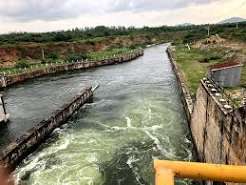
The Andhra Pradesh government recently stopped the release of Krishna River water to Chennai from the Kandaleru reservoir.
- Kandaleru Dam is a major irrigation and water-supply project located in the Nellore district of Andhra Pradesh.
- It is built across the Kandaleru River, a tributary of the Pennar (Penna)
Key Construction Features:
- Built using earthen materials (soil and rocks), making it one of the largest earthen dams in India.
- It is one of the longest reservoirs in the country.
- It connects with the Somasila Reservoir, ensuring smooth water distribution.
- It is designed to handle high water pressure, ensuring long-term durability.
- It has a substantial storage capacity, with a maximum capacity of 68 TMC (Thousand Million Cubic feet) of water.
- This capacity ensures a reliable supply for irrigation, drinking, and industrial purposes.
- It also helps in flood control during the monsoon season by regulating the flow of the Kandaleru River.
- This project is a key component of the Telugu Ganga project, which facilitates the supply of drinking water to Chennai city from the Srisailam Reservoir on the Krishna River.
- The Telugu Ganga Project was approved in 1977, after an agreement between Tamil Nadu and the states from where the Krishna River flows i.e. Andhra Pradesh, Maharashtra, and Karnataka.
- A network of canals and tunnels transports water to irrigation lands and Chennai (Kandaleru–Poondi canal).
Asola-Bhatti Wildlife Sanctuary: In News
Abandoned mining areas in the Asola-Bhatti Wildlife Sanctuary have emerged as the most bird-rich habitat studied in the area, with researchers finding that former quarries now support a diverse mix of scrub, grassland, rocky patches and water pools.
- Asola-Bhatti Wildlife Sanctuary is strategically located in Haryana.
- It lies on the Southern Delhi Ridge of the Aravalli hill range.
- The semi-arid forest vegetation of the Aravali region provides homes to certain plant species.
- It includes dhak (flame of the forest), babool (Acacia), khejri, and various shrubs and grasses that are well-adapted to dry conditions.
- It is home to a wide variety of animals, including the Indian leopard, jackal, Indian blue bull, sambar deer, wild boar, and mongoose.
- It is also a birdwatcher’s paradise, with many species of birds spotted here, including the Indian peafowl, crested serpent-eagle, and Indian roller.
- Reptiles such as the monitor lizard, Indian cobra, and Russell’s viper can also be found here.
Ingerana aizawl : Small frog
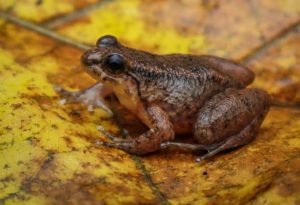
A small frog named Ingerana aizawl found along a stream on the Mizoram University campus in Aizawl has been formally recognised as a new species.
- Ingerana aizawl is a new species of frog.
- It was discovered at Hratdawng Stream on the Mizoram University campus.
- The new frog is small and stout-bodied.
- It has a distinct circular tympanum, a prominent supratympanic fold, small rounded discs at the tips of its fingers and toes, and a notably wrinkled dorsal surface.
- The species is closely associated with water and forest habitats.
- Its breeding season appears to coincide with the monsoon.
Kawal Tiger Reserve : In News
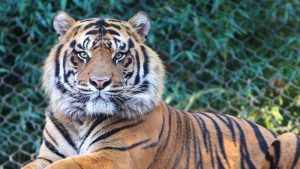
A 12-year study conducted between 2010 and 2022 confirmed that no tigers live permanently in Kawal tiger reserve.
- Kawal Tiger Reserve is located in northeastern part of the state of Telangana, India.
- The reserve is nestled in the Sahyadri Mountain Ranges.
- Geographically, the reserve is situated at the southernmost tip of the Central Indian Tiger Landscape, having linkages with the Tadoba-Andhari (Maharashtra) and Indravati (Chhattisgarh) tiger reserves.
- It is a major catchment of the river Godavari and local rivulets like Peddavagu and Kadam.
- It has diverse habitats comprising dense forests, grasslands, rivers, streams, and water bodies.
- Vegetation: Southern Tropical Dry Deciduous Forest.
- It consists of teak along with bamboo and other species like Anogeissus latifolia, Mitragyna parviflora, Terminalia crenulata, Terminalia arjuna, Boswellia serrata, etc.
- The major wild animals include: tiger, nilgai, chousinga, chinkara, black buck, sambar, spotted deer, wild dog, wolf, jackal, fox, leopard and the jungle cat.
SARAL AI:

The CSIR-National Institute of Science Communication and Policy Research (CSIR-NIScPR) has taken a new step towards strengthening science communication by leveraging SARAL AI.
- SARAL AI converts research published in its journals into engaging and accessible videos.
- It is an AI-based platform that demystifies and converts complex research publications and patents into podcasts, short videos, posters, business briefs.
- It is an initiative of Anusandhan National Research Foundation (ANRF) New Delhi.
- Researchers upload research papers via arXiv links or direct LaTeX files. The system automatically extracts content and figures.
- AI Script Generation: System generates engaging presentation scripts using advanced AI models like Gemini and GPT for educational content.
- Voice Synthesis: System converts scripts to natural-sounding audio narration with support for multiple Indian languages including Hindi.
- Video Production: System automatically creates professional presentation videos combining slides, narration, and visual elements. The video can be shared on social media
- It presentations and rich social media content in 18 Indian languages, enabling wider dissemination of scientific knowledge across the country.
Steneucyrtus wayanadensis:
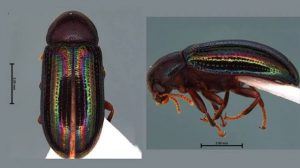
Researchers have identified a new species of darkling beetle, named Steneucyrtus wayanadensis in Kerala.
- Steneucyrtus wayanadensis is a new species of darkling beetle.
- It belongs to the genus Steneucyrtus and was discovered during a scientific survey deep within the Wayanad Wildlife Sanctuary.
- The researchers have officially named it for paying permanent tribute to its type locality in the Wayanad Wildlife Sanctuary.
- Wayanad Wildlife Sanctuary is located in Wayanad district of Kerala, India,
- It forms an integral part of the Nilgiri Biosphere Reserve, a UNESCO World Heritage Site.
- It is bordered by the protected areas of Nagarhole and Bandipur in Karnataka on the northeastern side and Mudumalai in Tamil Nadu on the southeastern side.
- Rivers like the Kabini, Cherupuzha, and Bavali flow through the sanctuary.
- Tribes living in these forests include some scheduled adivasis, such as Paniyas, Kattunaikkans, Kurumas, Ooralis, Adiyans, and Kurichiyas.
- It is a mosaic of the Western Ghats’ significant vegetation types, ranging from moist deciduous to dry deciduous and semi-evergreen patches.
- Flora: Teak, rosewood, eucalyptus, and silver oak.
- Fauna: It is home to leopards, gaur (Indian bison), sambar deer, wild boars, sloth bears, and jungle cats.
MERCOSUR Group: In News
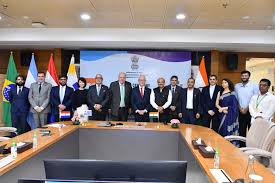
India and MERCOSUR signed the First Additional Protocol to the India–MERCOSUR Preferential Trade Agreement (PTA) to facilitate acceptance of electronic Certificates of Origin.
- The India-MERCOSUR PTA was signed on 25 January 2004 and entered into force on 1 June 2009.
- The Agreement provides preferential tariff concessions on 450 tariff lines by India and 452 tariff lines by the MERCOSUR side.
- The Southern Common Market (MERCOSUR for its Spanish initials) is a South American regional economic organization.
- It is the fourth largest integrated market after the European Union (EU), North American Free Trade Agreement (NAFTA), and ASEAN.
- It was created in 1991 by signing the Treaty of Asunción.
- Objective: Free movement of goods, services, capital and people and it became a customs union in January 1995.
- Member countries originally comprised Argentina, Brazil, Paraguay, and Uruguay as its members.
- Bolivia and Venezuela joined it later. (Venezuela has been suspended since December 1, 2016).
- Mercosur also counts Chile, Colombia, Ecuador, Guyana, Peru, and Suriname as associate members.
- Headquarters: Montevideo, Uruguay.
- Its official working languages are Spanish and Portuguese.
- Governance of MERCOSUR Group:
- Common Market Council: It is the bloc’s highest decision-making body, and provides a high-level forum for coordinating foreign and economic policy.
- The group consists of the foreign and economic ministers of each member state, or their equivalent, and decisions are made by consensus.
- The group’s presidency rotates every six months among its full members.
Meenakshi Sundareswarar Temple:
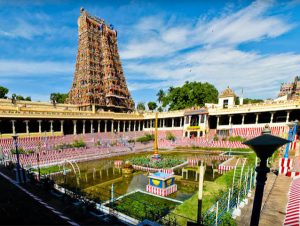
Hundreds of street vendors have been left struggling after being recently evicted from the roads surrounding the Meenakshi Sundareswarar Temple as part of measures to regulate traffic and pedestrian movement ahead of the temple’s Maha Kumbabishekam.
- Meenakshi Sundareswarar Temple, also called Arulmigu Meenakshi Sundareswarar Temple, is a historic Hindu temple located on the southern bank of the Vaigai River in the temple city of Madurai, Tamil Nadu.
- The temple is dedicated to the goddess Meenakshi, a form of Parvati; her consort Sundareswarar, a form of Shiva; and her brother Alagar, a form of Vishnu.
- The temple is theologically significant, as it represents a confluence of the Shaivism, Shaktism, and Vaishnavism denominations of Hinduism.
- It was built during the Pandya reign by Kulasekarer Pandya.
- According to historical findings, the creation of this temple can be traced back to early A.D.
- There are mentions of this temple in the songs of the great Hindu Saint Thirugnanasambandar, who lived during the 7th century.
- It is also said that during the 12th or 13th century, at the time of Islamic conquest, this temple was destroyed to an extent.
- However, later it was restored to its present structure. It was later expanded during the rule of Thirumalai Nayak (1623-55 AD). During this time, the present structure of the temple came into being.
- It is a finest example of the Dravidian style of architecture.
- The oldest gopuram is the eastern one, built by Maravarman Sundara Pandyan during 1216-1238.
- The west tower (gopuram) of the temple is the model on which the Tamil Nadu State Emblem is based.
- The temple has four entrances, while the entrance on the Eastern side being the main temple entrance.
- There are several corridors, and halls such as Aayirankaal (1000-pillared hall), Kilikoondu-mandapam, Golu-mandapam, and Pudu-mandapam, and shrines inside the temple.
- The corridors and pillars are adorned with wonderful artwork.
- The Thousand Pillar Hall contains 985 (instead of 1000) carved pillars. It was built by Ariyanatha Mudaliar in 1569 and currently houses a museum with artifacts collected from Madurai from the 8th century onwards.
- There are the Musical Pillars outside this hall towards the west. Each pillar produces a different musical note when struck.
- The temple is an architectural wonder with an estimated 33,000 sculptures in the temple.
Incentive Scheme for Promotion of Domestic PNG Connections:
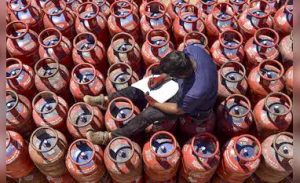
India has stepped up efforts to expand access to clean and affordable cooking fuel with the launch of the Incentive Scheme for Promotion of Domestic PNG Connections.
- It is aimed at accelerating the growth of active domestic Piped Natural Gas (PNG) connections across the country.
- It enables households to access clean, safe and affordable cooking gas through piped supply.
- It provides incentives to City Gas Distribution (CGD) network entities for converting unbilled connections into active, billed connections.
- It was launched in 2026, and seeks to encourage City Gas Distribution (CGD) entities to connect more households to piped natural gas.
- CGD networks are developed by entities authorised by the Petroleum and Natural Gas Regulatory Board (PNGRB).
- Nodal ministry: Ministry of Petroleum and Natural Gas
- The scheme will be implemented in two tranches over a six-month period.
- A minimum number of domestic connections have been fixed for every Geographical Area, with eligible CGD entities required to add billed domestic connections above the prescribed threshold during the performance period.
- For each such incremental connection, the entity earns an additional allocation of 200 Standard Cubic Metres (SCM)of gas.
Planet Mercury:

Mercury may have shrunk more than scientists previously estimated, with the planet’s diameter potentially reducing by as much as 23 km, a recent study has revealed.
- It is the smallest planet in our solar system and the nearest to the Sun.
- It is one of the four terrestrial (rocky) planets, along with Venus, Earth, and Mars.
- As the closest planet to the Sun, it experiences extreme temperature variations at its surface, from about +450ºC (day) down to –180ºC (night).
- However, Mercury is not the hottest planet; Venus has the highest average surface temperature because of its thick atmosphere and strong greenhouse effect.
- It has permanently shadowed regions at its poles that never see sunlight and thus enables ice to exist on its floor.
- Mercury’s ancient, cratered surface shows signs of past volcanic and tectonic activity and is heavily weathered by the harsh space environment.
- The planet has huge impact basins, including the Caloris Basin, one of the largest impact features in the solar system.
- Mercury has a large iron-rich core, which occupies a substantial portion of the planet’s interior.
- Its closeness to the Sun and its smallness make it the most elusive of the planets visible to the unaided eye.
- NASA’s MESSENGER spacecraft became the first spacecraft to orbit Mercury, entering orbit in 2011 and studying the planet until 2015.
- The BepiColombo mission, a joint mission of the European Space Agency (ESA) and Japan Aerospace Exploration Agency (JAXA), is studying Mercury and is expected to enter orbit in 2026.



