
Today’s Current Affairs: 17th Nov 2026 for UPSC IAS exams, State PSC exams, SSC CGL, State SSC, RRB, Railways, Banking Exam & IBPS, etc
Table of Contents
Geran-5:

Russia began using a variant of its Geran-5 drone known as the K5-K to attack Ukrainian cities, the GUR, Kyiv’s military intelligence agency, said recently.
- Geran-5 is a Russian jet-powered one-way attack drone built in the shape of a small cruise missile.
- It is powered by a turbojet engine and has a conventional aircraft configuration.
- It has a cruising speed of 450–600 km/h, a range of about 950 kilometers and can reach an altitude of up to 6 kilometers.
- It features an autonomous optical navigation system and a modified fuselage design.
- It is equipped with an electro-optical correction system that allows it to navigate using images of the ground surface.
Bar-Headed Goose:
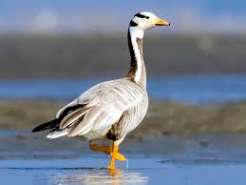
The bar-headed goose, famed for flying over the Himalayas and surviving at altitudes where oxygen levels are dangerously low, has been spotted at Nandur Madhmeshwar Wildlife Sanctuary after a gap of eight to 10 years.
- Bar-Headed Goose is a migratory bird species which is known to be one of the highest-flying birds in the world.
- Scientific Name: Anser indicus
- It breeds in Central Asia in colonies of thousands near mountain lakes and winters in South Asia, as far south as peninsular India.
- They reside near water bodies, preferring high-altitude lakes during the breeding season and freshwater lakes, rivers, and streams in their wintering habitats.
- Conservation Status:
- IUCN Red List: Least Concern
Silent Valley National Park:
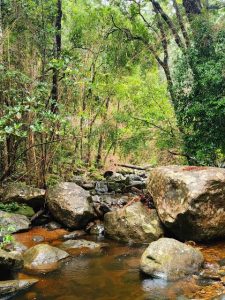
Three butterfly species — Branded Royal, Extra Lascar and Orange-spotted Grass Jewel — were recorded for the first time in Silent Valley National Park during a three-day butterfly survey that concluded recently.
- Silent Valley National Park is located in the heart of the Western Ghats in the Palakkad District of Kerala.
- This national park is part of the Nilgiri Biosphere Reserve and is one of the last undisturbed tracts of tropical rainforest in India.
- It is said to be “silent” because of the absence of the cicadas, a type of insect that produces a loud buzzing sound in many forests.
- Kunthipuzha, known as the Silent River of India, flows quietly through the park.
- Tribal Communities: Kurumba, Muduga, Irula, and Kattu Naiken.
- Plants of high medicinal value as well as the towering Culinea trees are also found here.
- The park is famous for its population of lion-tailed macaques, an endangered primate species that is endemic to the Western Ghats.
- Other notable mammals include the Nilgiri langur, Malabar giant squirrel, Indian elephant, tiger, leopard, and gaur (Indian bison).
- The park is also a paradise for bird watchers, with many species of birds, including the great Indian hornbill, Nilgiri wood pigeon, and several species of eagles and owls.
Canary Islands: In News
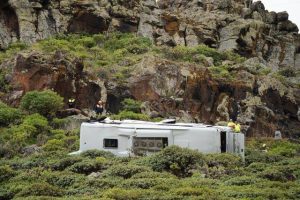
Spain’s coastguard rescued 1,488 migrants in 14 boats off the Canary Islands recently, the highest one-day total since 2020, with most landing on the small island of El Hierro.
- The Canary Islands are an archipelago located off the northwest coast of Africa in the Macaronesia region of the North Atlantic Ocean.
- Geographically, the archipelago is part of continental Africa, but politically and economically it is part of Europe.
- The archipelago is a Spanish territory and is its southernmost autonomous community.
- It is Macaronesia’s largest and most populated archipelago.
- The archipelago comprises seven major islands and numerous other minor islands or islets, divided into two groups.
- The western group consists of La Palma, Tenerife, La Gomera, Gran Canaria, and Ferro. This group is made up of mountain peaks rising directly from the deep seabed
- The eastern island group comprises Fuerteventura, Lanzarote, and six islets (the Chinijo Archipelago) that all sit on an underwater plateau, the Canary Ridge.
- It is the second-largest island in Spain and also Spain’s most populated island.
- The archipelago is the only Spanish region where a volcanic eruption has taken place in the modern era
Lakhpati Didi Initiative: In News

It was observed that, as of June 2026 Lakhpati Didi Initiative has enabled 3.76 crore Lakhpati Didis, with a target of six crore by March 2029.
- It is a flagship effort to strengthen women’s economic participation in rural India.
- It aims to improve household incomes through sustainable livelihood opportunities and enterprise development.
- It initially targeted two crore women from Self-Help Group (SHG) households. The target was subsequently increased to three crore in 2024.
- The initiative aims to create six crore Lakhpati Didis by 2029. This target was envisioned in 2026.
- The initiative builds on the institutional network of the Deendayal Antyodaya Yojana-National Rural Livelihoods Mission (DAY-NRLM).
- Objective is to encourage women to start micro-enterprises within their villages.
- Lakhpati Didi Strategy:
- Deepen, Strengthen and Expand Livelihood options : The households will be facilitated and enabled to take up diversified income-generating activities.
- Capacity Building: A Cascade Training Strategy is adopted to enable training and handholding of Potential Lakhpati Didis (SHG members) from across all States and Union Territories in India.
- Financial Assistance: DAY-NRLM serves as a catalyst, facilitating financial assistance and providing a platform for these women to thrive.
- Nodal Ministry: Ministry of Rural Development.
Eklavya Model Residential School:

The Prime Minister of India inaugurated four newly constructed Eklavya Model Residential Schools (EMRS) across Tripura on the occasion of the 151st birth anniversary of tribal freedom fighter Bhagwan Birsa Munda.
- It is a flagship intervention of the Ministry of Tribal Affairs launched in 1998.
- It aims to provide quality residential education to Scheduled Tribes students from Class 6th to 12th in remote areas to enable them to access the best opportunities in education and to bring them at par with the general population.
- The programme was revamped during the year 2018-19 to expand the geographical outreach and enhance the quality of facilities.
- EMRSs to be set up in every block with more than 50% ST population.
- The National Education Society for Tribal Students (NESTS), an autonomous organization, has been set up under the Ministry of Tribal Affairs to establish and manage EMRS across the country.
- Features of Eklavya Model Residential Schools:
- EMRSs are co-educational residential schools from Class VI to XII.
- Eklavya schools will be on par with Navodaya Vidyalayas and will have special facilities for preserving local art and culture besides providing training in sports and skill development.
- Non-ST students can be admitted in these schools on seats up to 10% of the total seats. And also reservation of 20% of seats under sports quota for deserving ST students who have excelled in the field of sports.
New Frog Species:

A team of Indian and American scientists has discovered five new species of diminutive horned frogs in Arunachal Pradesh.
New Frog Species:
- These new five frog species belongs to genus Jingophrys, commonly known as diminutive horned frogs.
- All five new species were discovered in Arunachal Pradesh.
Jingophrys taniitatii:
- It is also known as the Tanii Horned Frog, honours the Tanii tribe of the Ziro Valley region and incorporates the Apatani word ‘tatii’, meaning frogs and toads.
Jingophrys Tanogogo:
- It is also known as the Snail-eating Horned Frog.
- The species is the first snail-eating frog known from India and represents the first report of snail-eating behaviour in the frog family Megophryidae.
- The word ‘tanogogo’ for snails has also been adopted from the Apatani tribal language that is spoken in the region.
Jingophrys siangensis:
- It is known as Siang Horned Frog which is named after the Siang region,
Other two frog species: Jingophrys hrdy(Hrdy’s Horned Frog) and Jingophrys wularsoni (WuLarson’s Horned Frog) were named after anthropologist Sarah Blaffer Hrdy, medical professor Daniel Bruce Hrdy, and herpetologists.
Alzheimer’s Disease : New Study

People with diabetes could be at a 53% higher risk of Alzheimer’s disease, compared to those living without the metabolic disorder, a review of studies has found.
- Alzheimer’s Disease is a progressive neurodegenerative disorder characterized by memory loss, cognitive decline, and behavioural impairment.
- Central to its pathology is the misfolding and aggregation of amyloid-β (Aβ), which self-assembles into fibrils and deposits as extracellular plaques that trigger neurotoxic cascades leading to synaptic dysfunction and neurodegeneration.
- It is the most common cause of dementia, accounting for 60-80% of all dementia cases worldwide.
- The disease disrupts communication between brain cells, leading to a decline in cognitive and functional abilities.
- The exact cause of Alzheimer’s disease is not fully understood, but it is believed to be influenced by a combination of genetic, environmental, and lifestyle factors.
- There’s no cure for Alzheimer’s, but certain medications and therapies can help manage symptoms temporarily.
Bum La Pass:
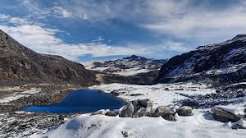
Bum La Pass at India-China border point is a culmination of history, geography and the presence of the army.
- Bum La Pass is a high-altitude mountain pass located near Tawang, in Arunachal Pradesh.
- It lies on the India–China border and is one of the most sensitive yet accessible border points that tourists can visit in India.
- During the 1962 India-China War, the Bum La sector witnessed intense fighting between Indian and Chinese forces.
- Subedar Joginder Singh, awarded the Param Vir Chakra (posthumously), fought against Chinese forces in this sector.
- The pass is also associated with the Dalai Lama’s escape from Tibet into India in 1959.
- It is an officially agreed Border Personnel Meeting (BPM) point between the Indian Army and China’s People’s Liberation Army (PLA).
Bhadra Wildlife Sanctuary:
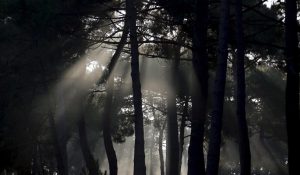
For the residents of Paradeshappana Mutt, a village inside the Bhadra Wildlife Sanctuary, love for their native land refuses to die.
- Bhadra Wildlife Sanctuary is situated in Madhya Pradesh.
- The sanctuary was established in 1978 for the conservation of blackbuck and other wildlife species, including wild boar, jackal, fox, porcupine, hyena, and sambar.
- Son River makes the southern boundary of the sanctuary.
- Natural caves and rock shelters are part of the Sanctuary.
- The sanctuary hosts a very dense cover of dry deciduous mixed forest.
- The dominant trees include Gigantic Creepers, Mango Groves, ds, Teak Trees, and many more.
- It boasts a number of wild animals, including Tiger, Panther, Deer, Sambhar, Hyenas, Chinkara, Cheetal, Wild Boar, Black Buck, along with an incredible diversity of birds.
Willow Warbler: Rare Migratory Bird
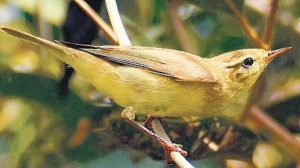
A willow warbler recorded at Kenjar grasslands near Mangaluru recently is believed to be Karnataka’s first sighting and species’ only fifth confirmed record in India.
- Willow Warbler is a very widespread insectivorous songbird.
- Scientific Name: Phylloscopus trochilus
- Willow warblers breed throughout Europe and the Palearctic, from Ireland east to the Anadyr River basin in eastern Siberia.
- They are strongly migratory, and almost all of the population winters in sub-Saharan Africa.
- They inhabit open woodlands with trees and ground cover for nesting, including most importantly birch, alder, and willow habitats.
- They also frequent gardens, orchards, hedges, and pastures.
- It measures around 11cm in length, with a wingspan of 19cm.
- It is greenish brown above and off-white to yellowish below; the wings are plain greenish-brown with no wingbars.
- Juveniles are yellower below than adults.
- It can be distinguished by their paler pinkish-yellow legs, longer, paler bill, more elegant shape, and longer primary projection (wingtip).
- Conservation Status:
- IUCN Red List: Least Concern