Today’s Current Affairs: 17th Oct 2026 for UPSC IAS exams, State PSC exams, SSC CGL, State SSC, RRB, Railways, Banking Exam & IBPS, etc
Table of Contents
10 Years of Kigali Amendment:

The Kigali Amendment to the Montreal Protocol marked its 10th anniversary on October 15, 2026, putting renewed focus on global commitments to curb potent hydrofluorocarbons (HFCs) to avert up to 0.5°C of warming by 2100.
- Kigali Amendment is a legally binding international treaty amendment to the 1987 Montreal Protocol on Substances that Deplete the Ozone Layer, mandating the gradual phase-down of the production and consumption of hydrofluorocarbons (HFCs)—potent greenhouse gases commonly used in air conditioning and refrigeration.
- Administered under the United Nations Environment Programme (UNEP) Ozone Secretariat and supported financially and technically by the Multilateral Fund for the Implementation of the Montreal Protocol.
- While the Montreal Protocol succeeded in phasing out nearly 99% of ozone-depleting substances (like CFCs and HCFCs), industry shifted to HFCs as alternatives because they do not damage stratospheric ozone.
- However, HFCs act as potent short-lived climate pollutants (SLCPs) with Global Warming Potentials (GWPs) hundreds to thousands of times greater than carbon dioxide (CO2).
- Proposed originally in 2009 by the Federated States of Micronesia and Mauritius, governments formally adopted the amendment on October 15, 2016, in Kigali, Rwanda, and it entered into legal force on January 1, 2019.
- Aim is to phase down global HFC production and consumption by more than 80% to 85% over three decades, preventing catastrophic warming and avoiding an estimated 0.3°C to 0.5°C of global temperature rise by 2100.
Key Features of the Kigali Amendment:
- Establishes a four-group architecture dividing countries into developed (non-Article 5) and developing (Article 5) tiers, giving developing nations longer transition windows to adopt alternatives.
- India (grouped under Article 5 Group 2 alongside nations like Pakistan, Iran, and Gulf states) ratified the pact in 2021; it must freeze its HFC baseline in 2028, execute an initial 10% cut by 2032, and achieve an 85% cumulative reduction by 2047.
- Unlike ozone-depleting substances that were completely eliminated, the treaty permits a residual baseline (15% to 20%) to accommodate specialized industrial, medical, and niche cooling applications where zero-GWP substitutes are unfeasible.
- Provides dedicated grant-based financing and technology transfer to developing economies to cover incremental costs, retrofit manufacturing facilities, and train service technicians.
- By driving equipment redesign toward low-GWP refrigerants (hydrocarbons, hydrofluoroolefins, ammonia), the treaty encourages simultaneous energy-efficiency improvements, which the UNEP and IEA estimate can double the climate mitigation benefits.
The National Strategic Trade Command Centre (NSTCC):
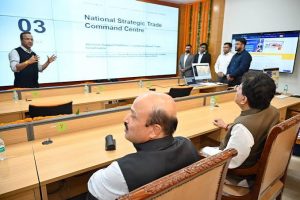
Union Minister of Commerce and Industry launched the National Strategic Trade Command Centre (NSTCC) at Vanijya Bhawan, New Delhi, establishing a unified analytics hub for trade intelligence and evidence-based governance.
- It is a centralized, high-tech trade intelligence, analytics, and data visualisation command centre designed to synthesize disparate trade data streams into a unified operational dashboard for senior policymakers and regulatory authorities.
- Developed and operated by the Department of Commerce, Ministry of Commerce and Industry, in close coordination with the Directorate General of Foreign Trade (DGFT).
- Aim is to transform international trade governance from periodic, fragmented reporting into continuous, real-time monitoring and evidence-based policy formulation, enhancing operational transparency and accelerating trade clearances.
Key Functions:
- Consolidates real-time tracking across core foreign trade administration verticals, including the Importer Exporter Code (IEC), Advance Authorisation, Export Promotion Capital Goods (EPCG) scheme, and Certificates of Origin (CoO).
- Features specialized monitoring of high-technology and dual-use items under SCOMET, tracking application pendency to facilitate rapid inter-ministerial coordination and disposal.
- Monitors the fulfillment of export obligations by beneficiaries of duty-exemption schemes, flags regulatory non-compliance, and audits processing turnaround times across Regional Authorities (RAs).
- Delivers multi-tiered analytical views dissecting national trade performance by product category, tariff line, destination market, Free Trade Agreement (FTA) utilization rate, and individual commercial enterprise.
- Interfaces with existing digital trade infrastructure—such as the DGFT portal and the Trade Connect ePlatform—with a phased architecture to integrate customs, logistics, and ministerial datasets.
India’s UNSC Bid for 2028–29:
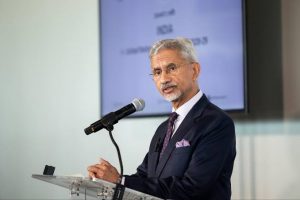
Following the conclusion of the 81st session of the United Nations General Assembly (UNGA) in New York, India has intensified its diplomatic campaign for a non-permanent seat on the United Nations Security Council (UNSC) for the 2028–29 term.
- The UNSC comprises 15 members: five permanent (P5) and 10 non-permanent members elected for staggered two-year non-consecutive terms.
- The 10 non-permanent seats are distributed geographically: African Group (3), Asia-Pacific Group (2), Latin American and Caribbean Group/GRULAC (2), Western European and Others Group/WEOG (2), and Eastern European Group (1). The Asia-Pacific seat becomes vacant once every year.
- Under the UN Charter, election to the UNSC requires a two-thirds majority of members present and voting in the 193-member UNGA, establishing an absolute minimum threshold of 129 affirmative votes if all member states vote.
- In most election cycles, regional groupings negotiate an informal candidate roster decades in advance, putting forward a single, uncontested candidate (clean slate) that passes the UNGA with overwhelming margins.
- India has served eight terms on the UNSC: 1950–51, 1967–68, 1972–73, 1977–78, 1984–85, 1991–92, 2011–12, and 2021–22.
CCRAS SPARK 5.0 and CCRAS Ayurshodh 2026:
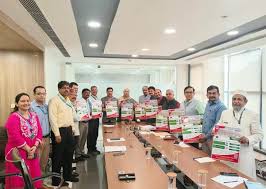
The NCISM Chairperson launched CCRAS SPARK 5.0 and CCRAS Ayurshodh 2026 to promote undergraduate research, scholarly excellence, scientific communication, and innovation in Ayurveda.
CCRAS SPARK 5.0 and CCRAS Ayurshodh 2026:
- CCRAS SPARK 5.0: The fifth edition of the Studentship Program for Ayurveda Research Ken (SPARK), offering short-term research opportunities to undergraduate Ayurveda students.
- CCRAS Ayurshodh 2026: A national research recognition initiative encouraging scientific communication, original publications, and innovative research in Ayurveda.
- Organisation: Central Council for Research in Ayurvedic Sciences (CCRAS), under the Ministry of AYUSH.
- Aim: To develop research aptitude, analytical thinking, scientific innovation, and scholarly excellence among Ayurveda students and researchers.
Key Features:
- SPARK 5.0 offers 300 studentships of ₹50,000 each for short-term independent research projects during 2026–27.
- Open to eligible third- and fourth-professional-year BAMS students studying in NCISM/Government-recognised institutions.
- SPARK registration begins on 15 October 2026, with applications closing on 15 November 2026.
- Three Ayurshodh Categories: Prabodh 3MT rewards research communication, Prakash recognises original publications, and Navonmesha promotes innovative prototypes and solutions.
- National Research Recognition: Ayurshodh provides awards and sponsored prize money, with its finals scheduled for 11 December 2026.
NASA’s Perseverance Rover Sets a New Driving Record on Mars:

NASA’s Perseverance rover has travelled 45.22 km on Mars, surpassing the previous off-Earth driving record of 45.16 km held by NASA’s Opportunity rover, demonstrating the capabilities of autonomous navigation in planetary exploration.
- It is a car-sized, six-wheeled robotic rover developed by NASA to investigate Mars’ geology, ancient habitability and potential evidence of past microbial life. It primarily explores Jezero Crater, a region believed to have contained an ancient lake and river delta billions of years ago.
- Objective is to investigate evidence of ancient microbial life on Mars, study its geology and evolution, collect rock and regolith samples for potential return to Earth, and identify environments that may have supported life.
- Perseverance uses AutoNav for autonomous navigation, the Vision Compute Element for rapid image processing, and a plutonium-238-powered Multi-Mission Radioisotope Thermoelectric Generator (MMRTG) for electricity generation.
- NASA has reported a potential biosignature in ancient rocks associated with a former river channel feeding Jezero Crater but this is not confirmation that life existed on Mars.
- NASA has extended the mission to explore the crater rim until approximately the end of 2028, although the rover may remain operational beyond this period.
- It was launched alongside its twin Spirit, landed on Mars in 2004 to investigate the planet’s geology and past conditions suitable for microbial life. It found evidence of ancient habitable conditions on Mars and operated for nearly 15 years, exceeding its planned mission duration by about 60 times.
World Food Day 2026:

On World Food Day 2026 (October 16), the heads of FAO, IFAD, and WFP emphasised technology-driven agrifood innovations to combat global hunger, highlighting India’s digital food security model.
- World Food Day is observed annually on October 16 to commemorate the founding of the Food and Agriculture Organization (FAO) in 1945 and mobilize collective global action toward ending hunger and malnutrition (SDG 2: Zero Hunger).
- The 2026 theme emphasizes that traditional agricultural practices alone cannot overcome modern climatic and economic disruptions; it calls for integrating digital farm extension, biofortification, supply-chain modernization, and blended rural finance to build inclusive, climate-resilient agrifood value chains.
Key Data / Statistics on Global andIndian Food Security:
- Around 645 million people face chronic hunger, while nearly 2.69 billion people worldwide cannot afford a healthy and nutritious diet.
- The NFSA, 2013, covers 75% of rural and 50% of urban populations, providing foodgrain entitlements to approximately 81 crore beneficiaries.
- Every $1 invested by IFAD in India has reportedly mobilised over $3 in total investment, with some private-sector-linked projects increasing rural incomes by 64%.
- Approximately 19% of food available to consumers is wasted across households, retail, and food services, contributing to economic losses and greenhouse gas emissions.
Indian Army Launches Bharat Rice:
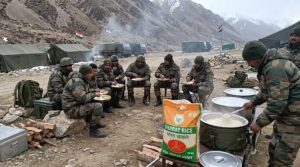
The Indian Army launched ‘Bharat Rice’ for defence personnel and signed a five-year Memorandum of Understanding (MoU) with the Food Corporation of India (FCI), to strengthen military logistics and operational preparedness.
- Bharat Rice is a superior-quality rice initiative developed based on feedback from troops, with rice supplied according to prescribed defence specifications to improve ration quality and logistical efficiency.
- Objective is to improve ration quality, ensure timely replenishment and strengthen military preparedness, especially during emergencies and rapid mobilisation.
Supply Mechanism: Rice will be delivered directly to Army supply depots, including those in remote areas of Ladakh and the Northeast, reducing the need for depots to collect supplies from local FCI facilities. - Role of NAFED: The National Agricultural Cooperative Marketing Federation of India (NAFED) will supply the rice during the financial year 2026–27.
- Packaging and Quality Control: Rice will undergo quality checks and be supplied in 10-kg and 30-kg bags. Ergonomic packaging will facilitate handling and transportation in difficult terrain.
- The agreement gives the Army access to FCI’s warehousing infrastructure, modern silos, trained manpower and material-handling equipment during operational contingencies.
- It will remain valid for five years, with an option to extend it by mutual consent.
- The initiative strengthens military supply chains in forward areas, reflecting lessons from Operation Sindoor about the importance of resilient logistics during short-warning or zero-warning military contingencies.
IMD Launches Interactive Cyclone Warning and Marine Weather Platform:
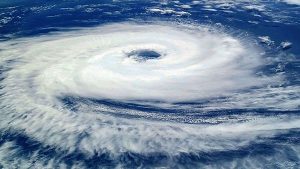
The India Meteorological Department (IMD) launched an interactive Cyclone Warning and Marine Weather Services Decision Support System(DSS) to strengthen cyclone preparedness and support timely decision-making.
- DSS is a WebGIS-based platform providing interactive maps and visualisations of cyclone-related hazards, including cyclone tracks, intensity forecasts, wind distribution, rainfall warnings, storm surge information and rainfall forecasts for river catchments.
- The launch coincided with the anniversaries of the landfalls of Very Severe Cyclonic Storms Phailin (2013) and Hudhud (2014), whose successful forecasting marked important milestones in India’s cyclone early-warning capabilities.
- It provides location-specific hazard information to disaster management authorities, government agencies and the public to improve preparedness and reduce losses.
- The platform is accessible through IMD and Regional Specialised Meteorological Centre((RSMC) websites and IMD’s Decision Support System.
- IMD’s biannual Pre-Cyclone Exercise Meeting, conducted since 2008, brings together disaster management authorities, defence forces, coastal states, fisheries departments and scientific organisations to review cyclone preparedness.
- The platform enables location-specific early warnings, supports evacuation planning and disaster risk reduction, and improves coordination among forecasting agencies, disaster management authorities and other stakeholders.
Jeypore Ground Gecko:

Herpetologists raised concern that a bauxite mining project in Odisha threatens the future of rare Jeypore ground gecko (Cyrtodactylus jeyporensis).
- Jeypore Ground Gecko is a reptile found in India.
- It is also known as the Jeypore Indian gecko or the Patinghe Indian gecko.
- It was originally described as far back as 1878 by the British naturalist Richard Henry Beddome.
- The nocturnal gecko, with a comparatively large head, and a yellow-orange body.
- It inhabits semi-evergreen forests.
- It is a relatively range-restricted species that is only found in high-elevation (900–1,400 metres) forests in the northern Eastern Ghats of southern Odisha and northern Andhra Pradesh.
- Threats: Habitat loss and degradation, forest fires, tourism, quarrying and mining activity among the reasons for the species’ decline.
- Conservation Status:
- IUCN Red List: Endangered
- CITES: Appendix II
Magnesium Hydridomethylzincate:

Scientists at the Indian Institute of Science Education and Research, Thiruvananthapuram, have developed a chemical compound named magnesium hydridomethylzincate.
- Magnesium Hydridomethylzincate is a crystalline, hydride-rich organometallic compound that does not rely on bulky supporting ligands.
- It is a compound of magnesium, zinc, hydrogen, and carbon.
- Under solvent-free, anaerobic conditions, it releases hydrogen and methane at temperatures as low as 80°C via reductive elimination, leaving behind elemental magnesium and zinc.
- When the compound was heated in solution to 100° C, it releases hydrogen.
- It is a solid at room temperature.
- It is revealed that each unit of the compound’s paired molecular structure could produce two molecules each of hydrogen and methane.
- It is established that methane emerged before hydrogen, indicating the compound was releasing the gases through successive chemical reactions.
- This organometallic compound could potentially provide molecular platforms for the storage and controlled release of fuel gases.
- It could offer an alternative to transporting methane and hydrogen as compressed gases.
Combined Task Force 154:
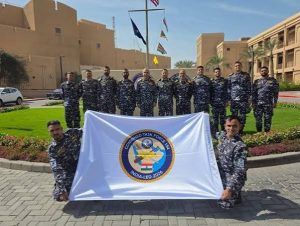
The Indian Navy is scheduled to hand over command of Combined Task Force 154 (CTF 154) at a ceremony in Manama, Bahrain.
- Combined Task Force 154 is the Combined Maritime Forces’ (CMF) dedicated multinational maritime training task force.
- It was established in 2023.
- It is dedicated to enhancing maritime security through multinational training programs across the Middle East and the wider region.
- It operates alongside CMF’s other task forces: CTF 150 (Maritime Security), CTF 151 (Counter-Piracy), CTF 152 (Maritime Security in Arabian Gulf) and CTF 153 (Maritime Security in Red Sea).
- The training focuses on five core pillars: Maritime Domain Awareness (MDA), Law of the Sea, Maritime Interdiction Operations, Maritime Rescue and Assistance, and Leadership Development.
- It focuses on professional training and capacity building to strengthen interoperability and operational readiness among the nations associated with the maritime partnership.
- CTF 154 trains partner navies and improve operational capabilities to enhance maritime security in the Middle East.
- India joined the Combined Maritime Forces as an associate partner in 2022 and became a full member in 2023.
World Health Summit 2026:

The WHO Director-General election process ignited its first public candidate conversation on Sunday (11 October) at the 2026 World Health Summit in Berlin recently.
- World Health Summit (WHS) is an international, multi-stakeholder global health forum.
- The event takes place annually in the German capital Berlin.
- It is organized by the WHS Foundation GmbH, a 100% subsidiary of Charite – Universitätsmedizin Berlin.
- Founded in 2009, it brings together global health stakeholders from all sectors and regions to catalyze collaborative and innovative solutions for key global health priorities.
- Key topics include pandemic preparedness, global digital health integration, climate change impacts, and healthcare equity.
- In addition to the conference in Berlin, the WHS features annual WHS Regional Meetings held in different parts of the world as well as activities throughout the year.
- It is distinct from the World Health Assembly, the decision-making body of the World Health Organization (WHO).
- WHS 2026:Theme: “From Crisis to Resilience: Innovating for Health”
Exercise Cambrian Patrol 2026 (CP26):

Indian Army’s Assam Regiment troops recently won the Gold Medal at the Exercise Cambrian Patrol 2026, held in Wales, United Kingdom.
- Exercise Cambrian Patrol is the British Army’s premier military patrolling event.
- The exercise is designed to enhance operational capabilities by subjecting participating teams to highly demanding military tasks and assessments.
- It is widely known as the “Olympics of Military Patrolling.
- It is held annually in Wales and hosted by Headquarters 160th (Welsh) Brigade.
- The exercise has been running for over 60 years and is the British Army’s principal All Arms Patrol Exercise.
- It is usually run over 9-10 days in October each year.
- It is open to regular and reserve personnel from all three British armed services, as well as military units from other countries.
- It is a mission focused and scenario-based
- It is not a competition, although patrol performance is assessed throughout based on the Battlecraft Syllabus (BCS) and Individual Training Requirement (ITR), in addition to robustness and leadership.
- The exercise is currently made up of eight phases, each of 48 hrs, over 10 days.
- Each patrol will cover approximately 60 km (average climb and descent is over 1000 m) carrying no more than 32 kg per person.
- The Indian Army’s Assam Regiment won a Gold Medal in CP26, one of 10 teams awarded gold among more than 100 teams.