
Today’s Current Affairs: 18th Aug 2026 for UPSC IAS exams, State PSC exams, SSC CGL, State SSC, RRB, Railways, Banking Exam & IBPS, etc
Table of Contents
Green India Mission:

The Comptroller and Auditor General (CAG) have flagged major shortcomings in the implementation of the Green India Mission (GIM).
- It was launched in the year 2014 as a Centrally Sponsored Scheme.
- It is one of the eight Missions under the National Action Plan on Climate Change (NAPCC).
- It aims at protecting, restoring and enhancing India’s forest cover and responding to climate change through adaptation and mitigation measures.
- Its objectives include improving ecosystem services such as biodiversity, water and carbon sequestration, as well as increasing means of forest-based livelihood.
- The mission envisages increasing forest and tree cover over 5 million hectares and improving the quality of forest/tree cover over another 5 million hectares.
- Enhanced annual CO2 sequestration by 50 to 60 million tonnes.
- India has committed to creating an additional carbon sink of 2.5-3 billion tonnes of CO2 equivalent by 2030 through additional forest and tree cover.
- Nodal Ministry: Ministry of Environment, Forest and Climate Change
Foreign Assets of Small Taxpayers – Disclosure Scheme:

The government has notified a one-time voluntary disclosure scheme, Foreign Assets of Small Taxpayers – Disclosure Scheme (FAST-DS).
- It is a one-time voluntary disclosure scheme contained in Chapter IV of the Finance Act, 2026.
- It enables eligible taxpayers to declare certain undisclosed foreign assets, undisclosed foreign income, or undeclared foreign assets on payment of a specified tax or fee.
- Asset includes immovable property, jewellery, artistic work, shares, securities or any other asset or income,
- The scheme applies to two broad categories of asset or income
- Category 1: An undisclosed foreign asset or foreign income that was not previously offered to tax, the aggregate value must not exceed ₹1 crore. Under this, taxpayers need to pay 30% of fair market value of assets or 30% of undisclosed income as tax and 30% as additional income tax in lieu of penalty in order to get immunity from prosecution.
- Category 2: It covers foreign assets that were already offered to tax or acquired when the taxpayer was a non-resident but were not reported in the relevant tax-return schedule. The threshold for such declarations is ₹5 crore. For this category, immunity from both penalty and prosecution is available with the fee payment of Rs 1 lakh.
- Taxpayers making valid declarations will receive immunity from any further tax or penalty and from prosecution under the Black Money (Undisclosed Foreign Income and Assets) and Imposition of Tax Act, 2015.
Mount Ararat:

A German-Turkish research team conducted the first survey of Mount Ararat’s glacier in eastern Turkey recently.
- Mount Ararat is a volcanic massif located in extreme eastern Turkey.
- It overlooks the point at which the frontiers of Turkey, Iran, and Armenia converge.
- It is the highest mountain in the Armenian Highlands.
- It is the highest mountain in Turkey.
- The dormant volcano is also known as Mount Agri and Mount Masis.
- It is actually part of two snow-capped peaks, named Greater Ararat and Lesser Ararat.
- Both Great and Little Ararat are the product of eruptive volcanic activity.
- Neither retains any evidence of a crater, but well-formed cones and fissures exist on their flanks.
- The only true glacier is found on the northern side of the Great Ararat, near its summit.
Leucas droupadiae: Plant species

Botanists recently discovered a previously unknown plant species named growing along the sandy shores of the Coromandel Coast.
- Leucas droupadiae is a new species of plant belonging to the mint family (Lamiaceae).
- It was discovered along the sandy shores of the Coromandel Coast during a survey of the coastal dunes in the Cuddalore district of Tamil Nadu.
- It thrives in nutrient-poor, sandy habitats.
- While most similar plants in this family grow as creeping vines or branched bushes with deep taproots, this new species stands upright as a single, unbranched stem, reaching only about 15 centimeters in height.
- It anchors itself into the sands using a shallow web of fibrous roots rather than a single thick root.
- Most distinctively, the plant produces oblong fruit, known as nutlets that are a golden yellow and covered in irregular dark brown spots.
- The scientists have named the plant in honour of Smt. Droupadi Murmu, the 15th President of India.
- Because of its limited range, the species has been provisionally labelled as “Data Deficient”.
India’s Lunar Future:
At the ninth India-U.S. Civil Space Joint Working Group meeting held at ISRO headquarters in Bengaluru, NASA formally invited the Indian Space Research Organisation (ISRO) to participate in its permanent ‘Moon Base’ programme under the Artemis Accords framework.
- India’s lunar trajectory is transitioning from robotic exploratory landings to sustained, crewed lunar surface infrastructure and long-term scientific utilization.
- Situated at the intersection of deep-space science, commercial partnerships, and geopolitical competition, it involves navigating between U.S.-led frameworks (Artemis and the Moon Base) and China-Russia coalitions (such as the International Lunar Research Station) while preserving national strategic autonomy.
- NASA Moon Base Collaboration: Formal participation invitation to build modular surface infrastructure near the lunar South Pole, leveraging water-ice reserves and extended sunlight areas.
- Gaganyaan Human Spaceflight Alignment: Deepened collaboration where NASA assists in training Indian astronaut candidates for human spaceflight missions.
- NASA-ISRO Payload Synergy: Integration of scientific instruments across forthcoming Chandrayaan missions, building upon the joint NASA-ISRO Synthetic Aperture Radar (NISAR) deployment.
- Multilateral Engagement via BRICS Space Forums: Hosting meetings with non-Artemis spacefaring nations (including China) to retain diverse international research ties.
National Consumer Dispute Redressal Commission:
The Supreme Court expressed concern over the pending cases in the National Consumer Dispute Redressal Commission and asked the Centre to consider setting up regional and circuit benches to clear the backlog.
- National Consumer Dispute Redressal Commission is a quasi-judicial commission set up in 1988 under the Consumer Protection Act of 1986.
- It is to provide inexpensive, speedy, and summary redressal of consumer disputes.
- The Commission is headed by a sitting or a retired Judge of the Supreme Court of India or a sitting or a retired Chief Justice of High Court.
- It shall have jurisdiction to entertain a complaint valued more than two crore and also have appellate and revisional jurisdiction from the orders of State Commissions or the District fora as the case may be.
- The provisions of this act cover ‘goods’ as well as ‘services’.
- Any person aggrieved by an order of NCDRC, may prefer an appeal against such an order to SC within a period of 30 days.
- Its head office is located in New Delhi.
- A complaint may be filed by the following:
- A consumer
- Any voluntary consumer association registered under the Companies Act 1956
- The Central Government or any State Government
- One or more consumers where there are numerous consumers.
Central Electricity Authority (Cyber Security in Power Sector) Regulations, 2026:

The Central Electricity Authority (CEA) has notified the comprehensive Central Electricity Authority (Cyber Security in Power Sector) Regulations, 2026 under the Electricity Act, 2003, coming into force from April 1, 2027.
- A statutory regulatory framework formulated by the CEA under Section 177 read with Section 73(c) of the Electricity Act, 2003 (with formal concurrence from the Ministry of Electronics and Information Technology – MeitY).
- It establishes binding cyber defense standards for entities owning, managing, or operating Operational Technology (OT) and interconnected Information Technology (IT) systems across India’s power sector.
- Aim is to build institutional cyber resilience across the Indian power sector, protect Critical Information Infrastructure (CII) and Industrial Control Systems (ICS) from external sabotage, prevent supply chain vulnerabilities, and ensure secure, uninterrupted electricity generation, transmission, and distribution.
Key Features of the Regulations:
- Broad Sectoral Scope & Generation Thresholds: Applies to all transmission utilities, distribution licensees, load dispatch centers, power exchanges, and OTC platforms.
- For generating companies, captive plants, and Energy Storage Systems (ESS), it applies to installations with a capacity of 50 MW and above.
- Institutional Governance (CISO & 24/7 Security Division): Mandates the appointment of a regular senior-level Chief Information Security Officer (CISO) and an Alternate CISO for a minimum 3-year tenure, supported by a dedicated, 24/7 operational Information Security Division within India.
- Physical & Logical IT-OT Network Isolation: Requires strict physical segregation of Operational Technology (OT) and Critical Information Infrastructure (CII) from the public Internet and general IT networks.
- Strict Incident Reporting Timelines: Mandates reporting of all cybersecurity incidents to CSIRT-Power and CERT-In within 6 hours, while incidents classified as cyber sabotage in critical systems must be reported within 24 hours.
- Rigorous Audit Cycles & Vulnerability Closure: Pre-commissioning audits (VAPT) are mandatory for new critical systems. Annual audits must have a 9-to-15 month gap.
- Identified critical/high-risk vulnerabilities must be resolved within 1 month, and medium/low-risk issues within 3 months.
- Data Localization & Domestic Security Perimeter: Sensitive operational and historical grid data—including information hosted on cloud platforms—must be encrypted, protected, and stored exclusively within India.
- Supply Chain Security & Prosumer Distributed Resources: Hardware and software must be procured from trusted sources, complete with a Software/Hardware Bill of Materials (BoM). Vendors of prosumer Distributed Generation Resources must ensure end-to-end encrypted communications and local data hosting.
The Mines and Minerals (Development and Regulation) Amendment Bill, 2026:
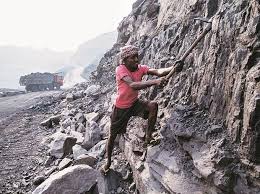
The Mines and Minerals (Development and Regulation) Amendment Bill, 2026 was introduced in Parliament to establish a uniform, Centre-directed fiscal framework for mining and restrict state-level taxes on mineral rights and mineral-bearing lands.
The Mines and Minerals (Development and Regulation) Amendment Bill, 2026:
- The MMDR Amendment Bill, 2026 amends the principal Mines and Minerals (Development and Regulation) Act, 1957 to curb multiple, cascading state levies and establish central conditions on mineral taxation.
- It responds to the Supreme Court’s 2024 nine-judge Constitution bench ruling in Mineral Area Development Authority (MADA) v. SAIL, which recognized the constitutional power of states to tax mineral rights and mineral-bearing lands, while holding that royalty is not a tax.
Key Features of the Bill:
- Union Regulation of Mineral-Bearing Lands: Amends Section 2 of the MMDR Act to explicitly extend the Central Government’s regulatory control over “mineral-bearing lands” as per prescribed parameters.
- Capping State Levies (New Section 9D): Prohibits state governments from imposing any tax, cess, or levy on mineral rights or mineral-bearing lands (whether based on quantity, value, or royalty) except in accordance with conditions or restrictions prescribed by the Centre.
- Retrospective Invalidation of Unpaid Levies: Declares that all unpaid or unrecovered dues of state levies on mineral rights and lands from before the commencement of the amendment are deemed invalid.
- No Refund on Deposited Amounts: Specifies that state taxes or cesses already collected or deposited by mining companies prior to the amendment will not be refunded.
- Delegated Rule-Making Power (Section 13): Empowers the Central Government to frame executive rules specifying the exact parameters, conditions, and ceilings under which states can levy mineral taxes.
The National Anubhav Awards:

Union Minister of State for Personnel, Public Grievances and Pensions, Dr. Jitendra Singh, will confer the National Anubhav Awards 2026 at the 9th National Anubhav Awards Ceremony held at Vigyan Bhawan, New Delhi.
- The Anubhav Awards are annual national honors instituted by the Government of India to recognize and reward outstanding write-ups and case studies submitted by retiring or retired government personnel on the online ‘Anubhav’ portal, documenting their institutional knowledge, administrative innovations, and field experiences.
- Nodal Department: Department of Pension and Pensioners’ Welfare (DoPPW), Ministry of Personnel, Public Grievances and Pensions.
- The online Anubhav Portal (launched in 2015).
- Aim is to preserve institutional memory, document governance best practices, and capture the rich operational knowledge of retiring employees to guide future policymaking, administrative reforms, and good governance.
Eligibility Criteria:
- Target Employees: Retiring/retired employees of Central Government Ministries/Departments, Central Public Sector Enterprises (CPSEs), and 12 Public Sector Banks (PSBs).
- Submission Window: Open to employees who are retiring within the next 8 months or pensioners who have retired within the past 3 years.
- Consideration Period: All write-ups published on the Anubhav Portal within the preceding financial year are evaluated.
Key Features of the Scheme:
- Structured Digital Repository: Functions through a dedicated digital archive where retiring personnel submit structured essays across themes like project execution, public service delivery, process streamlining, and policy reforms.
- Recognition ofHigh-Impact Governance: Rewards contributions to major national projects—such as the rollout of Passport Seva Kendras, administrative rule simplification, energy conservation drives, and public accounting automation.
- Rigorous Multi-Tier Evaluation: Submissions undergo departmental screening and assessment by an independent national jury, culminating in Medals, Citations, and Jury Certificates.
- Integration withPensioner Welfare Services: The awards ceremony is held alongside Pre-Retirement Counselling workshops, Pension Disbursing Bank exhibitions, and the launch of pensioner welfare tools like the Pension Mitra handbook and Nationwide Digital Life Certificate (DLC) campaigns.
Reform Utsav:
The Union Government plans to launch a three-month “Reform Utsav” campaign, likely from October 2, 2026, to systematically capture citizens’ suggestions and translate them into actionable governance reforms.
- Reform Utsav is a proposed citizen-driven governance reform campaign aimed at creating an institutional mechanism through which citizen feedback is identified, deliberated upon and converted into implementable reforms.
- It seeks to establish a continuous pipeline connecting citizen voice → actionable reform → implementation or committed roadmap.
- Organisation:
- Coordination Committee: To be headed by Cabinet Secretary T. V. Somanathan.
- State Participation: Chief Secretaries are being consulted to establish State-level bodies and designate nodal officers.
- The campaign is expected to run for three months, beginning on October 2, 2026, coinciding with Mahatma Gandhi’s birth anniversary.
- Aim is to institutionalise citizen participation in governance and create a responsive mechanism for identifying, prioritising and implementing administrative and structural reforms.
Key Features:
- Jan Manthan – Discover: Citizens will submit reform suggestions through a dedicated portal, supplemented by public meetings, webinars and outreach programmes.
- AI-Assisted Feedback Processing: Artificial Intelligence will help classify and organise citizen suggestions, while a multilingual call centre may improve accessibility.
- Vimarsh – Deliberate: Suggestions will be evaluated to identify “quick-win” reforms and develop roadmaps for more complex structural reforms.
- Samadhan & Sankalp Siddhi – Resolution: A coordination committee will undertake bi-weekly reviews to track implementation and progress on identified reforms.



