
Today’s Current Affairs: 18th jul 2026 for UPSC IAS exams, State PSC exams, SSC CGL, State SSC, RRB, Railways, Banking Exam & IBPS, etc
Table of Contents
Ana Sagar Lake:
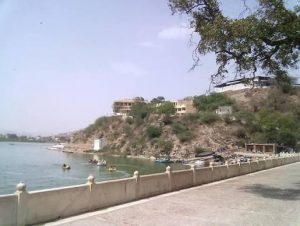
A large number of fish have perished in Rajasthan’s historic Ana Sagar, the lake located in the heart of Ajmer city, in the past few days.
- Ana Sagar Lake is an artificial lake located in Ajmer, Rajasthan.
- It was built by raising a dam across the Luni or Lavanavari River.
- It was built by Arnoraja Chauhan, the grandfather of Prithviraj Chauhan, in 1135–1150 AD and was named after him.
- The arresting Pavilions, or “Baradari” that are nearby the lake were constructed in 1637 by the Mughal emperor Shahjahan.
- The Baradari is essentially a marble stone pavilion.
- The “Daulat Bagh Gardens” that surrounds the lake were established by Mughal sovereign Jehangir.
- There is an island in the center of the lake, which is accessible by boat.
- The circuit residence that’s placed on the hilltop in the vicinity of the lake once served as the British Residency.
Legionnaires’ Disease:
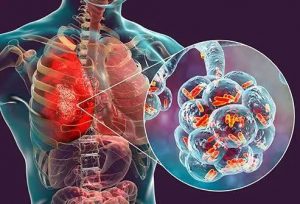
Legionnaires’ disease outbreak in New York City recently claimed its first life, with at least 67 people falling ill and dozens needing hospital care.
- Legionnaires’ Disease is a severe form of a lung infection (pneumonia) caused by a bacterium known as legionella.
- The name comes from a 1976 outbreak among people attending an American Legion convention in Philadelphia, where the disease was first identified.
- Legionella can also cause Pontiac fever. This is a milder, flu-like illness that doesn’t infect your lungs.
- Legionella is found naturally in freshwater, such as lakes and rivers. It can also be found in soil.
- But people usually only get sick from it when it grows and spreads in man-made water systems.
- These systems can include hot tubs, fountains, and the plumbing systems of large buildings, such as hotels or nursing homes.
- Most people catch Legionnaires’ disease by breathing in mist or small drops of water that contain the bacteria.
- You usually can’t get infected by drinking water that contains the bacteria unless you aspirate it (accidentally breathe the water into your lungs).
- It is not contagious, meaning it does not spread from person to person.
- Older adults, people with weakened immune systems, and people who smoke have a higher risk of getting Legionnaires’ disease.
- Treating right away with antibiotics most often cures Legionnaires’ disease.
- But some people still have problems after t
- Currently, there is no vaccine available for LD.
Investment Friendliness Index (IFI) 2026:

Gujarat has emerged as India’s most investment-friendly state in Niti Aayog’s first-ever Investment Friendliness Index (IFI) 2026, followed by Maharashtra and Tamil Nadu.
Highlights of IFI 2026:
- 5 states were identified as top performers: Gujarat, Maharashtra, Tamil Nadu, Goa, and Odisha.
- 15 States have been classified as Frontrunners, while 8 States/UTs have been placed in each of the Emerging Performers and Aspiring States categories.
- Among the large states, Gujarat secured the first rank, followed by Maharashtra and Tamil Nadu, which are also the top three performers in the overall Index.
- In the Hilly and Northeastern States category, Uttarakhand emerged as the highest-ranked State, followed by Assam and Himachal Pradesh.
- Among the City States and Union Territories, Goa secured the top position, followed by Delhi and Chandigarh.
- It is the country’s first IFI released by the NITI Aayog.
- It assesses how well Indian states and Union Territories are positioned to attract investments.
- It covers all 28 states and 8 Union Territories and evaluates investment attractiveness across the following eight pillars: Infrastructure,Business climate,Resources,Government policy,Regulatory Ease,Institutional Environment,Financial Health; and Environmental Resilience
- The framework comprises 84 indicators, incorporating both secondary data and perception-based measures derived from a primary survey of investors.
- The index uses a 100-point scale and serves as a benchmark for states to improve their investment environment.
- Each state has scored on different aspects using a mix of primary surveys and publicly available data.
- Based on overall scores, States and Union Territories have been classified into four performance categories:
- Top Performers (scores above 50)
- Frontrunners (45–50)
- Emerging Performers (≥40 – <45)
- Aspiring States (below 40)
- States and Union Territories have also been assessed within three peer groups – Large States, Hilly and Northeastern States, and Union Territories and City States.
Naying Hydroelectric Project: In News
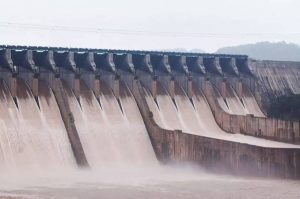
The Centre recently granted environmental clearance to the 1,000 MW Naying Hydro Electric Project in Arunachal Pradesh.
- Naying Hydroelectric Project is a proposed 1,000 MW hydropower project planned on the Siyom (Yomgo) River in the West Siang district of Arunachal Pradesh.
- It is a run-of-the-river project.
- The project includes the construction of a concrete dam, an underground powerhouse, and tunnels, with work expected to begin around 2028 and commissioning planned for 2032.
- It will be implemented by the North Eastern Electric Power Corporation (NEEPCO), a Miniratna Schedule ”A” Government of India enterprise under the Ministry of Power.
- Siyom River is a right-bank tributary of the Brahmaputra
- It is a river in Arunachal Pradesh that flows through the West Siang region.
- The Mouling National Park is located on the east bank of the river.
Two New Spider Species:
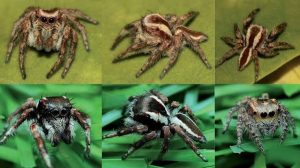
Scientists at the Zoological Survey of India (ZSI) have officially documented two newly discovered spider species named Simonia lawbah and Hamataliwa papikonda from contrasting and highly specialised ecosystems in Meghalaya and Andhra Pradesh.
Simonia lawbah :
- It is a new species of cave-dwelling ray spider.
- It was found inside Krem Lawbah Cave in Meghalaya.
- It belongs to the Theridiosomatidae family, commonly known as Ray Spiders. It marks the first-ever record of the genus Simonia in India.
- Measuring less than two millimetres, this tiny cave-dwelling spider is specially adapted to life in perpetual darkness.
- Scientists describe it as troglophilic, meaning it thrives in cave environments while retaining the ability to survive outside them under suitable conditions.
- Its most fascinating feature is the construction of an intricate cone-shaped “ray web.”
- These “ray webs” function like miniature slingshots, allowing the spider to launch its web at high speed to trap flying insects.
Hamataliwa papikonda:
- It is a new species of lynx spider.
- It was recorded in the mixed deciduous forest canopy of Papikonda National Park in Andhra Pradesh.
- It represents the first documented occurrence of the genus Hamataliwa in Andhra Pradesh.
- Measuring just under 5 mm, the yellow-bodied spider belongs to the lynx spider family Oxyopidae and is an active predator that does not build webs.
- Instead, it relies on speed, agility and its spiny legs to capture prey.
- It has a distinctive hexagonal arrangement of eight eyes, which helps it track and hunt insects with precision.
National Commission for Minorities : New Chairman

The Centre appointed Harjit Singh Grewal as the Chairperson of the National Commission for Minorities (NCM).
- National Commission for Minorities is a statutory body under the Ministry of Minority Affairs.
- In January 1978, the government set up the Minorities Commission to safeguard the interests of minorities.
- With the enactment of the National Commission for Minorities Act, 1992, the Minorities Commission became a statutory body and was renamed as the National Commission for Minorities.
- NCM is responsible for advising the central and state governments on matters related to the welfare and development of minority communities in India.
- Initially, five religious communities-Muslims, Christians, Sikhs, Buddhists, and Zoroastrians (Parsis)-were notified as minority communities by the Union Government.
- Further, with the 2014 notification, Jains were also notified as another minority community.
- The Commission consists of Chairperson, Vice-Chairperson, Five Members
- The Chairperson, Vice-Chairperson, and five Members are nominated by the Central Governmentfrom amongst persons of eminence, ability and integrity.
- Provided that five Members, including the Chairperson, shall be from amongst the minority communities.
- Each Member holds office for a period of three years from the date of entering the office
- The main functions of the Commission are:
- Evaluate the progress of the development of minorities under the Union and states.
- Monitor the working of the safeguards for minorities provided in the Constitution and in laws enacted by Parliament and the state legislatures.
- Make recommendations for the effective implementation of safeguards for the protection of the interests of minorities by the central government or state governments.
- Look into specific complaints regarding deprivation of rights and safeguards of the minorities and take up such matters with the appropriate authorities.
- Cause studies to be undertaken into the problems arising out of any discrimination against minorities and recommend measures for their removal.
- Conduct studies, research, and analysis on the issues relating to the socio-economic and educational development of minorities.
- Suggest appropriate measures in respect of any minority to be undertaken by the central government or state government.
- Make periodical or special reports to the central government on any matter pertaining to minorities and, in particular, difficulties confronted by them.
- Any other matter which may be referred to by the central government.
Pallikaranai Marshland: In News
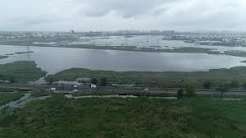
Decades of urbanisation and indiscriminate dumping have reduced the Pallikaranai marsh to a fraction of its original extent.
- Pallikaranai Marshland is a freshwater marsh and partly saline wetland situated about 20 kilometres south of the city of Chennai, Tamil Nadu.
- It serves as an aquatic buffer of the flood-prone Chennai and Chengalpattu districts.
- It encompasses many wetlands, through two outlets, viz., Okkiyam Madavu and the Kovalam Creek, and falls into the Bay of Bengal.
- On its eastern periphery, the Marsh is flanked by the Buckingham Canal.
- It is one of the Ramsar sites in India.
- The diverse ecosystem of the marshland supports bird species, mammals, reptiles, amphibians, fish, molluscs, crustaceans, and butterfly species.
- These include notable species such as Russell’s viper (Daboia siamensis) and birds such as the glossy ibis (Plegadis falcinellus), grey-headed lapwings (Vanellus cinereus), and Pheasant-tailed jacana (Hydrophasianus chirurgus).
- It continues to face significant anthropogenic pressures, including encroachments and sewage discharge.
Amrit Bharat Station Scheme : In News
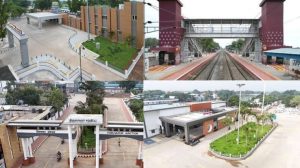
The Prime Minister of India virtually inaugurated 75 redeveloped railway stations across 20 states under the Amrit Bharat Station Scheme (ABSS).
- Amrit Bharat Station Scheme was launched in 2022 by the Ministry of Railways which aims at development and upgradation of railway stations over the Indian Railways (IR) network.
- The scheme envisaged development of stations with a long term vision.
- The policy is based on Master Planning for long term and implementation of the same as per needs and demand of the station to station.
- The ABSS has a long-term vision that involves creating master plans, promoting multimodal connectivity, better station accessibility for passengers, etc.
- The goal is to make stations cleaner, more comfortable, and easier to use.
- Features of Amrit Bharat Station Scheme
- It includes proving entry and exit points, waiting halls, toilets, platforms, and roofing. Facilities like lifts, escalators, and free Wi-Fi are added wherever needed.
- Local products will be sold at kiosks under the ‘One Station One Product’ scheme, and efforts will be made to make stations look greener and more attractive.



