
Today’s Current Affairs: 19th jun 2026 for UPSC IAS exams, State PSC exams, SSC CGL, State SSC, RRB, Railways, Banking Exam & IBPS, etc
Table of Contents
The National Statistical Commission:
The Appointments Committee of the Cabinet (ACC) officially approved the appointment of Dr. Saibal Chattopadhyay as Chairperson, along with three prominent domain experts as part-time members of the National Statistical Commission (NSC).
- The National Statistical Commission (NSC) is an empowered, autonomous advisory body created to serve as the nodal agency for all core statistical activities across India.
- It functions as a centralized regulatory authority designed to insulate official data collection from external influence while setting nationwide benchmarks for data collection and distribution.
- The government constituted a high-level expert commission in January 2000 under the chairmanship of Dr. C. Rangarajan to review the entire Indian Statistical System.
- In line with these recommendations, the Government of India passed an executive resolution on June 1, 2005, officially creating the NSC.
- The Commission formally took effect and began its mandate on July 12, 2006.
Governance Structure:
- The Executive Leadership: The commission features a part-time Chairperson alongside four part-time Members selected for their specialization and technical experience in statistical fields, operational research, and computer science.
- Ex-Officio Institutional Representation: The CEO of NITI Aayog serves as a permanent, ex-officio Member to align statistical planning with national development strategies.
- The Secretariat: The Chief Statistician of India (CSI)—who heads the National Statistical Office and acts as the Secretary to the Government of India within the Ministry of Statistics and Programme Implementation (MoSPI)—serves as the formal Secretary to the NSC.
Key Functions:
- Responsible for evolving comprehensive national policies, setting strategic priorities, and refining concepts, definitions, and classification methodologies across all branches of official statistics.
- Establishes and monitors strict national quality benchmarks for core socio-economic indices—such as inflation metrics, industrial production data, and national income accounts.
- Spearheads horizontal coordination between ministries and departments of the Central Government, while managing vertical cooperation with State Governments and Union Territory Administrations.
- Empowered to execute comprehensive statistical audits over data compilation methodologies to verify the quality and structural integrity of national data products.
- Monitors and reviews the functioning of the broader statistical system against established methodologies, recommending structural improvements to enhance performance.
Kashmir Saffron:

The ongoing crisis in West Asia, coupled with a sharp decline in saffron output from Iran has resulted in the demand for Kashmiri saffron.
- Kashmir Saffron is often called “red gold” for its distinctive aroma, flavour, and natural colouring properties.
- It is primarily cultivated in Pampore and nearby regions of South Kashmir.
- It has secured Geographical Indication (GI) tagin 2020.
- The saffron plant produces purple flowers with bright orange to red stigmas, which are carefully dried to obtain the highly valued spice.
- The saffron available in Kashmir is of three types: Lachha Saffron, Mongra Saffron and Guchhi Saffron
- It grows at an elevation of 1,500-2,000 m above mean sea level.
- Saffron cultivation requires explicit climatic conditions with temperatures ranging from not more than 35 degree Celsius or 40 degree Celsius in the summer to about -15 degree Celsius or -20 degree Celsius in the winter.
- It can be grown in dry, moderate and continental climate types.
- It thrives on loamy, sandy, and calcareous soils.
- Saffron grows best on acidic soil. It thrives well when the soil pH is 5.5 to 8.5.
- In India around 90% of saffron production comes from Kashmir, where it has been grown for centuries.
World Gold Council:

The World Gold Council’s (WGC) 2026 Central Bank Gold Reserves (CBGR) survey indicated that the central banks around the world would accumulate more gold in the future.
- World Gold Council is a nonprofit association of the world’s leading gold producers formed in 1987.
- It is a market development organization for the gold industry which includes 29 major gold mining companies.
- It aims to maximize the industry’s potential growth by monitoring and defending existing gold consumption.
- It achieves this by setting up gold standards, proposing policies, ensuring fairness and sustainability in the gold mining industry, and promoting the usage and demand for gold for individuals, industries, and institutions.
- The WGC is also the global authority on gold, and they offer comprehensive analyses of the industry.
- The most famous publications are quarterly reports on the gold market and gold demand trends analyzed by both sector and geographical location.
- It also co-sponsors researching the development of new uses of gold, or of new products containing gold.
- It covers the markets which comprise about three-quarters of the world’s annual gold consumption.
- The WGC was the creator of the first gold exchange-traded fund.
- Headquarters: London, UK.
Manas National Park:

The Chief Minister of Assam announced that Manas National Park has recorded zero rhino and tiger poaching cases for three consecutive years.
- Manas National Park is located in the foothills of the Himalayas in Assam.
- It shares a border with Bhutan’s Royal Manas National Park.
- The park’s elevation ranges from 60 to 1,500 meters (200 to 4,900 feet) above sea level, contributing to its rich biodiversity.
- The Manas River (A major tributary of the Brahmaputra River), from which its name has been derived, flows through the west of the park and is the main river within it.
- The area has the unique distinction of being a United Nations Educational, Scientific and Cultural Organisation (UNESCO) World Heritage Site, a Tiger Reserve, an Elephant Reserve, a Biosphere Reserve, and an Important Bird Area.
- It is one of the first reserves included in the tiger reserve network under Project Tiger in 1973.
- The park is inhabited by several indigenous communities, including the Bodo.
- It consists of semi-evergreen and mixed deciduous forests, interspersed with grasslands and riparian vegetation (in the core area).
- The most presiding plant species found here are hoolong trees. Some other prominent species available here are Amari, Dewa Sam, Himolu, Garjan, etc.
- It is home to Hispid Hare, Pygmy Hog, Golden Langur, Indian Rhinoceros, Asiatic Buffalo, etc.
GRAPES-3 Telescope:
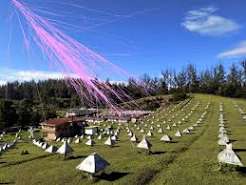
Researchers from Mumbai, Kochi, and Japan used the GRAPES-3 telescope to track how the Earth’s upper atmosphere temperature and the Sun’s magnetic field affect muons — subatomic particles from space.
- Gamma Ray Astronomy PeV EnergieS phase-3 (GRAPES-3) is designed to study the origin, acceleration and propagation of cosmic rays through measurement of extensive air showers.
- It is induced by primary cosmic rays or gamma rays entering the Earth’s atmosphere in tera to peta electronvolt energies.
- It also studies solar and thunderstorm phenomena using cosmic ray muons.
- GRAPES-3 employs an array of plastic scintillator detectors and a large area muon detector based on proportional counters.
- It is located in Ooty, India.
- It is operated by the Tata Institute of Fundamental Research.
- Cosmic Rays were discovered more than a century ago.
- They are considered to be the most energetic particles in the universe.
- Our planet is constantly bombarded by them from outer space, almost uniformly from all directions at a constant rate.
- They enter Earth’s atmosphere and induce a shower of particles that travel to the ground almost at the speed of light.
- The shower particles constitute electrons, photons, muons, protons, neutrons, etc.
- They have been observed over a remarkably wide energy range (108 to 1020 eV).
Powai Lake:
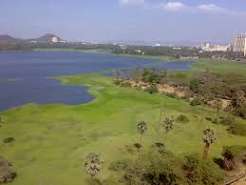
The Brihanmumbai Municipal Corporation (BMC) recently proposed appointing infrastructure consultancy firm AECOM Asia Company Limited to prepare a comprehensive redevelopment plan for a stretch of Powai Lake along Adi Shankaracharya Marg at a consultancy cost of Rs 1.85 crore.
- Powai Lake is an artificial lake situated in the northern suburb of Mumbai, Maharashtra.
- It was constructed by the British in 1890 by building two dams across the Mithi River to augment Bombay’s water supply.
- The lake has a catchment area of 6.6 sq. km and a depth ranging from 3 to 12 metres.
- The southern hillocks around the lake form the lowest slopes of the Western Ghats.
- Powai Lake flanked by two premier institutions which are Indian Institute of Technology-Bombay (IIT-B) and the National Institute of Industrial Engineering (NITIE).
- The Padmavati Devi Temple, situated on the bank of the lake inside IIT Bombay campus dates back to the 10th century AD.
- The lake is surrounded by the Powai Bird Sanctuary and is an important resting, feeding, and breeding site of several bird species, resident and migratory.
- The lake serves as an important habitat for resident and migratory birds, including the Watercock, Pheasant-tailed Jacana, Woolly-necked Stork, Caspian Tern, and Peregrine Falcon. It also supports a small population of Marsh Crocodiles.
- It also supports fishing activities and is currently being used for the conservation of the Indian mahaseer.
- In recent times, 40% of the lake has disappeared due to the accelerated growth of residential, commercial, and industrial areas around the lake.
Joint Crediting Mechanism:

India and Japan have adopted the Rules of Implementation for the Joint Crediting Mechanism (JCM) under Article 6.2 of the Paris Agreement.
- Joint Crediting Mechanism was first proposed by the Government of Japan and was officially launched in 2013.
- It is a Japanese initiative that aims to facilitate the diffusion of leading decarbonising technologies and infrastructure through investment by Japanese entities and contribute to the sustainable development of partner countries.
- It is a bilateral mechanism which is being implemented in accordance with Article 6 of the Paris Agreement.
- The JCM contributes to the achievement of both countries’ NDC (Nationally Determined Contribution) by evaluating Japan’s contributions quantitatively and acquiring the part of credit.
- It operates under the United Nations Framework Convention on Climate Change (UNFCCC).
- It complements other existing mechanisms, such as the Clean Development Mechanism (CDM) and Joint Implementation (JI).
- India is one of the 31 partner countries of the Joint Crediting Mechanism.
- Focus Area of Joint Crediting Mechanism focuses on priority sectors, which include renewable energy with storage, sustainable aviation fuel, compressed biogas, green hydrogen and green ammonia, and in hard-to-abate sectors.
INS Tarkash: In News
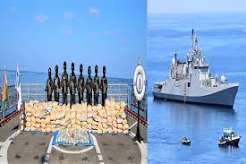
Indian Naval Ship Tarkash, a stealth frigate of the Indian Navy, recently arrived in Port Victoria, Seychelles, during its ongoing deployment in the South West Indian Ocean Region.
- INS Tarkash is a state-of-the-art stealth frigate of the Indian Navy.\
- It is the second of three Talwar-class guided missile frigates.
- Designed and built in Russia, the Talwar-class guided missile frigates are modified version of the Krivak III-class frigate
- It was built by the Yantar shipyard in Kaliningrad, Russia.
- It was commissioned into Indian Navy service on 9 November 2012 at Kaliningrad and joined the Western Naval Command on 27 December 2012.
- The ship is 8 m long, has a beam of 15.2 m and a draught of 4.2 m.
- Powered by four gas turbines, it can attain speeds of over 30 knots, has an operational range of 4,500 nautical miles, and an endurance of 30 days.
- It has been equipped with a weapon sensor that enables it to address threats in all dimensions.
- It uses stealth technologies and a special hull design to ensure a reduced radar cross-section.
- It can board one Ka-28 Helix-A antisubmarine helicopter or one Ka-31 Helix-B airborne early warning helicopter.
- It carries cutting-edge weaponry, which includes advanced surface-to-air missiles, 100 mm calibre guns (artillery), close-range guns, torpedoes, rocket launchers, and associated fire control systems.
- It is also equipped with BrahMos missiles instead of the Klub-N missiles, which makes it different from the earlier flight of Talwar-class ships.
Amangarh Tiger Reserve:
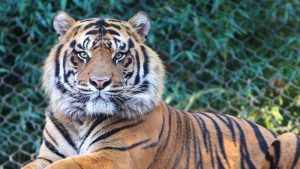
The fourth eco-tourism season at Amangarh Tiger Reserve in Uttar Pradesh was recently extended by 15 days.
- Amangarh Tiger Reserve is situated in the Bijnor district of Uttar Pradesh and forms a part of the Terai-Bhabar ecosystem, a unique stretch of forests at the foothills of the Himalayas.
- It was originally a part of the Jim Corbett National Park. After the state of Uttarakhand was carved out of Uttar Pradesh in 2000, Jim Corbett fell entirely within Uttarakhand’s boundaries, while the Amangarh sector remained in Uttar Pradesh and was later declared a tiger reserve in 2012.
- The landscape here is a blend of dense forests, rolling hills, grassy meadows, and pristine water bodies.
- The most dominant tree in Amangarh’s landscape is Sal (Shorea robusta), which forms large, continuous forests across the reserve.
- Alongside sal, species like Khair (Acacia catechu), Sheesham (Dalbergia sissoo), and Haldu (Adina cordifolia) thrive abundantly.
- Mammals: Tiger, Elephant, Swamp Deer, Sambar, Cheetal, Gangetic Dolphin, Hog Deer, Kakar, Langur, Sloth Bear, Porcupine, Otter.
- Birds: Hornbill, Red Jungle Fowl, Pea Fowl, Bengal Florican, Fishing Eagle, Serpent Eagle, Osprey, Woodpeckers, Shama, Indian Pitta, Paradise Flycatcher, Orioles, Emerald Dove.
- Reptiles: Monitor Lizard, various freshwater Turtles, Indian Rock Python, Mugger Crocodile, and Gharial.
Knob-Billed Duck:
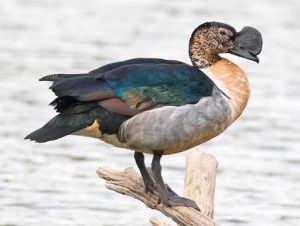
A rare knob-billed duck — a species usually associated with the wetlands of Central India, particularly Rajasthan and Gujarat — has been recently recorded for the first time at Pong Lake Wildlife Sanctuary.
- The knob-billed duck, or African comb duck, is a species of duck named for the prominent, leaf-shaped comb on top of the male’s bill.
- Scientific Name: Sarkidiornis melanotos
- It is found in tropical wetlands in Sub-Saharan Africa, Madagascar, and the Indian subcontinent from northern India to Laos and extreme southern China.
- It breeds in freshwater swamps and lakes in the tropics.
- It is one of the largest species of duck. Length can range from 56 to 76 cm, wingspan ranges from 116 to 145 cm, and weight ranges from 1.03 to 2.9 kg.
- Adults have a freckled white head with dark spots, a pure white neck, and glossy blue-black upperparts showing a greenish-blue iridescence. The male is much larger than the female.
- Conservation Status:
- IUCN Red List: Least Concern
Tasgaon Lift Irrigation Scheme:
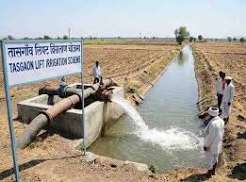
Maharashtra Krishna Valley Development Corporation recently issued the Letter of Award (LoA) to a joint venture involving Mumbai-based infrastructure company Patel Engineering Ltd (PEL) for an irrigation project under the Tasgaon Lift Irrigation Scheme in Maharashtra.
- It is an important irrigation infrastructure initiative in Maharashtra. The scheme falls under the administrative jurisdiction of the Maharashtra Krishna Valley Development Corporation (MKVDC), Pune.
- It encompasses the construction of a comprehensive water distribution system for a command area of 2,277 hectares across six villages in Satara Taluka (tehsil). These villages are Tasgaon, Varne, Karandwadi, Devkarwadi, Degaon, and Nigadi.
- Unlike gravity-fed canal systems, lift irrigation relies on electrically powered pumping infrastructure to raise water from a lower source body and push it through a pressurized distribution network to farmlands at higher elevations.
- The scheme includes multiple work fronts such as head works, pump houses, switch yards, rising mains, delivery chambers, and a closed-pipe distribution network.
- It aims to improve water availability and irrigation access across the region by supporting long-term agricultural and rural development.
Farm Loan Waivers in India:
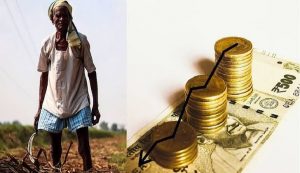
In a striking fiscal paradox, the Tamil Nadu government announced a full waiver of cooperative crop loans up to Rs 75,000 for farmers even as its recently released White Paper on Fiscal Management revealed a mounting debt burden of Rs 13.18 lakh crore.
- The development has reignited the debate over the trade-off between welfare-driven interventions such as farm loan waivers and the imperative of long-term fiscal discipline.
- A Reserve Bank of India (RBI) Internal Working Group (2019) noted a high correlation between the timing of loan waivers and state election cycles, suggesting they are often utilized as political tools rather than strictly as responses to climatic or market-driven agrarian crises.
- Waivers inherently benefit only those who have access to formal credit (institutional borrowing).
Marginalized groups like tenant farmers, landless laborers, and sharecroppers (who rely heavily on informal moneylenders at exorbitant interest rates) are entirely excluded from these benefits. - The “Moral Hazard” Problem: Routine waivers destroy the credit culture. They create a moral hazard where honest farmers who regularly repay their dues feel penalized, while willful defaulters are rewarded. This leads to strategic defaults in anticipation of future waivers.
- The outstanding debt of states is currently hovering around 27 – 29 % of GDP, which is significantly above the 20% benchmark recommended by the Fiscal Responsibility and Budget Management (FRBM) Review Committee (2019).
- State governments are bound by FRBM limits (capping the fiscal deficit at 3% of GSDP).
- To accommodate sudden waiver expenditures (which are classified as revenue expenditures), states invariably slash capital outlays.
- Waiver schemes are often accommodated by a nearly 1/3rd cut in capital expenditure.
- This deprives the agricultural sector of critical, long-term asset creation in irrigation networks, rural connectivity, and cold storage chains.
- Funding waivers frequently push states into revenue deficits. When states borrow to finance recurring or non-asset-creating expenses, it creates a debt trap.
- The fiscal burden of these waivers generally consumes between 0.1% to 4.5% of a state’s GSDP, staggering payouts to banks over 3–5 years and rigidly constraining future budget flexibility.
- To circumvent strict FRBM ceilings, states often resort to opaque off-budget borrowings through Special Purpose Vehicles (SPVs) or public sector undertakings, masking the true scale of state liabilities.
- Loan waivers often encourage anticipatory defaults, weakening the financial health of lending institutions. As a result, agricultural NPAs have historically risen sharply in states that announced farm loan waivers.
10th India-Thailand Defence Dialogue:

India and Thailand reviewed the full spectrum of bilateral defence cooperation and agreed to deepen collaboration in defence manufacturing, research, innovation, and capability development during the 10th Thailand-India Defence Dialogue in Bangkok, reaffirming their commitment to peace, stability, and prosperity in the Indo-Pacific region.
- Both sides explored opportunities to build mutually beneficial partnerships between their defence ecosystems.
- The dialogue reviewed cooperation under ASEAN-led defence and security mechanisms and other multilateral frameworks.
- India and Thailand elevated their relationship to a Strategic Partnership in 2025, providing a stronger foundation for defence and security collaboration.
- Thailand holds a strategic geo-location in the South-East Asian region and shares common maritime borders with India (specifically between
- India’s Andaman and Nicobar Islands and Thailand’s western coast/Mu Ko Similan islands, delineated by the 1978 and 1993 Maritime Boundary Agreements) in the Andaman Sea, driving steady structural growth in bilateral ties.
- The defence partnership gained robust momentum through the institutional convergence of India’s Look East Policy (upgraded to Act East Policy) and Thailand’s Look West Policy, boosting comprehensive engagement across political, security, and economic landscapes.
- Structural security dialogues are managed via the Joint Working Group on Security Cooperation (initiated in May 2003), which prioritizes military cooperation, alongside regular service staff talks and multi-level exchanges.
- Bilateral defence frameworks operate primarily under the umbrella of the definitive MoU on Defence Cooperation signed in 2012, providing a long-term roadmap for joint initiatives.
- Industrial synergy has scaled up through reciprocal active engagement in major sector expositions including Aero India, DefExpo, and Thailand’s Defence & Security exhibitions facilitating the successful export of reliable Indian military equipment to the Royal Thai Armed Forces.
Climate-Resilient Coral Reefs Ecosystems:
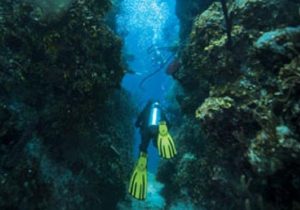
A study presented at the Our Ocean Conference in Mombasa (Kenya) highlighted that coral reefs off Kenya’s coast are showing signs of resilience despite climate change, marking a rare positive development in marine conservation.
- Despite severe bleaching in 2024, coral cover in the studied Kenyan region recovered significantly from 27% to 40% within a year.
- The study finds that around 1,66,000 sq km (nearly one-third) of global coral reefs are relatively climate-resilient, meaning they have a higher ability to survive rising ocean temperatures and thermal stress.
- The findings challenge earlier Intergovernmental Panel on Climate Change (IPCC) projections, which estimated 70–90% coral loss at 1.5°C warming and up to 99% loss at 2°C, suggesting a more optimistic survival outlook.
- The findings present a more optimistic scenario compared to earlier IPCC assessments, which projected widespread coral reef decline, suggesting that a significant portion of reefs may survive if protected effectively.
- Local conservation efforts in Kenya, including regulated fishing, patrolling, mangrove planting, and waste management, have helped protect reef ecosystems.
- These reefs persist due to a combination of naturally cooler local ocean microclimates, genetic adaptation to heat tolerance over time, and faster recovery capacity after bleaching events, which helps them bounce back from stress episodes.
- Advanced high-resolution mapping techniques revealed over three times more climate-resilient reefs than earlier studies, with major concentrations in Australia, Indonesia, the Philippines, Cuba, and the Bahamas.



