
Today’s Current Affairs: 19th Sep 2026 for UPSC IAS exams, State PSC exams, SSC CGL, State SSC, RRB, Railways, Banking Exam & IBPS, etc
Table of Contents
Vallur Thermal Power Project:
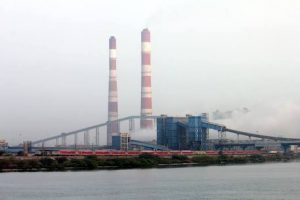
The southern bench of the National Green Tribunal (NGT) recently admitted an application alleging that the Vallur Thermal Power Project is discharging hot effluent directly into the Kosasthalaiyar river and its backwaters in violation of environmental and CRZ clearances.
- It is a coal-fired power project located in the Tiruvallur District of Tamil Nadu.
- It has a capacity of 1500 MW (3 units of 500 MW).
- The project was developed by NTPC Tamil Nadu Energy Company Limited (NTECL).
- NTECL is a 50:50 joint venture company formed between NTPC and Tamil Nadu Power Generation Corporation Ltd. (TNPGCL).
- It was commissioned to its full capacity and has been operating since
- Around 70 percent of the power from this station is supplied to Tamil Nadu, and the rest to neighboring states like Andhra Pradesh, Karnataka, Kerala, Telangana and Pondicherry.
- The coal is brought from the Mahanadi Coal Fields, Central Coal Fields, Eastern Coal Fields, etc through rail cum sea to Ennore Port.
- The unique feature of this plant is that the total plant water requirement is met from sea water.
- Being close to the sea, this plant has a seawater desalination unit of 20 MLD capacity. This takes care of the entire water requirement
Battery Energy Storage System:
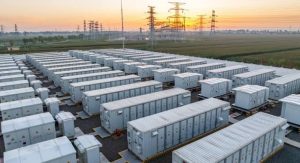
NTPC Ltd recently terminated a ₹ 413.37 crore contract awarded to GR Infraprojects Ltd (GRIL) for a 400 MWh Battery Energy Storage System (BESS) project at its Mouda Super Thermal Power Station in Maharashtra.
- A BESS is a system that stores electrical energy in rechargeable batteries and releases it when power is needed.
- A complete BESS is more than a battery. A complete BESS typically includes: Battery cells or modules, which store the energy
- A Battery Management System (BMS), which monitors cell voltage, temperature, and state of charge to keep the battery safe and efficient
- A Power Conversion System (PCS), often called an inverter, which converts stored DC power to usable AC power (and back again during charging)
- Thermal management, such as cooling or heating systems, to keep the battery within a safe operating temperature range
- A control and monitoring system, sometimes cloud-connected, that manages charging and discharging based on rules, schedules, or grid signals
- An enclosure, ranging from a small wall-mounted box for homes to a shipping-container-sized unit for utility projects.
- It operates by capturing electricity from various sources (either from the grid, from solar panels, from wind turbines, or from any other generation source), storing it, and discharging it when needed.
- BESS technology allows electricity to be stored when supply is abundant, demand is low, or power prices are favorable.
- The system can then discharge during outages, peak demand periods, renewable generation dips, or times when electricity is more expensive.
- This flexibility makes BESS valuable for commercial facilities, industrial sites, utilities, microgrids, and renewable energy projects.
- Battery storage supports peak shaving, load shifting, backup power, renewable energy integration, and grid reliability.
- It also gives operators more control over when electricity is used, which can improve energy economics and reduce strain on the grid.
- BESS are rated on energy storage capacity (kWh), which determines how much energy can be stored, and power rating (kW), which determines how quickly that energy can be delivered.
Global Business Climate Survey 2026:

India has been ranked first in business climate among forty plus global markets in the latest Business Climate Survey 2026 by the Swedish Chamber of Commerce in India.
- Global Business Climate Survey 2026 is jointly produced by Business Sweden, the Swedish Chambers of Commerce (SCI), and Sweden’s embassies and consulates and covers 41 markets in Western Europe, APAC, MEA+, and the Americas.
- The survey was first carried out in 2020 and captures the viewpoints, experiences, and insights of Swedish business leaders overseas.
- The Global Business Climate Survey 2026 edition presents insights from 41 markets, offering a broad view of Swedish companies’ perspectives on doing business abroad.
- The survey aims to provide a framework for comparing economic performance, outlook, and operating conditions over time in key Swedish export markets.
- It highlights the challenges companies face and identifies opportunities for Swedish companies considering entry into new markets or expansion in existing ones.
2026 Survey Highlights:
- India has been ranked first in the survey, followed by Vietnam.
- The 2026 survey found that Swedish companies remain strongly committed to India as a long-term market.
- Most respondents reported positive business conditions, while a clear majority said they expected to increase investments in India during the coming year.
- Asia-Pacific was the most optimistic region in the survey.
- The Philippines and India ranked among the top markets for planned investment.
- The report noted a more cautious mood across the Middle East and Africa.
- In Saudi Arabia, the share of firms with a positive outlook fell from 90% in 2025 to 44% in 2026.
- The Americas and Europe looked somewhat better than in 2025.
- India, the Philippines and Poland led on market-level growth expectations.
What is Geran-2?

New satellite imagery is shedding light on Russia’s expanding Geran-2 drone production at the Alabuga Special Economic Zone in Tatarstan.
- Geran-2 is a long-range one-way attack drone, often referred to as a kamikaze drone.
- It is essentially a domestically manufactured Russian version of the Iranian-designed Shahed-136.
- The Geran is mainly used for long-range strike, both as a primary system and as a low-cost complement to the much more sophisticated cruise and ballistic missiles.
- The Geran-2 drones are launched in swarms to maximize the probability of success against strategic infrastructures.
- While the Geran-2 retains the core aerodynamic layout of the Shahed-136—featuring a delta wing, composite honeycomb structure, and a rear-mounted piston engine—it incorporates substantial upgrades.
- Powered by a 50–90 HP piston engine, the drone can reach speeds up to 180 km/h with a flight endurance of up to 12 hours.
- Warhead weight: 50 kilograms original, can be increased up to 90 kg with reduced fuel load.
- Operational range: 2,500 km
- Launch: Rocket-assisted take-off, or from moving vehicle
- The Geran-2 features advanced navigation systems resistant to jamming and spoofing, including multi-antenna Controlled Reception Pattern Antennas (CRPA), 3G/LTE modems for real-time data links, and improved inertial navigation units.
Biligiri Ranganatha Swamy Temple (BRT) Tiger Reserve:

Authorities of the BRT Tiger Reserve are seeking immediate action on fallow lands, warning that these neglected plots are turning into suitable habitats for big cats and increasing risks in fringe villages.
- Biligiri Ranganatha Swamy Temple (BRT) Tiger Reserve is located in the BR Hills (Biligiri Rangana Hills) in Chamarajanagar District of southeastern Karnataka.
- The reserve gets its name from Biligiri, meaning “white rocky cliff,” which is home to the ancient Rangaswamy Temple dedicated to Lord Vishnu.
- It is also believed that the hill range gets its name due to white mist and silvery clouds which cover these lofty hills for a greater part of the year.
- It is considered to be the wildlife corridor that connects the Eastern Ghats to the Western Ghats, which in turn facilitates gene flow between the population species inhabiting both the mountain ranges.
- The reserve is home to the Soliga community — a forest-dwelling indigenous people who have lived within the BRT hills for centuries.
- Soligas was the first tribal community living inside a tiger reserve and getting their forest rights recognised by a court in a judgement in 2011.
- The vegetation is predominantly dry scrub jungle to evergreen forests and high-altitude shola grassland
- Dry deciduous and scrub forests are found in the foothills.
- The major species include Anogeissus latifolia, Dalbergia paniculata, Grewia teliaefolia, Terminalia alata, Terminalia bellirica, Terminalia paniculata, etc.
- Animals including tiger, elephant, leopard, wild dog, bison, sambar, spotted deer, barking deer, four-horned antelope, sloth bear, wild boar, common langur, bonnet macaque, varieties of reptiles, birds, etc., are found in the Tiger Reserve.
Naegleria fowleri:
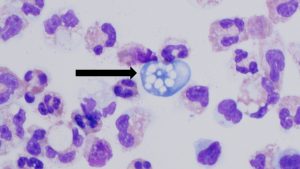
Scientists have figured out how Naegleria fowleri amoebae go from the nose to the brain, with N. gruberi as a proxy.
- Naegleria fowleri is commonly known as “brain-eating amoeba,” is a single-cell organism.
- It thrives in warm freshwater lakes, ponds and rivers. It can also survive in poorly maintained swimming pools in rare cases.
- Only one species of Naegleria, Naegleria fowleri, infects people.
- It causes Primary amoebic meningoencephalitis or PAM.
- It is typically acquired through the nasal passage and mouth.
- The amoeba then migrates through the olfactory nerve to the brain, where it causes severe inflammation and destruction of brain tissue.
- The Naegleria fowleri infection does not spread from person to person, nor does it manifest symptoms when contracted in other forms.
- The infection is primarily associated with a warm freshwater environment, especially during hot summer months when water temperatures are higher.
- Primary Amoebic Meningoencephalitis is caused by Naegleria fowleri.
- It is non-communicable and people cannot get infected with Naegleria fowleri from drinking water contaminated with the amoeba.
- There are no effective treatments for the disease yet.
- At present, doctors treat it with a combination of drugs, including amphotericin B, azithromycin, fluconazole, rifampin, miltefosine, and dexamethasone.
Bidriware:

It was observed that Bidriware, the centuries-old metal craft is facing fresh pressure from the rising prices of silver, copper, and zinc.
- Bidriware is a form of metal handicraft which has been made for centuries by artisans from Karnataka’s Bidar district.
- It is renowned for its intricate, handcrafted designs.
- The origin of Bidriware as a craft is attributed mostly to the Bahamani Sultans who ruled the region during the 14th and 15th centuries.
- It was first brought to India by the noted Sufi Khwaja Moinuddin Hasan Chisti in the form of utensils.
- The art form developed in the kingdom was a mix of Turkish, Persian and Arabic influences, which were intermingled with the local styles, and thus a unique style of its own was born.
- It has obtained a Geographical Indications (GI) tag.\
- It is made primarily from a zinc-copper alloy, while silver is used for intricate inlay work.
- The craftsman uses small chisels to engrave the design over the freehand etching. Craftsmen engrave delicate floral and geometric patterns on the surface and inlay silver into them.
- Fine wire or flattened strips of pure silver are then carefully hammered into these grooves.
- The characteristic deep-black lustre is produced using soil sourced from the historic Bidar Fort.
- The soil is added to a chemical solution during the final stage of the process, giving the metal its distinctive black finish.
- The product then undergoes a process called buffing to smoothen the surface.



