
Today’s Current Affairs: 1st May 2026 for UPSC IAS exams, State PSC exams, SSC CGL, State SSC, RRB, Railways, Banking Exam & IBPS, etc
Table of Contents
Ru-Soam Bridges:
UNESCO has partnered with the Sikkim government to document the indigenous engineering known as Ru-Soam.
- Ru-Soam Bridges is a cane bridge built by the Lepcha community in Sikkim, especially in the Khangchendzonga Biosphere Reserve.
- In the Lepcha language, ‘Ru’ means cane or rattan, while ‘Soam’ refers to a bridge.
- It is crafted from locally available materials such as bamboo, cane, and wood.
- It consists of two parallel canes called soamgyang. The soamgyang are tied to trees on the two ends, ensuring that the bridge remains suspended.
- A ru-soam contains swinging cane loops called ahool.
- Bamboos, or soamgur, are used to make the deck of the bridge.
- The bridges can be 100 metres long, and two or three people can cross them at a time.
- This engineering practice reflects a sophisticated understanding of ecological balance and structural resilience.
- The Ru-Soam cane bridges are not relics of the past; they are living expressions of engineering ingenuity.
Past Risk and Return Verification Agency (PaRRVA):

The Securities and Exchange Board of India (SEBI) has operationalised the Past Risk and Return Verification Agency (PaRRVA).
- It is a regulatory initiative designed to bring transparency and standardization to performance claims made by financial intermediaries.
- It has been operationalised by the Securities and Exchange Board of India (SEBI)
- Designated Entities: CARE Ratings Limited has been granted recognition as the PaRRVA and the National Stock Exchange of India Limited (NSE) will function as the PaRRVA Data Centre (PDC).
- The following entities can Use PaRRVA:
- Investment Advisers (IA)
- Research Analysts (RA)
- Trading Members (TM)
- Investors seeking verified performance data
- It will enable regulated entities such as investment advisers, research analysts, and algorithmic trading service providers to showcase their verified performance.
- It will enable investors to access reliable and standardised data for informed decision-making.
- Additionally, regulated entities will be permitted to use PaRRVA-verified performance in their advertisements, in line with SEBI’s regulatory provisions.
- It ensures that all risk-return metrics presented to investors are independently verified and compliant with SEBI guidelines.
Platypus : New Fossils
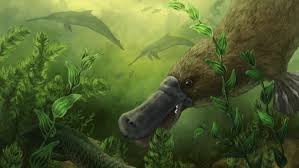
New fossils from South Australia reveal a new species of ancient platypus that still had teeth – something modern platypuses lost long ago.
- The platypus is a semi-aquatic egg-laying mammal endemic to eastern Australia.
- Scientific Name: Ornithorhynchus anatinus
- Platypuses occur in freshwater systems from tropical rainforest lowlands and plateaus of far northern Queensland to cold, high altitudes of Tasmania and the Australian Alps.
- When not foraging, the platypus spends most of the time in its burrow in the bank of the river, creek, or a pond.
- Platypus is well adapted for a semi-aquatic lifestyle.
- In addition, males possess a horny spur on their ankles, which is connected to a venom gland in the upper leg, making the Platypus one of the few venomous mammals.
- Conservation Status:
- IUCN Red List: Near Threatened
E-PRAAPTI Portal:
The Employees Provident Fund Organisation (EPFO) is set to launch E-PRAAPTI (EPF Aadhaar-Based Access Portal for Tracking Inoperative Accounts).
- E-PRAAPTI (EPF Aadhaar-Based Access Portal for Tracking Inoperative Accounts), a dedicated digital platform of the Employees Provident Fund Organisation (EPFO).
- Purpose is to facilitate identification, tracking, Unique Account Number (UAN) linking, and activation of old EPF accounts.
- The E-PRAAPTI Portal will provide a streamlined Aadhaar-based authentication mechanism that will enable members to securely access their old EPF account that are not linked to a UAN and initiate the process for updating their member profile, followed by seamless UAN linking and activation.
- In the initial phase, the portal will be member ID-based, ensuring a secure and efficient rollout while delivering immediate benefits to a large segment of members who possess their member IDs.
- E-PRAAPTI’s scope will later be expanded to include members who may not be able to recall or access their old member IDs.
New Species of Fireflies:
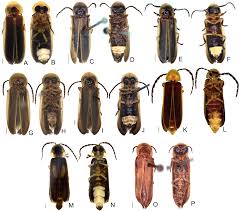
Scientists recently discovered two previously unknown species of fireflies named Diaphanes meghalayanus and Diaphanes mawlynnong in Meghalaya’s East Khasi Hills, marking the first formal documentation of such insects from the state.
- They are two new species of fireflies.
- They were discovered in Meghalaya’s East Khasi Hills.
Meghalayanus has been named after Meghalaya to indicate its broader distribution in the region, while D. mawlynnong derives its name from Mawlynnong village, where the species was first recorded, acknowledging the local Khasi community. - Both species thrive in dark, humid environments with minimal human interference.
Mission SAKSHAM:
The Reserve Bank of India (RBI) Governor launched Mission for Urban Co-operative Banks.
- The mission SAKSHAM (Sahakari Bank Kshamta Nirman) is a sector-wide capacity-building and certification framework for urban co-operative banks (UCBs).
- It aims to enhance managerial and operational capabilities, improve compliance culture, and strengthen institutional resilience across UCBs.
- It is a mission-mode, sector-wide and all-India capacity-building training initiative for UCBs, under which the RBI will conduct a large number of training programmes,
- It targets board members, senior management, heads of risk, compliance and audit functions, and employees working in IT functions and other critical areas.
- Delivery Model: Blended learning (in-person and digital) with a focus on regional language accessibility.
- Designed with the Umbrella Organisation for UCBs and State/National Federations.
- Core Objective is to improve compliance culture and strengthen the financial health of cooperative institutions
- It focuses to establish a sustainable, self-reinforcing ecosystem for systemic stability and the healthy growth and development of the UCB sector.
Exercise Pragati:
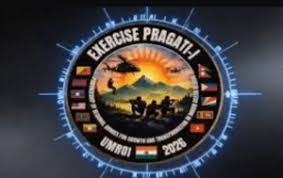
The Indian Army is set to host military delegations to the inaugural edition of the multilateral exercise ‘Pragati’ at the Foreign Training Node in Umroi, Meghalaya.
- The PRAGATI (Partnership of Regional Armies for Growth and Transformation in the Indian Ocean Region)is a multilateral military exercise.
- It is the first edition of exercise which will be held in Umroi,
- It includes 11 friendly countries Laos, Myanmar, Seychelles, Sri Lanka, Philippines, Nepal, Maldives, Malaysia, Vietnam, Cambodia and Bhutan.
- It aims to strengthen defence cooperation, enhance interoperability, and build mutual trust among participating nations.
- It reflects a shared commitment to collective security and regional stability.
- Exercise Pragati centers on counter-insurgency and counter-terrorism operations, emphasising joint training and defence diplomacy.
- It is part of India’s growing defence engagement with its neighbouring and Indian Ocean region nations, focusing on building capacity and shared operational capabilities.
- It will mark a shift in the Indian Army training from bilateral to consortium-style engagements.
- Besides war games, a key component of the event is a two-day industry exposition, highlighting the Indian Army’s capabilities and fostering industrial partnerships with ASEAN nations.
Panchayat Advancement Index 2.0:
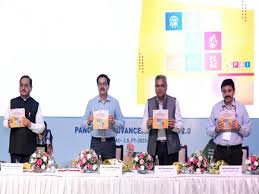
The Ministry of Panchayati Raj on the occasion of National Panchayati Raj Day celebrated on 24th April 2026 released the Panchayat Advancement Index (PAI) 2.0 Report for the FY Year 2023–24.
- It is India’s first nationwide data-driven framework to assess Gram Panchayat performance.
- It serves as a robust tool for evidence-based planning, performance monitoring, and incentivising Panchayati Raj Institutions.
- It evaluates each of the more than 5 lakh Gram Panchayats across the country.
- It is built on the framework of Localization of Sustainable Development Goals (LSDGs), which consolidates the 17 global SDGs into nine thematic areas relevant to Panchayati Raj Institutions.
- Covering Poverty, Health, Child Welfare, Water, Environment, Infrastructure, Social Justice, Good Governance, and Women’s Empowerment.
- Based on their composite PAI scores, Gram Panchayats are classified into five performance categories
- Achiever (A+: 90 and above)
- Front Runner (A: 75 to below 90),
- Performer (B : 60 to below 75),
- Aspirant (C: 40 to below 60),
- Beginner (D: below 40)
- It is prepared by the Union Ministry of Panchayati Raj.
Kyrgyzstan:
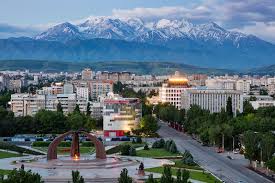
The Minister of Defence addressed the SCO Defence Ministers’ Meeting in Bishkek, Kyrgyzstan.
- It is a landlocked mountainous country in Central Asia.
- It is bordered by four nations; Kazakhstan (north), Uzbekistan (west), Tajikistan (south), and China (east).
- It is occasionally referred as “the Switzerland of Central Asia”.
- Capital City: Bishkek
- Geographical Features of Kyrgyzstan:
- Climate: The climate is continental and varies according to the altitude. The winters are cold, often freezing, and the summers warm and sunny.
- Highest Peak: Victory Peak
- Major Rivers: Syr Darya, Naryn, Chu.
- Lakes: Lake Issyk-Kul, the second-largest saline lake in the world is located here.
- Natural Resources: It consists of coal, oil, natural gas, and uranium, alongside deposits of gold and rare earth metals.
Creamy Layer in SC/ST Reservation:
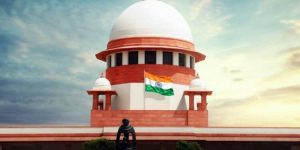
The Supreme Court is examining fresh petitions seeking to apply the “creamy layer” principle to SC/ST reservations, a move that misinterprets the State of Punjab v. Davinder Singh Case, 2024. It revives the contentious question of whether economic status can override caste-based social disadvantage.
- It is a landmark judgment that has fundamentally reshaped the legal landscape of reservations in India by addressing the internal diversity within the Scheduled Castes (SCs) and Scheduled Tribes (STs).
- In a 6:1 majority verdict, the Supreme Court held that state governments have the power to create sub-classifications within the Scheduled Castes and Scheduled Tribes for the purpose of granting preferential reservation benefits.
- Key Highlights of the Judgment:
- Overruled E.V. Chinnaiah (2004): The Court overruled its previous decision in E.V. Chinnaiah v. State of Andhra Pradesh Case 2004, which had held that SCs were a “homogeneous” group and could not be subdivided.
- Substantive Equality: The SC/ST categories are not uniform blocks. Some sub-groups are “more backward” and have not benefited from reservations as much as others. Sub-classification is seen as a tool to achieve true equality for the “weakest of the weak.”
- Empirical Data Requirement: The Court mandated that any sub-classification must be based on quantifiable and empirical data showing inadequate representation and relative backwardness. It cannot be done based on political whims.
- The “Creamy Layer” Debate: 4 of the 7 judges expressed the view that the “creamy layer” principle (excluding the relatively affluent/advanced members of a backward class from reservation) should also be applied to SCs and STs to ensure benefits reach the truly needy.
- Legislative Competence: The Court clarified that while only the President (under Article 341) can identify which castes belong in the SC list, the states have the power under Articles 15(4) and Articles 16(4) to decide how to distribute reservation benefits among those identified castes.
50th Anniversary of Sikkim’s Integration with India:
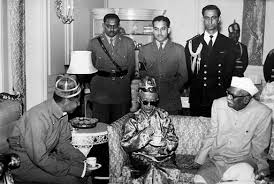
The Prime Minister of India participated in the closing ceremony of Sikkim’s 50th Year of Statehood celebrations in Gangtok.
- During the event, the Prime Minister lauded Sikkim’s natural and organic farming model serves as a template for the entire country.
- The Chogyal Dynasty: Before its integration into India, Sikkim was an independent Himalayan kingdom ruled by the Namgyal dynasty, whose monarchs, known as the Chogyals, governed the region as a hereditary monarchy from 1642 to 1975.
- British Colonial Treaties:
- Treaty of Titaliya (1817): Granted the British authorities strategic commercial and political advantages in the region.
- Treaty of Tumlong (1861): Formally established Sikkim as a protectorate state of British India.
- Calcutta Convention (1890): Demarcated the vital Sikkim-Tibet border (signed between Viceroy Lord Lansdowne and Qing China), a boundary later affirmed by the Lhasa Convention (1904).
- “Protectorate” Status (1947–1974): When India gained independence in 1947, Sikkim chose not to join the Indian Union immediately.
- Instead, under the Indo-Sikkim Treaty of 1950, Sikkim became an Indian “protectorate.”
- This meant Sikkim retained its internal autonomy, but the Government of India took responsibility for its defense, external affairs, and communications.
- Transition to an “Associate State” (1974): By the early 1970s, there was growing political unrest in Sikkim, with the local population demanding greater democratic rights and closer ties with India.
- In response, the Indian Parliament passed the 35th Constitutional Amendment Act in 1974.
- This amendment gave Sikkim the unique status of an “Associate State” of the Indian Union, a status not given to any other state before or since.
- Full Statehood (1975): The “Associate” status did not fully satisfy the democratic aspirations of the Sikkimese people. In April 1975, the Chief Minister of Sikkim appealed to the Indian Parliament for full integration.
- A special referendum was held, where over 97% of the voters chose to abolish the Chogyal monarchy and fully join India.
- Consequently, the 36th Constitutional Amendment Act, 1975 was passed. It officially made Sikkim the 22nd State of the Indian Union on 16th May 1975.
- Special Constitutional Protections: To protect the unique cultural identity, history, and land rights of the Sikkimese people, Article 371F was inserted into the Indian Constitution.
- This article safeguards old Sikkimese laws and ensures that land and properties cannot be easily purchased by non-Sikkimese individuals, preserving the local demographics.
- Sikkim is the only state in India where eligible native residents are exempt from income tax, secured by Article 371F of the Constitution and Section 10(26AAA) of the Income Tax Act, 1961.
- This special status stems from the 1975 merger treaty, allowing residents to pay no tax on income from any source within Sikkim.
UAE’s Exit from OPEC and OPEC+:
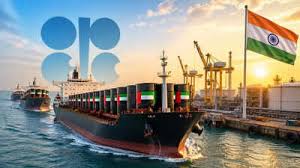
The United Arab Emirates (UAE) announced its withdrawal from the Organization of the Petroleum Exporting Countries (OPEC) and the broader OPEC+ alliance, effective 1st May 2026.
- This landmark decision marks a major shift in global energy geopolitics, threatening to weaken the historic oil cartel’s bargaining power.
- OPEC is a permanent intergovernmental organization created at the Baghdad Conference in 1960 by Iran, Iraq, Kuwait, Saudi Arabia, and Venezuela.
- Mandate to coordinate and unify the petroleum policies of its Member Countries and ensure the stabilization of oil markets.
- The UAE (through Abu Dhabi) has been a highly influential member since joining in 1967, later representing the entire federation.
- Following the UAE’s exit, OPEC is left with 11 active members: Algeria, Congo, Equatorial Guinea, Gabon, Iran, Iraq, Kuwait, Libya, Nigeria, Saudi Arabia, and Venezuela.
- OPEC+: Formed in 2016, as an alliance between OPEC and 10 other oil producers to address declining oil prices due to US shale oil growth.
- OPEC+ includes the OPEC members plus Azerbaijan, Bahrain, Brunei, Kazakhstan, Malaysia, Mexico, Oman, Russia, South Sudan, and Sudan.
- OPEC+ produced roughly 40% of the world’s crude oil and accounts for about 60% of internationally traded petroleum.
- The UAE decided to exit OPEC primarily due to restrictive production quotas that limited its ability to utilize its expanded oil capacity, even as it aims to reach 5 million barrels per day by 2027.
- At the same time, the UAE is pursuing an energy transition strategy that focuses on maximizing oil revenues in the short term before global demand shifts toward renewables.
- OPEC’s consensus-based decision-making, including the presence of Iran, further constrained the UAE’s ability to respond independently to evolving geopolitical and market conditions.
- In 2025, the UAE was the fourth-largest oil producer in OPEC, contributing around 11% of total production.
Its oil production capacity is estimated at 4.2-4.5 million barrels per day. The exit is expected to weaken OPEC’s ability to control global oil supply and prices, as it reduces collective discipline within the cartel. - For India, this could bring economic relief through lower oil prices and reduced inflation, along with greater availability of oil supplies in the global market.
India Introduces Underground Coal Gasification:

The Ministry of Coal signed Coal Mine/Block Production and Development Agreements (CMDPAs) with successful bidders for four coal mines, marking the first-ever inclusion of Underground Coal Gasification (UCG) provisions in India’s commercial coal mining framework.
- UCG is an in-situ technology that converts coal into synthetic gas (syngas) underground within the seam itself, without physical mining, enabling utilisation of deep, thin, or otherwise unworkable coal deposits.
- The process produces syngas composed mainly of hydrogen, carbon monoxide, and methane, which can be used for multiple industrial purposes.
- Syngas can be utilised for fertiliser production (urea, ammonia), petrochemicals (methanol, dimethyl ether – DME), and synthetic fuels, thereby strengthening industrial value chains.
- Reduces reliance on imported natural gas and naphtha while boosting domestic manufacturing and chemical industries.
- Enhances energy security by expanding usable coal reserves and promotes cleaner, more efficient coal utilisation compared to conventional mining.
Eyespots in Marine Animals:
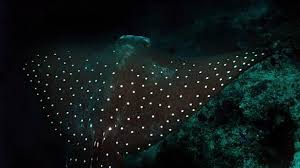
A recent study published in the journal Nature explains the evolutionary reasons behind the presence of “eyespots” in marine animals like skates and rays, used as a defence against predators.
- Eyespots are conspicuous, eye-like circular markings found on some animals that act as a visual defence mechanism by confusing, intimidating, or deterring predators.
- Eyespots are predominantly found in species lacking strong physical defences (like venom or electric organs) and are more common in smaller marine species inhabiting shallow, well-lit waters (less than 200 m depth).
- They are commonly seen in butterflies, birds, and certain marine species.
- Evolutionarily, they develop gradually from simple markings into complex concentric-ring patterns, indicating adaptive progression over time.
- Eyespots are part of the evolutionary arms race between predator and prey and represent one of many defence strategies alongside mechanical, chemical, behavioural, and visual adaptations.
- Their effectiveness depends on ecological conditions, particularly visibility in bright, shallow environments where visual signals are more impactful.
- Skates and rays belong to the superorder Batoidea, a group of cartilaginous fishes with over 600 described species, closely related to sharks and often sharing coastal and shelf habitats with them and with marine mammals.
Women and Men in India 2025:
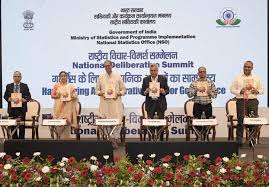
The Ministry of Statistics and Programme Implementation (MoSPI) released the 27th edition of its report, Women and Men in India 2025, in Bhubaneswar.
- Women and Men in India 2025 Report is annual publication, institutionalized in 1995, serves as a vital statistical compendium on the socio-economic status of both genders across India. It draws from various ministries and administrative data to cover domains such as population, health, education, economic participation, and violence against women.
Key Data and Statistics:
- Sex Ratio at Birth: The ratio increased from 904 (2017-19) to 917 (2021-23), signaling improved survival rates for females.
- Infant Mortality: Both female and male infant mortality rates saw a sustained decline between 2008 and 2023.
- School Parity: India has achieved gender parity across all levels of school education, from Primary to Higher Secondary.
- Higher Education Enrolment: Gross Enrolment Ratio (GER) for females rose from 28.5 to 30.2 between 2021-22 and 2022-23.
- Labour Force Participation: The LFPR for those aged 15+ has increased for both genders, with rural females showing the highest growth.
- RuralFemale LFPR: Participation for rural women rose significantly from 37.5% to 45.9% between 2022 and 2025.
- Managerial Positions: Between 2017 and 2025, women in managerial roles grew by 102.54%, outpacing the 73.80% increase for men.
- Fertility Trends: The Adolescent (15-19) Fertility Rate has shown a sustained downward trend since 2021.
Op Netra 1.0:
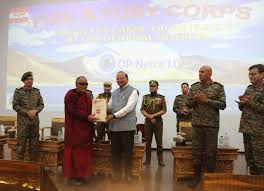
The Indian Army successfully concluded ‘Op Netra 1.0,’ a four-day high-altitude mega eye camp in Leh, Ladakh, which provided advanced surgical care to 950 patients.
- ‘Op Netra 1.0’ was an Advanced Surgical Eye Camp conducted by the Indian Army.It was hosted at the 153 General Hospital in Leh, under the leadership of Director General Armed Forces Medical Services.
- The primary goal was to provide high-end ophthalmic medical care and humanitarian outreach to citizens in remote, high-altitude regions. It aimed to ensure that geographical barriers do not prevent citizens from accessing essential healthcare services.
Key Features:
- Wide Outreach: Screened 950 patients from seven districts of Ladakh, including extremely remote areas like Chushul, Hanle, Demchok, and Turtuk.
- Specialized Surgeries: Performed 214 procedures, including 197 complex cataract surgeries and 10 vitreo-retinal interventions.
- Advanced Techniques: Utilized cutting-edge procedures such as Glued Intraocular Lens implantation, Minimally Invasive Glaucoma Surgery (MIGS), and vitrectomy.
- Indigenous Technology: Launched the Op Netra App, which features QR code-based identification and end-to-end digitization of patient records to automate scheduling and enhance safety.
- Inter-Service Cooperation: The Indian Air Force enabled the mission by airlifting advanced medical equipment to the high-altitude setting.
India Post Payments Bank (IPPB) has launched a dedicated Self Help Group:
India Post Payments Bank (IPPB) has launched a dedicated Self Help Group (SHG) Savings Account designed to provide a reliable and cost-effective banking solution for women-led groups in rural India.IPPB is a 100% Government of India-owned entity operating under the Department of Posts, Ministry of Communications. It is built on the pillars of India Stack, enabling paperless, cashless, and presence-less banking through a network of CBS-integrated smartphones and biometric devices.The bank was officially launched on September 1, 2018.The bank’s vision is to build the most accessible, affordable, and trusted banking platform for the common man. Its fundamental mandate is to remove barriers for the unbanked and underbanked populations by reaching the last mile of India.
The Komagata Maru Incident:
The Komagata Maru incident was recently highlighted by singer Diljit Dosanjh during his appearance on The Tonight Show Starring Jimmy Fallon.The Komagata Maru incident was a 1914 maritime standoff involving a Japanese steamship chartered by Punjabi entrepreneur Gurdit Singh. The vessel carried 376 passengers—340 Sikhs, 24 Muslims, and 12 Hindus—who were British subjects attempting to emigrate to Canada to build new lives.In the early 1900s, Punjab was the primary recruiting ground for the British Indian Army, yet the region suffered from rural indebtedness and deadly epidemics. These conditions pushed former soldiers and peasants toward emigration.
- The Ghadar Movement: Expatriate Punjabis in North America formed the Ghadar movement in 1913, dedicated to the armed overthrow of British rule.
- The Komagata Maru voyage became intertwined with this anti-colonial politics.
- Discriminatory Laws: Canada enacted the continuous journey regulation in 1908, which effectively barred Indian immigrants by requiring a single unbroken journey from their country of birth—a journey impossible to make at the time as direct tickets were not sold from India.



