
Today’s Current Affairs: 1st Oct 2026 for UPSC IAS exams, State PSC exams, SSC CGL, State SSC, RRB, Railways, Banking Exam & IBPS, etc
Table of Contents
The PRAGATI-50 Initiative:
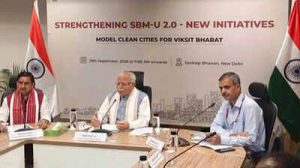
Union Minister for Housing and Urban Affairs launched the PRAGATI-50 initiative in New Delhi to develop 50 model cities across 24 States demonstrating higher benchmarks of Swachhata under Swachh Bharat Mission–Urban 2.0 (SBM-U 2.0).
The PRAGATI-50 Initiative:
- A targeted urban transformation and benchmarking program under SBM-U 2.0 that selects 50 urban centres across India to surpass routine sanitation standards and demonstrate sustained, high-performance outcomes in visible cleanliness, circular economy, and waste management.
- Organisation: Spearheaded by the Ministry of Housing and Urban Affairs (MoHUA), Government of India.
- Aim is to create replicable urban sanitation models, ensure scientific waste processing, eliminate legacy dumpsites, and promote behavioural change in major urban hubs.
UIDAI unveils five new initiatives:
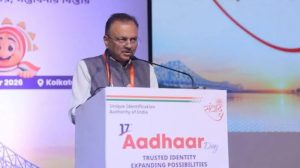
The Unique Identification Authority of India (UIDAI) unveiled five new initiatives at the ‘Aadhaar Samvaad’ stakeholders conference held in Kolkata, coinciding with the 17th Aadhaar Day.
- UIDAI unveils five new initiatives suite of digital governance reforms, authentication modalities, onboarding architectures, and resident-facing platforms launched by UIDAI to upgrade the national digital identity stack for emerging technologies.
- Aim is to reduce biometric-based welfare exclusion, simplify authentication for small entities, improve public service delivery, and enhance digital accessibility and transparency.
Key Initiatives Launched:
- Face Authentication for Electronic Public Distribution System (ePDS):
- Developed jointly by UIDAI, the Department of Food and Public Distribution (DFPD), and the National Informatics Centre (NIC).
- Provides a contactless, consent-based authentication modality for ration delivery, serving as an alternative where worn-out fingerprints or cataracts impede traditional biometric verification.
- SWIK Portal 2.0 (Social Welfare, Innovation, Knowledge):
- An upgraded digital interface that streamlines the end-to-end approval process under the Aadhaar Authentication for Good Governance framework.
- Enables eligible non-government entities to submit proposals for permissible authentication use cases directly to the concerned line Ministry or Department in a coordinated manner.
- Sub-AUA / Sub-KUA (LITE) Framework:
- Facilitates faster, cost-effective onboarding for government and eligible private entities with low-volume verification requirements.
- Allows smaller entities to leverage the pre-existing infrastructure of certified Authentication User Agencies (AUA) or KYC User Agencies (KUA) without deploying dedicated capital-intensive infrastructure.
- New Token Management System:
- A queue-management and scheduling digital tool deployed across UIDAI State and Regional Offices.
- Reduces physical congestion, streamlines appointment workflows, and enhances in-person grievance resolution and resident assistance.
- RevampedUIDAI Website & Career Portal:
- Redesigned around four core resident journeys (understand the ID, access a service, locate a document, or seek assistance) in line with unified visual branding.
- Features enhanced accessibility (screen readers, high contrast, keyboard navigation) and multi-lingual support via BHASHINI (expanding from 13 to 23 languages), alongside an integrated UIDAI Career Portal for transparent deputation hiring.
ECI’s Electoral Roll Management Systems:

Maharashtra’s Chief Electoral Officer sought changes to the ECI’s ECINET platform to preserve EROs’ statutory discretion in resolving voter-data discrepancies during the Special Intensive Revision (SIR), amid concerns over centralised software controls.
ECI’s Electoral Roll Management Systems:
- A unified digital umbrella platform and mobile application launched by the Election Commission of India in January 2026, consolidating more than 40 disparate portals, websites, and mobile applications into a single digital architecture for voters, candidates, political parties, and election administrators.
- Aim is to streamline the electoral tech ecosystem, enhance administrative transparency, eliminate software fragmentation across departments, and provide citizens with seamless single-window access to electoral roll services, candidate profiles, and polling booth details.
Key Features:
- Comprehensive Super-App Integration: Consolidates citizen-facing services (electoral roll search, Form 6/7/8 submissions, and e-EPIC downloads) alongside administrative modules for returning officers, observers, and security personnel.
- Integrated Electoral Roll Module: Subsumes and absorbs the backend functionalities of ERONET, operating as the overarching interface through which field staff and citizens process voter registrations and revisions.
- Automated Logical Discrepancy Detection: Deploys algorithmic cross-matching to flag anomalies between old and new rolls—such as parent-child age gaps under 15 or over 50 years, mismatched lineage names, or documentation gaps.
- Role-BasedDynamic Access Control: Employs mobile authentication and role-specific credential hierarchies to dictate which administrative actions can be initiated, modified, or approved across constituency, district, state, and national tiers.
India bans Paraquat Dichloride:

The Central Government, through the Ministry of Agriculture and Farmers Welfare, has officially banned Paraquat Dichloride, one of the world’s most toxic non-selective herbicides, citing severe risks to human and animal life.
- Paraquat is a fast-acting, broad-spectrum, non-selective contact herbicide used for weed control and crop desiccation. It damages plant cells by generating reactive oxygen species during photosynthesis.
- Paraquat is highly toxic when ingested, and poisoning can be fatal. The absence of a specific antidote makes severe poisoning particularly difficult to treat.
- Paraquat poisoning can severely damage the lungs and kidneys, with progressive pulmonary fibrosis being among its most serious and potentially irreversible effects.
- Its accessibility in agriculture creates risks of occupational exposure, accidental poisoning and intentional ingestion, increasing the public-health burden associated with hazardous pesticides.
- Government expert review and consultations with the Registration Committee assessed its risks to human health, livestock and the environment, providing the basis for regulatory action.
Sanskrit Subhashitam on the Six Qualities of Success:
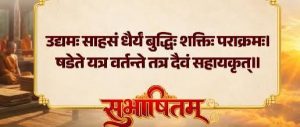
Prime Minister of India shared a Sanskrit Subhashitam highlighting six qualities: diligence, courage, patience, wisdom, strength and valour.
Sanskrit Subhashitam on the Six Qualities of Success:
Quote:
Udyamah sahasam dhairyam buddhih shaktih parakramah,
Shadete yatra vartante tatra daivam sahayakrit.
- Where diligence, courage, patience, wisdom, strength and valour coexist, even destiny or divine assistance supports the individual’s efforts.
- Success is not merely a product of fate. Persistent effort and initiative create the conditions in which opportunities can be converted into achievement.
- Courage enables one to confront adversity, while patience and perseverance prevent temporary setbacks from weakening long-term commitment.
- Strength and courage become constructive when guided by knowledge, prudence and sound judgement, preventing impulsive or reckless action.
- Good intentions alone are insufficient. Ethical and effective leadership requires the ability and determination to translate knowledge into action.
- The verse harmonises human agency with faith, suggesting that favourable circumstances tend to assist those who first cultivate the qualities necessary for action.
The Report: Status of Policing in India Report (SPIR) 2026
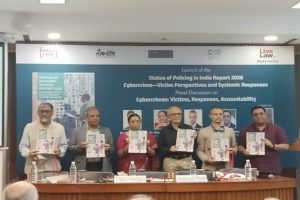
The Status of Policing in India Report (SPIR) 2026 was released, based on a 16-State survey of 8,306 citizens mapping cybercrime exposure, vulnerability patterns, and police redressal mechanisms.
The Report: Status of Policing in India Report (SPIR) 2026:
- An empirical, multi-state study evaluating the everyday interface between citizens and the police, tracking the lifecycle of cyber frauds from digital exposure and victimization to formal reporting and financial recovery.
- Published by: Conducted and published jointly by Lokniti–Centre for the Study of Developing Societies (CSDS) and Common Cause.
Key Findings in the Report:
- Divergent National Crime Trend: Cybercrime surged 17.9% (from 86,420 cases in 2023 to 1,01,928 in 2024 according to NCRB data), sharply contrasting with a 6% decline in overall registered crime nationwide.
- Pervasive Exposure to Scams: Fraudulent phone calls were common: 33% received calls regarding unordered deliveries, 31% faced high-return investment scams, and 27% encountered fake bank officials seeking personal account details.
- ScreenTime Directly Correlates with Risk: Citizens spending higher time online faced significantly greater exposure: 46% of high-usage respondents reported moderate-to-high scam encounters, compared to 19% among non-internet users.
- Prevalence of Financial Loss: Approximately 13% of surveyed citizens were direct victims of cybercrime within the last 2–3 years; among them, 54% experienced financial fraud, with 23% losing upwards of ₹20,000.
- Socio-Economic Skew in Fraud: Financial fraud was higher among privileged groups: 57% of affluent respondents were victims compared to 47% of the poor, and 59% of college graduates were targeted compared to 40% of non-literate citizens.
- Low Formal Reporting: Only 49% of victims lodged a formal police complaint, while 39% did not complain at all and 9% dropped out after the initial visit.
- Bribery as an Enforcement Catalyst: More than a quarter (27%) of complainants paid a bribe to the police; 41% of bribe-payers recovered their full lost money compared to just 12% who did not pay.
- Asymmetric Burden on Marginalized Groups: Poor victims were more than four times as likely to pay a bribe (51%) as the affluent (12%), and 55% of poor victims relied on informal networks of influence to move their cases forward.
India’s 1st Geological Museum:
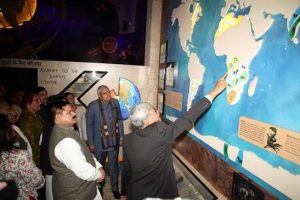
India’s first world-class geological museum is set to be developed at the Bhedaghat–Lamhetaghat area in Jabalpur, Madhya Pradesh, to showcase the geological history of the Narmada Valley.
- The project will include a geological museum and interpretation centre with six galleries and more than 130 exhibits. It will explain the origin of the Earth and the geological evolution of the Narmada Valley through interactive displays.
- The museum will feature 3D models, interactive touch tables, digital panels and an immersive theatre.
- Other attractions include Titanosaur Square, dinosaur park, fossil garden, geological maze, rock garden, tree-top walkway, glass floor, nature trails and viewing decks.
- The Central Government has approved an ₹87 crore project under the Swadesh Darshan 2.0 scheme. The project will be implemented by the Madhya Pradesh Tourism Board and is targeted for completion by February 2028.
- The museum will promote geological education, scientific awareness and eco-tourism while showcasing the geological history of the Narmada Valley.
2nd ASEAN-India Maritime Exercise (AIME) 2026:
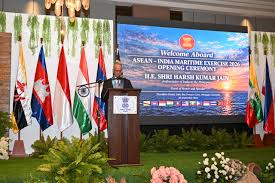
The second ASEAN–India Maritime Exercise (AIME 2026) is being conducted in the Philippines to enhance maritime cooperation between India and ASEAN member states.
- Participating Naval Ships: Indian Naval Ships Sahyadri and Kulish are participating along with BRP Jose Rizal, BRP Tarlac and RSS Justice from ASEAN member states.
- The exercise is co-hosted by the Indian Navy and the Philippine Navy. The first ASEAN–India Maritime Exercise was conducted in Singapore in 2023.
- The exercise includes expert-level exchanges on Humanitarian Assistance and Disaster Relief (HADR), Maritime Domain Awareness (MDA), Logistics cooperation and Women, Peace and Security.
- Sea exercises are being conducted off the coast of Zambales province, Philippines, involving Boarding operations, Helicopter cross-deck landings and Medical evacuation exercises.
- The exercise enhances maritime security cooperation, operational coordination and trust-building between India and ASEAN countries.
- It supports India’s vision of MAHASAGAR (Mutual and Holistic Advancement for Security and Growth Across Regions) and reinforces ASEAN centrality and the ASEAN Outlook on the Indo-Pacific.
World Tourism Day 2026:

World Tourism Day 2026 was observed on 27th September 2026 under the theme “Digital Agenda and Artificial Intelligence to Redesign Tourism”, highlighting the role of technology in shaping the future of tourism.
- World Tourism Day is an initiative of the United Nations World Tourism Organisation (UNWTO). It was first observed in 1980 to highlight the contribution of tourism to socio-economic development, cultural exchange and the achievement of Sustainable Development Goals (SDGs).
- 27 September was selected to commemorate the adoption of the UNWTO Statutes in 1970. The timing also coincides with the end of the peak tourism season in the Northern Hemisphere and the beginning of the tourism season in the Southern Hemisphere.
- India’s World Tourism Day Initiatives 2026:
- National Digital Tourism Stack: An open digital public infrastructure launched to improve the discoverability, accessibility and trustworthiness of tourism offerings.
- Dekho Apna Desh 2.0: An initiative aimed at promoting lesser-known destinations and ensuring balanced distribution of tourist footfall.
- Industry Partnerships: The Ministry of Tourism entered into MoUs with industry organisations to promote destination visibility, digital outreach, experiential tourism, sustainable tourism and community participation under the Incredible India framework.
207th Birth Anniversary of Pandit Ishwar Chandra Vidyasagar:
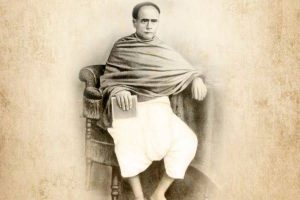
On 26th September 2026, India observed the 207th birth anniversary of Ishwar Chandra Vidyasagar, the eminent social reformer, philosopher, educationist, and polymath of the Bengal Renaissance, whose pioneering efforts in vernacular education, women’s rights, and social reform helped transform 19th-century Indian society.
- Early Life & Scholarship: Born in 1820 in West Bengal, he enrolled at Sanskrit College in 1829. He mastered Vedanta, Hindu law, and Western philosophy, earning the title “Vidyasagar” (Sea of Knowledge) at age 21.
- He began his career as head pandit at Fort William College and later became the Principal of Sanskrit College in 1851, using these platforms to reimagine Indian education.
- Rejecting elitist exclusivity, he championed mass education in the vernacular, established numerous schools for girls, and authored Barnaparichay (Introduction to Letters) to standardize the Bengali alphabet.
- He reconstructed and simplified the Bengali alphabet into 12 vowels and 40 consonants, removing unnecessary Sanskrit phonemes.
- His primer ‘Barnaparichay’ remains a foundational text for learning the Bengali alphabet.
- He was a pioneer of female education in India. Collaborating with Drinkwater Bethune (an English educator), he helped establish the Hindu Female School in 1849 (now Bethune College).
- Through writings in Sarva Subhakari (1850), he criticised child marriage on social, ethical, and health grounds.
- Widow Remarriage Act (1856): Drawing upon Smriti texts to prove scriptures did not prohibit the practice, his 1855 pamphlets and formal petition culminated in the British government passing the Hindu Widows’ Remarriage Act (Act XV) in 1856 (drafted during the tenure of Lord Dalhousie and enacted by Lord Canning).
- Crusade Against Polygamy: Combining rationalism with scriptural analysis, he led massive petition campaigns in 1857 and 1866 (gathering tens of thousands of signatures) to suppress Kulin Brahmin polygamy (marital and social system in Bengal where high-ranking Brahmin men married numerous wives).
- Pan-India Influence: Vidyasagar carried forward the reformist legacy of Raja Ram Mohan Roy by combining rational thought with scriptural interpretation.
- His writings and legislative victories inspired future reformers across India, including Jyotirao Phule and Vishnu Shastri Pandit, making him a foundational figure in India’s intellectual and moral history.
New Additions to India’s UNESCO Tentative List:

The Ministry of Culture and Tourism announced the inclusion of five new heritage properties and serial transnational proposals to India’s UNESCO Tentative List. With these new additions, India’s total count on the Tentative List has increased to 78.
Newly Added Sites to India’s UNESCO Tentative List:
Bagh Cave Paintings (Madhya Pradesh):
- It is Situated on the southern slopes of the Vindhyan range along the Baghni river, this site comprises nine rock-cut Buddhist caves carved into the only sandstone outcrop in an otherwise basaltic region.
- Chronology and Political Significance: Developed during the Gupta period (4th–6th century CE).
- Ancient inscriptions (358 to 487 AD) use terms like “Valkha” and “Vikha-adishthana” (powerbase of chiefdom), proving the site was a major political and administrative center, not merely an isolated retreat.
- Associated with the Buddhist monk Dataka, the complex functioned as a major Buddhist monastic retreat, featuring Chaityagrihas (assembly halls), Viharas (residential cells), pillared verandas, and Stupas.
- The murals demonstrate technical continuity with the Ajanta Caves, while retaining a distinct regional artistic identity. They used earth and lime-based plasters and mineral pigments such as lapis lazuli, terre verte, red and yellow ochre, and carbon.
Udaigiri Caves (Madhya Pradesh):
- Excavated primarily between the late 4th and early 5th centuries CE, the site contains twenty rock-cut caves commissioned under the reigns of Gupta emperors Chandragupta II and Kumaragupta I.
- Renowned for classical Vaishnava iconography, most notably the colossal Varaha panel (symbolizing divine rescue of Prithvi/Bhudevi, cosmic restoration, and royal sovereignty) and the reclining Anantasayana Vishnu.
- While predominantly dedicated to Vaishnavism and Shaivism, the ensemble also features Jain excavations, reflecting the religious pluralism of the Gupta period.
Group of Temples of the Chambal Valley (Madhya Pradesh):
- The Group of Temples of the Chambal Valley – comprising Bateshwar, Padavali, and Kakarmath in the Morena district of Madhya Pradesh.
Built between the 8th and 11th centuries CE, these monuments illustrate the evolution of regional architecture under the patronage of the Gurjara-Pratihara and Kachchhapaghata dynasties. - The complexes represent an outstanding example of regional Nagara-style temple architecture.
- Key features include axial temple planning, prominent shikharas (spires), elaborate sandstone carvings, and advanced dry masonry construction (precisely interlocked stone blocks built entirely without mortar).
Ginnorgarh Fort (Madhya Pradesh):
- A tribal hill-fort strategically situated inside the Ratapani Wildlife Sanctuary, utilizing dense forests, ravines, and steep slopes as natural defense mechanisms.
- It served as the principal fortified capital of the Raj Gond rulers of the Garha Kingdom between the 15th and 18th centuries.
- Link to Rani Durgavati: Following the fall of the legendary Gond queen Rani Durgavati in 1564 CE, the region came under Mughal control but retained deep-rooted local Gond influence, creating a layered political history.
Rangpur-Sivasagar Historical Ensemble (Assam):
- The Rangpur-Sivasagar Historical Ensemble represents the political, ceremonial, and architectural heart of the Tai Ahom kingdom in Assam.
- Led by Siu-ka-pha, the Tai Ahoms entered Assam from present-day Myanmar in 1228 CE and ruled the Brahmaputra Valley for 600 years.
- They successfully resisted Mughal expansion (notably the Battle of Saraighat in 1671) before declining due to Burmese invasions and British annexation via the Treaty of Yandaboo (1826).
- The ensemble centers on Rangpur (established as the Ahom capital in 1704) and Sivasagar, the later political and cultural hub.
Rising Digital Frauds and the Challenge of Ensuring Cyber Justice:

According to data from the National Crime Records Bureau (NCRB), cybercrime cases in India rose sharply by 17.9% from 2023 – 2024, moving against the broader national trend where overall registered crime fell by 6%.
- Concurrently, the Status of Policing in India Report (SPIR) 2026 highlights citizens’ vulnerability to cyber fraud and systemic challenges in securing justice for cyber fraud cases
- .Cybercrime in India is rising rapidly, driven by social engineering, AI-enabled scams, digital arrests and financial fraud, while low conviction rates, weak digital forensics and jurisdictional challenges hinder effective justice.
- India needs a shift toward proactive cyber justice through stronger I4C coordination, FRI-based prevention, real-time fund freezing, digital literacy, faster FIR registration and accountable policing.
- According to the latest NCRB 2024 report, India recorded over 1.01 lakh cybercrime cases.
- The crime rate for digital offenses has escalated to 7.3 per lakh population.
- This highlights a definitive national transition from localized, physical offenses to sophisticated, borderless digital crimes.
- Despite the rising number of cybercrime cases, the cybercrime conviction rate remains below 18%, as per NCRB 2022, due to challenges in digital evidence collection, procedural lapses, and the transnational nature of cybercrimes.
FAO Committee on Forestry:

India showcased it’s forest and landscape restoration at the Twenty-eighth Session of the FAO (Food and Agriculture Organization) Committee on Forestry (COFO 28) held in Rome.
- FAO Committee on Forestry is FAO’s (Food and Agriculture Organization) highest global intergovernmental body on forestry.
- It guides the organisation’s work and fostering international collaboration, policy dialogue, and technical guidance on forest-related issues.
- It was established by the Conference at its Sixteenth Session in 1971.
- COFO reports to the FAO Council on matters related to programmes and budgets, and to the FAO Conference on policy and regulatory issues.
- Its work is informed by six Regional Forestry Commissions, which review regional forestry priorities and inform global policy discussions.
- It convenes biennially (every two years) at the FAO headquarters in Rome.
- It brings together 128 Members, convening ministers, heads of forest services, senior government officials and partner organizations.
- It reviews the programmes of work of the Organization in the field of forestry and reviews forestry problems of an international nature, evaluating said problems with a view to concerted action by Member Nations and the Organization.
- It oversees the Working Group on Dryland Forests and Agrosilvopastoral Systems, which supports the development of a comprehensive understanding of dryland ecosystems.
PRAMAAN Certificate:
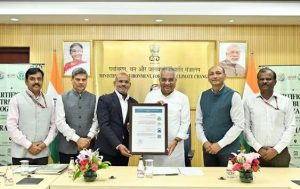
The Union Environment, Forest and Climate Change Minister handed over India’s first PRAMAAN certificates under the Indian Forest and Wood Certification Scheme (IFWCS).
- PRAMAAN stands for Programme for Recognition and Accreditation of sustainable Management practices for Agroforestry And Natural forestry resources.
- Launched by: Ministry of Environment, Forest and Climate Change (MoEFCC)
- It is a nationally accepted framework for certification of forests, wood and non-timber forest products.
- Under the framework, Forest Management certification is assessed against Indian Forest Management Standards derived from the National Working Plan Code 2023.
- PRAMAAN’s accreditation architecture is benchmarked against international frameworks, ensuring recognition among domestic and global buyers and regulators.
- The certification is audited by certification bodies accredited by the National Accreditation Board for Certification Bodies (NABCB) under the Quality Council of India.
- Three types of Certification under IFWCS “PRAMAAN”:
- Forest Management (FM) Certification: For recorded forest areas and forest plantations, in accordance with the Indian Forest Management Standard
- Trees Outside Forests (TOF) Management Certification: For agroforestry systems and private plantations in accordance with the Trees Outside Forests (Management) Standard
- Chain of Custody (CoC) Management Certification: Ensures traceability of timber and non-timber forest products at each step of production, from its source to the customer.
- The IFWCS-PRAMAAN certificate enhances the social, and ecological values of India’s forests, agroforestry systems and the Indian wood-based industries.
Mandar Instrument:
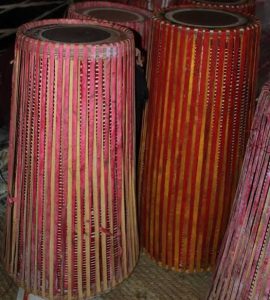
The traditional musical instrument Mandar, has received official recognition with a Geographical Indication tag.
- Mandar Instrument is a traditional musical instrument deeply rooted in the folk culture and tribal life of Jharkhand.
- The Mandar is a percussion instrument characterised by its distinctive cylindrical shape made from red clay, which slightly bulges in the middle.
- The structure is hollow, with its openings covered by leather on both sides.
- The right opening is smaller, while the left is larger.
- The leather coverings are secured using braided cords.
- A special coating, known as Kiran, is applied to the smaller opening, giving Mandar its resonant and unique sound.
- When played, the musician often moves rhythmically, carrying the instrument using a rope slung over the shoulder.
- It serves as the primary instrument played during festivals, crop celebrations, religious rituals, and cultural events.
- It is deeply integrated into the lives of both tribal and non-tribal communities, having been used for centuries in various dance and song performances.
Vasundhara Lake:
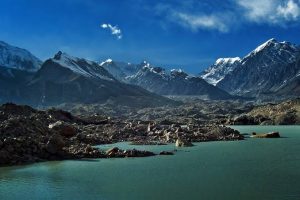
The Uttarakhand state is installing first early-warning system at Vasundhara Tal in Chamoli to monitor it in real time.
- Vasundhara Lake is a high-altitude glacial lake located in Chamoli district of Uttarakhand.
- It is situated at an elevation of about 4,795 meters in the Raikana valley.
- It serves as an originating source for the Dhauliganga River, a vital tributary of the Alaknanda.
- The lake sits at the snout of the Raikana Glacier which is the primary source of this lake.
- It was classified as Category A, the highest-risk category lake by the National Disaster Management Authority (NDMA).
- Vasundhara Early-warning system will track water level, weather, snow conditions, water flow and movement around the lake.
- Components and Working:
- A water-level sensor will monitor fluctuations and abnormal changes.
- An automatic weather station will record temperature, humidity, rainfall, wind speed and direction, atmospheric pressure and light intensity.
- Snow-depth and sub-surface temperature sensors will monitor changes in snow conditions.
- Tilt and accelerometer sensors will detect movement and vibrations at selected locations, while a water-flow sensor will monitor changes in discharge.
- The equipment will be powered through a solar-energy system, and data will be transmitted by satellite because conventional mobile networks are unavailable in the remote high-altitude region.
- A data logger and monitoring dashboard will record the readings and generate alerts when predetermined thresholds are crossed.
Fukutoku-Okanoba Volcano:
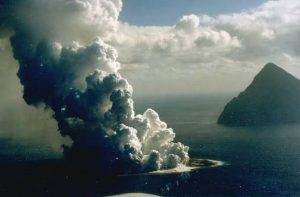
Japan’s Coast Guard recently reported signs of activity at the Fukutoku-Okanoba submarine volcano.
- Fukutoku-Okanoba Volcano is an active submarine volcano that is part of the Volcano Islands of Japan in the Pacific Ocean.
- It is part of the Izu-Bonin arc formed by subduction of the Pacific Plate beneath the Philippine Sea Plate.
- Its summit is just 14 meters (46 feet) below sea level, allowing Surtseyan eruptions to breach the surface.
- Composition is tholeiitic basalt, typical of arc front volcanism.
- It remains active with intermittent submarine eruptions and discoloured water since 2013.
- Eruptions are explosive with pumice rafts, discoloured water, and occasional ephemeral island formation.
- The 2021 eruption produced massive pumice rafts that drifted thousands of kilometres across the Pacific, impacting shipping and beaches.
- The volcano’s frequent activity and shallow depth make it one of the most dynamic submarines, with eruptions often detected by satellite discoloration.
- Surtseyan Eruption is a type of volcanic eruption that takes place in shallow seas or lakes.
- It is named after the island of Surtsey off the southern coast of Iceland.
- When magma rises close to the surface of the water, it can come into contact with the water and cause it to flash to steam.
- The sudden increase in volume of the steam can cause an explosion, which can fragment the magma into small pieces.
- These pieces of magma, called tephra, can be ejected into the air, forming an ash column.
- These eruptions are commonly phreatomagmatic eruptions, representing violent explosions caused by rising basaltic or andesitic magma coming into contact with abundant, shallow groundwater or surface water.
- Tuff rings, pyroclastic cones of primarily ash, are built by explosive disruption of rapidly cooled magma.
- Surtseyan eruptions are relatively common, and they can be found all over the world.
- Surtseyan eruptions can be very dangerous.
- The ash and rock fragments that are ejected into the air can travel long distances, and they can be a hazard to ships and aircraft.
- The sudden expansion of steam can also cause shock waves, which can damage buildings and other structures.
What is Galaxy Frog?
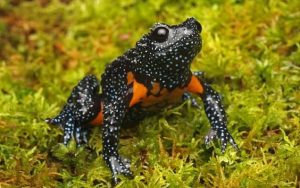
The rarely sighted Galaxy frog returned to the spotlight after the Additional Chief Secretary, Environment, Climate Change and Forests Department of Tamil Nadu, shared new images of the frog, as its galaxy-like spots are being studied.
- Galaxy Frog is a small, nocturnal amphibian.
- It is one of the rarest amphibians in the world.
- The species was first described in 1878 from the Anamalai Hills of Tamil Nadu, and was later rediscovered in 1997, after decades in which it was exceptionally difficult to find.
- It belongs to the family Microhylidae and sub-family Melanobatrachinae.
- Scientific Name: Melanobatrachus indicus
- It is the sole member of its genus.
- It is endemic to the southern Western Ghats, with records from parts of Kerala and Tamil Nadu.
- The rarely-sighted creature lives in wet evergreen and other moist forest habitats, generally at elevations of about 1,000 to 1,500 metres.
- They are typically found in dark, moist places such as under the cover of leaf litter, rotting logs and rocks.
- Features:
- It has a slender, elongated body of uniform width.
- It measures just 2-3.5 centimeters in length.
- The amphibian’s dark body is covered with tiny bluish-white spots that resemble stars, while flashes of scarlet-orange appear underneath.
- Conservation Status:
- IUCN Red List: Vulnerable
Didymocarpus nautiyalii:
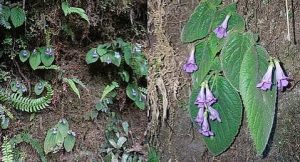
Botanists recently discovered a new plant species in Arunachal Pradesh’s Shi-Yomi district, highlighting the rich botanical diversity of the Eastern Himalaya.
- Didymocarpus nautiyalii is a new plant species.
- It was discovered in Arunachal Pradesh’s Shi-Yomi district.
- It belongs to the Gesneriaceae, a family of flowering plants.
- The small herb grows on moist rock surfaces, including roadside walls and areas near waterfalls, in subtropical evergreen forests at elevations above 1,000 metres.
- It grows to only around 8 cm and has leathery leaves and distinctive bluish-purple flowers.
- The plant resembles Didymocarpus albiflorus but differs in several characteristics, including its much shorter stem, very short or absent leaf stalks, leathery leaf blades, smaller calyx, shorter bluish-purple corolla, and a hairless ovary.
- The researchers have currently assessed D. nautiyalii as ‘Data Deficient’ under the IUCN Red List criteria.
Unified Complex Radio Antenna (UNICORN):

Japan recently called on India to fast-track internal official processing of the agreement on the UNICORN (Unified Complex Radio Antenna) naval radar system.
- UNICORN, also known as NORA-50, is a shipborne integrated antenna system.
- It is a mast with integrated communication systems that is engineered to dramatically enhance a warship’s stealth and situational awareness.
- Developed jointly by three Japanese companies (NEC Corporation, Sampa Kogyo K.K., and The Yokohama Rubber Co., Ltd.), the system is already in service aboard Japan’s Mogami-class frigates.
- Conventional warships typically carry several exposed antennas – for radar, communications, and electronic warfare – bolted onto a mast.
- Each of these surfaces adds to a ship’s radar cross-section, making it easier for an adversary to detect.
- UNICORN does away with that arrangement by consolidating multiple antennas into a single enclosed radome mounted on one mast, cutting down the number of reflective surfaces a hostile radar can pick up.
- Its design stacks the antennas vertically inside a bar-shaped dome, moving components such as the tactical air navigation antenna from an exposed position at the top of the mast to a more sheltered spot lower down.
- A lightning diverter strip runs across the mast’s surface as a safety measure, given the exposure of ships at sea to lightning strikes.
- Inside this unified mast are several vital subsystems, including those for tactical data links, Tactical Air Navigation Systems (TACAN), Identification Friend or Foe (IFF), Electronic Support Measures (ESM), and general communications.
- This innovation significantly reduces the cross-section of naval platforms, thereby enhancing their stealth characteristics and enabling them to operate with reduced electronic signatures.
- Beyond stealth, the system is also designed to reduce mutual interference between closely packed antennas, improve the range at which external radio signals can be detected, and simplify installation and maintenance.
- India-Japan Agreement:
- India and Japan signed a Memorandum of Implementation (MOI) on 15 November 2024 for the co-development of UNICORN masts.
- It is the first military hardware co-development pact between the two countries.
- Japan will provide the design and engineering support, while India will handle integration, adaptation, and co-production through Bharat Electronics Limited (BEL).
- The integrated mast is expected to gradually replace existing communication and sensor mast systems across the Navy’s fleet.



