
Today’s Current Affairs: 1st Sep 2026 for UPSC IAS exams, State PSC exams, SSC CGL, State SSC, RRB, Railways, Banking Exam & IBPS, etc
Table of Contents
Malaria : Decline
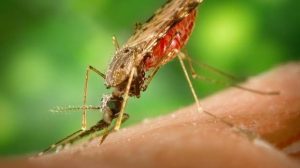
According to the Union Health Ministry, India recorded a nearly 80 per cent decline in malaria cases and deaths between 2015 and 2025, while the number of high-burden districts dropped sharply from 155 to 33.
- It is a life-threatening febrile illness caused by Plasmodium parasites.
- It is transmitted through the bites of infected female Anopheles mosquitoes.
- It is not contagious, but can be spread through infected blood or contaminated needles.
- Risk: Infants, children under 5 years, pregnant women and girls, travellers and people with HIV or AIDS are at higher risk of severe infection.
- Treatments include
- ACTs (Artemisinin-based Combination Therapies) for P. falciparum.
- Chloroquine for P. vivax
- Primaquine to prevent relapses in P. vivax and P. ovale infections.
Magnetar:

A magnetar called 1E 1547.0−5408 has produced the strongest observational case so far that an intense magnetic field can change how light travels through otherwise empty space.
- Magnetars are neutron stars having an ultrahigh magnetic field that are much stronger than the terrestrial magnetic field.
- They are formed in the same way as all neutron stars, through the core-collapse of a massive star in a supernova explosion.
- The idea of a magnetar was first proposed in 1987 and used to successfully explain soft gamma repeaters (SGR) in 1992.
- They are characterised by exceptionally strong magnetic fields, estimated to be a thousand times stronger than typical neutron stars.
- The magnetic field of a magnetar is over one quadrillion times stronger than the magnetic field of Earth.
- What powers the emission of high-energy electromagnetic radiation in them is the decay of magnetic fields in these objects.
- Besides, magnetars display strong temporal variability, typically including a slow rotation, a rapid spin-down, bright but short bursts going on upto months-long outbursts.
- Occasionally, they emit intense bursts of energy in the form of flares.
Kamlang Tiger Reserve:
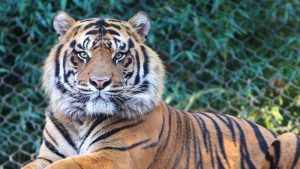
The Wildlife Trust of India (WTI), in collaboration with The Serenity Trust and the Department of Environment, Forest and Climate Change, provided essential field gear and equipment to frontline staff of the Kamlang Tiger Reserve.
- Kamlang Tiger Reserve is located in Arunachal Pradesh near the border with Myanmar.
- It is a part of the larger Eastern Himalayan Biodiversity Hot Spot.
- It is named after the Kamlang River, which flows through the reserve and joins the Brahmaputra.
- It is spread between the famed Namdapha National Park on its south and the Lang River on its north.
- The western border is formed by the Lati River, while its eastern part is bordered by the Tawe River.
- It encompasses a diverse range of landscapes, including dense tropical forests, grasslands, rivers, and hills.
- It enjoys a subtropical climate as it falls within the subtropical zone.
- The vegetation types include moist evergreen tropical forests in the foothills and subtropical and temperate forests in higher elevations.
- Common species of trees in the reserve include Ammora wallichi (Amari), Gmelina arborea (Gamari), Terminalia chebula (Hillika), Canarium resigniferum (Dhuna), and many others.
- All four big cats, including the Snow Leopard, Clouded Leopard, Leopard and Tiger and other species like Himalayan Palm Civets, Leopard Cat, Slow Lories and Hoolock Gibbon, can also be spotted in the sanctuary.
Hanging Glaciers:
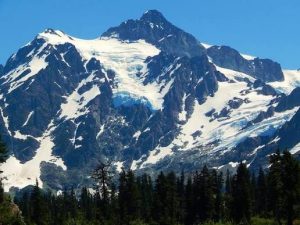
Recent study published in Nature magazine has found that there are as many as 219 hanging glaciers in the Alaknanda basin of the Garhwal Himalayas.
- Hanging glaciers are ice masses perched on steep slopes that can detach and trigger massive avalanches.
- They occur when a major valley glacier system retreats and thins, leaving the tributary glaciers in smaller valleys high above the shrunken central glacier surface.
- If the entire system has melted and disappeared, the empty high valleys are called hanging valleys.
- Impact of Hanging Glaciers:
- Hanging glaciers pose a significant risk of break-offs.
- The break-offs from hanging glaciers can also trigger secondary hazards such as glacial lake outburst floods (GLOFs).
- Glaciers in high-elevation alpine environments are highly sensitive to climate variability and warming.
- This sensitivity is particularly pronounced in the Himalaya, where warming over the past two decades has exceeded the global average, resulting in accelerated glacier retreat.
Larak Island:
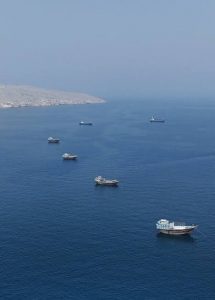
Iran retaliated with ballistic missiles at US bases in Jordan after the Larak Island strike.
- Larak Island is a small island located in the Strait of Hormuz.
- It is to the south of Hormuz Island, southeast of Bandar Abbas and southeast of the eastern end of Qeshm Island.
- The island sits close to one of the world’s most important maritime choke points.
- Larak’s importance is closely tied to the Strait of Hormuz, the narrow waterway linking the Persian Gulf with the Gulf of Oman.
- Strait of Hormuz is a narrow waterway between Iran and the Arabian Peninsula, specifically the United Arab Emirates, and Musandam (Oman).
- The Gulf of Oman is on the strait’s east, while the Persian Gulf is on the west.
- It is the only sea channel linking the oil-rich Persian Gulf (west) with the Gulf of Oman and the Arabian Sea (southeast).
- Iran is located on the north coast, while the UAE is on the south coast.
- Some of the islands located in the Strait of Hormuz are Hengam, Hormuz, and Qishm.
Rove beetle:
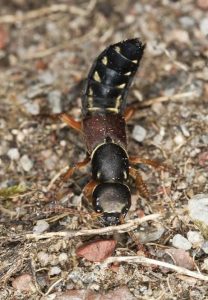
An Indo-German research team has discovered 15 species of rove beetles in the waterfalls and forests of Arunachal Pradesh.
- Rove beetles (family Staphylinidae) are one of the largest beetle families.
- They are typically elongate, fast-moving beetles with shortened wing covers (elytra) that expose flexible abdominal segments.
- Many species of these beetles can raise the abdomen in a scorpion-like defensive posture (not a true sting).
- It is mainly found in sub-tropical, cold tolerant climate.
- Typical microhabitats include leaf litter, soil surface, under bark, fungi, shorelines, dung, carrion, compost, and nests of social insects;
- These are usually found around decaying animal and vegetable matter, preying on carrion-feeding insects.
- Rove beetles occupy almost all moist environments throughout the world.
- Features:
- Some large species are a brightly coloured black and yellow, thus resembling wasps; other rove beetles mimic soldier ants in both appearance and behaviour.
- These predatory beetles are beneficial to farmers and gardeners, because they can reduce pest populations, also referred to as biological control
- Lifespan is variable: Adults may live ~2 weeks to ~12 months; total life cycle often ~1-24 months depending on climate and species.
- It has chemical defenses from abdominal glands; secretions can deter predators and may include irritants or antimicrobial compounds.
PM-SETU Scheme:

The Ministry of Skill Development and Entrepreneurship (MSDE), Government of India, in collaboration with the Government of Uttar Pradesh, today organized the PM-SETU Industry Conclave in Lucknow.
- PM-SETU (Pradhan Mantri Skilling and Employability Transformation through Upgraded ITIs) is a Centrally Sponsored Scheme launched to strengthen India’s vocational training ecosystem.
- It aims to modernise the ITI ecosystem by upgrading 1000 government ITIs across India into modern, industry-aligned training institutions
- It is implemented as a hub-and-spoke model, with 200 hub ITIs linked to 800 spoke ITIs.
- Each hub will be equipped with advanced infrastructure, innovation and incubation centres, production units, training of trainer facilities, and placement services, while the spokes will extend access and outreach.
- Objectives:
- To improve the quality of training delivery in Industrial Training Institutes (ITIs) and National Skill Training Institutes (NSTIs)
- To modernize infrastructure and equipment as per industry standards
- To introduce industry-aligned long-term and short-term courses, especially in new and emerging sectors
- To strengthen industry linkage for demand-driven skilling and better employment outcomes
- To enhance the capacity of NSTIs for training of trainers
- Financial outlay and Time Period: ₹60,000 crore, over a five- year period.
- Nodal Ministry: Ministry of Skill Development and Entrepreneurship
- Components of PM-SETU Scheme:
- Introduce new, demand-driven courses and revamp existing ones in collaboration with industry;
- Special Purpose Vehicles: Set up Special Purpose Vehicles (SPVs) with credible Anchor Industry Partners to manage clusters and ensure outcome-based training;
- Create pathways for long-term diplomas, short-term courses, and executive programs;
- Strengthen 5 National Skill Training Institutes in – Bhubaneswar (Odisha), Chennai (Tamil Nadu), Hyderabad (Telangana), Kanpur (Uttar Pradesh), Ludhiana (Punjab), as Centres of Excellence with global partnerships.
- The initiative is backed by global co-financing from the World Bank and Asian Development Bank.
Integrated Fertilizer Management System:
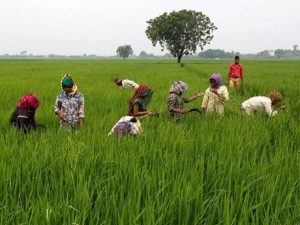
The Ministry of Chemicals and Fertilizers said that the Integrated Fertilizer Management System (iFMS) has entered a new phase with the introduction of a series of digital initiatives.
- It is the digital platform for fertilizer management in India.
- It is developed and technically supported by the National Informatics Centre (NIC) for the Department of Fertilizers.
- It offers a range of online services related to fertilizer distribution and management.
- It includes dealer registration, stock availability tracking, dealer search, and access to Management Information System and Direct Benefit Transfer (DBT) reports.
- iFMS connects key stages of the fertilizer ecosystem, including production, imports, movement, stock availability, retail sale and subsidy processing.
- The new dashboards and analytical tools have been developed to provide officials with a consolidated view of fertilizer production, imports, dispatches, movement, stocks and retail sales.
- These tools enable monitoring at the national, State, district and retailer levels, helping identify unusual trends and emerging supply situations at an early stage.
- iFMS enhances transparency, efficiency, and real-time monitoring in fertilizer supply, supporting farmers and stakeholders in ensuring timely availability of quality fertilizers.
India–Uzbekistan Comprehensive Strategic Partnership:
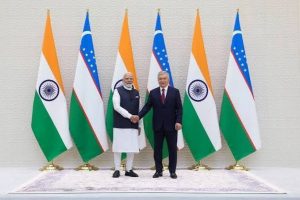
The Prime Minister undertook a State Visit to Uzbekistan to commemorate the 15th anniversary of the India-Uzbekistan Strategic Partnership (2011). During the visit, the two nations elevated their bilateral relations to a Comprehensive Strategic Partnership.
- The visit comes at a time when stakes are high for India as it actively seeks to reset and deepen its ties with Central Asian countries amid shifting geopolitical dynamics.
- The Prime Minister Narendra Modi was conferred with the “Oliy Darajali Do’stlik” Order, Uzbekistan’s highest state honour.
- Both nations formally upgraded their bilateral relationship to a Comprehensive Strategic Partnership, broadening long-term engagement across strategic, economic, and technological domains.
- Both countries adopted a zero-tolerance approach to terrorism and called for action against terror financing, safe havens and perpetrators.
- Both sides agreed to expand defence-industrial cooperation through the Joint Working Group on Military Cooperation.
- They welcomed the successful Dustlik military exercise, held in Uzbekistan in April 2026.
- Set a bilateral trade target of USD 5 billion by 2030, up from the current volume of over USD 1 billion.
- Both Nations agreed to establish a Coordination Council led by Foreign Ministers to oversee bilateral cooperation and upgrade the existing Joint Commission from the secretarial to the ministerial level.
- Created a Joint Working Group to address trade and investment barriers in sectors such as engineering, automobiles, electrical goods and pharmaceuticals.
- Both sides agreed to take time-bound steps towards an India-Uzbekistan PTA.
- India reaffirmed its support f`or Uzbekistan’s accession to World Trade Organization (WTO).
- Cooperation between Invest India and Uzbekistan’s Investment Promotion Agency will promote two-way investment flows.
- Agreed to implement joint ventures in geological exploration, mining, processing, value addition, and recycling of critical minerals.
- The two nations agreed to establish a framework for the long-term supply of uranium from Uzbekistan to India to meet the fuel requirements of India’s civil nuclear energy programme.
- Explored avenues for extended cooperation in the peaceful uses of nuclear energy, modernization of energy grids, and renewable energy infrastructure.
- Decided to scale up partnerships between startups, tech incubators, and IT parks, building on the success of the Tashkent IT Park (established in 2019 with Software Technology Parks of India(STPI) assistance).
- Agreed to collaborate on developing secure and trustworthy Artificial Intelligence (AI) systems for economic development and societal problem-solving.
- An agreement between NPCI International Payments Ltd and Uzbekistan’s National Interbank Processing Centre will allow Indian UPI apps to scan Uzbekistan’s UZQR national codes, boosting digital connectivity.
- India announced a USD 1 million grant under its Grant-in-Aid framework to support afforestation and ecological rehabilitation in the fragile Aral Sea region, linking Uzbekistan’s “Yashil Makon” with India’s “Ek Ped Maa Ke Naam”.
- Agreed to utilize the Tashkent Pharma Park cluster for joint manufacturing, technology transfer, and establishing Indian medical laboratories and research centres in Uzbekistan.
- Signed a Letter of Intent to conserve and restore the ancient Buddhist heritage sites of Fayaz Tepa and Karatepa, along with a Cultural Exchange Program (2026–2030).
- India announced the Lal Bahadur Shastri Scholarship for Hindi language learning in Uzbekistan and signed an MoU for cooperation in traditional medicines (AYUSH).
- Uzbekistan reaffirmed its support for India’s candidature for permanent membership in a reformed UN Security Council.
- Uzbekistan expressed its intent to join the International Solar Alliance (ISA) and the International Big Cat Alliance (IBCA).
- Uzbekistan backed India’s 2026 BRICS Chairship, while India pledged support for Uzbekistan’s upcoming Non-Aligned Movement (NAM) Chairship (2027–2030).
- Both reaffirmed cooperation within the SCO and the Central Asia–India framework.
National Animal Disease Control Programme (NADCP):
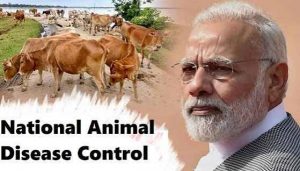
The Government has highlighted the achievements of the National Animal Disease Control Programme (NADCP) in strengthening India’s livestock health ecosystem through mass vaccination, disease surveillance and digital livestock management.
- The programme has administered 147.16 crore FMD vaccine doses, benefiting 8.04 crore farmers. As a result, reported Foot and Mouth Disease (FMD) outbreaks declined from 132 in 2019 to 40 in 2025, while Brucellosis outbreaks reduced from 22 in 2019 to 15 in 2025.
- The National Animal Disease Control Programme (NADCP) is a flagship Scheme launched in September 2019 to control and eradicate Foot and Mouth Disease (FMD) and Brucellosis through nationwide vaccination.
- Vaccination Targets under NADCP:
- 100% vaccination of cattle, buffalo, sheep, goat, and pig populations against FMD.
- 100% vaccination of female bovine calves aged 4–8 months against Brucellosis
- FMD outbreaks have declined by more than 60% compared to the period before NADCP. India continues efforts through vaccination, surveillance, animal identification and disease monitoring to achieve FMD eradication by 2030.
- Funding Pattern: It is a Central Sector Scheme under which 100% funding is provided by the Central Government to States/UTs.
- The programme includes sero-surveillance, sero-monitoring, outbreak investigation, virus identification and impact assessment to track disease prevalence and vaccination effectiveness.
- Livestock are ear-tagged, registered and digitally recorded on the Bharat Pashudhan Portal for effective monitoring and disease management.
- NADCP supports vaccine procurement, cold-chain infrastructure, awareness campaigns, official training, animal movement regulation and quarantine measures.
- The programme provides remuneration to vaccinators, with a minimum support of ₹3 per vaccination dose, to ensure effective field-level implementation.
- Under the revised Livestock Health and Disease Control Programme (LHDCP), NADCP, Livestock Health & Disease Control (LH&DC) component and Pashu Aushadhi initiative have been brought under one umbrella framework. The 2026–27 budget allocation for LHDCP is ₹2,010 crore.
India Signs Deal for 60 US Javelin Anti-Tank Missiles:

India has signed a Letter of Offer and Acceptance (LOA) with the US for a ₹292-crore government-to-government deal to acquire around 60 Javelin anti-tank guided missiles (ATGMs) for the Indian Army through the US Foreign Military Sales (FMS) route.
- The acquisition will provide an immediate operational capability, while India’s indigenous Man-Portable ATGM (MPATGM) is being developed to progressively replace ageing Milan-2T and Konkurs systems.
- It is a man-portable, shoulder-fired, medium-range anti-tank guided missile (ATGM) designed for individual or dismounted infantry use.
- Utilizes a passive imaging-infrared seeker that automatically tracks targets post-launch, allowing troops to immediately relocate and evade counter-fire.
- Ejects the missile using an initial motor before main ignition, minimizing exhaust and enabling safe firing from confined spaces like bunkers and buildings.
- Offers an effective operational range of 2.5 to 4 km and weighs approximately 22 kg, ensuring high mobility for infantry units.
- Extensively battle-tested in high-intensity global conflicts, including deployments in Iraq, Afghanistan, and Ukraine.
- Jointly produced by the Javelin Joint Venture (comprising US defence majors Lockheed Martin and RTX).
- The procurement strengthens the U.S.-India Major Defence Partnership and paves the way for potential mutually beneficial co-production, which aligns with India’s goal of bolstering its domestic defence industrial base.
Legal Metrology (Indian Standard Time) Rules, 2026:

The Department of Consumer Affairs has notified the Legal Metrology (Indian Standard Time) Rules, 2026, establishing Indian Standard Time (IST) as the mandatory, single time reference for all legal, administrative, commercial, and official purposes across India.
- The rules will formally take effect 180 days from publication in the Official Gazette, providing government bodies, enterprises, and institutions a transitional window for system upgrades.
- The rules were notified under Section 52 of the Legal Metrology Act, 2009, giving legal and administrative significance to a uniform national time standard.
- Eliminates timing discrepancies across critical digital and physical infrastructure by standardizing accurate time-stamping for:
- Banking and digital payment transactions to prevent reconciliation errors and fraud.
- Transport coordination across railways, air traffic, and emergency response networks.
- Telecommunications, internet networks, and smart power grids requiring precise microsecond-level synchronization.
- Legal records, administrative logs, and government filings to ensure legal evidentiary validity.
- Strategic Indigenisation: Mandates the use of NavIC (Navigation with Indian Constellation) and domestic timing infrastructure to systematically reduce dependency on foreign satellite systems (such as the US GPS).
- Precise IST will be disseminated through domestic infrastructure backed by CSIR-National Physical Laboratory (CSIR-NPL) and Legal Metrology laboratories.
- The new rules are part of the government’s broader ‘One Nation, One Time’ initiative, which seeks to establish a unified national time standard across critical infrastructure.
- It uses White Rabbit Technology (WRT), commissioned at the Regional Reference Standard Laboratory (RRSL), Bengaluru, to achieve sub-nanosecond-level time synchronisation across institutions such as ISRO, SEBI, NSE and BSNL.
Lake Ontario:

The US President signed an executive order to rename Lake Ontario as “Lake America”, citing its significance as a US asset and part of American heritage.
- Canada opposed the move, stating that the name Ontario has Indigenous Wendat origins and is over 400 years old, predating both the Canadian Confederation and the US Declaration of Independence.
- The new name is not binding on Canada or other countries as there is no single global authority for standardising geographical names.
- Lake Ontario is one of the five Great Lakes of North America (Superior, Michigan, Huron, Erie, and Ontario) and lies between the Ontario province of Canada and New York State of the USA.
- It is the only Great Lake that does not border Michigan.
- Lake Ontario is the smallest of the five Great Lakes by surface area and forms the easternmost and final lake of the Great Lakes system.
- The Great Lakes system contains around 20% of the world’s surface freshwater, making it one of the largest freshwater ecosystems globally.
- Its waters flow into the Saint Lawrence River, which connects the Great Lakes with the Atlantic Ocean, making it an important corridor for navigation, trade, and freshwater exchange.
- It is connected to Lake Erie through the Welland Canal and forms part of the Great Lakes–Saint Lawrence navigation system.
- The Niagara River is the principal source of water for Lake Ontario, contributing about 85% of its inflow.
- The lake supports diverse aquatic ecosystems, including species such as the Lake Sturgeon, which faces conservation challenges.



