
Today’s Current Affairs: 20th jun 2026 for UPSC IAS exams, State PSC exams, SSC CGL, State SSC, RRB, Railways, Banking Exam & IBPS, etc
Table of Contents
Non-Methane Hydrocarbons:
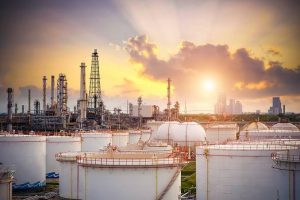
Researchers from Aryabhatta Research Institute of Observational Sciences (ARIES) spent a year (2022–2023) measuring non-methane hydrocarbons (NMHCs) in Munsyari.
- Non-Methane Hydrocarbons are trace atmospheric constituents which includes ethane, ethene, propane, propene, and isoprene.
- These are a group of reactive gases emitted from fuel use, vehicles, and other human activities that play a key role in forming ozone and secondary aerosols.
- They are primarily produced from terrestrial sources, with some contribution from marine environments, and exhibit distinct production processes influenced by environmental factors.
- They play a significant role in controlling ozone concentrations and serving as a sink for hydroxyl radicals.
- They are vital precursors for the photochemical formation of tropospheric ozone and secondary organic aerosols (SOA).
- It is important to trace them and evaluate their implications for regional air quality and potential impacts on human health.
Indian Coast Guard : 12th International Day of Yoga
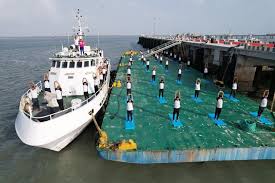
The Indian Coast Guard (ICG) marked the 12th International Day of Yoga (IDY) 2026 with great enthusiasm and nationwide participation through its flagship initiative, “Yoga Sangam 2026.”
- Indian Coast Guard is a maritime armed force operating under the Ministry of Defence, Government of India.It is a multi-mission organization, conducting round-the-year real-life operations at sea.
- It was formally established in 1978 by the Coast Guard Act, 1978 as an independent Armed force of India.
- The Headquarters of the ICG is located in New Delhi, and is under the command of the Director General Indian Coast Guard.
- Moto: “VAYAM RAKSHAMAH” – WE PROTECT
- Mission:
- To protect our ocean and offshore wealth, including oil, fish, and minerals.
- To assist mariners in distress and safeguard life and property at sea.
- To enforce maritime laws with respect to the sea, poaching, smuggling, and narcotics.
- To preserve the marine environment and ecology and protect rare species.
- To collect scientific data and back up the Navy during war.
Bitumen: In News
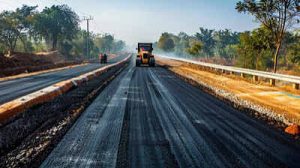
The ongoing conflict in West Asia has hit India’s push to expand road infrastructure as Bitumen was also caught in the crossfire with an import dependency ranging between 30 to 40%.
- Bitumen is a dense, highly viscous, petroleum-based hydrocarbon.
- It is found in deposits such as oil sands and pitch lakes (natural bitumen) or is obtained as a residue of the distillation of crude oil.
- Bitumen is primarily used for paving roads and is known as black gold in the pavement industry.
- It is known for its waterproofing and adhesive properties.
- It has adhesive properties, and is soluble in carbon disulphide.
- It is composed of complex hydrocarbons and contains elements like calcium, iron, sulfur, and oxygen.
- The quality of material and ease of production depends on the source and type of crude oil from which it is derived.
- Applications:
- Bitumen is versatile and widely used.
- It is commonly used in the construction industry, notably for roads and highways.
Development Policy Financing:
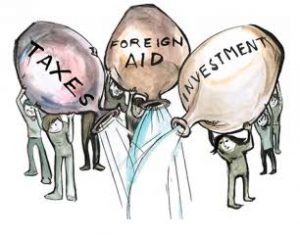
The World Bank’s Board of Executive Directors approved $1.5 billion financing to India under the Development Policy Financing (DPF) Operation.
- Development Policy Financing provides rapidly disbursing financing to help a borrower address actual or anticipated development financing requirements.
- It supports borrowers in achieving poverty reduction and climate-friendly sustainable and inclusive growth through a program of policy and institutional actions.
- It can be extended as loans, credits/grants, or guarantees.
- It is an initiative of the World Bank.
- Funds are made available to country based on
- Maintenance of an adequate macroeconomic policy framework, as determined by the Bank with inputs from IMF assessments;
- Satisfactory implementation of the overall reform program;
- Completion of a set of critical policy and institutional actions agreed between the Bank and the client
- Alignment with the Goals of the Paris Agreement
Sickle Cell Anaemia : Target Of 2047 To Eradicate
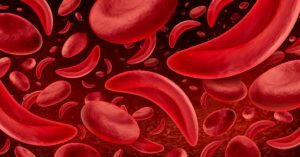
The President of India said that the country would eradicate sickle cell anaemia well before the government-set target of 2047.
- Sickle Cell Anaemia is a group of inherited blood cell disorders that affect hemoglobin, the molecule in red blood cells (RBCs) that delivers oxygen to cells throughout the body.
- Normally, RBCs are disc-shaped and flexible enough to move easily through the blood vessels.
- People with SCD have atypical hemoglobin molecules called hemoglobin S, which can distort RBCs into a sickle, or crescent, shape.
- When RBCs sickle, they do not bend or move easily and can block blood flow to the rest of the body.
- The sickle-shaped cells can also stick to vessel walls, causing a blockage that slows or stops the flow of blood.
- The cause of SCD is a defective gene, called a sickle cell gene.
- A person will be born with SCD only if two genes are inherited—one from the mother and one from the father.
- If one are born with one sickle cell gene, it’s called sickle cell trait. People with sickle cell trait are generally healthy, but they can pass the defective gene on to their children.
- Signs and symptoms of sickle cell disease usually begin in early childhood.
- Early stage: Extreme tiredness or fussiness from anemia (low number of RBCs), painfully swollen hands and feet, and jaundice.
- Later stage: Severe pain, anemia, organ damage, and infections.
- Treatments:
- A bone marrow transplant (stem cell transplant) can cure SCD.
- However, there are treatments that can help relieve symptoms, lessen complications, and prolong life.
- Gene therapy is also being explored as another potential cure.
Abhigyan App:
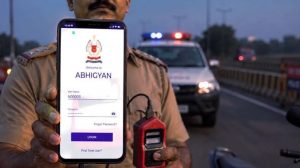
The Union Home Minister launched the Abhigyan app in New Delhi.
- Abhigyan App is a centralised platform created to support law enforcement in making better use of crime-related data.
- It is developed by the National Crime Records Bureau (NCRB).
- It enables field police personnel to access a vast repository of criminal records directly on their smartphones.
- It is secured with two-step authentication and allows real-time fingerprint identification within seconds, strengthening ground-level policing.
- It is equipped with features such as fast identification, portability, and access to millions of records.
- The app is linked to the National Automated Fingerprint Identification System (NAFIS), which stores fingerprint scans of accused, convicts, and those in prisons on a centralised platform.
- A demonstration of the app showed that prints can be matched with the NAFIS database in 35 seconds.
National Crime Records Bureau:
- It was established in 1986 to act as a repository of information on crime and criminals.
- It was set up based on the recommendations of the Tandon Committee, the National Police Commission (1977-1981) and the Task Force of the Home Ministry.
- Nodal Ministry: It comes under the Ministry of Home Affairs (MHA), Government of India.
- Headquarters: New Delhi.
Norway:
Norway is imposing a near ban on the use of generative AI tools by elementary school pupils while also restricting their use in the education of older children to prevent a negative impact on learning.
- Norway is located on the western half of the Scandinavian Peninsula.
- It shares land borders with Sweden, Finland and Russia in the east and an extensive coastline facing the North Atlantic Ocean on the west.
- It is bounded by the Barents Sea in the north, the Norwegian Sea and the North Sea in the west and the Skagerrak (Skager Strait) in the south.
- Capital City: Oslo
- About two-thirds of Norway is mountainous, and off its much-indented coastline lie, carved by deep glacial fjords.
- The highest point in Norway is Galdhopiggen
- Rivers: Glama, the country’s longest, and the Dramselva, Lagen (two of them) and the Tana in the far north.
- Lakes: Lake Mjosa is the largest Lake.
- It has deposits of iron ore, copper, titanium, coal, zinc, lead, nickel, and pyrite, and large offshore reserves of petroleum an
Jonathan the Tortoise Becomes the World’s Oldest Known Land Animal at 194:
There are few living creatures who can claim to have witnessed nearly two centuries of the human history. Out of them Jonathan, it is a Seychelles giant tortoise living on the remote South Atlantic island of St Helena has done exactly like that. Its estimated age is 194 years and he is now officially recognized as the world’s oldest known terrestrial animal and the oldest turtle ever recorded on the record.He was born around the year 1832 and he has lived through some of the history’s most transformative periods.Jonathan belongs to the species of the Seychelles giant tortoise which is one of the largest tortoise species in the world.
International Tribunal for the Law of the Sea:
India’s candidate, Professor Bimal N. Patel has been elected as a Judge of the International Tribunal for the Law of the Sea (ITLOS) for the 2026-2035 term.
- It is an independent judicial body established by the 1982 United Nations Convention on the Law of the Sea (UNCLOS).
- The Tribunal is composed of 21 independent members.
- Members elected by secret ballot by the States Parties to the Convention.
- Each State Party may nominate up to two candidates.
- Members are elected for nine years and may be re-elected; the terms of one third of the members expire every three years.
- Eligibility of members: Candidates from among persons enjoying the highest reputation for fairness and integrity and of recognized competence in the field of the law of the sea.
- It has jurisdiction over any dispute concerning the interpretation or application of the Convention, and over all matters specifically provided for in any other agreement which confers jurisdiction on the Tribunal.
- Disputes relating to the Convention may concern the delimitation of maritime zones, navigation, conservation and management of the living resources of the sea, protection and preservation of the marine environment and marine scientific research.
- The Tribunal is open to States Parties to the Convention (i.e. States and international organisations which are parties to the Convention).
- It is also open to entities other than States Parties, i.e., States or intergovernmental organisations which are not parties to the Convention, and to state enterprises and private entities.
- Headquarter: Hamburg, Germany.
The Air Cushion Vehicles (ACVs):
The first of six indigenously constructed Air Cushion Vehicles (ACVs) was officially inducted into the Indian Coast Guard (ICG) during a ceremony in Goa.An Air Cushion Vehicle (ACV), commonly known as a hovercraft, is an amphibious craft designed to travel smoothly over multiple surfaces—including water, mudflats, sandbars, and shallow beaches.It operates by generating a high-pressure cushion of air beneath its hull, which is contained by a flexible rubber skirt, allowing the vessel to float completely above the surface and eliminate water resistance.Developed By: The high-tech vessel is being constructed indigenously by Chowgule & Company Private Limited.The induction of these ACVs aims to enhance the Indian Coast Guard’s rapid-response capability for coastal security, shallow-water surveillance, search and rescue, and maritime law enforcement operations.
Kanchan Devi Committee:
The Supreme Court-appointed committee led by Kanchan Devi has come under scrutiny after environmental experts and former officials sought its restructuring.The Kanchan Devi Committee is a Supreme Court-appointed expert panel constituted on 25 May 2026 to review the Court’s earlier judgment concerning the protection and classification of the Aravalli Range.Aim is to examine the existing framework governing Aravalli protection and recommend measures for environmental conservation, forest demarcation, and sustainable land-use management.
World Refugee Day:
World Refugee Day, observed annually on 20th June, is a United Nations-designated international day to honour refugees forced to flee conflict or persecution.Theme 2026: The theme “Until Everyone Is Safe” highlights the idea that protection must be universal and should not depend on nationality, wealth, race, religion, gender, political opinion or migration status.It was first celebrated on 20th June 2001 to commemorate the 50th anniversary of the 1951 Convention Relating to the Status of Refugees.1951 Refugee Convention and 1967 Protocol: These are the key global legal instruments that protect refugees, ensuring they receive at least the same treatment as other foreign nationals and, in many cases, treatment similar to nationals of the host country.
Uzbekistan 10th Member of the New Development Bank:
Uzbekistan has become the 10th member of the New Development Bank (NDB) and the first country from Central Asia to join the BRICS-led multilateral financial institution.The NDB is a multilateral development bank established jointly by the BRICS states (Brazil, Russia, India, China, and South Africa).It was agreed upon during the 6th BRICS Summit in Fortaleza, Brazil (2014) and became fully operational in 2015.The NDB established its initial authorized capital at USD 100 billion. Of this, the initial subscribed capital was set at USD 50 billion, which was divided equally among the five founding members (Brazil, Russia, India, China, and South Africa).Headquarters: Shanghai, China.Objective is to mobilize resources for infrastructure and sustainable development projects in BRICS and other Emerging Market Economies and Developing Countries (EMDCs).Unlike the World Bank, where voting power is based on capital share, the NDB operates on an equal voting basis.Each member has one vote, and no country possesses a veto. However, the combined voting share of the founding BRICS members can never fall below 55%.