
Today’s Current Affairs: 21st Aug 2026 for UPSC IAS exams, State PSC exams, SSC CGL, State SSC, RRB, Railways, Banking Exam & IBPS, etc
Table of Contents
Divyastra Mk3:

Kawa UAV Pvt. Ltd., a defence start-up based in Lucknow, Uttar Pradesh, announced that it successfully conducted a maiden flight test of the Divyastra Mk3.
- The maiden flight marks the first instance in India’s defence history of an indigenously designed, developed, and manufactured jet-powered loitering munition fitted with a fully indigenous power plant taking to the skies.
- Divyastra Mk3 is an indigenous loitering munition (kamikaze drone or suicide drone).
- It was developed by Lucknow-based defence startup Kawa UAV Pvt. Ltd (HoverIt).
- It is designed to destroy high-value enemy assets, infrastructure, and personnel in a warzone by striking the target directly with an onboard explosive warhead.
- It is powered by an indigenous jet-propulsion system developed by New Delhi-based DG Propulsion.
- It features autonomous flight control and AI-enabled target-engagement
- Its propulsion system sets it apart from many conventional drones and one-way attack UAVs because it uses a jet engine rather than a propeller-driven piston engine or an electric motor.
- Conventional UAVs such as Iran’s Shahed-136 use an internal-combustion engine to drive a propeller, an architecture that generally prioritises endurance, simplicity, and relatively low-cost operation.
- Divyastra Mk3, by contrast, uses a compact indigenous jet engine designed to give it a higher speed.
- This could reduce the time available for an adversary to detect, track, and engage the incoming weapon.
- This makes the Mk3 closer in concept to a small jet aircraft than to a conventional propeller-driven UAV.
Singhbhum Craton:
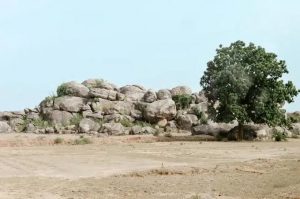
Researchers recently identified a 3.5-billion-year-old layered rock formation within the Singhbhum craton in eastern India that could contain some of the earliest chemical evidence of life on the planet.
- The Singhbhum Craton, located in eastern India (Jharkhand and Odisha states) between the Chhota Nagpur plateau and the Eastern Ghats, is one of the oldest and most important cratons in the Indian Shield.
- A craton is a stable continental block composed of ancient crystalline rocks, typically surrounded by mobile belts.
Studying them offers a window into how processes within and on the surface of Earth operated in the past. - It represents a fragment of the ancient Gondwana supercontinent and holds significant geological and economic importance due to its rich mineral resources.
- This ancient part of the Earth’s crust has been found in previous research to date back to 3.5 billion years ago.
- The craton’s oldest rock assemblages are largely volcanic and sedimentary rocks, also known as greenstone successions.
- Greenstones are rock assemblages made up mostly of sub-marine volcanic rocks with minor sedimentary rocks.
- The geology of this area shares stark similarity with the greenstone belts documented in South Africa’s Barberton and Nondweni areas and the Pilbara Craton in western Australia.
- All these areas experienced widespread submarine mafic — meaning high in magnesium oxide — volcanic eruptions between 3.5 and 3.3 billion years ago, preserved as pillowed lava and komatiites.
- They offer a clearer picture of Earth’s early tectonic activities during the Archaean times, contributing to our understanding of the planet’s formative years.
- The Singhbhum Craton’s unique geological features, including its greenstone belts, provide invaluable information about Earth’s surface and atmospheric processes.
- This is crucial for hypothesising early habitable conditions and the emergence of life on Earth.
AIKosh Platform:

A workshop on AIKosh platform was organised at the India Habitat Centre, New Delhi.
- AIKosh Platform is a national platform for datasets, AI models and related resources.
- It aims to enhance access to datasets and models from various sources to boost AI innovation, support AI solution development with shared toolkits, and showcase use cases to inspire new applications.
- It is designed to enable greater discoverability, access and responsible use of AI-ready resources for India’s AI ecosystem.
- It also features AI sandbox capabilities through an integrated development environment along with tools and tutorials.
- It is an initiative under the IndiaAI Mission.
- Nodal Ministry: Ministry of Electronics and Information Technology (MeitY)
- IndiaAI Mission was initially launched as a joint initiative between the Ministry of Electronics and Information Technology and Nasscom in 2023.
- Aim: To bolster India’s AI ecosystemby making high-end computing resources accessible to startups and researchers.
- IndiaAI an independent business division under the Ministry of Electronics and Information Technology (MeitY)
- Pillars of the IndiaAI Mission:
- Common Compute Facility
- AI Kosha (IndiaAI Datasets Platform)
- AI Safety Institute of India (Upcoming)
- IndiaAI Innovation Centre
- AI Application Development Initiative
- Future Skills Initiative
- Startup Financing.
Christmas Island: In News
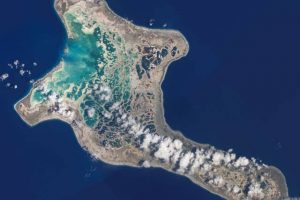
SpaceX has recently towed Starship to waters off Christmas Island after the spacecraft floated in the Indian Ocean for nearly 24 days.
- It is a special territory of Australia located in the Indian Ocean.
- The island is the summit of an oceanic mountain whose highest point on the island is Murray Hill.
- The island has steep cliffs along most of its coast.
- The main settlement and chief port is at Flying Fish Cove on the northeastern part of the island.
- Most of the island is covered in tropical rainforest. Much of the island (63%) is a national park.
- One of the island’s best-known animal residents is the Christmas Island red crab (Gecarcoidea natalis), whose spectacular annual emergence and migration draws large numbers of tourists.
- The reefs around Christmas Island have healthy coral. They are home to several rare marine animals.
- These reefs, along with those near the Cocos (Keeling) Islands, are sometimes called “Australia’s Galapagos Islands”.
- The population includes many ethnic Chinese, a small number of people of European ancestry, and Malay labourers recruited mainly from Malaysia, Singapore, and the Cocos (Keeling) Islands.
- The economy was completely based on phosphate mining and extraction earlier.
- With the mineral close to exhaustion now, subsistence cropping, fishing, and tourism serve as the backbone of its economy.
RK-251 Drug:

The Ministry of Science and Technology informed about a new smart drug named RK-251 that can replace traditional chemotherapy.
- RK-251 Drug is a smart cancer drug designed to activate primarily in cancer cells and does not harm healthy cells.
- When RK-251 enters a cancer cell with high reactive oxygen species (ROS) levels, these molecules trigger the drug’s activation, releasing an anticancer compound called NBDHEX.
- NBDHEX blocks target proteins that many cancer cells use to survive and resist treatment.
- The idea is to keep RK-251 relatively inactive in normal tissues and activate its anticancer action inside cancer cells.
- It exhibited strong activity against aggressive triple-negative breast cancer cells, with much less effect on healthy cells.
- It displayed the desired fluorescence in the presence of reactive oxygen species.
- The fluorescence response also provides an indication that the drug is being activated in an ROS-rich environment, supporting the underlying mechanism of the targeted approach.
Zambia:
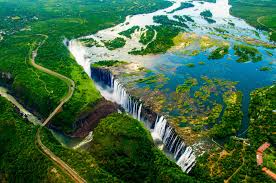
The Prime Minister of India has congratulated Hakainde Hichilema on being re-elected as the President of Zambia.
- Zambia is a Southern-Central African landlocked country.
- It is bounded by the Democratic Republic of the Congo (North), Zimbabwe and Botswana (South), Tanzania (North-east), Malawi (West) and Mozambique (Southeast), Angola and Zambia (West) and Namibia to the southwest.
- It has a sub-tropical climate that is tempered by its relatively high altitude, making it more temperate and pleasant than other sub-tropical areas.
- The most significant river is the Zambezi River (which empties into the Indian Ocean). Other major rivers include the Kafue and the Luangwa.
- Mountain Range: Mafinga Mountains.
- Lakes: Lake Tanganyika and Lake Kariba
- Natural Resources: It majorly consists copper, cobalt, silver, uranium, lead, coal, zinc, gold, and emerald.
National Centre for Polar and Ocean Research: In News
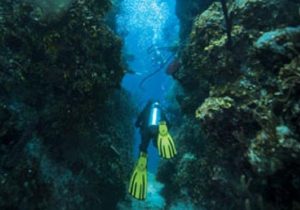
The Ministry of Earth Sciences organized the 8th Meeting of the BRICS Working Group on Ocean Polar Science and Technology (OPST) at Goa, hosted by the National Centre for Polar and Ocean Research (NCPOR).
- National Centre for Polar and Ocean Research was established as an autonomous Research and Development Institution on the 25th May 1998.
- It was formerly known as the National Centre for Antarctic and Ocean Research (NCAOR).
- It has been at the forefront of leading India’s scientific expeditions and research programmes in the Polar Regions and the Southern Ocean.
- Nodal Ministry: Ministry of Earth Sciences Government of India
- Location: Vasco da Gama, Goa
- Functions of National Centre for Polar and Ocean Research:
- It is designated as the nodal organization for the co-ordination and implementation of the Indian Antarctic Programme, and executing polar expeditions in the Antarctic, Arctic, Southern Ocean, and Himalayas.
- It also works on strategically vital projects like: Mapping of Exclusive Economic Zone (EEZ), Continental shelf surveys, and the Deep Ocean Mission.
- It has established and operationalised permanent Indian research stations — Dakshin Gangotri, Maitri, and Bharati in Antarctica, and Himadri in the Arctic, along with the Himalayan station Himansh.
Parichha Dam:
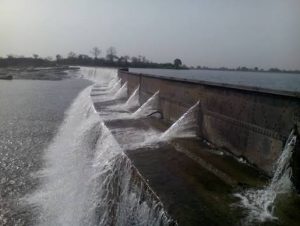
The International Commission on Irrigation and Drainage (ICID) has recognized the historic Parichha dam as a ‘World Heritage Irrigation Structure (WHIS)’.
- Parichha Dam is located on Betwa River in Jhansi, Uttar Pradesh.
- It is a key component of Betwa Canal System, which supplies water for agriculture to drought-prone areas of Bundelkhand.
- Parichha Dam has played an important role in irrigation system of Bundelkhand for nearly 140 years.
- It benefits irrigation in several areas of Uttar Pradesh and Madhya Pradesh.
- In 1855, Captain Strachey proposed developing a canal system for Bundelkhand, following which surveys were undertaken.
- Construction of the dam began in 1881 and it became operational in 1886.
- Others in the World Heritage Irrigation Structure list: In 2022, the Sukwa-Dukwan Weir in Jhansi was included in the ICID heritage list
International Commission on Irrigation and Drainage:
- It was established in 1950.
- It is a leading scientific, technical, international not-for-profit, non-governmental organization.
- ICID’s mission is to promote ‘Sustainable agriculture water management’ to achieve ‘Water secure world free of poverty and hunger through sustainable rural development’.
- It is working on irrigation, drainage and flood management.
- Under its WHIS programme, the ICID recognises historically significant irrigation and drainage structures for their engineering, historical and continuing significance.
- Criteria for World Heritage Irrigation Structure:
- The structure shall be more than 100 years old;
- The structures shall fall under one of the following categories:
- Dams (operational largely for irrigation purpose),
- Water storage structures such as tanks for irrigation,
- Barrages and other water diversion structures,
- Canal Systems,
- Old waterwheels,
- Old shadouf,
- Agriculture drainage structures,
- Any site or structure functionally related to present or past agricultural water management activity.



