
Today’s Current Affairs: 21st Oct 2026 for UPSC IAS exams, State PSC exams, SSC CGL, State SSC, RRB, Railways, Banking Exam & IBPS, etc
Table of Contents
Conference on Interaction and Confidence Building Measures in Asia:

The 7th Summit of the Conference on Interaction and Confidence Building Measures in Asia (CICA) was held in Baku, Azerbaijan.
- Conference on Interaction and Confidence Building Measures in Asia is a forum aimed at enhancing cooperation through elaborating multilateral approaches towards promoting peace, security and stability in Asia.
- CICA was established at the initiative of President Nursultan Nazarbaev of Kazakhstan outlined at the 47th UNGA in 1992.
- The Almaty Act, serving as the charter of CICA, was adopted at the First CICA Summit Meeting in Almaty, Kazakhstan.
- Secretariat: Almaty (Kazakhstan)
- The highest decision making organ of CICA is the Council of the CICA Heads of State or Government (Summit).
- The CICA Summit is convened every four years in order to conduct consultations, review the progress of, and set priorities for CICA activities.
- The Council of Ministers of Foreign Affairs (Ministerial Council) is the central forum for consultations and examination of all issues related to CICA activities. Its regular meetings are held once every two years.
- To be a member of CICA, a state must have at least a part of its territory in Asia.
- CICA currently comprises 28 Member States. Ten countries and five multi-national organizations, including the United Nations, have observer status.
- India is a founding member of CICA.
Martian Moons Exploration Mission:
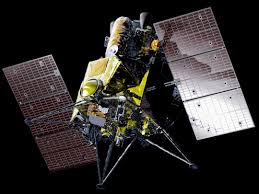
Japan is preparing to launch an ambitious Martian Moons eXploration (MMX) mission to one of Mars’ mysterious moons, Phobos, by using Japan’s H3 rocket.
- Martian Moons Exploration Mission is a mission of Japan Aerospace Exploration Agency (JAXA).
- The mission will primarily focus on Phobos, a Martian moon that has never been explored.
- It will observe the topography, internal structure, composition, and gravity of the moon, and return samples of sand.
- It aims to collect at least 10 grams of material from Phobos and return it to Earth in 2031.
- It will also study both Phobos and Deimos, Mars’ two small moons, to investigate their origins and evolution.
- The mission will travel to the Martian system aboard Japan’s H3 rocket from the Tanegashima Space Center.
- It is scheduled to reach Mars in 2027.
- It will deploy a small rover, developed jointly by the German Aerospace Center (DLR) and France’s CNES, to study the surface and support exploration.
- NASA is contributing two key technologies to this mission:
- MEGANE instrument, which will analyse the elemental composition of Phobos, and a pneumatic sampler designed to collect surface material.
- Pneumatic sampler that uses high-pressure nitrogen gas to lift surface particles into a collection container.
Macquarie Island:
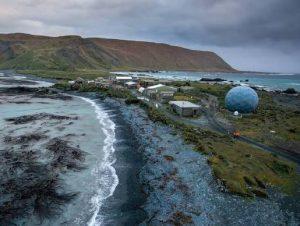
Australia recently confirmed its first case of H5N1 bird flu on the sub-Antarctic Macquarie Island, with the deadly virus found in the remote territory’s vulnerable elephant seal population.
- Macquarie Island is a subantarctic island located in the southwestern part of the Pacific Ocean.
- The island is politically a part of the Australian island state of Tasmania, and regionally it forms a part of Oceania.
- It is geographically positioned about 1,500 km to the southeast of the principal island of Tasmania, approximately midway between the island nation of New Zealand and the continent of Antarctica.
- In 1978, Macquarie Island became a part of the Tasmanian State Reserve and was subsequently designated as a UNESCO World Heritage Site in 1997.
- It has no permanent human population, but a meteorologic and geologic research station has been maintained on the island since 1948.
- It is a site of major geo-conservation significance, being the only place on earth where rocks from the earth’s mantle are being actively exposed above sea level.
- The island is an exposed portion of the undersea Macquarie Ridge, where the Pacific and Indian-Australian plates meet.
- Macquarie Ridge is one of only 3 such ridges that impede the Antarctic Circumpolar Circulation.
- This results in distinct differences between the west and east sides of the ridge, which are used in different ways by different species.
- There are a few small glacial lakes on the island.
- Although the island is treeless, there are a variety of native vegetation types, including grasses and many species of moss.
- It serves as a vital breeding ground for several penguin species, including the royal penguin, which breeds exclusively on the island, along with king, gentoo, and southern rockhopper penguins.
- The island is also home to various fur seal species, such as the New Zealand fur seal and the southern elephant seal.
YJ-21 Missile:
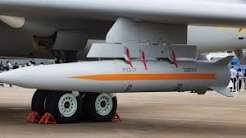
Footage released by Chinese state media recently has for the first time shown the launch of a YJ-21 anti-ship ballistic missile by a Chinese People’s Liberation Army H-6K bomber, eight years after the missile was unveiled.
- The YJ-21, also known as the Eagle Strike 21, is a Chinese hypersonic anti-ship ballistic missile.
- It is designed for striking large, high-value naval targets, such as aircraft carriers.
- It entered service in 2022.
- Initially deployed on naval platforms, a bomber-launched variant was revealed in May 2024, significantly extending its operational reach.
- It is a solid-fueled, two-stage missile with unique aerodynamic and propulsion systems optimized for hypersonic flight.
- The missile achieves cruise speeds exceeding Mach 6 during its midcourse phase and reaches terminal velocities up to Mach 10.
- It has a maximum range of approximately 1,500 km.
- The missile’s high-speed trajectory is coupled with a quasi-ballistic flight path, allowing it to execute high-G maneuvers during its terminal approach.
- It uses an Inertial Navigation System (INS) as well as an active radar-homing or infrared terminal-state seeker.
PUFFINS Telescope Mission:
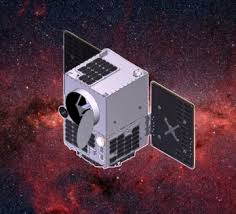
A Bengaluru-born astronomer Dr. Ramya Anche will be heading the $20 million NASA space telescope mission PUFFINS.
- A PUFFIN (Polarimetry in the Ultraviolet to Find Features in INterStellar dust) is a SmallSat selected under NASA’s highly competitive Astrophysics Pioneers programme.
- It is a NASA funded mission andis a joint effort between the University of Arizona, McDonald Observatory other scientists.
- It involves sending up a small satellite that will contain a telescope.
- It will study the smallest grains of dust between the stars.
- It will observe them using UV spectropolarimetry.
- It gives scientists insights into the characteristics, presence, and behavior of interstellar dust particles.
- The measurements are supposed to provide information on the particles’ characteristics and how they behave in relation to the magnetic field of the Milky Way galaxy.
- The mission intends to bridge the gaps that exist in existing astronomy studies, especially those concerning the observation of interstellar dust particles using ultraviolet polarisation.
- Interstellar dust refers to particles that exist in the space between the stars.
- These particles have sizes ranging from less than 50 nanometers; therefore, they cannot be detected using the traditional optical or infrared techniques.
National Strategic Trade Command Centre (NSTCC):
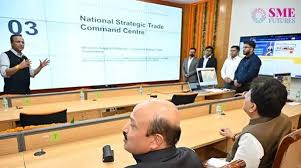
The Commerce and Industry Minister recently launched the National Strategic Trade Command Centre (NSTCC) in New Delhi.
- National Strategic Trade Command Centre (NSTCC) is a strategic initiative aimed at strengthening the monitoring, analysis, and governance of India’s international trade ecosystem through integrated data analytics and evidence-based decision-making.
- At its core is an integrated analytics and visualisation platform designed to convert trade-related data into actionable insights.
- It was developed by the Department of Commerce under the Ministry of Commerce and Industry.
- It will provide senior policymakers and government officials with a consolidated view of India’s trade performance, export promotion schemes, regulatory approvals, application processing, and operational indicators.
- It enables users to analyse information at multiple levels, including national trade performance, Regional Authorities, schemes, products, destination markets, and individual applications, subject to role-based access permissions.
- In its initial phase, the command centre brings together dashboards covering key functions of the Directorate General of Foreign Trade (DGFT) and related trade domains.
- These include the Importer Exporter Code (IEC), Advance Authorisation, Export Promotion Capital Goods (EPCG), Certificate of Origin (CoO), SCOMET (Special Chemicals, Organisms, Materials, Equipment and Technologies), restricted imports and exports, and other regulatory and trade facilitation processes.
- These dashboards will enable monitoring of scheme utilisation, processing efficiency, export obligations, trade patterns, and operational performance across regional authorities.
- The initiative has three main objectives:
- Improving the monitoring of trade and pending applications.
- Comparing the performance of schemes and regional offices.
- Using data to identify procedural hurdles and simplify regulations.
- The centre will also help officials identify export opportunities, assess how effectively businesses are using India’s trade agreements, and track the country’s position in international markets.
- It has been designed to leverage existing digital infrastructure, including DGFT systems and the Trade Connect e-Platform.
- It will also provide a framework for the phased integration of additional datasets from other departments and trade-related agencies.
- The NSTCC is envisaged to evolve into a broader whole-of-government decision-support mechanism, with phased access for authorised stakeholders, including relevant ministries, states, Export Promotion Councils, and other institutions.
Kufri Jamunia:
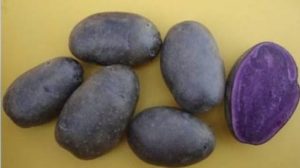
The Indian Council of Agricultural Research- Central Potato Research Institute developed nutrient-rich coloured potato varieties, including Kufri neelkanth, Kufri manik, and Kufri jamunia.
- Kufri Jamunia is a biofortified table variety purple potato developed by the Indian Council of Agricultural Research- Central Potato Research Institute.
- It was officially released in 2024.
- It is a medium-maturing potato variety with medium-tall plants and a semi-compact canopy.
- Kufri jamunia has demonstrated stable performance in multi-location trials and has been recommended for cultivation in the North Indian plains.
Characteristics of Kufri jamunia:
- It possesses good storage quality with low rottage and minimal weight loss.
- The variety contains higher levels of ascorbic acid, anthocyanin, and carotenoids.
- Its purple flesh indicates high antioxidant content and better nutritional quality. Kufri jamunia also contains enhanced levels of zinc and iron.
- It is suitable for a wide range of culinary applications.
Port of Constanta:

The Indian mission in Bucharest said a chemical tanker carrying nine Indian seafarers, which was hit by a drone at an anchorage off Romania has reached the Port of Constanta safely.
- Port of Constanta is one of the key Romanian maritime ports in the Black Sea Region.
- It is the only seaport directly connected to the Danube River through the Danube—Black Sea Canal.
- This port also plays a key role for the Danube countries in Central and East Europe through the Danube River.
- It is playing a highly important role as the transit node for the landlocked countries in the Central and South-East Europe.
Black Sea:
- It is a large inland sea situated at the southeastern extremity of Europe.
- It is located where Europe and Asia meet.
- It is bordered by Ukraine to the north, Russia to the northeast, Georgia to the east, Turkey to the south, and Bulgaria and Romania to the west.
- Though far inland, it connects with the Atlantic Ocean through a series of other waterways.
- The Bosporus Strait, the Sea of Marmara, and the Dardanelles Strait link the Black Sea to the Aegean Sea, the Mediterranean Sea, and finally, the
- To its east, the Kerch Strait links the Black Sea to the smaller Sea of Azov.
- Major rivers flowing into it include the Danube, Dnieper, Southern Bug, Rioni, and Dniester.
Exercise Akhand Prahar-II:
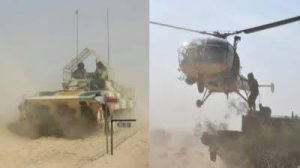
The Indian Army, in a bid to strengthen combat readiness, recently conducted Exercise Akhand Prahar-II at Jaisalmer in the desert region of Rajasthan.
- Exercise Akhand Prahar-II is a military exercise conducted by the Indian Army.
- It was jointly conducted by the Army’s “Black Mace” Brigade and “Battle Axe” Division at Jaisalmer in the desert region of Rajasthan.
- It followed the success of “Akhand Prahar-I”, during which the Army demonstrated its combat and operational readiness through joint military operations.
- The exercise focused on strengthening operational effectiveness by integrating New Generation Equipment (NGEs) and Force Multipliers (FMs).
- It also tested the formations’ preparedness to meet the evolving challenges of modern warfare, highlighting the Army’s emphasis on technological advancement, operational coordination, and battlefield adaptability.
- During the exercise, the formations tested integrated battle drills in a multi-domain operational environment, demonstrating coordination among combat elements and the effective use of advanced technologies.
- The drills showcased their ability to combine different operational capabilities, execute tasks with precision, and improve combat effectiveness across multiple domains.
Indian Council of Social Science Research:
A recent study on Internet use among school-going children, supported by the Indian Council of Social Science Research (ICSSR), recommends that digital literacy must be encouraged for children and parents with active support from schools.
- It is the apex body of the Government of India for research in the social and human sciences.
- It was established in the year 1969 by the Government of India on the recommendation of the V. K. R. V. Rao Committee.
- Purpose: Encourage, promote, and fund social science research in the country.
- It is an autonomous organisation working under the aegis of the Department of Higher Education, Ministry of Education.
- Objectives:
- To review and survey the progress of social science research and advise the Government on policy issues
- To fund and promote social science research in Universities/Colleges/Research Institutes
- To award Doctoral, Post–Doctoral, Senior, and National Fellowships to researchers and faculties
- To award minor, major and collaborative research projects to researchers and faculties
- To fund national and international seminars and conferences to disseminate social science research findings
- To support training and capacity-building Programmes for young researchers and faculties
- To provide International Travel and Data Collection Grants to scholars and faculties
- To encourage international collaboration in social science research with well recognized foreign research funding agencies
- To fund the publication of journals and books in social science research and also strengthen professional social science associations/organizations
- To provide library, documentation, data, and online services for social science research
- To indicate periodic themes in neglected and new critical areas of research
- Organisational Structure:
- The ICSSR’s highest decision-making body, known as the Council, has 26 members, which includes the ICSSR Chairman and the Member-Secretary, 17 Social Scientists (Non-Ex-Officio members), one co-opted member, and six Ex-officio members representing the Government of India.
- The Member Secretary is the Chief Executive Officer and heads the ICSSR Secretariat, consisting of Directors, Deputy Directors, Assistant Directors, and other officials.
- The Council has three standing committees, namely the Research Committee (RC), Research Institutes Committee (RIC), and Planning and Administration Committee (PAC).
- An all-India network of 24 frontline research institutes and six regional centres is maintained, and five recognized institutes are programmatically supported by the ICSSR.
- The Documentation center of ICSSR–National Social Science Documentation Centre (NASSDOC)-provides library and information support services to researchers in social sciences.
- ICSSR has developed the ICSSR Data Service to serve as a national data service for promoting a powerful research environment through sharing and reuse of data among the social science community in India.
What is Vasuki indicus?

A massive prehistoric snake discovered in India named Vasuki indicus may have rivaled the largest snake ever known.
- Vasuki indicus is an ancient snake species, the fossils of which were first unearthed in 2005 at the Panandhro Lignite Mine in the Kutch district of Gujarat.
- However, the species was only identified and described as a new genus in 2024.
- It is named after Vasuki, the mythical snake often depicted around the neck of the Hindu god Shiva.
- It belonged to the now-extinct Madtsoiidae family, a group of large, non-venomous constrictor snakes.
- It is thought to have existed during the Middle Eocene (47.8 to 38 million years ago), when the Earth’s temperature was good enough to permit the evolution of large, cold-blooded reptiles.
International Organization of Legal Metrology:

India will host the 61st Meeting of the International Committee of Legal Metrology (CIML) which is being organised by the Department of Consumer Affairs in association with the International Organization of Legal Metrology (OIML).
- International Organization of Legal Metrology is an intergovernmental organisation established in 1955 to promote the global harmonisation of legal metrology procedures.
- It is an international standard-setting body.
- A meeting of the OIML Conference is held every four years to establish general policy, vote on the budget and confirm the decisions of the CIML.
- Headquarter: Paris
- It develops international recommendations, standards and related documents for measuring instruments used in trade, industry, healthcare, safety and environmental protection.
- It plays a crucial role in harmonising national laws and regulations on performance of measuring instruments like clinical thermometers, alcohol breath analysers, radar speed measuring instruments, ship tanks found at ports, and petrol dispensing units.
- It develops model regulations, standards and related documents for use by legal metrology authorities and industry.
- There are 63 Member States (voting) and 66 Corresponding Members (nonvoting).
- India became a member of the OIML in 1956. In the same year, India signed the metric convention.
- India can issue Internationally Accepted OIML (International Organization of Legal Metrology) Certificates for selling weights & measures anywhere in the world. (There are 13 countries who can issues these certificates).
- To sell a weight or measure in the International market an OIML Pattern Approval certificate is mandatory.
- The International Committee of Legal Metrology (CIML) is the principal decision-making body responsible for guiding the technical and administrative activities of the OIML.
Exercise AUSTRAHIND 2026:
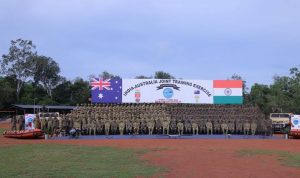
The 5th edition of the Exercise AUSTRAHIND 2026 commenced at the Foreign Training Node, Thiruvananthapuram, Kerala.
- Exercise AUSTRAHIND 2026 is an annual joint military exercise conducted between India and Australia.
- It is aimed at enhancing interoperability, jointmanship and operational coordination between the two armies while developing a common understanding of tactics, techniques and procedures for operations in island and coastal terrain.
- Theme: “Joint Sub-Conventional Operations in Island and Coastal Environment under Chapter VII of the UN Mandate”.
- The Indian Army contingent comprises troops from the Garhwal Rifles, along with personnel from other arms and services,
- The training will focus on coordinated operations in coastal and island environments, surveillance and reconnaissance, protection of vital installations and response to Humanitarian Assistance and Disaster Relief contingencies.
- As a first, an observer delegation from New Zealand will also be participating in the exercise.
- It will further strengthen military-to-military cooperation, interoperability and mutual trust between India and Australia.
- It will reinforce their shared commitment towards peace, stability and security in the Indo-Pacific region.
Agri Welfare Portal:

The Union Agriculture and Farmers’ Welfare Minister launched the upgraded Agri Welfare Portal.
- Agri Welfare Portal aims to provide farmers across the country with direct, easy access to government schemes, financial assistance and reliable agricultural information on their mobile phones.
Key Features of Agri Welfare Portal:
- Scheme access: It brings information on initiatives including PM-KISAN, AgriStack and Pradhan Mantri Fasal Bima Yojana into a common interface, with online eligibility checks and application facilities.
- Farm information: The portal is intended to provide updates on weather, farming practices, seeds, fertilisers and market prices.
- Rural use: It is designed for basic smartphones and weak internet connections, with screen-reader support and simpler navigation for users with disabilities.
- Assistance: A training campaign through Krishi Vigyan Kendras is planned to help farmers use the portal and other digital tools.
- Wider network: Farmer Producer Organisations, Primary Agricultural Credit Societies, scientists, researchers and start-ups are also intended to be brought onto the platform.
- Greater transparency and fewer intermediaries: It has feature of Online eligibility checks, direct application facilities and the transfer of financial assistance through Direct Benefit Transfer (DBT).
- Timely and reliable agricultural information: Farmers will be able to access authentic information on weather conditions, scientific farming practices, the availability of seeds and fertilisers, and prevailing market prices for agricultural produce.
Homoporus Tridentata:
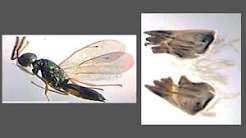
Entomologists have announced the discovery of a previously unknown parasitoid wasp species, Homoporus tridentate.
- Homoporus Tridentata is a new parasitoid wasp species.
- Its name is directly derived from the Latin-based anatomical description of its distinctive three-toothed clypeal margin.
- The wasps in the genus Homoporus are natural parasitoids that target the larvae and pupae of agricultural and forestry pests.
What is Swavlamban 2026?
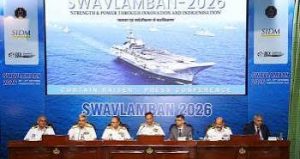
The Indian Navy’s fifth Swavlamban seminar will build on a growing national effort to connect technological talent with the requirements of the maritime domain.
- Swavlamban 2026 is the fifth edition of the Indian Navy’s flagship Naval Innovation and Indigenisation Seminar.
- Venue: Manekshaw Centre in New Delhi
- The fifth edition will focus on converting indigenous technological innovations into operational capabilities for the Indian Navy.
- It aims to strengthen collaboration between the armed forces and India’s domestic innovation ecosystem as the maritime security environment evolves.
- The two-day event will bring together innovators, industry partners, startups, micro, small, and medium enterprises (MSMEs), academic institutions, investors, and representatives of the Defence Forces.
- The exhibition will showcase indigenous technologies across several areas, including maritime surveillance, counter-unmanned aircraft systems (counter-UAS), artificial intelligence, quantum technologies, nuclear, biological, chemical, and damage control (NBCD), and systems designed to improve safety and operational efficiency.
- The programme will also include discussions on defence innovation, self-reliance, funding opportunities and the commercialisation of technologies developed by Indian enterprises.
- The seminar has also been supported by the Government of India, the Ministry of Defence, the Society of Indian Defence Manufacturers, and the Defence Innovation Organisation.
What is Bud Rot Disease?
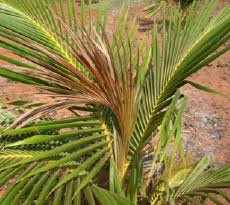
Coconut growers of Tiptur taluk, Tumakuru district, Karnataka, are worried as coconut trees are increasingly affected by Bud Rot Disease causing their crowns to break and fall off.
- Bud Rot Disease is a fatal disease of the coconut palm, characterized by the rotting of the terminal bud and the surrounding tissues.
- It affects the palms of all ages, but young palms are found to be most vulnerable.
- It is caused by the fungus Phytophthora palmivora, which attacks the growing point of the coconut palm.
- Once the growing point is attacked, the palm is beyond recovery.
- The incidence is found to be severe during the monsoon when the relative humidity is high.
- With the onset of dry weather, the infection becomes less severe, and the fungus remains dormant in the leaf base.
- The disease is often seen in river banks subject to flooding. Normally, the disease is observed sporadically in widely scattered palms.
Indian Cybercrime Coordination Centre (I4C):

The Indian Cyber Crime Coordination Centre (I4C) recently warned of a rise in financial fraud involving deceptive advertisements that use manipulated videos of the Prime Minister, the Finance Minister, and Chief Ministers to promote fake government welfare schemes.
- I4C has been established under the Ministry of Home Affairs (MHA) to act as a nodal point at the National level in the fight against cybercrime.
- The I4C was dedicated to the nation on 10th January 2020.
- It is designed to provide a framework and ecosystem for law enforcement agencies (LEAs) to deal with cybercrime in a coordinated and comprehensive manner.
- I4C brings together academia, industry, public, and government in the prevention, detection, investigation, and prosecution of cybercrimes.
- Headquarters: New Delhi
- The I4C is a Ministry of Home Affairs body focused on cybercrime against citizens and the policing response, including the 1930 helpline and the cybercrime reporting portal.
- CERT-In, under the Ministry of Electronics and IT and anchored in Section 70B of the IT Act, 2000, handles cybersecurity incident response and network protection rather than crime against persons.
- Objectives:
- To act as a nodal point to curb cybercrime in the country.
- To strengthen the fight against cybercrime committed against women and children.
- Facilitate easy filing of cybercrime-related complaints and identifying cybercrime trends and patterns.
- To act as an early warning system for LEAs for proactive cybercrime prevention and detection.
- Awareness creation among the public about preventing cybercrime.
- Assist states/UTs in the capacity building of Police Officers, Public Prosecutors and Judicial Officers in the area of cyber forensics, investigation, cyber hygiene, cyber-criminology, etc.
- Identify the research problems and needs of LEAs and take up R&D activities in developing new technologies and forensic tools in collaboration with academia/research institutes within India and abroad.
- Suggest amendments, if required, in cyber laws to keep pace with fast-changing technologies and international cooperation.
- To coordinate all activities related to the implementation of Mutual Legal Assistance Treaties (MLAT) with other countries related to cybercrimes in consultation with the concerned nodal authority in MHA.
- Components:
- National Cybercrime Threat Analytics Unit (TAU)
- National Cybercrime Reporting Portal (NCRP)
- National Cybercrime Training Centre (NCTC)
- National Cybercrime Research and Innovation Centre
- Platform for Joint Cyber Crime Coordination Team
- Cybercrime Ecosystem Management Unit
- National Cybercrime Forensic Laboratory (Investigation) Ecosystem
- Major Initiatives:
- Citizen Financial Cyber Fraud Reporting and Management System (CFCFRMS): For immediate reporting of financial cyber frauds and preventing the siphoning of funds by cyber criminals on a near-real-time basis.
- National Toll-Free Helpline number ‘1930’ has been operationalized to provide citizen assistance in lodging online cyber complaints.
- The social media handle “CyberDost”, which provides cyber safety tips at regular intervals.
- I4C has envisaged the Cyber Crime Volunteers Program to bring together citizens with a passion to serve the nation on a single platform and contribute to the fight against cybercrime in the country.
- Pratibimb geospatial crime mapping platform maps locations of criminals and crime infrastructure on a map to give visibility to jurisdictional officers.
- Samanvaya Portal:
- It is a web-based Joint Cybercrime Investigation Facilitation System.
- The platform works as a centralized one-stop system for cybercrime data sharing, crime mapping, data analytics, and coordination among police and Law Enforcement Agencies (LEAs) across States and Union Territories.
What is Osteoporosis?
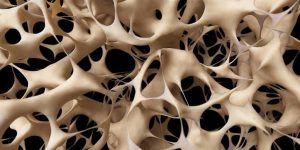
Osteoporosis is commonly associated with aging and postmenopausal women, but bone-health concerns are increasingly being noticed among younger adults in clinical practice.
- Osteoporosis is a disease in which the bones become weak and are likely to fracture (break).
- Osteoporosis means “porous bone.” Viewed under a microscope, a healthy bone looks like a honeycomb. When osteoporosis occurs, the holes and spaces in the honeycomb are much larger than in healthy bone.
- Osteoporotic bones have lost density or mass and contain abnormal tissue structure. As bones become less dense, they weaken and are more likely to break (bone fractures).
- Fractures can occur in any bone but happen most often in bones of the hip, vertebrae in the spine, and wrist.
- Bones are made of living tissue. To keep them strong, the body breaks down old bone and replaces it with new bone.
- Osteoporosis develops when more bone is broken down than replaced.
- You lose bone mass, and changes happen in the structure of the bone tissue. This can happen as you get older.
- Some of the common risk factors for developing osteoporosis include:
- Are female
- Over the age of 50
- Are of white or Asian descent
- Have a family history of osteoporosis
- Have low body weight
- Have low levels of sex hormones (low estrogen in women, low testosterone in men)
- Have too much thyroid hormone (hyperthyroidism)
- Are chronically on certain medications such as steroids
- Symptoms:
- It is called a “silent” disease because it doesn’t usually cause symptoms.
- Although most people are not aware that they may have osteoporosis until they experience a fracture, there are some signs and symptoms that you may experience in later stages of the condition. They include:
- Back pain (in the presence of vertebral compression fracture)
- Loss of height over time (this will be gradual)
- A stooped posture
- Low-impact bone fracture
- Treatment: Treatment for osteoporosis may involve:
- Making lifestyle changes, such as changing the diet and exercise routine
- Taking calcium and vitamin D supplements
- Using medicines to strengthen bones.
Rajmargyatra Application:
The National Highways Authority of India (NHAI) recently introduced a ‘Toll Plaza Feedback’ feature on the Rajmargyatra mobile app, enabling National Highway users to rate their toll plaza experience, report concerns, and suggest improvements.
- Rajmargyatra Application is a citizen-centric unified mobile application developed by the National Highways Authority of India (NHAI).
- This user-friendly app empowers travelers with comprehensive information on Indian National Highways while also offering an efficient complaint redressal system.
- The app is currently available in English, Hindi, and over 13 other regional languages.
Key Features:
- ‘Rajmargyatra’ serves as a one-stop repository of essential information for National Highway users.
- Get real-time weather conditions, timely broadcast notifications, and access to details about nearby toll plazas, petrol pumps, hospitals, hotels, and other essential services that ensure a seamless and safe journey on National Highways.
- Get precise cost estimates and instantly see how much you save with the Annual Pass.
- The app comes equipped with an inbuilt complaint redressal and escalation mechanism.
- Users can easily report highway-related issues, attaching geo-tagged videos or photos for better clarity.
- The registered complaints will be handled in a time-bound manner, with system-generated escalations to higher authorities in case of any delays.
- Users can also track the status of their grievances for complete transparency.
- Rajmargyatra’ integrates its services with various bank portals, making it convenient for users to recharge their FASTags, avail monthly passes, and access other FASTag-related banking services – all within a single platform.
- Over-speeding notifications and voice assistance to encourage responsible and safe driving behavior.
- Report & Track Issues: Lodge and track complaints about road conditions, toll operations, or facilities.
- 24×7 Emergency Support: Get immediate assistance by calling the 1033 National Highway Helpline directly from the app.
- Toll Plaza Feedback: Enables National Highway users to rate their toll plaza experience, report concerns and suggest improvements.