
Today’s Current Affairs: 22nd Aug 2026 for UPSC IAS exams, State PSC exams, SSC CGL, State SSC, RRB, Railways, Banking Exam & IBPS, etc
Table of Contents
Sea Urchin : Study
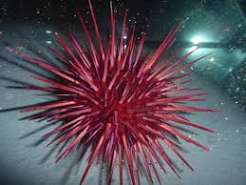
Researchers from IIT Mandi have developed a sea urchin inspired surface coating on 3D-printed bone implants capable of mechanically disrupting bacteria and accelerating integration of the implant with bones.
- Sea Urchin belongs to a group of marine invertebrates called echinoderms, which means spiny-skinned animals.
- It includes other well-known marine creatures like starfish and sea cucumbers.
- They can be found in various marine environments, including rocky shores, coral reefs, seagrass beds, and sandy bottoms.
- They live on the ocean floor, usually on hard surfaces, and use tube feet or spines to move about.
- Sea urchins are characterized by their spherical, flattened, spiny bodies.
- They are herbivorous, primarily feeding on algae and plant material.
- They use their specialized mouthparts, called Aristotle’s lantern, to scrape algae and other food sources from rocks or the seafloor.
Pradhan Mantri Janjatiya Vikas Mission:

The government is seeking to strengthen forest-based economy through the Pradhan Mantri Janjatiya Vikas Mission (PMJVM).
- Pradhan Mantri Janjatiya Vikas Mission was launched in 2021-22 to create a more organised system for tribal communities to process, add value to and market Minor Forest Produce.
- The mission seeks to move tribal communities beyond selling raw forest produce by providing them with skills, technology, infrastructure and market linkages.
- It has objective to strengthen the tribal forest economy by combining traditional knowledge and locally available resources with modern processing, technology and market access.
- This mission provides support at different stages, from collection and processing to marketing.
- Skill development: Tribal gatherers are trained in scientific harvesting, processing and value addition.
- Infrastructure: Van Dhan Vikas Kendra (VDVK) receives support for setting up facilities at beneficiaries’ homes or in government or Gram Panchayat buildings.
- Depending on the locally available produce, centres can receive equipment such as cutting and sieving tools, decorticators, dryers and packaging equipment.
- Financial linkages are facilitated through banks, financial institutions and the National Scheduled Tribes Finance and Development Corporation.
- Support is also provided for storage and transportation on a rental basis.
- A key component of the mission is the Van Dhan Vikas Kendra (VDVK) model.
- VDVKs bring tribal forest gatherers together through self-help groups and help them undertake primary processing and value addition.
- A VDVK is generally formed by clustering around 15 self-help groups, comprising about 300 tribal members.
- At least 60 per cent of the members are required to belong to Scheduled Tribe communities.
- The Van Dhan Yojana, launched in 2018, forms the foundation of this model.
Dimna Lake:
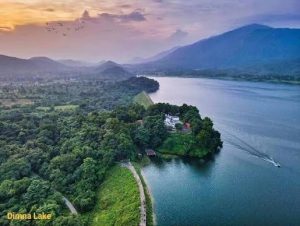
Dimna Lake, Jamshedpur’s iconic reservoir and lifeline, was among 25 lakes across the country after which spectator galleries were named during the 80th Independence Day celebrations at Delhi’s Red Fort.
- Dimna Lake is an artificial lake located in the steel city of Jamshedpur in Jharkhand.
- It is located in the foothills of the Dalma mountain range.
- Constructed under the Dimna Nala Water Supply Scheme by Tata Steel, the reservoir was built to meet the future water needs of a rapidly expanding industrial city.
- Work on the project began in 1940 and was completed in 1944, with water from the lake supplied to Jamshedpur for the first time on April 17, 1944.
- The lake was created by damming the Subarnarekha River.
- This lake is near the Dalma Wildlife Sanctuary, which is home to several species of deer and other animals like the sloth bear and the Indian wolf.
- The lake has facilities for water sports like jet skiing, rowing, and water scooting.
Psammophaga holzmannae and Psammophaga sinhai:
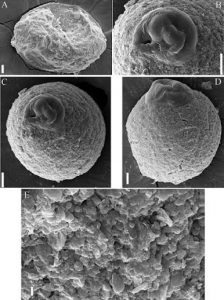
Scientists from Pune’s Agharkar Research Institute (ARI) recently discovered two new species of microscopic marine organisms named Psammophaga holzmannae and Psammophaga sinhai.
- They are two new species of microscopic marine organisms that selectively pick up and swallow specific mineral grains from the seafloor.
- They were found at Rajapuri Creek in Raigad district along Maharashtra’s Konkan coast.
- Psammophaga is a type of foraminifera, a group of microscopic organisms commonly found in oceans.
- The name comes from Greek words meaning ‘sand eater’.
- Unlike many foraminifera that have hard, multi-chambered shells, these organisms have just one chamber and a soft wall made mainly of very fine clay particles.
- The most interesting discovery was what the organisms choose to eat.
- Both species selectively take in heavy minerals containing titanium and iron. These include ilmenite and magnetite.
- This is important because these minerals occur only in small amounts in the surrounding sediment.
- Psammophaga uses thin, temporary hair-like extensions called granuloreticulopodia.
- These extend from the aperture and help the organism interact with the surrounding sediment.
- Scientists believe these extensions may help the organism detect differences between mineral grains, although the exact mechanism is still not known.
Methamphetamine:
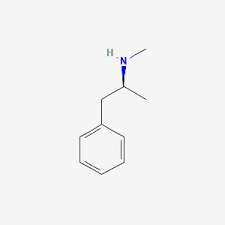
The Directorate of Revenue Intelligence (DRI) has foiled a major attempt to illegally export a significant quantity of Methamphetamine from India to Saudi Arabia.
- Methamphetamine is a powerful, highly addictive stimulant that affects the central nervous system.
- It is also known as meth, chalk, ice, and crystal.
- It was developed early in the 20th century from its parent drug, amphetamine, and was used originally in nasal decongestants and bronchial inhalers.
Properties of Methamphetamine:
- It is a member of the class of amphetamines.
- It takes the form of a white, odorless, bitter-tasting crystalline powder that easily dissolves in water or alcohol.
- It has a role as a neurotoxin, a psychotropic drug, a central nervous system stimulant, a xenobiotic and an environmental contaminant.
Impact of Methamphetamine on Humans:
- It causes increased activity and talkativeness, decreased appetite, and a pleasurable sense of well-being or euphoria.
- The use of methamphetamine in higher doses can induce psychosis, bleeding in the brain, skeletal muscle breakdown, and seizures.
Glyphosate:
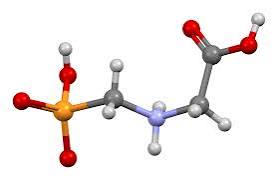
Environmentalists have raised concern over the alleged use of glyphosate on forest department land for pea cultivation in parts of Himachal Pradesh.
- Glyphosate is a widely used herbicide that can kill certain weeds and grasses.
- It is considered a broad-spectrum herbicide, meaning it can effectively control a wide variety of plants, including grasses, broadleaf plants, and woody plants.
- It works by inhibiting an enzyme called EPSP synthase, which is essential for the synthesis of certain amino acids that plants need for growth.
- It disrupts this enzyme; glyphosate interferes with the plant’s ability to produce proteins, leading to the eventual death of the plant.
- It is effective only on plants that grow above the water.
- It will not be effective on plants that are submerged or have most of their foliage underwater, nor will it control regrowth from seed.
- It is degraded in soil and water by microbes and binds tightly to soil particles, which prevents the leaching of glyphosate into groundwater.
- It does not degrade quickly in plants. As a result, it is possible that glyphosate residues can occur in food products.
Friends of MY Bharat’ Initiative:
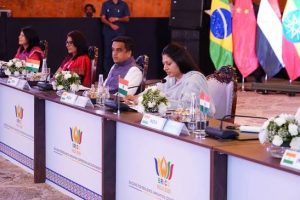
The Ministry of Youth Affairs and Sports has launched a new digital initiative, ‘Friends of MY Bharat’ initiative.
- It is an initiative of the Ministry of Youth Affairs and Sports.
- It strengthens engagement with Indian-origin youth living across the world and provides them opportunities to participate in India’s nation-building and youth-led programmes.
- It is developed through Mera Yuva Bharat (MY Bharat) platform.
Features of Friends of MY Bharat’ Initiative:
- Global Youth Engagement: It will enable Indian-origin students, young professionals and other youth residing outside India to access information about nation-building activities, volunteering opportunities and youth programmes hosted on the MY Bharat platform.
- Volunteering opportunities: It will also provide information on volunteering opportunities in areas such as education, environmental protection, health awareness, disaster relief and cultural preservation.
- A dedicated ‘Know Your India’ section will offer curated information on India’s culture, heritage, history, tourism, travel and prominent leaders.
- The initiative seeks to channel the ideas, skills, experiences and aspirations of global Indian youth towards India’s development journey.
MY Bharat Platform:
- MY Bharat (Mera Yuva Bharat) was launched in 2023 under the Ministry of Youth Affairs and Sports.
- The initiative aims to place youth at the centre of nation-building by providing opportunities for volunteering, skill development, leadership and civic participation.
- It serves as a digital platform that connects the Government, educational institutions, non-profit organisations and industry to create meaningful youth engagement.
India-Japan Maritime Security Pact:
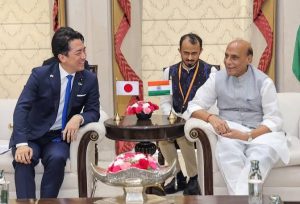
India and Japan signed a Memorandum of Arrangement (MoA) on Maritime Security Cooperation during bilateral talks between their Defence Ministers in New Delhi, aimed at deepening defence and maritime security cooperation.
- The agreement provides a framework for closer cooperation between the Indian Navy and the Japan Maritime Self-Defense Force (JMSDF), including Maritime Domain Awareness (MDA), Search and Rescue (SAR), and Humanitarian Assistance and Disaster Relief (HADR).
- Both sides agreed to strengthen protection of Sea Lines of Communication (SLOCs) through reciprocal naval visits, joint exercises, personnel and expert exchanges, port access, logistics support, and maintenance and repair facilities.
- India and Japan will explore joint development in naval shipbuilding and design, combining Japan’s technological expertise with India’s production capabilities, while also advancing reciprocal ship-repair arrangements and greater use of Indian shipyards under Make in India.
- The two countries will expand exercises such as Dharma Guardian and JAIMEX, while the planned Veer Guardian 26 will see Japanese fighter aircraft participate in an air exercise in India for the first time.
- They also plan more complex, short-notice and unmanned-system-enabled drills.
- India’s DRDO and Japan’s Acquisition, Technology & Logistics Agency (ATLA) will deepen cooperation in advanced defence technologies, while a Defence Industry Forum will promote industrial collaboration.
- The shipborne UNICORN integrated communications antenna system was identified as a key symbol of bilateral defence-equipment cooperation and is being pursued as the first defence equipment transfer project between India and Japan.
- Both sides agreed to promote exchanges between their Special Operations Forces and explore cooperation with India’s integrated theatre commands after their establishment.
- India and Japan reaffirmed support for a free and open Indo-Pacific, opposed unilateral actions that threaten freedom of navigation or seek to alter the status quo by force, and agreed to deepen cooperation with third countries through exercises and initiatives such as the Indo-Pacific Logistics Network.
- A Director-General/Joint Secretary-level Working Group will coordinate cooperation across operational, intelligence, equipment, technology and industrial domains, while both sides will accelerate preparations for the fourth India-Japan 2+2 Foreign and Defence Ministerial Dialogue in Tokyo.
Impatiens Nimspurjai:

A newly discovered Himalayan plant has been named Impatiens nimspurjai in honour of the legendary Nepali mountaineer.
- Impatiens Nimspurjai is a new plant species of the touch-me-not family.
- It is endemic to western Nepal.
- It was named in honour of the celebrated Nepali mountaineer Nirmal Purja.
- Its botanical name combines “Nims Purja” with “jai”, the Nepali word for jasmine.
- It grows on moist, humus rich slopes in temperate forest and forest-edge habitats.
- It is closely related to Impatiens radiata, I. harae, and I. wallichii, other balsams native to the Himalayan region.
- It has sessile oblong-lanceolate leaves.
- It is an annual herb reaching up to nearly a metre in height.
- It is distinguished by its sessile, oblong to lanceolate leaves and small clusters of flowers flushed with yellow and tinged purple.
Hara Mangrove Forests:

The Hara mangrove forests of Iran’s Qeshm Island are facing a serious environmental threat after oil residues reached the island and parts of the protected mangrove ecosystem, amid continuing conflict and shipping-related oil spills in the Persian Gulf.
- Hara Forests located around Qeshm Island and the Khuran Strait near the Strait of Hormuz, the Hara forests are among the largest and most ecologically important mangrove ecosystems along the Persian Gulf.
- The forests are dominated by the grey mangrove (Avicennia marina), whose specialised root system helps it filter salt and survive in highly saline coastal waters.
- The forests serve as breeding, nursery and feeding grounds for fish, shrimp, crabs and other marine species, while also supporting migratory birds, marine mammals and critically endangered hawksbill sea turtles.
- The Hara forests form part of the UNESCO-designated Hara Biosphere Reserve, reflecting their ecological significance, while Qeshm is also recognised for its globally important geological and ecological heritage.
- Local fishing communities depend heavily on the surrounding marine ecosystem, while the mangrove waterways are also central to Qeshm’s sustainable tourism, supporting boat tours and nature-based livelihoods.
Centre’s FY 2026–27 Fiscal Outlook:
Former RBI Governor C. Rangarajan and D.K. Srivastava assessed the Centre’s FY 2026–27 fiscal outlook, noting that strong non-tax revenues and capital spending could keep the fiscal deficit near the 4.6% target, despite tax, subsidy and geopolitical pressures.
- The Centre’s fiscal outlook represents the projected health of Union government finances for FY 2026–27, balancing gross tax revenues, non-tax windfalls, non-debt capital receipts, and expenditure liabilities (subsidies and public capital expenditure).
- It measures the government’s ability to maintain fiscal consolidation targets—specifically capping the fiscal deficit at 4.6% of GDP and the debt-to-GDP ratio at 55.8%—against external supply shocks and domestic tax base adjustments.
Key Data & Statistics:
- Gross Tax Revenue (GTR) Slowdown: According to Controller General of Accounts (CGA) data, the Centre’s GTR grew by only 3.7% in Q1 FY 2026–27, driven by an 11% contraction in GST and a modest 6.8% increase in Personal Income Tax (PIT).
- Excise Duty Contraction: Union excise duty collections contracted by 22.4% in Q1 following duty cuts introduced to buffer consumers against high global crude oil prices.
- Higher NominalGDP Growth Projection: FY 2026–27 nominal GDP growth is projected between 12.5% and 13.0% (exceeding the budgeted 10.04%), with estimated real GDP growth of ~7% and an Implicit Price Deflator (IPD) inflation of 5.0%–5.5%.
- Rising Subsidy Burden: Major subsidies surged by 37.4% in Q1, with full-year subsidy payouts projected to exceed budget estimates by approximately ₹50,000 crore due to volatile crude oil prices.
South Korea’s Plastic Waste Management System:
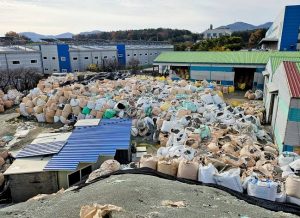
South Korea’s plastic recycling system has come under scrutiny after research showed that only 16.4% of household plastic collected for recycling in 2021 was actually recycled into plastic, despite official recycling figures of around 73%.
- South Korea operates an Extended Producer Responsibility (EPR) system under which manufacturers and importers are financially responsible for managing the packaging waste they introduce into the market.
Key Findings:
- High Plastic Waste Generation: South Korea generated 7.8 million tonnes of household and commercial plastic waste in 2024. In 2022, per-capita plastic waste stood at 103.9 kg, the second-highest in the OECD.
- Low Actual Material Recycling: Researchers found that only 16.4% of sorted household plastic in 2021 returned as recycled plastic, while substantial quantities were burned or landfilled.
- Inflated Recycling Statistics: South Korea historically counted thermal recovery—burning plastic as fuel in cement kilns, boilers and power plants—as recycling, pushing the reported recycling rate above 70%.
- High Producer Responsibility: Mandatory recycling rates for major packaging streams range from roughly 50% to 90%, including about 79% for colourless PET bottles and 90% for containers, trays, films and sheets.
- Municipalities ReceiveEPR Funds: Through the Korea Resource Circulation Service Agency (KORA), around 80–90% of producer contributions reach local governments, collectors, sorting facilities and recyclers.
Thermal Protection System:
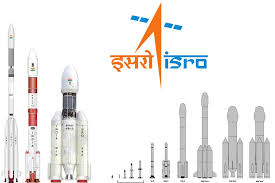
As ISRO prepares for the uncrewed flight test sequence of the Gaganyaan human spaceflight mission, aerospace experts have detailed the functioning of the crew module’s Thermal Protection System (TPS).
- A Thermal Protection System (TPS) is a specialized, high-performance external shielding layer engineered to protect a spacecraft, space shuttle, or crew capsule from extreme aerodynamic heating and thermal flux during high-speed atmospheric ascent and hypersonic planetary re-entry.
Thermal Protection System:
- Dissipation of Extreme Kinetic Energy: Returning from Low Earth Orbit (LEO), the Gaganyaan capsule hits Earth’s upper atmosphere at hypersonic velocities. Over 99% of this massive kinetic energy is converted into intense shock-layer heating, generating plasma temperatures up to 1,800°C that would otherwise melt the metallic spacecraft structure.
- Irreversible Re-entry Dynamics: Unlike orbital launch phases where ascent aborts are possible, once atmospheric descent begins, there is no provision to abort the mission.
- Rapid Deceleration &Human Limitations: Rapidly fluctuating aerodynamic deceleration forces occur too quickly for manual intervention, demanding a completely passive, autonomous, and failsafe thermal barrier.
- Internal Habitability & Structural Integrity: The TPS ensures the internal habitable environment and underlying aluminum-alloy/CFRP structural frame remain well below structural tolerance limits.
The Food Safety and Standards (Advertising and Claims) Regulations, 2018:

The Maharashtra FDA issued notices to actors over Vimal Elaichi endorsements, alleging surrogate advertising of prohibited pan masala in violation of food safety and consumer protection norms.
The Food Safety and Standards (Advertising and Claims) Regulations, 2018:
- A statutory regulatory framework notified by the Food Safety and Standards Authority of India (FSSAI) under Section 92 read with Sections 23 and 24 of the Food Safety and Standards Act, 2006.
- It governs how Food Business Operators (FBOs), advertisers, and marketers promote food products, formulate nutritional/health claims, and display public commercial communications.
- Aim is to ensure truthful, scientifically supported food advertising, protecting consumers from misleading claims, surrogate advertising and unfair trade practices.
Key Features of the Regulations:
- Mandates that all marketing communications and claims must be unambiguous, clear, and scientifically meaningful; advertisements must not encourage or condone excessive consumption or undermine healthy lifestyles.
- Use of words such as Natural, Fresh, Pure, Original, Traditional, or Authentic in brand or trade names must strictly adhere to prescribed qualifying criteria.
- Strictly prohibits advertisements from claiming that a food can prevent, alleviate, treat, or cure any specific physiological disease or disorder; labels cannot state recommended/approved by medical or health professionals.
- Requires all nutritional content, comparative, and health claims (including Nutrient Function and Reduction of Disease Risk claims) to be backed by validated laboratory methods and peer-reviewed human intervention studies.
- Rigorous Non-Addition Standards: Formulates strict qualifying criteria for claims asserting non-addition of sugars (mandating the label CONTAINS NATURALLY OCCURRING SUGARS where applicable), salt/sodium, and food additives.
- Obligates FBOs and marketers to seek prior formal approval from FSSAI for reduction-of-disease-risk claims before publishing commercial communications.
- While displaying the FSSAI license number and logo is mandatory for packaging and traceability, using the FSSAI emblem as a marketing badge to promote sales or imply product superiority is prohibited.
- Empowers the Food Authority to order the immediate stoppage of deceptive advertisements and mandate the issuance of a corrective advertisement within 30 days through the exact same medium to neutralize misleading impressions, alongside penalties under Section 53 of the FSS Act, 2006.
Sea Lice:
A German biotech startup developing a feed-based nano-antibody treatment for sea lice has ambitions to use its platform technology to tackle bacterial, viral and parasitic diseases across aquaculture.Sea lice are larvae from certain jellyfish and sea anemones that live in saltwater oceans and seas.Sea lice can be unpredictable because they drift with the currents. A beach that had sea lice one year may not have them the next, and vice versa.Because they’re so small and nearly see-through, sea lice are almost impossible to see with the naked eye.
India’s Trade Agreements in Action:
The Government has highlighted India’s growing use of Free Trade Agreements, showing early export gains, rising preferential Certificate of Origin issuance and wider product diversification across FTA partner markets.Over the past decade, India has expanded its network of Free Trade Agreements (FTAs) across major global markets, reflecting its growing economic weight and deeper integration with the world economy.Recent FTAs are opening new markets for Indian exporters, diversifying trade partnerships and creating opportunities across goods, services and investment.India’s strategy is increasingly centred on ensuring that negotiated market access translates into higher export participation, investment flows and employment generation.While pursuing greater global market access, India continues to safeguard domestic priorities and sensitive sectors through calibrated trade commitments.In FY 2025–26, India’s combined merchandise and services exports reached a record USD 863.1 billion, including USD 441.8 billion in merchandise exports.During April–June 2026, combined exports were grew by 11.37% over the corresponding period of the previous year.
Deemed Distribution Licence:
The Andhra Pradesh government’s policy framework recommending a Deemed Distribution Licence (DDL) for hyperscale AI data centres—including the Google-Adani AI data centre project in Visakhapatnam—has faced severe legal and civil pushback.A Deemed Distribution Licence (DDL) is a statutory status where an entity is treated as an authorized power distributor to supply electricity within a designated area without undergoing the standard licensing process.The Andhra Pradesh government proposed granting DDL status to strategic data centres with a minimum connected load of 300 MW, allowing them to procure, build, and manage their own power networks.An entity is legally deemed an authorized power distributor for a designated area without needing a standard, formal distribution license.The licensee directly procures electricity (such as renewable energy via Power Purchase Agreements or energy exchanges) and manages its own internal distribution network.The entity supplies and distributes the procured power directly to consumers located within its demarcated operating area.



