
Today’s Current Affairs: 23rd jun 2026 for UPSC IAS exams, State PSC exams, SSC CGL, State SSC, RRB, Railways, Banking Exam & IBPS, etc
Table of Contents
Solanum Pandeyi:
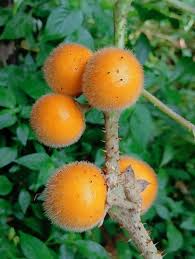
A new species of wild brinjal has been discovered from one of the remote islands of the Andaman and Nicobar archipelago by a scientist from the Botanical Survey of India (BSI) and named it as Solanum pandeyi.
- Solanum Pandeyi is a species of wild brinjal recorded in the evergreen forest of Middle Andaman.
- It was found growing in the open along the forest edges and was locally known as wild orange eggplant.
- The new species is similar to Solanum lasiocarpum and belongs to the Leptostemonum clade of Solanum.
- It was used by an indigenous Negrito tribe, Great Andamanese, for food and medicinal purposes.
- Most seeds and roots are used to treat tooth infection.
- Ripe fruit with jaggery (a natural unrefined sugar), chilli, garlic, ginger, and salt are used to make sour-sweet sauce by the Ranchi and Bengali settler community of the island.
- Botanical Survey of India is India’s apex taxonomic and floristic research institution under the Ministry of Environment, Forest and Climate Change.
- It was established on 13 February 1890.
- It provides the scientific foundation for plant conservation, documentation, identification and sustainable use of the country’s plant wealth.
New Species of Cave-Dwelling Micro Snails:
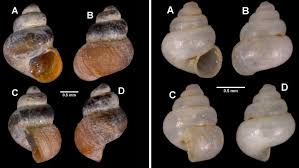
Researchers recently discovered two new species of miniature, cave-dwelling micro-snails named Georissa meghalayaensis and Acmella bensoni.
- Georissa meghalayaensis and Acmella bensoni are two new species of cave-dwelling micro-snails.
- They were discovered deep inside the damp limestone caves of Northeast India’s Indo-Burma biodiversity hotspot.
- Georissa meghalayaensis was discovered at the edge of Meghalaya’s Krem Puri cave entrance.
- It stands out from its closest relatives due to its striking orangish-red colour and a highly detailed, mesh-like pattern of ridges covering its tiny shell.
- In contrast, its closest known snail cousins typically sport yellowish shells with sharp, widely spaced spiral lines.
- Acmella bensoni was found clinging to walls deeper inside both the Krem Puri and Arwah caves of Meghalaya.
- This species distinguishes itself from similar snails by having a smaller, slightly transparent, whitish shell.
- It features deeply impressed grooves between the shell’s spirals (whorls) and an incredibly fine, densely packed pattern of tiny ribs that make the shell appear almost smooth.
- This shiny little snail was named in honour of William H. Benson, a legendary 19th-century scientist, celebrated as the pioneer of Indian Malacology, the study of molluscs.
India’s first 3D-Printed Artificial Reef Modules:

Tamil Nadu is set to deploy India’s first 3D-printed artificial reef modules in coastal waters as part of an ambitious marine habitat restoration initiative under the second phase of the Pradhan Mantri Matsya Sampada Yojana.
- India’s first 3D-Printed Artificial Reef Modules is to be deployed by Tamil Nadu in coastal waters off the Ramanathapuram coast.
- It is part of an ambitious marine habitat restoration initiative under the second phase of the Pradhan Mantri Matsya Sampada Yojana.
- It will serve as a pilot to assess the performance of six newly developed reef designs created through advanced 3D-printing technology.
- The modules, each weighing about 1 tonne, were developed by Chennai-based startup Tvasta, an IIT Madras-incubated company, in collaboration with Visakhapatnam Regional Centre of the ICAR-Central Marine Fisheries Research Institute.
- These modules will be deployed about two nautical miles offshore.
- Unlike conventional artificial reefs made from reinforced concrete structures, the new modules feature complex geometries with multiple crevices, folds and attachment surfaces designed to enhance biodiversity.
- They are manufactured without iron reinforcement and incorporate material innovations aimed at increasing porosity and creating substrates more suitable for marine organisms, including corals, sponges and other reef-associated fauna.
- They allow greater structural complexity, higher surface area, and species-specific habitat design.
- The technology offers significant advantages over traditional reef modules, including faster fabrication, reduced labour requirements and flexibility to alter material composition according to site-specific ecological needs.
Dongfeng-17 (DF-17):

Chinese state broadcaster CCTV has for the first time aired footage showing the launch of a Dongfeng-17 (DF-17) hypersonic missile recently.
- Dongfeng-17 (DF-17) is a Chinese solid-fueled medium-range hypersonic ballistic missile.
- It was officially unveiled in 2019.
- Its NATO code name is CSS-22.
- It is said to have a range of 1800 km to 2500 km.
- It is mounted on a mobile launcher.
- It carries a hypersonic glide vehicle DF-ZF (HGV — Hypersonic Glide Vehicle).
- The missile is launched outside the atmosphere like a classic ballistic missile.
- At a certain altitude, the DF-ZF warhead separates.
- The warhead reenters the atmosphere, but instead of descending in a straight line like ballistic missiles, it “glides” in the atmosphere with its fins.
- While gliding, it changes direction and maneuvers. Its speed is approximately Mach 5-10.
- This flight profile allows the vehicle to remain below radar detection for longer durations than a ballistic missile covering the same distance.
Blue Swimmer Crab:
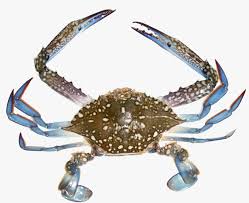
ICAR-Central Institute of Brackishwater Aquaculture (ICAR-CIBA), Chennai, has successfully demonstrated Blue Swimmer Crab (Portunus reticulatus) farming technology for the first time.
- Blue Swimmer Crab is a brachyuran crab in the Portunidae family.
- It is also known as the blue crab, blue swimmer crab, blue manna crab and flower crab.
- It is usually recognized by flat, disc-shaped hind legs, used as paddles for swimming, and by the nine spikes or horns along their carapace, on either side of their eyes.
- It is found in Indonesia, Vietnam, Philippines, China, Japan, Malaysia, Australia, India, Sweden, Singapore
- In India it is distributed all along the east and west coasts with a dominant fishery at Palk Bay and Gulf of Mannar.
- They stay buried under sand or mud most of the time, particularly during the daytime and winter, which may explain their high tolerance to ammonium (NH4+) and ammonia (NH3).
- They come out to feed during high tide on various organisms such as bivalves, fish and, to a lesser extent, macroalgae.
Nabha Fort:
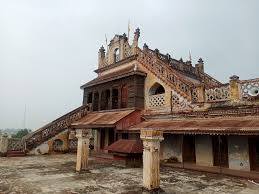
Volunteers recently cleared four trolley-loads of garbage from the 18th-century Nabha Fort and an adjoining park, renewing demands that the monument linked to Maharaja Ripudaman Singh be protected and developed as a tourism destination.
- Nabha Fort is located in Nabha city within the Patiala district of Punjab.
- It served as the royal residence and administrative center of the Nabha princely state under the Phulkian dynasty.
- Constructed and expanded over more than 150 years, notable rulers like Maharaja Hira Singh (1843-1911) contributed to its grandeur with decorative frescoes, intricate carvings, and spacious courtyards.
- The fort played a significant role during the Anglo-Sikh Wars, with Nabha aligned with the British, which secured its sovereignty under colonial rule.
- The fort features traditional Indian military architecture with thick walls, bastions, and large gates designed for defense, alongside palatial residences, gardens, and audience halls showcasing a blend of Mughal, Rajput, and Sikh architectural styles.
- The fort also consists of painted chambers, gilding and mirror work, colored glass and decorative fanlights, wood carvings, decorative plasterwork, stone door frames, and stone jaalis.
- Rediscovered artifacts include rare wall paintings depicting Maharaja Ranjit Singh’s army and a unique cooling system in the basement known as the Sard Khana.
Bolivia:
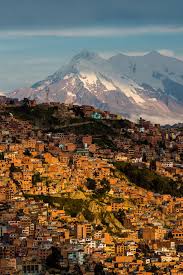
The Bolivian President announced a state of emergency in Bolivia.
- It is a landlocked country located in west-central South America.
- It is bordered by 5 countries: by Brazil to the north and east; by Paraguay to the southeast; by Argentina to the south; by Chile to the southwest and by Peru to the northwest.
- The constitutional capital is Sucre, while the seat of government and executive capital is La Paz.
- Bolivia’s geography is diverse, featuring high mountains, plateaus, and low plains.
- The Andes Mountains dominate the west, with the Cordillera Occidental along the Chilean border, and the Cordillera Oriental to the east.
- Highest Point: It is Nevado Sajama
- Important ones include the Beni, Desaquadero, Guapore, Madre de Dios and Mamore.
- Lake Titicaca is situated between Peru to the west and Bolivia to the east is the largest freshwater lake in South America and the highest of the world’s large lakes.
- It has significant deposits of natural gas and vast reserves of minerals such as tin, silver, zinc, and lithium.
Ambubachi Mela:
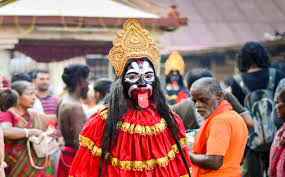
The annual Ambubachi Mela which is one of the largest and most significant religious gatherings in eastern India started at the revered Kamakhya Temple.
- Ambubachi Mela festival is held during the monsoon, generally in June at the Kamakhya Temple in Guwahati, Assam.
- It is a shrine to the Goddess Kamakhya and one of the most important centres of Tantrik Shaktism.
- The period of Ambubachi is believed to be the period of the goddess’s annual menstruation, and the shrine is closed for this.
- The festival is associated with fertility, with the onset of monsoon, and the common historical association across cultures of the Earth as a fertile woman.
- The name ‘Ambubachi’ itself translates to water flowing.
- Kamakhya Temple is situated on Nilachal Hill and adjoining the southern bank of the Brahmaputra River.
- It is one of the most revered centres of Tantric practices. It is regarded as one of the oldest of the 51 Shakti Peethas in India.
- It had been modelled out of a combination of two different styles namely, the traditional nagara and Saracenic or Mughal style of architecture.
- This unusual combination has been named the Nilachala Style of Architecture.
- This is the only temple of Assam having a fully developed ground plan.
- It consists of five chambers, garbhagriha, antarala, Jagan Mohan, bhogmandir and natmandir or opera hall for performing traditional dance and music associated with sukti temples.
- The superstructure of each of the above chambers exhibits different architectural features.
- The main temple contains a modified Saracenic dome, the antarala carries a two-roofed design, the bhogmandir with five domes similar in appearance to the main temple and the natmandir having a shell-roof with apsidal end similar to some of the impermanent namghars or prayer halls found in Assam.
Lake Baikal: In News
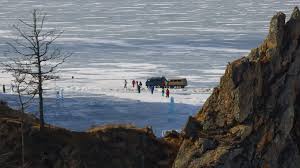
Researchers said ancient DNA obtained from bodies interred in four burial sites in the Lake Baikal area revealed the presence of the oldest-known strains of Yersinia pestis, the plague bacterium.
- It is located in the southern part of eastern Siberia, south-central Russia, near the border with
- It is the oldest existing freshwater lake on Earth.
- It is the world’s largest freshwater lake.
- It is also the world’s deepest lake.
- There are 45 islands and islets in Lake Baikal, of which Olkhon is the largest island.
- Rivers: Barguzini, Selenga, Upper Angara, Sarma, and Turka are the major rivers that drain into the lake.
- It has only one outlet, the Angara River.
- It is also home to the Buryat people, who follow the Tibetan Buddhist religion and reside on the eastern side of the lake, rearing goats, camels, cattle, and sheep.
- The lake was declared a UNESCO World Heritage Site in 1996.
Nirbhay Chetna Initiative:
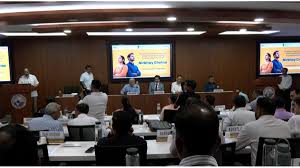
The central government rolled out ‘Nirbhay Chetna’ to sensitise 17.5 lakh male elected representatives.
- Nirbhay Chetna Initiative is a key intervention under the Nirbhay Raho initiative.
- It is a first-of-its-kind national initiative implemented under the Nirbhaya Fund.
- Nodal Ministry: Ministry of Panchayati Raj
- It seeks to strengthen gender-responsive governance through Panchayati Raj Institutions by building awareness, accountability and community leadership among elected representatives.
- It is a landmark national initiative on the sensitisation of men towards women-related issues, including women’s safety and security that aims to strengthen gender-responsive governance at the grassroots level.
- Components of Nirbhay Raho:
- Nirbhay Chetna seeks to sensitise elected male representatives on gender equality and women’s safety
- Nirbhay Netri focuses on capacity-building and legal awareness among elected women representatives;
- Nirbhay Drishti envisages the installation of CCTV cameras at strategic rural locations to strengthen technology-enabled safety infrastructure in Panchayats.
Ecologically Sensitive Area:

The Western Ghats one of the world’s biodiversity hotspots, may soon receive stronger legal protection in at least three states through the notification of Ecologically Sensitive Areas (ESAs).
- ESAs, also called Eco-Sensitive Zones (ESZs) are designated regions identified for special environmental protection because of their rich biodiversity, fragile ecosystems or critical ecological functions.
- The Central Government can notify certain areas as Ecologically Sensitive Areas under the Environment (Protection) Act, 1986.
- Under this recognition certain activities are prohibited, some are tightly regulated, while others are encouraged to ensure development does not come at the cost of ecological damage.
- Getting an ESA status also means that any development project in the area will be subject to stricter environmental scrutiny.
- Eco-Sensitive Zones are created as “shock absorbers” for the protected areas, to minimize the negative impact on the “fragile ecosystems” by certain human activities taking place nearby.
- These areas are meant to act as a transition zone from areas requiring higher protection to those requiring lesser protection.



