
Today’s Current Affairs: 23rd Nov 2026 for UPSC IAS exams, State PSC exams, SSC CGL, State SSC, RRB, Railways, Banking Exam & IBPS, etc
Table of Contents
What is Membranous Nephropathy?
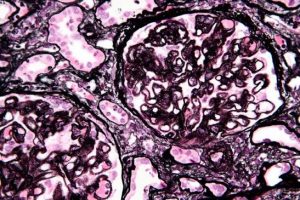
An 18-year-old girl from Keralam recently developed a serious kidney ailment named Membranous Nephropathy, allegedly after using a fairness cream — promoted through social media — that contained dangerously high levels of mercury for nearly a year.
- Membranous Nephropathy (MN) is a kidney disorder that causes your immune system to attack glomeruli, the tiny filters in kidneys.
- Kidneys have thousands of glomeruli. These filters clean waste products from your blood.
- MN can cause your kidneys to stop filtering waste.
- There are two types of MN:
- Primary MN (idiopathic): This is a condition that directly affects kidneys. It is usually due to an autoimmune condition. Up to 75% of people have this type.
- Secondary MN: This type happens when another health condition or treatment affects kidney About 25% of people have this type.
- The following conditions increase the risk for MN:
- Cancers, especially lung and colon cancer
- Exposure to toxins, including gold and mercury
- Infections, including hepatitis B, malaria, syphilis, and endocarditis
- Medicines, including penicillamine, trimethadione, and skin-lightening creams
- Systemic lupus erythematosus, rheumatoid arthritis, Graves disease, and other autoimmune disorders
- Treatment:
- At present, there is no cure for MN.
- Controlling blood pressure is the most important way to delay kidney damage.
- High blood cholesterol and triglyceride levels should be treated to reduce the risk for atherosclerosis.
New Micro-Moth Species:
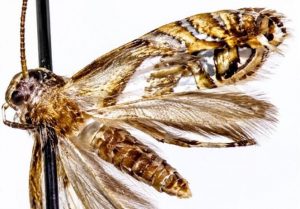
Scientists recently identified a new micro moth species, Glyphipterix brevimucronata, near Hollongapar Gibbon Sanctuary in Assam.
- Glyphipterix brevimucronata is a new species of micro moth.
- It was discovered near Hollongapar Gibbon Sanctuary in Assam.
- The 5 mm moth has distinctive brown forewings with a yellowish metallic sheen and characteristic white markings.
- Its scientific name, brevimucronata, refers to a distinctive short, pointed structure in its reproductive anatomy.
- Scientifically classified under the family Glyphipterigidae, sedge moths comprise more than 530 described species worldwide. However, researchers have documented only 25 species in India.
- The genus Glyphipterix has an especially limited history of documentation in the country.
- Except for one species, British entomologist Edward Meyrick described all Indian species belonging to this genus between 1907 and 1923.
- This discovery is India’s first addition to the sedge moth family in almost 100 years.
Hollongapar Gibbon Sanctuary:
- It is located in the Jorhat district of Assam.
- It is named after the Hoolock Gibbon, the only ape species found in India. It has the thickest gibbon populations in Assam.
- The Bhogdoi River creates a waterlogged region dominated by semi-hydrophytic plants along the border of the sanctuary.
- Most of the vegetation is evergreen in character and is composed of several canopy layers.
- The tall hollong trees form the upper canopy, the Nahar trees form the middle canopy and the shrubs form the lower canopy.
- It is home to the only nocturnal primate found in the northeast Indian states, the Bengal slow loris.
- Other primates include the stump-tailed macaque, northern pig-tailed macaque, eastern Assamese macaque, rhesus macaque, and capped langur.
- Also found at the sanctuary are Indian elephants, tigers, leopards, jungle cats, wild boar, three types of civet, four types of squirrel, etc.
- The sanctuary is home to over 200 species of birds, including several rare and endangered species, such as the white-winged wood duck, the Bengal florican, and the great hornbill.
Gulf of Finland:

A Russian cargo vessel bound for the country’s Baltic exclave Kaliningrad has been recently hit by a drone attack in the eastern Gulf of Finland.
- Gulf of Finland is the easternmost extension of the Baltic Sea, located in Northern Europe.
- It is one of the largest bodies of brackish water in the world.
- It is bordered by Finland in the north, Russia in the east, and Estonia in the south.
- Both the Finnish capital city, Helsinki, and the Estonian capital, Tallinn, are located right on the shores of the Gulf of Finland.
- At the very eastern end of the gulf is the Russian city of St. Petersburg.
- It has relatively low salinity because of substantial freshwater inflow from rivers and limited exchange with the more saline waters of the North Sea.
- Major rivers: The Neva River flows into the Gulf of Finland near Saint Petersburg.
- The gulf is also connected to the Saimaa Lake (Finland’s largest lake) via the Saimaa Canal.
- The gulf faces a humid continental climate with hot summers and relatively harsh winters.
What is Candida albicans?
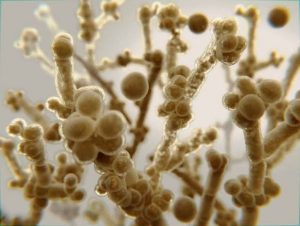
Scientists at CSIR-Centre for Cellular and Molecular Biology (CCMB) recently identified two compounds that prevent Candida albicans from changing into its infection-associated filamentous form without stopping its growth.
- Candida albicans, a type of yeast, is a fungus that naturally lives in the body.
- It is the most common species of Candida yeast.
- Candida albicans can cause different types of infections.
- Normally, yeast infections aren’t contagious. But Candida albicans can spread if one has a weakened immune system.
What is Bagheera AT1?

Adani Defence & Aerospace successfully demonstrated its vehicle-mounted anti-tank guided missile (ATGM) system ‘Bagheera AT1’ at the Pokhran Field Firing Ranges in Rajasthan recently.
- Bagheera AT1 is a vehicle-mounted anti-tank guided missile (ATGM) system.
- It is indigenously developed and integrated by Adani Defence & Aerospace, a subsidiary of the Adani Group.
- It can target both enemy tanks as well as armoured vehicles.
- It combines a guided missile, an automated launcher, day-and-night targeting sights and a high-mobility armoured vehicle.
- It can engage targets up to 8 km.
- This is approximately twice the 4-km range of conventional ground-launched anti-tank missiles.
- The missile uses laser beam-riding guidance instead of depending on a radio communication link.
- This makes the system highly resistant to electronic jamming.
- One of the missile’s key features is its ability to counter Active Protection Systems (APS).
- An APS detects an incoming missile and fires a countermeasure to destroy or deflect it.
- It can fire two missiles in quick succession along the same beam at a single target.
- The first engages the tank’s APS, while the second is designed to penetrate its defences, such as armour.
- Each Bagheera AT1 vehicle carries a total of 12 missiles: four kept ready-to-fire on the automated launcher, and eight stored onboard as additional reloads.
- The system is equipped with a television camera to identify targets during daylight and a thermal imaging system for operations at night.
- The platform features a critical “shoot-and-move” capability, allowing crews to fire from protected cover and rapidly relocate before the enemy can trace their position and retaliate.
DSC A21:
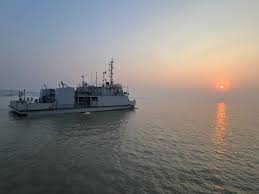
DSC A21 of the Diving Support Craft (DSC) project was delivered to the Indian Navy today at Naval Dockyard in Mumbai.
- DSC A21 is an indigenously designed and built Diving Support Craft delivered to the Indian Navy.
- It has been indigenously designed and constructed by M/s Titagarh Rail Systems Limited (TRSL), Kolkata.
- It has a catamaran-hull form and is equipped with state-of-the-art diving equipment.
- Its superior design offers enhanced stability, enlarged deck area and improved sea-keeping characteristics, which makes it suitable for its specialist role.
- The ship is indigenously designed and built under relevant Naval Rules and Regulations of Indian Register of Shipping (IRS).
- With induction of these ships, the Indian Navy’s capabilities in diving support, underwater inspection, salvage assistance and coastal operational deployment will be augmented.
- DSC A21 is a proud flag bearer of Make in India initiative of Government of India (GoI)/ Ministry of Defence (MoD).
NCG VISHWAS:
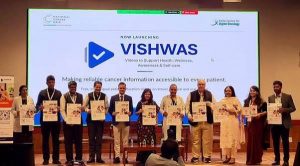
The union Health Secretary launched National Cancer Grid VISHWAS.
- NCG VISHWAS (Videos to Support Health, Wellness, Awareness and Self-care) is an AI-enabled patient education initiative covering breast, cervical and oral cancers.
- It provides information in Hindi, Marathi, Tamil and English.
- The videos cover prevention, diagnosis, treatment and long-term care, helping patients and caregivers access reliable information and make informed decisions.
- The initiative will be disseminated through the National Cancer Grid’s network of hospitals and healthcare partners.
- It can support cancer awareness through Ayushman Arogya Shivirs, ASHA and Anganwadi workers.
- These videos could also be made available through platforms such as the Ayushman Bharat Digital Mission (ABDM) and Swasth Bharat portals, enabling greater access to reliable cancer-related information.
National Cancer Grid:
- It was formed in August 2012.
- It is funded by the Government of India through the Department of Atomic Energy,
- It is a network of more than 400 cancer centres, research institutions and patient groups working towards improving cancer care through standardised protocols, quality assurance, capacity building and collaborative research.
Lonar Lake:
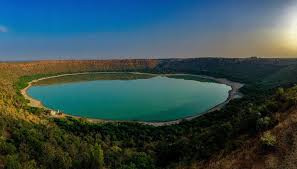
Lonar Lake has been recently included in the ‘Third 100 IUGS Geological Heritage Sites’, an international list recognising locations of outstanding scientific importance.
- Lonar Lake (also known as Lonar Crater) is situated in the Buldhana district of Maharashtra.
- It is less than 6 km in diameter and sits in a nearly circular bowl.
- It sits inside the Deccan Plateau—a massive plain of volcanic basalt rock leftover from eruptions some 65 million years ago.
- Its location in this basalt field suggested to some geologists that it was a volcanic crater.
- Scientists in the 1970s, however, confirmed the presence of maskelynite—a naturally occurring glass that is only formed by extremely high-velocity impacts.
- It is believed to have been created around 52,000 years ago when a high-velocity meteorite struck the basaltic Deccan Plateau.
- This impact led to the formation of a nearly circular depression, which gradually transformed into a saline and alkaline lake.
- It is the only known impact crater lake in basaltic rock in the world.
- It is the only known saline crater lake in the world. Its water is seven times saltier than seawater due to the presence of basalt rock.
- The basin is surrounded by steep slopes. It has several springs around the lake that supply water to the lake.
- It has several vents around the lake that release gases such as methane, carbon dioxide, hydrogen sulphide, etc.
- One of the most striking aspects is its color, which changes from green to pink depending on the season and the water conditions.
- This is caused by the presence of microorganisms that thrive in the saline and alkaline environment of the lake.
- Apart from its scientific importance, Lonar also has a rich historical and cultural heritage.
- The region has been mentioned in ancient scriptures, such as the Skanda Purana and the Ain-i-Akbari.
- The area surrounding the crater is home to centuries-old temples built during the Chalukya and Hemadpanti eras, showcasing stunning architectural craftsmanship and religious significance.
- It was already recognized as a Ramsar Site and a National Geological Heritage Monumen
- With the latest recognition, Lonar Lake moved closer to becoming a UNESCO World Heritage Site.
IUGS Geological Heritage Sites:
- IUGS Geological Heritage Sites are recognised by the International Union of Geological Sciences (IUGS) for their outstanding scientific value as exceptional examples of geological features, processes and discoveries.
- With 74 active national members, IUGS is one of the World´s largest scientific organisations.
- It encourages international cooperation and participation in the Earth sciences in relation to human welfare.
- They represent some of the world’s most significant places for understanding the Earth and its history.
- Located across the globe, they offer a surprising journey through the most important geological sites of the Earth.
- The selection of the Third 100 builds on the success and global impact of the First 100, announced in Zumaia, Spain, in 2022, and the Second 100, announced during the 37th International Geological Congress (IGC 2024) in Busan, Republic of Korea.
- Third 100 Geological Heritage Sites was announced at a IUGS Geoheritage Event, Algarve, Portugal.
- They are distributed across 47 countries and include 11 sites in Africa, 22 in the Americas, 22 in the Asia-Pacific region, 6 in the Middle East, 34 in Europe, 2 in Antarctica, and 3 in the High Seas.
- This list of geographical wonders include the Fjords of Norway, the San Andreas Fault in the US, Chocolate Hills in the Philippines and Mount Fuji in Japan.
Hypereteone indica : New Species Of Marine Bristle Worm
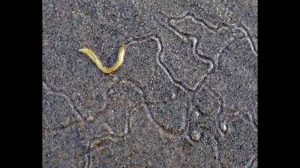
Scientists recently discovered a new species of marine bristle worm named Hypereteone indica along the northern Bay of Bengal coast.
- Hypereteone indica is a new species of marine bristle worm.
- It was discovered along the northern Bay of Bengal coast in the intertidal zones of Udaipur Beach in Odisha and Hijli Beach in Bengal.
- The discovery takes the number of recognised species in the genus worldwide to 10.
- The worms were spotted in the early morning but could not be found after sunrise despite repeated attempts, suggesting possible sensitivity to light or a distinct daily activity pattern.
- The worm has an elongated, flattened body.
- The holotype — the specimen used to formally describe the species — measures about 43 mm.
- Pale yellowish when alive, it turns opaque brown after preservation.
- It is distinguished from its relatives by several physical features, including a prominent terminal ring on its proboscidial papillae, ventral cirri as long as the neuropodia, and bristles with a long, curved tooth accompanied by smaller accessory teeth.
Bristle Worms:
- Members of the annelid family: the term ‘’bristle worm’’ encompasses more than 10,000 species.
- Generally found in the ocean (but also occasionally in fresh water), they’re characterized by segmented bodies with bristle-like protrusions—called chaetae—which extend from both sides of their body along their entire length.
- These worms can grow very large—up to 24 inches in a tank—but most are between 1 and 6 inches long.
- They are nocturnal and tend to stay in or under a live rock or in substrate.
Purana Qila:
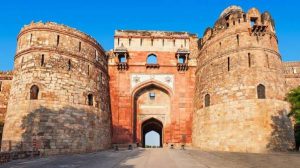
The Prime Minister recently inaugurated the first SCO Civilisational Dialogue Forum at Delhi’s Purana Qila.
- Purana Qila, also known as Qila-e-Kohna (meaning ‘old fort’), is located in the southeastern part of the present city of New Delhi.
- It is one of the oldest forts in Delhi built on the banks of the Yamuna River.
- The current structure of Purana Qila was built by the Mughal Emperor Humayun from 1533 to 1538. He named it Dinpanah, meaning the refuge of faith.
- The Afghan ruler Sher Shah Suri (‘The Lion King’) defeated Humayun in 1540, renamed the fort as Shergarh, and added several structures in the complex during his five-year reign.
- Purana Qila changed hands several times between the Mughals and their rivals until it came under the control of the British in 1803 CE.
- The British used it as a military camp and a prison during the First War of Independence in 1857 CE.
- It is an impressive example of medieval Indian architecture, combining elements of Hindu, Islamic, and Persian styles.
- It is roughly rectangular in shape.
- The fort complex has walls measuring 18 m in height and 1.5 km in length.
- The fort has three main entrances, the Bara Darwaza, which faces west and is used as the entrance to the fort even today.
- The South Gate is known as the Humayun Gate, and the third gate is called the Talaqi Gate, or the forbidden gate.
- All these gateways are beautifully decorated with tiles, marble inlays, and pillared pavilions.
- The double-storied gates of the Purana Quila are quite massive and are built with red sandstone.
- The fort is surrounded by a moat, which is fed by river Yamuna.
- The Sher Mandal and the Quila-i-Kunha Mosque are the notable structures inside the Fort complex.
- The Sher Mandal was built by Humayun. It is a two storied octagonal tower, used by Humayun as his library.
- The Quila-I-Kunha Mosque is an example of Indo-Islamic architecture built by Sher Shah Suri in 1541 AD.
Overa-Aru Wildlife Sanctuary:
A report from Kashmir reveals severe environmental violations in the ecologically sensitive Overa-Aru Wildlife Sanctuary near Pahalgam.
- Overa-Aru Wildlife Sanctuary is located in the Aru Valley near Pahalgam in the Anantnag district of Jammu and Kashmir.
- Established as a game reserve in 1945 under Dogra rule and upgraded to a sanctuary in 1981, it covers an area of about 511 sq.km.
- It is known for its rich biodiversity and scenic landscape, including lakes, glaciers, mountains, and forests with elevations ranging from 2,100 to 5,425 meters.
- It also plays a vital role in protecting the Lidder River catchment area, which is key for irrigation and drinking water supply in the region.
- The sanctuary’s forests vary by altitude, with deciduous species like walnut and chestnut at lower levels, coniferous blue pine and silver fir at mid-levels, birch at higher levels, and alpine shrubs near the peaks.
- It is a critical habitat for endangered species such as the Hangul or Kashmir stag, musk deer, Asiatic ibex, Himalayan serow, and predators like the common leopard and Asiatic black bear.
- It also supports over 117 bird species, including the endangered Egyptian vulture and vulnerable Kashmir flycatcher.
Allan-Herndon-Dudley Syndrome:
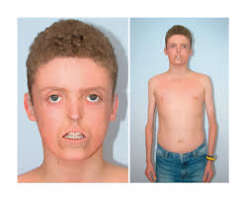
An initiative led by Hyderabad-based paediatrician brought down rare disease Allan-Herndon-Dudley syndrome (AHDS) drug cost from ₹9 crore to ₹2.5 lakh and made seven children to get the medicine tiratricol free of cost.
- Allan-Herndon-Dudley Syndrome is also known as MCT8 deficiency.
- It is a rare X-linked genetic disorder that primarily affects males and disrupts brain development and movement.
- It is caused by mutations in the SLC16A2 gene, which block the thyroid hormone triiodothyronine (T3) from entering nerve cells in the developing brain while leaving excess T3 circulating in the bloodstream.
- It has weak muscle tone (hypotonia) and underdevelopment of many muscles (muscle hypoplasia).
- As they get older, they usually develop joint deformities called contractures, which restrict the movement of certain joints.
- Abnormal muscle stiffness (spasticity), muscle weakness, and involuntary movements of the arms and legs also limit mobility.
- Treatment options range from symptomatic interventions, including botulinum toxin injections, levodopa/carbidopa, assistive devices, functional therapies, rehabilitation to replacement therapies.
Klebsiella Pneumonia : Study
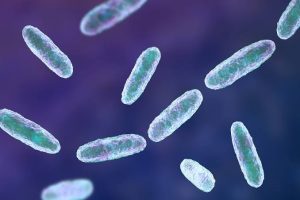
The Indian Council of Medical Research (ICMR) Antimicrobial Resistance Surveillance and Research Network (AMRSN) Annual Report 2025 found particularly low effectiveness of several antibiotics against E. coli and Klebsiella pneumonia.
- Klebsiella Pneumonia is a type of bacteria that can cause pneumonia.
- It is usually found in poop (stool) and your respiratory tract. It can also live in dirt and water in the environment.
- It is a major cause of healthcare-associated infections, particularly in adult and newborn intensive-care units (ICUs).
- It can cause pneumonia, bloodstream infections and sepsis, and is associated with high mortality, especially among critically ill patients.
- It is known to develop multidrug resistance, including resistance to carbapenems, which are important antibiotics used to treat severe bacterial infections.
- Types of Klebsiella pneumoniae:
- Classic: These strains can live in your body and usually don’t harm you. But they can spread in hospitals and long-term care facilities. They usually infect people with medical devices or those who have other health conditions.
- Hypervirulent: These are more likely to cause severe illness and spread outside of healthcare facilities (community-acquired).
- Symptoms: Klebsiella symptoms depend on where you get infected. Some symptoms could include: Belly pain, Cough, shortness of breath, Eye pain, Fever, chills etc.
- Treatment: Healthcare providers treat Klebsiella infections with antibiotics.
DIVERSIFARM-India:
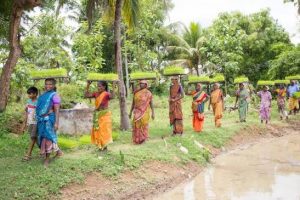
According to a survey conducted by DIVERSIFARM-India, India has at least 1,000 community seed banks (CSBs).
- It is a project designed to strengthen community seed banks, farmer-managed seed systems and Farmers’ Rights in India.
- It aims to improve food, nutrition, and livelihoods for small farmers by strengthening seed systems through community seed banks.
- It will provide an overview of community seed banks, invite them to share experiences through a joint platform, develop solutions to joint challenges and identify how best practices can be scaled out.
- It is a project led by Fridtjof Nansen Institute (FNI) and the M S Swaminathan Research Foundation (MSSRF).
- It is funded by the Royal Norwegian Embassy, New Delhi.
- Key Features:
- National mapping: The project estimates at least 1,000 CSBs in India and has profiled 652 in a digital atlas.
- Six management types: An earlier survey of 475 CSBs identified six types based on how they are managed.
- Odisha roadmap: A ten-point proposal recommends a coordinating secretariat, district-level recognition and access to technical and financial support.
- Capacity-building manual: A practical guide covers seed quality, storage, documentation, governance and financial sustainability.
Bridal Veil Bamboo Mushroom:
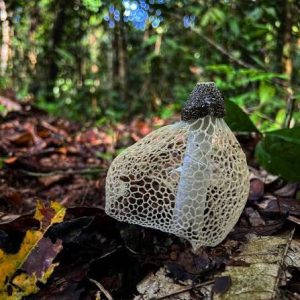
Biologist spotted the short-lived Bridal Veil bamboo mushroom in Ranganathittu Bird Sanctuary, Karnataka.
- Bridal Veil Bamboo Mushroom is scientifically known as Phallus indusiatus.
- It is popularly referred as “veiled lady” or bamboo pith, derives its common name from its close association with bamboo thickets.
- The net-like structure surrounding its stalk is called an indusium, which gives it the distinctive appearance of a veil,
- It can grow up to 25 centimeters tall, and it consists of a brown cap, a hollow shaft, and its distinctive netting.
- It can also grow in other moist, shaded habitats rich in decaying leaves and organic matter.
- It is found in tropical environments around the world, from the Amazon to Southern China.
- This fungus grows on deadwood bamboo when moisture and temperature conditions are favourable, adding that it also emits a distinctive odour.
- It is considered a delicacy in several Asian cuisines and is used in soups and stir-fries after proper processing.