
Today’s Current Affairs: 23rd Sep 2026 for UPSC IAS exams, State PSC exams, SSC CGL, State SSC, RRB, Railways, Banking Exam & IBPS, etc
Table of Contents
Damodar River: In News
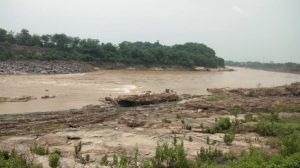
River and fishery department experts in West Bengal are still unable to explain why hilsas are frequently found upstream in the Damodar River.
- Damodar River is a major river of eastern India and an important part of the Ganges River System.
- It flows through the states of Jharkhand and West Bengal.
- This river is sometimes called “the Sorrow of Bengal” because it used to cause big floods in the plains of West Bengal.
- It originates from the Palamau hills of Chota Nagpur Plateau in Jharkhand.
- From its source, the river flows in a southeastern direction, passing through the Chota Nagpur Plateau, a region known for its rich mineral deposits.
- In its lower course, it flows through West Bengal’s plains and is joined by several tributaries.
- It meets the Hooghly River at Shayampur, which is 48 km from Kolkata.
- Total Length: 592 km
- The Damodar basin is the industrial and mineral heartland of India.
- It traverses the Gondwana coalfields — Jharia, Raniganj, Bokaro, Karanpura and Giridih — which contain the bulk of India’s high-grade coking coal reserves, making the valley the foundation of the country’s iron, steel and thermal-power industries.
- Tributaries: Barakar River, Konar River, Jamunia River, Bokaro River, Sali River, Ghari River, Guaia River, Khadia River, Bhera River.
- Damodar Valley Project is a multipurpose river valley project in eastern India, developed on the Damodar River and its tributaries with objectives including flood control, irrigation and power generation.
- The project is operated by the Damodar Valley Corporation (DVC), an undertaking of the Indian Government established in July 1948.
- It was one of the first major multipurpose river valley projects undertaken in independent India.
- The DVC constructed dams at Tilaiya and Maithon on the Barakar, Konar on the Konar, and Panchet on the Damodar, together with the Durgapur barrage that feeds the Damodar Valley Canal system.
Rebate of State and Central Taxes and Levies (RoSCTL) Scheme: Extension
The government may extend the tenure of the Rebate of State and Central Taxes and Levies (RoSCTL) scheme, an export-boosting incentive for the textile sector, beyond September 30, an official aware of the matter said recently.
- Rebate of State and Central Taxes and Levies (RoSCTL) Scheme is a significant export incentive framework introduced by the Ministry of Textiles in 2019.
- Objective is to compensate for the State and Central Taxes and Levies in addition to the Duty Drawback Scheme on export of apparel/garments and Made-ups by way of rebate.
- It aims to reimburse all embedded State and Central Taxes/Levies for exports of manufactured goods and garments.
- These taxes are incurred during the production of garments and made-ups before export.
- It has been established as a successor for the old “Rebate of State Levies (RoSL) Scheme.
- The difference between the RoSL & RoSCTL Schemes is that under the RoSL Scheme, there was no benefit on the central tax and levies.
- But in the RoSCTL scheme, the exporter will get a rebate of both State and Central tax and Levies.
- Many taxes (like electricity duty, mandi tax, fuel tax, etc.) get embedded in production costs.
- These cannot be claimed through GST or duty drawback.
- RoSCTL refunds these leftover taxes, reducing production cost and increasing competitiveness.
- It is based on an internationally acceptable principle that taxes and duties should not be exported, to enable a level playing field in the international market for exports.
- Hence, not only indirect taxes on inputs are to be rebated or reimbursed, but also other un-refunded State & Central taxes and levies are to be rebated.
- It provides transferable and sellable duty credit scrips to exporters based on the Free on-board (FOB) value of their exports.
- The scrips shall be issued electronically on the Customs system.
- The duty credit scrips shall be used for payment of Basic Customs Duty on the import of goods. These scrips shall be freely transferable.
- The duty credit available in an e-scrip shall be transferred at a time for the entire amount in the said e-scrip to another person, and transfer of the duty credit in part shall not be permitted.
- The period of validity of the e-scrip, of one year from its creation, shall not change on account of transfer of the e-scrip.
- All exporters of garments/apparel and made-ups manufactured in India are eligible to take benefit under this scheme, except entities/IECs under the Denied Entity List of the Directorate General of Foreign Trade (DGFT).
- Implementing agency: It is implemented by the Department of Revenue, Ministry of Finance.
Nevados de Chillán Volcano:

Chile’s Nevados de Chillán volcano erupted in an eruptive pulse recently, sending ash and volcanic material about 380 metres above the crater.
- Nevados de Chillán Volcano is a large composite stratovolcanic complex located in the Southern Volcanic Zone of the Chilean Andes.
- It’s one of the most active volcanoes in the Ñuble Region of Chile.
- This volcanic group is made up of three main peaks that overlap each other.
- The highest peak is Cerro Blanco (also called Volcán Nevado).
- To the southeast, is Volcán Viejo (also known as Volcán Chillán).
- In the middle of these two is Volcán Nuevo.
- Documented eruptions date back to the 17th century, while geological deposits preserve evidence of activity dating back thousands of years.
- It is particularly known for lava-dome growth, explosions and pyroclastic activity.
Painganga Wildlife Sanctuary:

Maharashtra’s tiger conservation programme has added a third big cat to the population being established in Painganga Wildlife Sanctuary, with a young tigress shifted to the 325-sq-km sanctuary in Yavatmal district recently.
- Painganga Wildlife Sanctuary is located in the Yavatmal district of Maharashtra.
- It derives its name from the river Painganga, or Penganaga River (a tributary of the Wardha River), which borders the sanctuary on its three sides.
- The sanctuary’s geological formation consists of basaltic rock, which contributes to the thermal mass of the region.
- The sanctuary features several ancient rock shelters adorned with petroglyphs, providing insights into the region’s prehistoric human activity.
- It is characterized by its diverse topography, which includes rolling hills, riverine valleys, and dense deciduous forests primarily composed of teak and bamboo.
- The numerous species of fauna sheltered here include Fox, Leopard, Jackal, Hare, Four Horned Antelope, Porcupine, Sambar, Nilgai, Black Buck, Chinkara, and many others.
- It is also a paradise for birdwatchers with numerous species of avifauna like Vulture, Bulbul, Dove, Kingfisher, Cuckoo, Kite, and others.
Neodymium-Iron-Boron (NdFeB) Magnets:

Neodymium-Iron-Boron (NdFeB) magnets have become the backbone of energy transition and advanced manufacturing.
- NdFeB magnets are a type of rare-earth permanent magnet composed of an alloy of neodymium (Nd), iron (Fe), and boron (B).
- First developed in the early 1980s, they are the strongest commercially available permanent magnets in the world, offering an extraordinary combination of high magnetic energy density, coercivity, and remanence in a compact size.
- The chemical formula for the primary magnetic phase in an NdFeB magnet is Nd₂Fe₁₄B — a tetragonal crystalline structure that gives the material its exceptional magnetic properties.
- Typically, the composition includes 29-32.5% neodymium, 64-69% iron, and 1-1.2% boron.
- Their magnetic performance can deteriorate at high temperatures, although specialized grades are designed for higher-temperature applications.
- The addition of heavy rare-earth elements like dysprosium (Dy) or terbium (Tb) is common in high-temperature grades to maintain performance above 150°C.
- All the NdFeB magnets are prone to corrosion. They will require a form of protective coating. The standard coating is a triple-layer plating of nickel copper nickel (Ni-Cu-Ni).
- NdFeB magnets find widespread use in various industries, including electronics, automotive, medical devices, renewable energy, and more.
- In everyday products like headphones, electric motors, sensors, speakers, and generators, NdFeB magnets deliver enhanced performance, underlining their adaptability in modern technology.
Ophiopogon Japonicus:
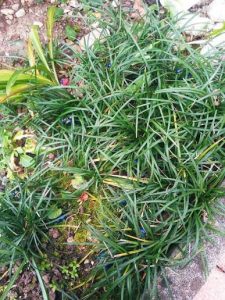
Researchers from the Wildlife Institute of India (WII), Dehradun, and the Uluberia Botanical Institute Herbarium recorded the Ophiopogon japonicus in the wild in Arunachal Pradesh for the first time.
- Ophiopogon Japonicus is an evergreen perennial herb that grows in dense clumps.
- Commonly known as dwarf lilyturf or mondo grass.
- It is a perennial and grows primarily in the subtropical biome.
- It has narrow, grass-like leaves with retroserrulate margin, small white to pale-purple flowers, and blue, berry-like fruits.
- The plant is native to East Asia and is found in China, Japan, Korea and Nepal, generally at elevations between 200 and 2,800 m.
- Its tuberous roots are known as Ophiopogonis Radix or Maidong in Chinese and have long been used in traditional Chinese medicine.
- It is reported that japonicus polysaccharides (OJPs) have a variety of biological activities, including anti-diabetes, anti-inflammatory, kidney protection, hepatoprotective and immunomodulatory activity.
Khejri Tree:
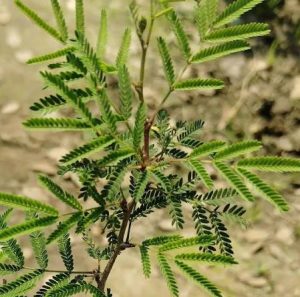
Lok Sabha Speaker has paid respects to Amrita Devi Bishnoi and all the martyrs who laid down their lives for the protection of Khejri trees in Khejadli village of Rajasthan during the 18th century.
- Khejri (Prosopis cineraria (L.) Marbride) is considered a sacred tree in Rajasthan.
- It is also called jant or janti in areas like Alwar, Sikar, Jhunjhunu,
- Khejri is called the state tree of Rajasthan.
- It is found growing in arid and semi-arid parts of Rajasthan, Gujarat, Haryana, Punjab, Delhi and some parts of southern India.
- The tree is frost and drought resistant and tolerates extreme temperature ranging from 40–45 0C in summer to less than 10 0C in winter.
- It is capable of growing in areas of rainfall ranging from 100–600 mm.
- The tree can withstand the hottest winds, the driest season and stay alive where other plants cannot survive.
- It is a deciduous tree with finely divided, feathery leaves and small yellow flowers.
- It is known for its adaptability to arid conditions, the tree thrives in dry and sandy soils.
- It is a nitrogen-fixing tree which enhances the fertility of the soil.
- The fruit is used to make the very popular local dish ‘Sangri’
- The bark of this tress is used medicinally for a range of ailments.
- It plays a vital role in preserving the ecosystem of arid and semi-arid areas, mainly in the Thar Desert.
- Its highly nutritious leaves constitute important source of fodder for livestock while nutritious pods are valued as vegetable for human beings.
AASHVAST Lab:

Indian Army to deploy six AASHVAST labs nationwide for mandatory drone and CCTV cybersecurity screening to counter operational vulnerabilities.
- AASHVAST stands for Assessment and Analysis of Electronic Systems Hardware for Vulnerabilities and Security Threats.
- It is a specialized testing and validation system developed to examine military electronics for hidden security weaknesses.
- The primary goal is to ensure that critical military systems operate exactly as intended and do not contain unauthorized components or malicious code.
- It is developed by the private firm for the Directorate General of Electronics and Mechanical Engineering (DG EME).
- There are approximately 14 types of vulnerabilities that the labs can detect.
- It neutralizes the common threats of enemy interference in Indian drones, preventing them from performing their designated tasks in a contested area.
- The facility can inspect both hardware and software components used in drones, communication systems, sensors, and other defence equipment.
- It examines the software that operates these unmanned aerial vehicles (UAVs) – to identify and eliminate firmware-level vulnerabilities.
- Location based Bug Test: The system examines location-based security controls and assesses how a drone would respond to GPS spoofing or jamming by an adversary.
- It can scan systems for hidden passwords, embedded keys and remote-access tools. It can also check whether a drone accepts only manufacturer-approved software updates.
- The launch of AASHVAST Labs marks a major step toward strengthening the cyber security and resilience of India’s defence infrastructure.
- The facility will help ensure that military drones, sensors, communication systems, and electronic platforms remain secure from hidden vulnerabilities and evolving cyber threats.
SC Strikes Down Maharashtra’s Methanol Rules:

The Supreme Court of India recently struck down Rules 18A and 18B of the Maharashtra Poisons Rules, 1972, which mandated the addition of colourants and bitterants to industrial methanol. The Court ruled that these provisions are unconstitutional and fail the Doctrine of Proportionality.
Maharashtra Poisons Rules, 1972:
- Methanol (Methyl Alcohol): A highly toxic but essential industrial chemical used in paints, resins, pharmaceuticals, and disinfectants.
- The Origin of the Rules: Following a severe 1991 hooch (spurious liquor) tragedy in Mumbai, Maharashtra amended its Poisons Rules in 2011 to introduce Rules 18A and 18B.
- The Impugned Rules:
- Rule 18A(1): Restricted the sale of methanol only to holders of a ‘Form A’ licence.
- Rule 18A(2): Mandated mixing a colourant (methylene carmine) and a bitterant (denatonium saccharide) into methanol before selling it to non-drug manufacturers to prevent its use in illicit liquor.
- Rule 18B: Permitted confiscation of methanol found without a Form A licence.
- Supreme Court Ruling on Maharashtra Poisons Rules, 1972:
- Violation of Fundamental Rights: The Supreme Court declared the rules unconstitutional for violating two primary fundamental rights:
- Article 14 (Right to Equality): The rules were deemed “manifestly arbitrary” as they lacked a rational nexus with the objective sought to be achieved.
- Article 19(1)(g) (Freedom of Trade and Profession): The mandatory denaturing of methanol placed an unreasonable and continuous burden on non-drug manufacturers, irreparably damaging product quality for legitimate industries (e.g., paints, laboratory chemicals).
- Application of the Proportionality Test:
- Applying the proportionality framework (established in K.S. Puttaswamy v. Union of India (2017)), the Court noted:
- While preventing hooch tragedies is a legitimate state aim, the specific restrictions were neither suitable nor necessary. Cosmetic changes (colour/bitterness) fail to address the root causes of illicit liquor deaths, such as pilferage, corruption, and illegal diversion in unregulated fields.
- The Court noted that forced temperance and complete alcohol bans often fail, driving the trade underground.
- This leads to five evils: loss of tax revenue, high enforcement costs, police/excise corruption, illegal distilling, and the resultant drug menace.
- The Court cited the example of Gujarat, which despite strict prohibition since 1960, has witnessed multiple mass hooch tragedies.
Exercise SLINEX 2026:
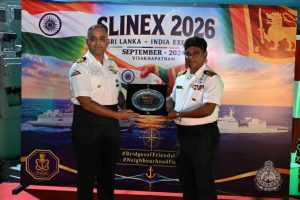
The 13th edition of the exercise SLINEX-26 is being conducted at Visakhapatnam.
- Exercise SLINEX is a bilateral naval exercise between India and Sri Lanka, which was conceptualised in
- It has strengthened maritime cooperation between the nations over two decades.
- INS Kavaratti, an indigenous Anti-Submarine Warfare Corvette, and INS Jyoti, the Fleet Tanker, will participate from the Indian Navy.
- The exercise commenced with the Harbour Phase, which will be followed by the Sea Phase.
- The Harbour Phase includes professional interactions, cross-deck visits, sharing of best practices, Yoga, sports and cultural activities.
- The subsequent Sea Phase will focus on enhancing operational synergy and interoperability through coordinated activities at sea.
- SLINEX has evolved into an important forum for fostering maritime cooperation, interoperability and mutual understanding between the two Navies.
- It is aligned with India’s vision of MAHASAGAR, SLINEX-26 reinforces India’s commitment to a secure, stable and inclusive maritime environment and further consolidates the enduring maritime partnership between India and Sri Lanka.
International Conference on “The Future of Environment and Climate Dynamics”:
The Prime Minister of India inaugurated the two-day International Conference on “The Future of Environment and Climate Dynamics” in New Delhi. The event was organized by the National Green Tribunal (NGT).
Key Highlights of the Conference:
- The Conference brings together jurists, experts, policymakers and stakeholders from 17 countries, along with United Nations Environment Programme (UNEP) and Asian Development Bank (ADB).
- It focuses on knowledge exchange and best practices in judicial, scientific and policy domains.
- It promotes collaborative action to address global environmental and climate challenges.
- It promoted dialogues on the intricate relationship between the environment, climate change, development, and environmental justice.
Major Highlights of the PM’s Address:
- Per Capita Carbon Emissions & Equity: India’s per capita greenhouse gas (GHG) emissions remain less than half the global average, whereas developed nations emit up to six times more per capita.
- According to the UNEP Emissions Gap Report 2024, India’s per capita GHG emissions were 2.9 tCO₂e in 2022, compared with the global average of 6.6 tCO₂e per person per year.
- The Prime Minister reiterated the principle of Common But Differentiated Responsibilities (CBDR–RC), emphasizing that developing nations must not be unfairly penalized for historical emissions.
- Early Achievement of COP21 Paris NDCs: India is the only G20 nation to fulfill its original Paris Agreement (COP21) Nationally Determined Contributions (NDCs) well ahead of the 2030 deadline (surpassing the 50% non-fossil fuel electric capacity milestone and drastically slashing carbon intensity).
- Pioneering Global Green Alliances: Emphasized that India continues to lead multilateral climate diplomacy through homegrown global frameworks:
- International Solar Alliance (ISA) and One Sun, One World, One Grid (OSOWOG)
- Global Biofuels Alliance (GBA)
- International Big Cat Alliance (IBCA)
- Mission LiFE (Lifestyle for Environment) for mass behavioural change
- Non-fossil energy capacity has expanded by nearly 400% over the last 12 years.
- Solar capacity grew exponentially from ~2 GW (2014) to over 160 GW (2026), alongside a threefold surge in wind energy and a strategic push for nuclear power.
- Inaugurated NGT Mobile App to democratize legal remedies, expedite dispute resolution, and bolster transparent environmental governance.
Tulu Accorded 2nd Official Language Status in Karnataka:
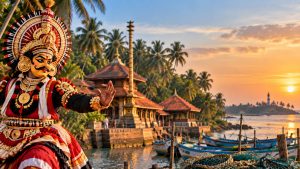
The Karnataka government has granted Tulu the status of the second additional administrative language in the State. The status will apply specifically to the coastal districts of Dakshina Kannada and Udupi, where Tulu is widely spoken.
- The government will allocate Rs 82 lakh annually for translation, training and other activities related to the use of Tulu.
- The decision implements the recommendations of a committee headed by educationist M. Mohan Alva.
- This committee was appointed in 2023 to study the state of Tuluva culture and language and recommend pathways for its official recognition.
- Under Article 345 of the Indian Constitution, a State Legislature is empowered to formally adopt Hindi or any regional language in use within the state as its official language for administrative purposes.
- Article 347 grants the President of India the authority to direct the official recognition of a language across an entire state or a specific district if a substantial proportion of the population demands it.
- At the national level, the Eighth Schedule of the Indian Constitution currently recognizes 22 languages, while Tulu remains outside it despite demands for its inclusion and greater recognition.
- Tulu is a highly prominent Dravidian language, often counted among the ‘Pancha-Dravida’ (Proto-Dravidian) languages, alongside Tamil, Kannada, Telugu, and Malayalam.
- To record its rich literary and religious heritage, the region developed its own indigenous writing system known as the Tulu script (or Tigalari).
- A Southern Brahmic script that evolved from the medieval Grantha script.
The OMO (Open Market Operation) Auction:
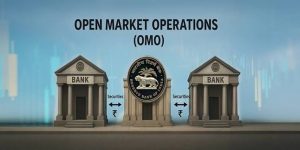
The Reserve Bank of India (RBI) conducted an Open Market Operation (OMO) sale auction, offloading ₹25,000 crore worth of Government of India securities (G-Secs) to drain durable surplus rupee liquidity from the banking system.
- It is a quantitative monetary policy tool through which the central bank (RBI) conducts outright purchases or sales of Government Securities (G-Secs) and Treasury Bills in the open secondary market to regulate the quantum of liquidity (reserve money) in the banking system.
- Types of OMO Operations:
- Outright OMO Sale: The RBI sells G-Secs from its internal portfolio to commercial banks and primary dealers, permanently absorbing durable surplus rupee liquidity from the banking system.
- Outright OMO Purchase: The RBI buys G-Secs from market participants by injecting central bank money, providing durable reserve liquidity to address cash deficits.
- Simultaneous Sale & Purchase (Special OMO / Operation Twist): Simultaneous selling of short-term securities and buying of long-term government bonds to flatten the yield curve without expanding the central bank’s balance sheet.
- Aim: To manage systemic durable liquidity, anchor short-term interbank money market rates (such as the Weighted Average Call Rate – WACR) around the policy Repo rate, and curb demand-pull inflationary pressures stemming from excess money supply.
India Joins the G20 Energy Consensus:
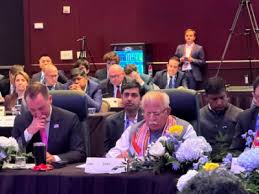
India joined other G20 member nations in adopting four major consensus outcome declarations at the conclusion of the three-day G20 Energy Abundance Ministerial held in Houston, Texas.
- It is anon-binding, consensus-based multilateral policy declaration adopted by G20 energy ministers outlining actionable cooperation across four core tracks: expanding household energy access, improving infrastructure regulatory efficiency, advancing voluntary water recycling, and building resilient critical-mineral value chains.
- Convened at: The G20 Energy Abundance Ministerial in Houston, Texas (held under the US G20 Presidency).
- Aim: To strengthen energy security, infrastructure, water resilience and critical mineral supply chains for industrial and digital growth.
Agasthyamala Biosphere Reserve:
A comprehensive checklist compiled by researchers documented 3,261 flowering plant species in the Agasthyamalai Biosphere Reserve (ABR).
- A contiguous, protected biosphere reserve spanning the southern extremity of the Western Ghats, functioning as one of South India’s four designated biosphere reserves (alongside Nilgiri, Gulf of Mannar, and Seshachalam Hills).
- Located in Geographical Span: Straddles the inter-state border between Kerala and Tamil Nadu.
- Covers approximately 3,500 square kilometres (350,000 hectares), with rugged mountainous terrain rising to 1,868 metres above sea level at the Agasthyamala (Agasthyarkoodam) peak.
- Formally established by the Government of India in 2001.
- Inscribed into the UNESCO World Network of Biosphere Reserves (WNBR) under the Man and the Biosphere (MAB) Programme in 2016.
- Encompasses contiguous wildlife reserves including the Kalakkad Mundanthurai Tiger Reserve (KMTR) in Tamil Nadu, and the Shendurney, Peppara, and Neyyar Wildlife Sanctuaries alongside the Agasthyavanam Biological Park in Kerala.
3,261 Flowering Plant Species in Agasthyamalai Biosphere Reserve:
The Jawaharlal Nehru Tropical Botanic Garden and Research Institute (JNTBGRI), Thiruvananthapuram, has compiled a new checklist of flowering plants in the Agasthyamalai Biosphere Reserve (ABR), highlighting the global biodiversity significance of the Western Ghats.The study documented 3,261 species, 26 subspecies and 28 varieties belonging to 1,139 genera and 190 families, highlighting the rich floral diversity of ABR.A high level of endemism was recorded, with 1,018 taxa (31.2%) endemic to India, including 245 steno-endemic taxa restricted to specialised habitats.Fabaceae was the most species-rich family, followed by Rubiaceae, Poaceae and Orchidaceae.ABR shows strong floral affinity with Sri Lanka, sharing 347 taxa, due to historical geological and climatic connections.Some species also show affinity with tropical American flora, possibly due to long-distance dispersal or pan-tropical distribution patterns.
9th edition of the India International Water Week:
The 9th edition of the India International Water Week (IIWW) convened in New Delhi, centered on the theme of Climate Resilient Water Management.Climate-Resilient Water Management refers to planning and managing water resources so that communities and ecosystems can withstand and adapt to climate impacts such as droughts, floods and changing rainfall. It combines water conservation, efficient irrigation, rainwater harvesting, groundwater recharge, wastewater reuse and resilient infrastructure to ensure reliable water availability despite climatic uncertainty.Climate resilience in the water sector requires moving beyond conventional infrastructure to build adaptive institutional capacity across the entire water cycle:
- The New Hydrological Reality: Climate change has intensified hydrological variability—compressing annual precipitation into roughly 30 to 35 high-intensity rainfall days followed by approximately 330 dry days characterized by severe localized water stress and drying riverbeds.
- The 20/80 Governance Divide: While scientific tools and engineering hardware contribute roughly 20% of the solution, the remaining 80% depends on policy convergence, cross-departmental coordination, community engagement, and institutional reform.
- Although international collaborations provide technological benchmarks, India’s distinct sub-continental monsoon dynamics, demographic load, and agrarian reliance demand customized indigenous governance models rooted in the confluence of traditional knowledge systems and modern hydrology.
WHO Framework on Ethics and Oversight of AI-Related Health Research:
The World Health Organization (WHO) released a departmental guidance update and global report titled Artificial intelligence-related health research: ethics review and oversight.Jointly developed by WHO experts across research ethics, science, and digital health, the publication provides practical recommendations for researchers, RECs, regulators, research funders, scientific publishers, and policymakers. It aims to establish end-to-end ethical oversight across the research lifecycle—from trial design and data collection to clinical translation, publication, and regulatory post-market monitoring.
The WHO categorizes AI-related health research into three distinct domains:
- Health-related research with data (data science) that uses AI: Machine learning and statistical data science deployed to analyze large datasets to generate new health insights.
- Research with AI tools and technologies: Utilizing AI systems as research instruments—such as large multimodal models (LMMs) for protocol authoring, chatbots for participant recruitment/informed consent, and synthetic data generators.
- Health-related research on AI tools and technologies: Clinical validation studies, prospective randomized controlled trials, and implementation research assessing the safety, efficacy, diagnostic accuracy, and utility of AI systems intended for direct clinical or behavioural intervention.
The Partners for Multilateralism (P4M) Grouping:
India joined the inaugural summit of Partners for Multilateralism (P4M) on the sidelines of the UN General Assembly in New York, with India External Affairs Minister attending as an initial co-sponsor.A non-superpower multilateral coalition of middle powers, regional organizations, and developing nations designed to bridge geopolitical divides, uphold international law, and advocate for reformed multilateralism outside traditional superpower confrontation.Conceived in response to the erosion of global consensus, trade weaponization, and escalating conflicts across Europe and West Asia.The framework built upon Canadian Prime Minister Mark Carney’s Carney Doctrine on middle-power solidarity delivered at Davos.
Members:
Founding Initiators: The European Union, Brazil, Canada, and Kenya.
Initial Co-Sponsors & Attendees: India, Australia, and Barbados.
The Nagaland-Set Film Angh Wins TIFF Platform Prize:
Nagaland filmmaker Theja Rio’s debut feature film, Angh, made history by winning the prestigious Platform Prize at the 2026 Toronto International Film Festival (TIFF).A critically acclaimed historical period-drama feature film set in Northeast India, marking the feature directorial debut of Naga filmmaker Theja Rio. Directed & Produced By:Director: Directed by Theja Rio.Producers: Produced by Nancy Nisa Beso and Theja Rio; co-written by Theja Rio and Rajkumar Kandamudi.



