
Today’s Current Affairs: 24th Aug 2026 for UPSC IAS exams, State PSC exams, SSC CGL, State SSC, RRB, Railways, Banking Exam & IBPS, etc
Table of Contents
Vishwamitri River : In News
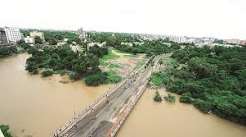
A man died after a crocodile attacked him in the Vishwamitri River recently in Talsat village, on the outskirts of Vadodara city.
- It is a small non-perennial river located in Gujarat.
- It originates from the western and southern slopes of the Pavagadh hills in eastern Gujarat.
- The river flows westward, through Gujarat’s third-largest city, Vadodara, after which it meets the two tributaries of Dhadar and Jambuva before draining into the Arabian Sea via the Gulf of Khambhat.
- It flows between the Mahi and Narmada rivers.
- The highly meandering, sinuous river has a unique ecosystem bearing a plethora of beautiful ravines right from its beginning till its end.
- Porcupines, the common Indian civet, the jungle cat, cobras, pythons, the checkered keelback, and the Bengal monitor are some of the species found in the ravines on the banks of this river.
- Vishwamitri is also where the protected and vulnerable species of the Indian crocodile (Crocodylus palustris), also known as the mugger, resides.
- Historically, the river has been central to Vadodara’s development, with human settlements along its banks dating back to 1000 B.C.
- This river system includes the Sayaji Sarovar on the Vishwamitri River near Ajwa, and the Dev Dam on the Dhadhar Branch.
Ribociclib:
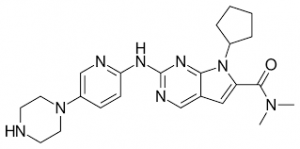
The Kerala High Court recently allowed a breast cancer patient to be impleaded in a petition considering the issue of the ‘exorbitant’ price of ‘life-saving’ breast cancer medication, Ribociclib.
- It is an anticancer medicine used in combination with other medicines to treat certain types of breast cancer.
- It belongs to a group of drugs called CDK 4/6 (cyclin-dependent kinase) inhibitors.
- These drugs block the action of kinase, which is a protein that helps cells to grow and divide. This stops the growth and spread of cancer.
- It is a treatment for breast cancer that has:
- spread to another part of the body (advanced or metastatic breast cancer)
- spread to the area and structures surrounding the breast, such as nearby lymph nodes, muscle, and skin, but not to other parts of the body (locally advanced breast cancer)
- Ribociclib is always given alongside a hormone therapy drug to treat breast cancer.
- Since the growth of normal cells may also be affected by the medicine, other unwanted effects will also occur. Some of these may be serious and must be reported to your doctor.
Guruvayur Temple:
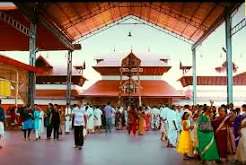
A record 416 marriages were solemnised at Guruvayur Temple on a single day recently.
- Guruvayur Temple, also known as the Dwarka of the South, is a Hindu temple located in the small town of Guruvayur, in the Thrissur District of Kerala.
- It is dedicated to Guruvayurappan, a beloved form of Lord Vishnu worshipped as Baby Krishna.
- It is ascertained that the main presiding deity is 5,000 years old.\In fact, the word ‘’Kuruvayur’’ has been mentioned in the Tamil literature called ‘’Kokasandesam’’ in the 14th century CE.
- However, the earliest recorded history of the Guruvayur temple can be traced back to the 17th century C.E.
- The present structure was rebuilt in the year 1638 C.E.
- In 1716 AD, the Dutch plundered and set fire to the temple. It was rebuilt in 1747 AD.
- In terms of devotees every day, it is the fourth biggest shrine in India.
- It is renowned for its traditional Kerala style of temple architecture, characterized by its gabled roof, wooden carvings, and intricate sculptures.
- Structures like the Nalambalam (temple structure surrounding the sanctum sanctorum), Balikkal (sacrificial stone), and Deepastambam (pillar of lights) are situated on the temple premises.
- The wall of the sanctum sanctorum is decked with ancient 17th-century murals.
- Another famous sight here is the Dwajasthamba. It is a flagstaff, around 70 feet tall, fully covered with gold.
- The Thulabharam is one of the most popular offerings at Guruvayur Temple. In this ritual, devotees are weighed against jaggery, coconuts, sugar, or bananas on a giant set of scales.
- This quantity is then given to the Lord as an offering.
- The temple is also noted for being home to a large population of captive male Asian elephants.
- The Punnathur Kotta elephant sanctuary is very close to the temple.
Crimean-Congo Hemorrhagic Fever:
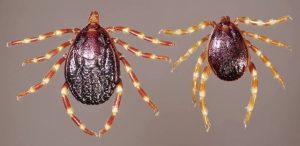
Scientists recently identified multiple targets for antibodies, proteins that protect when an unwanted substance enters body that, could help treat Crimean-Congo hemorrhagic fever (CCHF).
- It is an important zoonotic disease caused by a tick-borne virus (Nairovirus) belonging to the family Bunyaviridae.
- The CCHF virus causes severe viral haemorrhagic fever outbreaks, with a case fatality rate of 10–40%.
- The disease was first characterized in 1944 in the Crimea.
- In 1969, the same pathogen was identified as the cause of a similar disease in the Democratic Republic of the Congo, leading to the combined name used today.
- CCHF commonly spreads in (is endemic to) Africa, Asia, the Middle East, and parts of Europe.
- Its distribution closely mirrors that of Hyalomma ticks, the primary vectors responsible for transmitting the virus.
- It is transmitted by bites from infected ticks or by direct contact with blood or tissues of infected ticks, people, and livestock.
- The ticks can also be hosted by migratory birds.
- People working in livestock industries, slaughterhouses, and veterinary services are considered among the highest-risk groups for infection.
- Treatment:
- There is no specific treatment or cure for CCHF.
- Supportive care includes fluid balance, giving oxygen, managing blood pressure, and treating other infections.
- An antiviral called Ribavirin has shown some benefits in treating CCHF patients.
What is Smew?
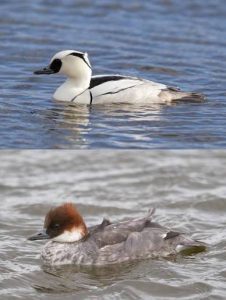
Assam’s Laokhowa Wildlife Sanctuary recently recorded the Smew (Mergellus albellus), a rare migratory waterbird, for the first time.
- Smew is a medium-sized duck belonging to the family Anatidae.
- It was formally described in 1758 by the Swedish naturalist Carl Linnaeus.
- Scientific Name: Mergellus albellus
- The smew species breed in the northern taiga of Europe and Asia.
- They winter in sheltered coasts or inland lakes of the Baltic Sea, the Black Sea, Great Britain, Caspian Sea, East China, Korea and Japan.
- The smew is an occasional visitor to the Indian Subcontinent.
- The smew species inhabit freshwater lakes, reservoirs, flooded woods, ice-free rivers, sheltered bays, estuaries, lagoons and tidal creeks.
- Conservation Status:
- IUCN Red List: Least Concern
Laokhowa Wildlife Sanctuary:
- It is located on the southern part of the Brahmaputra River in the Nagaon District of Assam.
- It forms an integral part of the Laokhowa-Burachapori ecosystem and is a notified buffer of the Kazairanga Tiger Reserve.
- It is a part of the Brahmaputra valley.
- The sanctuary is surrounded by human-dominated areas on all sides except for the north.
- The vegetation composition of Laokhowa can be broadly categorized into alluvial grassland, alluvial forest, moist deciduous forest, and tropical semi-evergreen
- The sanctuary is home to the great Indian-one horned rhinoceros, elephants, royal Bengal tigers, Asiatic water buffaloes and many species of birds.
- Some of the birds spotted here are the spot-billed pelican, little and large cormorant, egret, open-billed stork, brahminy kite, pond heron, etc.
Nilgiri Biosphere Reserve:
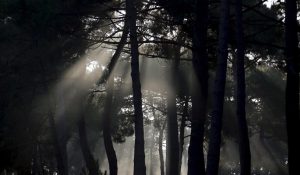
Researchers warned that climate change is destabilising Western Ghats’ forest ecosystems in Nilgiri Biosphere Reserve.
- Nilgiri Biosphere Reserve is located in the Nilgiri Mountains of the Western Ghats.
- It encompasses parts of Tamil Nadu, Kerala, and Karnataka.
- It was the first biosphere reserve in India, established in 1986.
- Protected areas within this Reserve: Mudumalai Wildlife Sanctuary, Wyanaad Wildlife Sanctuary, Bandipur National Park, Nagarhole National Park, Mukurthi National Park, and Silent Valley are the
- It has tropical evergreen forests, Montane sholas and grasslands, semi-evergreen forests, moist deciduous forests, dry deciduous forests, and thorn forests.
- Tribal groups like the Todas, Kotas, Irullas, Kurumbas, Paniyas, Adiyans, Edanadan Chettis, Cholanaickens, Allar, Malayan, etc., are native to the reserve.
- It is India’s first biosphere reserve under UNESCO’s Man and the Biosphere Programme.
- It mainly includes species of Adenoon, Calacanthus, Baeolepis, Frerea, Jarodina, Wagatea, Poeciloneuron, etc.
- It mainly has namely the Nilgiri Tahr and the Lion-tailed macaque and the largest South Indian population of elephant, tiger, gaur, sambar, and chital.
Regenerative Agriculture:

Regenerative agriculture is gradually reshaping the future of Indian farming.
- Regenerative Agriculture is a holistic farming approach centred on restoring soil health and enhancing biodiversity.
- It focuses not merely on sustaining existing farming conditions, but on actively restoring soil health, improving biodiversity and strengthening farms against climate-related stresses.
- It is based on the following principles:
- Minimizing soil disturbance
- Protecting the living roots of perennial crops
- Maintaining soil cover
- Integrating Livestock
- Limiting the use of chemical inputs
- Enhancing biodiversity
- Popular Regenerative agricultural practices in India:
- Micro-irrigation: Drip and sprinkler systems deliver water closer to plant roots, reducing wastage and improving water-use efficiency.
- Natural farming: It uses on-farm biological inputs such as Beejamrut, Jeevamrut, GhanJeevamrut, Neemastra and Dashparni. It also encourages multi-cropping, mulching, cover cropping, minimal soil disturbance and livestock integration.
- Soil health management: Green manuring, cover cropping and mulching can add organic matter, protect soil from erosion, conserve moisture and support nutrient cycling.
- Integrated Farming Systems: Crops can be combined with livestock, fisheries, horticulture, agroforestry and apiculture. This diversification can reduce the risk of crop failure and create additional livelihood opportunities.
- Agroforestry: Integrating trees with crops can provide additional income while improving soil moisture, regulating local temperatures and storing carbon.
216 rescued Indian Star Tortoises:
216 rescued Indian Star Tortoises (Geochelone elegans) were successfully rehabilitated in Tadoba Andhari Tiger Reserve (TATR) from Mumbai and Thane.It is a medium-sized terrestrial tortoise.Their name comes from the star-like pattern on their shell.These patterns act as camouflage by helping to break up the shell outline so that it more easily blends into its surroundings. It inhabits dry areas and scrub forest.It is mainly found in the Indian subcontinent specifically western India and southeastern India (Kerala, Karnataka, and Tamil Nadu), and in Sri Lanka.These are generally crepuscular, which means they are active in the early morning and the late afternoon during dry, hot weather. It has a lifespan of 35 to 80 years in the wild.These solitary animals do not hibernate, but when it is very dry and hot, or very cold, they stay inactive.
Conservation Status: IUCN Red List: Vulnerable



