
Today’s Current Affairs: 24th January 2026 for UPSC IAS exams, State PSC exams, SSC CGL, State SSC, RRB, Railways, Banking Exam & IBPS, etc
Table of Contents
Java Island : Massive Landslide
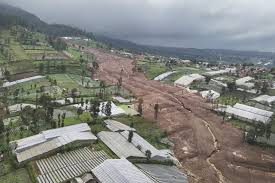
Indonesia’s main island of Java has been recently hit by a massive landslide in which at least 8 people have been reported to be killed.
- Java Island is located in Indonesia.
- It is a part of the Greater Sunda Islands, which also includes Sumatra, Borneo, and Sulawesi.
- It is surrounded by the Java Sea and the Indian Ocean.
- It is volcanic in origin.
- Jakarta, Indonesia’s capital city, is on Java’s northwest coast.
Strobilanthes riteshii: Flowering Plant Species
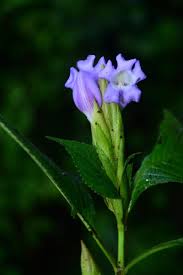
A new flowering plant species named Strobilanthes riteshii has been formally recorded from Arunachal Pradesh recently.
- Strobilanthes riteshii is a new species of flowering plant found in Arunachal Pradesh.
- It belongs to the family Acanthaceae.
- It grows on open hill slopes, often near small waterfalls and streams within evergreen forest patches.
- Based on current information, the species has been provisionally assessed as Data Deficient under the IUCN Red List criteria, indicating that more field data is required to understand its population status and threats.
Schizophrenia : Recent Data
Researchers analysing data from more than half a million people find that compared to the general population, people with schizophrenia are more likely to have weaker bones and to suffer fractures
- Schizophrenia is a serious mental disorder characterized by disruptions in thought processes, perceptions, emotional responsiveness, and social interactions.
- Although the course of schizophrenia varies among individuals, schizophrenia is typically persistent and can be both severe and disabling.
- Researchers believe that several genetic and environmental factors contribute to the risk of developing schizophrenia, and life stressors may play a role in the start of symptoms and their course.
- Since multiple factors may contribute, scientists cannot yet be specific about the exact cause in each individual case.
- Symptoms of schizophrenia include psychotic symptoms such as hallucinations, delusions, and thought disorder, as well as reduced expression of emotions, reduced motivation to accomplish goals, difficulty in social relationships, motor impairment, and cognitive impairment.
- Suicidal thoughts and attempts are much higher than average in people with schizophrenia.
- Although symptoms typically start in late adolescence or early adulthood, schizophrenia is often viewed from a developmental perspective.
- Cognitive impairment and unusual behaviors sometimes appear in childhood, and persistent presence of multiple symptoms represent a later stage of the disorder.
- This pattern may reflect disruptions in brain development as well as environmental factors such as prenatal or early life stress.
- There is no cure for schizophrenia. People with schizophrenia need lifelong treatment.
- This includes medicine, talk therapy, and help in learning how to manage daily life activities.
What Forever Chemicals?
When scientists tested human blood samples collected from 2003 to 2021, they found that levels of older PFAS, “Forever chemicals” dropped by 86% because manufacturers stopped producing them.
- Forever chemicals, or PFAS (per- and poly- fluoroalkyl substances), are a large chemical family of thousands of highly persistent, toxic, man-made, hazardous chemicals.
- PFAS molecules have a chain of linked carbon and fluorine atoms. Because the carbon-fluorine bond is one of the strongest, these chemicals do not degrade easily in the environment.
- The name ‘forever chemicals’ comes from the fact that they remain in the environment without breaking down for generations, if ever.
- In manufacturing, PFAS are favoured for their durability and useful properties such as non-stick, water repellence, and anti-grease.
- PFAS are used in the manufacture of many domestic products, including:
- skin creams and cosmetics
- car and floor polish
- rinse aid for dishwashers
- textile and fabric treatments
- food packaging and microwave popcorn bags
- baking equipment
- frying pans
- clothing and shoes
- They also have many and widespread uses in industry, including in firefighting foam.
- Over time, PFAS may leak into the soil, water, and air.
- People are most likely exposed to these chemicals by consuming PFAS-contaminated water or food, using products made with PFAS, or breathing air containing PFAS.
- Because PFAS breaks down slowly, if at all, people and animals are repeatedly exposed to them, and blood levels of some PFAS can build up over time.
- Impacts of PFAS on Human Health: Forever chemicals have been linked to multiple health problems, including compromised immune systems, liver damage, thyroid diseases, increased cholesterol levels, hypertension, developmental delays in infants, and increased certain cancers such as kidney and testicular.
- The Stockholm Convention has listed some PFAS, such as Perfluorooctane sulfonic acid (PFOS) and Perfluorooctanoic acid (PFOA), as persistent organic pollutants (POPs).
Sonic Boom:
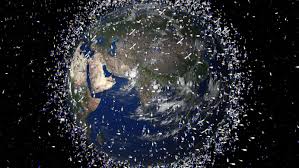
Researchers have used seismometers to detect the sonic booms created by debris from orbit falling back to the earth.
- A sonic boom is a thunderous noise caused by an object, like an aircraft, moving faster than the speed of sound.
- As the object zooms through the sky, the air molecules around it are pushed aside with tremendous force, generating shock waves along its flight path.
- The release of pressure, following the shock waves’ buildup, is heard as the sonic boom.
- Sonic booms create huge amounts of sound energy.
- The intensity of the sonic boom is determined not only by the distance between the craft and the ground but also by the size and shape of the aircraft, the types of maneuvers that it makes, and the atmospheric pressure, temperature, and winds.
- A larger and heavier aircraft must displace more air and create more lift to sustain flight, compared with small, light aircraft.
- Therefore, they create sonic booms stronger and louder than those of smaller, lighter aircraft.
- The larger and heavier the aircraft, the stronger the shock waves will be.
- Generally, the higher the aircraft, the greater the distance the shock wave must travel, reducing the intensity of the sonic boom.
- If the aircraft is especially long, double sonic booms might be detected, one emanating from the leading edge of the plane and one from the trailing edge.
Advanced Chemistry Cell Production Linked Incentive (ACC-PLI) scheme:
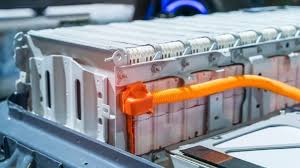
It was observed that there is a substantial gap between the intended and actual outcomes of the Advanced Chemistry Cell Production Linked Incentive (ACC-PLI) scheme.
- It was launched in 2021 to catalyse domestic manufacturing of next-generation battery cells.
- It is aimed to set up 50 gigawatt hour (GWh) of battery cell manufacturing capacity by
- It is also aimed to build a local battery supply chain to reduce import dependence, mobilising private investments and global tech partnerships, lowering battery costs, and accelerating electric vehicle (EV) and energy storage adoption.
- Under the scheme, selected manufacturers are promised incentives linked to actual battery sales.
- Beyond capacity creation, the policy intended to develop a complete battery supply chain covering cathodes, anodes, electrolytes, and cell assembly, while also generating over one million jobs.
- Nodal Ministry: It was launched by the Ministry of Heavy Industries.
Scientists Plan World’s First Graviton Detector:
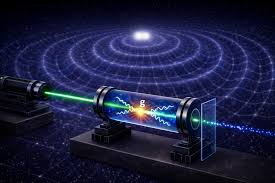
Researchers from Stevens Institute of Technology and Yale University are developing an experiment aimed at detecting gravitons, the hypothetical quantum particles believed to carry gravity, bridging the gap between quantum mechanics and general relativity.
- A graviton is a hypothetical elementary particle believed to carry the force of gravity, similar to how photons carry electromagnetic force. Detecting gravitons would confirm gravity as a quantum force, a major breakthrough in physics.
- The proposed detector is a superfluid helium resonator, cooled to its quantum ground state to eliminate noise. When a gravitational wave passes through, it could transfer one quantum of energy (a graviton), causing a phonon (vibration) detectable by lasers.
- Detection Challenges: Gravity is the weakest of the four fundamental forces (Gravity, electromagnetism, strong and weak nuclear forces), making graviton interaction with matter extremely rare. A graviton can pass through matter almost without interaction, giving it an extremely small detection probability.
- Even if a vibration is detected, it may still be explainable by classical gravity. Previous studies suggest that creating a detector capable of capturing a single graviton may be practically impossible.
- Successful graviton detection would be a landmark breakthrough, opening pathways toward a unified theory of physics and deeper understanding of the universe.
DoT De-licenses Half of 6 GHz Band:

The Department of Telecommunications (DoT) has officially de-licensed the lower half of the 6GHz frequency band for indoor use, paving the way for the adoption of WiFi 6E and WiFi 7 technologies in India.
- The invisible radio frequencies used for wireless communication, ranging from 20 KHz to 300 GHz (a subset of the larger electromagnetic spectrum).
- 2.4 GHz: Offers wide coverage (passes through walls) but has limited data speed.
- 5 GHz: Offers high speed but has a shorter range.
- WiFi 6: Uses both 2.4 GHz and 5 GHz simultaneously for greater efficiency.
- 6 GHz: Operates in the 5,925–7,125 MHz range, offering ultra-high theoretical speeds of 9.6 Gbps.
- The 6 GHz frequency range of 5,925–6,425 MHz is now license-free. This provides an “extra strand” of spectrum for routers, reducing congestion on the legacy 2.4GHz and 5GHz bands.
- This move enables “Multi-Link Operation” (MLO), a key feature of WiFi 7 that allows devices to transmit data across multiple bands (2.4GHz, 5GHz, and 6GHz) simultaneously, ensuring higher speeds and lower latency.
- The 6GHz band is essential for high-bandwidth applications like Virtual Reality (VR), Augmented Reality (AR), and high-fidelity cloud gaming, as it allows massive data flow with minimal lag.
- India has adopted a balanced approach similar to Europe, splitting the 6GHz band between unlicensed use (for WiFi) and licensed use (potentially for 5G/6G), unlike the US (fully de-licensed) or China (reserved for mobile).
- The de-licensed use is strictly for indoor environments.
- It remains prohibited on moving vehicles (cars, trains) and oil rigs to prevent interference with other critical services.
- This decision removes regulatory uncertainty, allowing the launch of advanced hardware (e.g., Sony’s PlayStation 5 Pro) that was previously withheld from the Indian market due to spectrum restrictions.
INSV Kaundinya Reached Oman:
INSV Kaundinya reached Muscat’s Port Sultan Qaboos after completing its maiden voyage from Porbandar (Gujarat), highlighting the shared maritime heritage of India and Oman.Eutelsat (French satellite operator) provided high-speed satellite connectivity to the INSV Kaundinya team via its OneWeb satellite constellation.INSV Kaundinya is India’s first ‘stitched ship’ built using the ancient stitched shipbuilding (Tankai) method. It aims to revive the 2000-year-old Tankai method, a forgotten indigenous technique.Tankai Method is An ancient technique using stitched planks (with coir ropes) and no metal fasteners (like iron nails), making ships flexible and rust-proof.Employs indigenous materials like coir, dammar resin, and animal fat for waterproofing.Involves a unique hull-first construction, unlike Western frame-first methods.Design & Inspiration: Modeled after vessels depicted in the 5th-century Ajanta cave paintings. The design draws inspiration from the ancient Sanskrit text Yuktikalpataru (by King Bhoja, 9th century CE) and accounts of foreign travellers.Features symbolic motifs like the Gandabherunda (two-headed eagle of the Kadamba dynasty emblem), Sun motifs, Simha Yali (mythical lion), and a Harappan-style stone anchor.It is Named after Kaundinya, a legendary 1st-century Indian mariner to make overseas voyages with global historical impact. Kaundinya is credited with sailing to the Mekong Delta and co-founding the Kingdom of Funan (modern Cambodia), one of the earliest Indianised states in Southeast Asia.
Jamma Bane Lands of Kodagu:
Karnataka has enacted the Karnataka Land Revenue (2nd Amendment) Act, 2025 to modernize the century-old land record system for the unique Jamma Bane lands in Kodagu (Coorg).Jamma Bane is a unique, hereditary land tenure system prevalent in Kodagu district (Coorg). The lands were originally granted by the erstwhile kings of Coorg and the British (between 1600 and 1800) to local communities, primarily the Kodavas, in return for military service. These holdings comprise both wetlands (used for paddy cultivation) and forested highlands, which have largely been converted into the region’s famous coffee estates. This act seeks to resolve inheritance disputes over Jamma Bane lands by aligning their records with the Karnataka Land Revenue Act, 1964, to ensure accurate documentation of current holders, occupants, and owners.
National Voters’ Day:
The Prime Minister of India extended greetings to citizens on the occasion of National Voters’ Day.It is observed on January 25th across India every year since 2011 to commemorate the foundation day of the Election Commission of India.It is celebrated to honour voters, encourage youth participation, and strengthen democratic values, and promote universal adult suffrage.It celebrates democracy and empowers every citizen to take part in the electoral process.Theme: The theme for National Voters’ Day 2026 is”My India, My Vote” with a tagline of Citizen at the Heart of Indian Democracy.It is celebrated at the level of national, state, district, constituency, and polling booth NVD stands as one of the country’s most widespread and significant celebrations.
It is dedicated to the voters of the nation.The National Voters’ Day also promotes the enrolment of new voters, particularly young individuals who have recently become eligible
Citizen-Centred Universal Health Coverage:

The Lancet report titled “A Citizen-Centred Health System for India” outlines a roadmap for achieving citizen-centred Universal Health Coverage (UHC), aligned with the vision of Viksit Bharat @2047.
- It argues that as the World Health Organization (WHO) faces financial stress and the US retreats from global health leadership, India has an opportunity to reform its healthcare delivery while emerging as a strong voice for the Global South.
Key Findings of the Lancet Report on the Health System of India:
- Public Spending Stagnation: Despite policy commitments, public health expenditure remains under 2% of GDP (falling short of the National Health Policy 2017 target of 2.5%).
- Fragmented Care: The current system operates in silos (e.g., separate programs for TB, malaria, maternal health), leading to a lack of continuity in care. Patients often have to navigate multiple providers for a single condition.
- Input-Based Governance: The health administration relies on rigid “line-item budgets” (allocating funds strictly for specific items like salaries or bricks), which stifles local innovation and responsiveness to local disease burdens.
- Out-of-Pocket Expenditure (OOPE): OOPE accounts for nearly 50% of total health spending in India, which is among the highest globally.
- Primary Care Gap: The report notes that insurance schemes are “hospital-centric,” leaving outpatient care (where most poor families spend money) largely unprotected.
- Paradigm Shift in Barriers: The report notes that the barriers to UHC in India are no longer a lack of political will, funding, or infrastructure (which have all seen expansion). Instead, the core obstacles are uneven quality, fragmentation, and poor governance.
- The “Missing Middle”: While the poor have government schemes and the rich have private insurance, the middle class often faces catastrophic health expenditure with little support.
- Human Resource Valuation: The current HR policy focuses excessively on counting “qualifications” (degrees) rather than valuing “competencies, motivations, and values,” leading to the underutilization of frontline workers like ASHAs.
Parakram Diwas 2026:
Parakram Diwas was observed to commemorate the birth anniversary of Subhash Chandra Bose.Parakram Diwas (Day of Valor) is celebrated annually on 23rd January to honor the birth anniversary of Netaji Subhash Chandra Bose, one of India’s greatest freedom fighters. Parakram Diwas 2026 is being celebrated on the 129th birth anniversary of Subhash Chandra Bose (SC Bose).The day symbolizes the courage, valor, and patriotism of Netaji Subhas Chandra Bose, who led the Indian National Army (INA) and advocated for complete independence.It also serves as a reminder of Netaji’s famous slogan, “Give me blood, and I will give you freedom,” which inspired millions in the fight for India’s independence.
India’s LFPR Hits Record 56.1% in 2025:
The Periodic Labour Force Survey (PLFS) – December 2025 shows a consistent recovery with workforce participation reaching yearly highs while unemployment rates remain broadly stable.The monthly data is based on the Current Weekly Status (CWS) approach, assessing a person’s activity status (employed, unemployed, or out of the labour force) over the 7 days preceding the survey. LFPR for persons aged 15+ continued its upward trend since June 2025, reaching 56.1% in December 2025. WPR reached its yearly peak at 53.4%. Rural male WPR showed strong performance at 76.0%, and women at 38.6% indicating robust rural employment. Overall Unemployment Rate (UR) remained stable at 4.8%. Rural UR was steady at 3.9% while urban UR increased slightly to 6.7%. A clear disparity persists with rural LFPR (59.0%) substantially higher than urban LFPR (50.2%), and urban unemployment consistently exceeding rural levels.



