
Today’s Current Affairs: 24th jul 2026 for UPSC IAS exams, State PSC exams, SSC CGL, State SSC, RRB, Railways, Banking Exam & IBPS, etc
Table of Contents
Salal Dam:
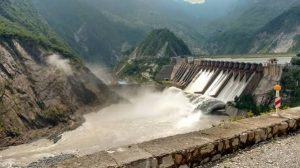
Authorities recently opened all gates of the Salal Dam in Jammu and Kashmir’s Reasi district after heavy rainfall triggered a sharp rise in water inflow into the Chenab River and the dam reservoir.
- The Salal Dam, also known as Salal Hydroelectric Power Station, is a 690 MW run-of-the-river power project on the Chenab River in the Reasi District of Jammu and Kashmir.
- Though the dam was first conceptualized in 1920, the construction commenced in 1970 and subsequently entered into commercial operation in 1987.
- This was the first hydropower project, which was built by India under the Indus Water Treaty regime in Kashmir.
- The project is developed and owned by National Hydroelectric Power Corporation (NHPC).
- Jammu and Kashmir receives 12.5 percent of the energy generated from the project.
- The rest is transmitted to the Northern Grid, where it is distributed to the states of Punjab, Haryana, Delhi, Himachal Pradesh, Rajasthan, and Uttar Pradesh.
- Jammu and Kashmir also purchases additional power at regular prices.
Disporum yobinorum: Flowering Plant
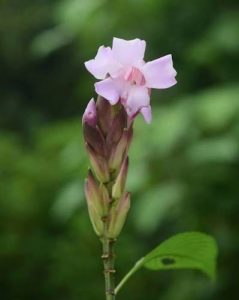
Botanists recently discovered a flowering plant named Disporum yobinorum in a remote corner of Arunachal Pradesh bordering Myanmar.
- Disporum yobinorum is a new species of flowering plant.
- It was discovered in the forests of Vijaynagar in Changlang district of Arunachal Pradesh.
- Vijaynagar is one of India’s least disturbed forest landscapes.
- Nestled along the border with Myanmar’s Kachin State, the region shares its geography and flora with the forests of Yunnan in China, making it part of a biologically rich transboundary landscape.
- The species was named yobinorum in honour of the Yobin community, recognising their support for scientific exploration in the region.
- The Yobin, also known as the Lisu in Myanmar and China, are one of Arunachal Pradesh’s smallest indigenous tribes.
- Disporum yobinorum grows in moist, shaded evergreen forests.
- Researchers recommended that the species be treated as Data Deficient under IUCN criteria.
Tenzing Norgay National Adventure Award :
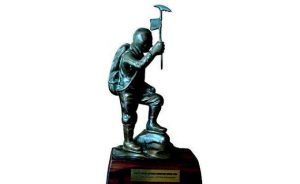
The Ministry of Youth Affairs & Sports invites online nominations for the Tenzing Norgay National Adventure Award (TNNAA) 2025.
- Tenzing Norgay National Adventure Award is India’s highest national honour for outstanding achievements in the field of adventure.
- The objectives of the award are:
- To recognize the achievements of the person in the field of adventure.
- To encourage young people to develop the spirit of endurance, risk-taking, cooperative teamwork, and quick, ready, and effective reflexes in challenging situations.
- To provide incentives to the young people for getting exposed to the adventure activities.
- The Tenzing Norgay National Adventure Award carries a bronze statuette, a certificate, a blazer with a silken tie (or saree), and cash prize of ₹15 lakh.
- The award enjoys a status equivalent to the Arjuna Awards and is presented by the Government of India along with the National Sports Awards.
- Number of Awardees:
- Awards can be given in four categories namely, Land Adventure, Water (Sea) Adventure, Air Adventure and Life Time Achievement for adventure activities on Land, Sea and Air.
- Ordinarily not more than one Award will be made in each category.
Electric Vertical Take-off and Landing Aircraft:

An IIT Madras-incubated startup launched India’s first electric vertical take-off and landing (eVTOL) aircraft prototype.
- It is a battery-powered aircraft that can take off and land vertically like a helicopter before transitioning to forward flight like a conventional aeroplane.
- An eVTOL does not require long runways.
- It is a low-altitude urban air mobility aircraft.
- Most designs use multiple electrically powered propellers instead of a single large rotor, allowing them to lift off from relatively small spaces.
- eVTOL aircraft use multiple electric motors and propellers powered by batteries.
- Most eVTOLs use distributed electric propulsion technology which means integrating a complex propulsion system with the airframe.
- There are multiple motors for various functions; to increase efficiency; and to also ensure safety.
- Applications: Air Taxi, Delivery, Medical assistance (EMS), Cargo Transport, Recreation.
SMILE Scheme: In News
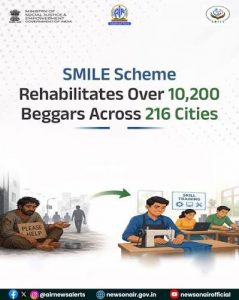
The SMILE scheme has rehabilitated over 10200 persons engaged in begging across 216 cities in India.
- The SMILE (Support for Marginalized Individuals for Livelihood and Enterprise) is an umbrella programme of the Ministry of Social Justice and Empowerment.
- It is a central sector scheme.
- It aims to realise the vision of a “Bhiksha Vritti Mukt Bharat” (Begging-Free India) by adopting a convergence-based approach involving
the Central Government, State Governments, Union Territories, district administrations, urban local bodies, municipal corporations and implementing agencies. - It will cover 295 cities by the financial year 2030-31, with a special focus on metropolitan centres as well as religious, tourist and historical destinations.
- The larger scheme includes the:
- ‘Central Sector Scheme for Comprehensive Rehabilitation for Welfare of Transgender Persons’
- Central Sector Scheme for Comprehensive Rehabilitation of Persons Engaged in the Act of Begging
- These two schemes provide comprehensive welfare and rehabilitation measures to the transgender community and the people engaged in the act of begging.
- To strengthen implementation and transparency, the Ministry has introduced the SMILE-Beggary National Portal, which enables digital registration, monitoring and tracking of rehabilitation centres and shelter homes.
Allographa : New Species Of Lichen
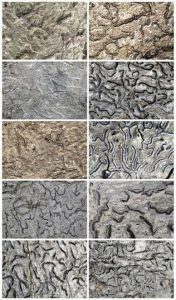
A team of researchers has unveiled five new species of lichen-forming fungi belonging to the genus Allographa.
- Allographa is a genus of script lichens or lichen-forming fungi (a fungus that teams up with algae or cyanobacteria to create a lichen) with elongated fruiting bodies in the family
- It has more than 200 species and in India these Allographa species are limited, particularly from the Western Ghats.
- These are highly sensitive to pollution, climate shifts and habitat disturbance, making them reliable indicators of ecosystem health.
- The recently discovered five new Allographa species from Western Ghats are:Allographa keralensis, A. paraconsanguinea; A. persistinspersa and A. semicarbonisata.
- Lichens are not just one organism but two (sometimes more) living in intimate symbiosis: a fungus that offers structure and protection, and a photobiont (usually a green alga or cyanobacterium) that captures sunlight and makes food.
- Lichens play critical roles in ecosystems, building soil, feeding insects and serving as nature’s bioindicators.
Mission Golden Spice:
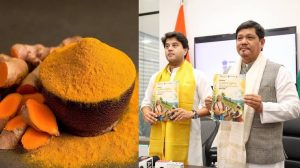
The Union Minister for Communications and Development of North Eastern Region (MDoNER) launched the Mission Golden Spice.
- Mission Golden Spice is an integrated Lakadong Turmeric Value Chain Enhancement Project.
- It is a convergence-led initiative for turmeric cultivation and value-chain development in the State of Meghalaya.
- Time Period: Five-year roadmap (2025–2030)
- It is to be implemented in two phases namely Value Chain Strengthening (Phase 1) followed by Expansion & Scale-up (Phase 2).
- It is anchored by MDoNER and the North Eastern Council (NEC).
- The Mission builds upon convergence with schemes and interventions of the Ministries of Agriculture & Farmers Welfare, Food Processing Industries and Commerce, along with APEDA, the Spices Board, the National Turmeric Board, ICAR, MeitY, NABARD, SFAC and the Government of Meghalaya.
Lakadong Turmeric:
- It is mainly cultivated in the Lakadong area of Jaintia Hills, Meghalaya.
- It is distinguished by its remarkable curcumin content, ranging from 7 to 12%
- It is darker in colour and is grown organically without the use of fertilisers.
- It has been awarded the Geographical Indication (GI) tag in 2024.
- It has anti-inflammatory, antioxidant, and neuroprotective properties.
India’s Rising Inflation:

India’s Wholesale Price Index (WPI) inflation has surged to around 10%, marking its sharpest rise in over a decade (excluding the Covid-19 period). The spike has reignited concerns over inflation, with rising fuel, power, and manufactured goods prices emerging as the primary drivers rather than excessive consumer demand.
- India’s headline Consumer Price Index (CPI) inflation climbed to an 18-month high of 4.38% in June 2026, driven by food, fuel, and precious metals. While remaining within the RBI’s 2–6% target band, rising non-core inflation reflects mounting cost-of-living pressures.
- Wholesale Inflation (WPI) rose to 9.87% in June 2026 from 9.68% in May, driven mainly by higher fuel and power (27.41%), mineral, and manufactured product prices, remaining well above historical averages.
- The Consumer Food Price Index (CFPI) remains the most volatile and elevated component, consistently crossing the 5–6% threshold, heavily skewed by the prices of cereals, pulses, and vegetables.
- Core inflation (excluding volatile food and fuel) remains stubbornly rigid, particularly in the services sector (transport, health, and education), limiting the RBI’s maneuverability.
- The narrowing gap between WPI and CPI indicates a “pass-through” effect.
- India’s current inflationary trend is predominantly cost-push and structural inflation, rather than traditional demand-pull inflation.
- A sharp rise in WPI, led by fuel and power inflation, has increased production and logistics costs, triggering a price pass-through effect as manufacturers pass higher input costs on to retail customers, gradually pushing up the CPI.
- Meanwhile, sticky core inflation keeps underlying inflationary pressures persistent and constrains the Reserve Bank of India’s (RBI) monetary policy flexibility.
India’s 1st Geothermal Wells Commissioned at Puga Valley:
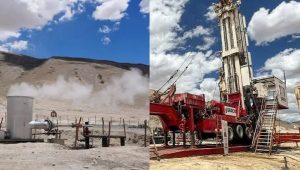
India has commissioned its first and deepest geothermal wells at Puga Valley in Ladakh, marking a significant step in the country’s clean-energy transition and Ladakh’s goal of becoming carbon-neutral.
- Both wells have been drilled to a depth of 1,000 metres at an altitude of more than 14,000 feet in Puga Valley, one of India’s most promising geothermal-energy locations.
- The wells will support the proposed 1 MW pilot geothermal power plant, which is expected to become India’s first demonstration-scale geothermal power project.
- The project will harness heat naturally stored beneath the Earth’s surface to generate reliable, round-the-clock renewable electricity, unlike weather-dependent solar and wind power.
- A maximum temperature of 135°C has been recorded at a depth of 400 metres, with further testing underway to assess higher temperatures and the reservoir’s commercial potential.
- The project is being implemented by the ONGC Energy Centre in collaboration with the Ladakh Administration and the Ladakh Autonomous Hill Development Council, Leh.
- Puga Valley is located in Ladakh’s south-eastern Changthang region, approximately 22 km from the Salt Lake Valley.
- Renowned for its scenic landscape and geothermal activity, the valley is particularly known for its natural hot sulphur springs.
Hidden Giant Exoplanet:

Astronomers using NASA’s James Webb Space Telescope (JWST) discovered a hidden giant exoplanet, Beta Pictoris d, in the well-studied Beta Pictoris star system, located 63 light-years from Earth in the Milky Way.
- Beta Pictoris is a young planetary system, around 23 million years old, providing insights into planetary formation and interactions between planets and the surrounding dust and debris disk.
- Before this discovery, the system was known to host two giant planets: Beta Pictoris b (one of the first directly imaged exoplanets) and Beta Pictoris c.
- With Beta Pictoris d, it became the second known planetary system with at least three directly imaged planets.
- Beta Pictoris d is a gas giant exoplanet, estimated to have at least twice the mass of Jupiter, making it the smallest of the three known giant planets in the system.
- It orbits its star at around 30 astronomical units (AU), comparable to Neptune’s distance from the Sun, and has the widest orbit among the three planets.
- It remained hidden for years as it lies within one of the brightest known debris disks, making conventional imaging difficult.
- Discovered accidentally using JWST’s Near-Infrared Spectrograph (NIRSpec) Integral Field Unit while studying Beta Pictoris b; spectroscopy revealed its chemical signature and motion.
- Carbon monoxide absorption lines and radial velocity analysis confirmed it as a planet, while follow-up observations using the Mid-Infrared Instrument (MIRI) detected water vapour and methane, confirming its atmosphere.
- It is the first directly imaged exoplanet discovered primarily through moderate-resolution spectroscopy, demonstrating a new method of detecting hidden planets through atmospheric chemical fingerprints.
The State of Food Security and Nutrition in the World (SOFI) 2026 Report:

The Food and Agriculture Organization (FAO) along with IFAD, UNICEF, WFP, and WHO officially released The State of Food Security and Nutrition in the World (SOFI) 2026 report.
Key Findings in the Report:
- For the first time, Africa hosts the largest population facing hunger at 309 million people (20.0% rate), surpassing Asia’s 292 million people (6.0% rate).
- An estimated 2.69 billion people (32.7% globally) were unable to afford a healthy diet in 2025. In Africa, this figure rises to a staggering 66.6%.
- Animal-source foods, fruits, and vegetables account for nearly 70% of the total cost of a healthy diet, whereas starchy staples contribute only one-sixth of the total cost despite providing half the calories.
- Only 30.8% of children aged 6–23 months and 62.7% of women aged 15–49 years achieved minimum dietary diversity globally.
- Projections show that 510 to 520 million people will still face chronic hunger in 2030, with 56% of them residing in Africa.
- Anaemia among women aged 15–49 worsened to 30.7%, while global adult obesity steadily climbed from 12.1% (2012) to 16.2% (2024).
- Food insecurity remained consistently higher in rural areas (29.7%) compared to peri-urban (25.4%) and urban areas (22.3%).
India and Report Findings: - Southern Asia’s substantial decline in undernourishment (from 13.9% in 2021 down to 9.3% in 2025) and food insecurity was largely propelled by improvements in India.
- India plays a decisive role in the global affordability metrics; excluding India from the lower-middle-income group converts the regional trend of people unable to afford a healthy diet from a decrease to an increase.
- Aligned with broader Asian trends, India contributes to Southern Asia remaining on track to meet the 2030 global targets for child stunting reduction and halting child overweight.
- Similar to global trends where anaemia is worsening, India faces significant hurdles in meeting the 50% reduction target for anaemia among women of reproductive age.
- Case studies in the report emphasize that price fluctuations in non-staples like vegetables and fruits disproportionately drive up the daily cost of a healthy diet across South Asian markets.
SOFI report:
- The SOFI report is the UN system’s annual flagship assessment that tracks global, regional, and national progress toward ending hunger (SDG Target 2.1) and eliminating all forms of malnutrition (SDG Target 2.2).
- Theme-focused on Understanding and addressing the high cost of a healthy diet, the 2026 edition evaluates the cost drivers of Healthy Diet Baskets (HDB), tracks progress across global maternal and child nutrition targets.
Pellet Guns and Shock Batons:
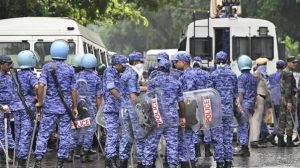
Pellet guns are back in the spotlight following allegations of their use during the July 2026 Delhi youth and student protest organised by the Cockroach Janta Party (CJP).
- Categorized globally as “non-lethal” crowd-control methods (alongside tear gas and water cannons), pellet guns fire cartridges containing hundreds of lead pellets.
- While designed to immobilize, they can cause fatal injuries or permanent blindness if fired at close range into soft tissues or eyes.
- The ammunition is manufactured at the Ordnance Factory, Ishapore. Standard Operating Procedures (SOPs) mandate that security personnel open minimal fire and aim strictly “below the waist”.
- First deployed by the Government during the 2010 Kashmir summer unrest, pellet guns drew international scrutiny following the 2016 Kashmir unrest, where CRPF deployment resulted in mass blinding injuries.
- This led to the 2017 introduction of alternative “plastic bullets,” tested at the Terminal Ballistics Research Laboratory (TBRL) in Chandigarh.
- A shock baton is a handheld electroshock device used by security forces as a non-lethal self-defence and crowd-control weapon. It incapacitates a person by delivering a high-voltage, low-current electric shock, causing temporary pain and muscle disruption without intended long-term injury.
- In India, Rapid Action Force (RAF) personnel carry shock batons as part of their standard crowd-control equipment.
- In 2021, the Ministry of Home Affairs (MHA), through the Border Security Force (BSF), prescribed Qualitative Requirements (QRs) for handheld shock batons, including a maximum weight of 1 kg, length of 450–700 mm, operating temperature of −20°C to +50°C, minimum service life of five years, and a rechargeable battery capable of delivering at least 1,000 quarter-second shock bursts on a full charge.
- They are also designed with high-impact-resistant and water-resistant materials for field operations.
Bharat 6G Alliance (B6GA):
Minister of State for Communications announced that the Bharat 6G Alliance (B6GA) expanded its membership to 90 organizations.
- The Bharat 6G Alliance (B6GA) is an industry-led, government-facilitated collaborative platform established to position India as a global leader in 6G telecommunications.
- It brings together domestic and international stakeholders to drive research, intellectual property creation, and standard-setting for next-generation networks.
- Nodal Support: Facilitated by the Department of Telecommunications (DoT), Ministry of Communications.
- It Operates under bilateral MoUs with international 6G bodies like the NextG Alliance (USA), 6G-IA (Europe), 6G Forum (South Korea), XGMF (Japan), 6G Brasil, and the European Space Agency (ESA).
- Aim is to drive indigenous 6G research and development, helping build a self-reliant (Atmanirbhar), globally competitive 6G ecosystem.
- It works to ensure India’s technological, manufacturing, and intellectual property priorities are embedded into global 6G standards.
Key Functions of the Alliance:
- Analyzes high-frequency spectrum requirements and advises the Department of Telecommunications on spectrum planning, policy frameworks, and deployment timelines.
- Coordinates multi-institutional projects under the Telecom Technology Development Fund (TTDF), such as the 6G Terahertz testbed at SAMEER Kolkata for ultra-high-rate line-of-sight communication.
- Drives Indian contributions to the International Telecommunication Union (ITU) under the IMT-2030 framework, successfully embedding ubiquitous connectivity as a core 6G global requirement.
- Facilitates research into advanced System-on-Chips (SoCs), multi-chip modules, and IoT devices, utilizing DoT’s Technology Development and Investment Promotion (TDIP) scheme to sponsor startup participation in international bodies like 3GPP and oneM2M.
- Partners with international research hubs (such as Finland’s 6G Flagship) to establish secure, trusted cross-border supply chains and co-develop open 6G standards.
The First-Ever Mixed Disability Ashes 2027:

England will host Australia in the first-ever Mixed Disability Ashes in 2027, marking a historic milestone in the international expansion of disability cricket. The series will be played as part of England’s 2027 Ashes summer.
- The Mixed Disability Ashes is the first bilateral Ashes cricket series between England and Australia featuring mixed disability men’s teams. It extends the iconic Ashes rivalry to elite cricketers with disabilities, promoting inclusive participation in international cricket.
- Aim is to strengthen inclusive sports, provide elite international competition for cricketers with disabilities, and integrate disability cricket into mainstream global cricket.
- Key Features:
- The inaugural Mixed Disability Ashes will be held in England in 2027 between England and Australia.
- It will be played alongside the Men’s and Women’s Ashes, making all three Ashes formats part of the same season.
- The contest will be played in the T20 International format, with venues and schedule to be announced.
- The series expands the international calendar for mixed disability cricket, following England’s bilateral series with India.
Presidential Visits to Moldova and North Macedonia:
The President of India concluded State Visits to the Republic of Moldova and the Republic of North Macedonia, marking the first-ever visit by an Indian Head of State to both countries.India announced a decision to double the number of Indian Technical and Economic Cooperation (ITEC) training slots for Moldovan professionals.The President addressed the India-Moldova Business Forum to strengthen bilateral trade, investment, and resilient supply chains.
Moldova:
A landlocked country in Eastern Europe.
It is bordered by Romania to the west and Ukraine to the north, east, and south.
Moldova gained European Union (EU) candidate status alongside Ukraine in 2022.
It holds immense strategic importance due to its proximity to the ongoing Russia-Ukraine conflict and the presence of the breakaway region of Transnistria within its internationally recognized borders.
Today’s Current Affairs: 23rd jul 2026 for UPSC IAS exams, State PSC exams, SSC CGL, State SSC, RRB, Railways, Banking Exam & IBPS, etc



