
Today’s Current Affairs: 24th Oct 2026 for UPSC IAS exams, State PSC exams, SSC CGL, State SSC, RRB, Railways, Banking Exam & IBPS, etc
Table of Contents
Azerbaijan:
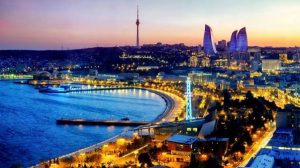
A year after ties between India and Azerbaijan soured over Baku’s alignment with Pakistan during Operation Sindoor, India’s External Affairs Minister (EAM) met with Azerbaijan’s top leadership in an attempt to reset bilateral relations.
- Azerbaijan, officially the Republic of Azerbaijan, is located at the junction of Eastern Europe and Western Asia along the southern flanks of the Caucasus Mountains.
- It is bounded in the east by the Caspian Sea, the world’s largest inland body of water.
- It is bordered by Russia, Georgia, Armenia, Turkey and
- The country is highly mountainous, making human settlement very limited to along rivers and coastlines.
- Highest Point: Mount Bazardüzü is the highest peak in the Greater Caucasus Range and the highest mountain in Azerbaijan.
- Government Type: Presidential Republic
- Capital: The capital city, Baku, is famous for its modern architecture and historical sites, including the UNESCO World Heritage-listed Old City.
- For its location at 28 m below sea level, Baku is the largest city in the world located below sea level and also the lowest-lying national capital in the world.
- Climate: Its climate is highly varied and contains examples of nine out of the world’s eleven climate zones. Most of Azerbaijan is dry, with hot summers and mild winters.
- Major Rivers: Alazani, Aras, and Kura Rivers.
- Currency: Azerbaijani manats (AZN).
Sri Ranganathaswamy Temple:
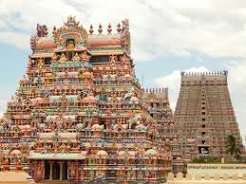
The Madurai Bench of the Madras High Court recently restrained registration authorities from registering documents relating to lands covered by an 1887 deed dedicating properties to the Sri Ranganathaswamy Temple in Srirangam.
- Sri Ranganathaswamy Temple is a prominent Hindu temple situated at Srirangam near Trichy in Tamil Nadu.
- This temple lies on an islet formed by the twin rivers Cauvery and Coleroon.
- It is the biggest functioning Hindu temple in India and is often found ranked amongst the largest religious complexes of the world.
- This temple is dedicated to Ranganatha, a reclining form of Hindu deity, Lord Vishnu.
- It is regarded as the foremost among the 108 Divya Desams dedicated to Lord Vishnu.
- Though the temple has existed since the 2nd century BC, the archaeological inscriptions are available only from the 10th century CE.
- This temple underwent many changes during the rule of the Cholas, Cheras, Pandiyas, Hoysalas, Vijayanagar kings, and Nayaks of Madurai.
- In addition, influential Vaishnava leaders like Yamunacarya, Ramanujacarya, and Sudarsanacarya played pivotal roles in shaping the temple’s worship and its enduring legacy.
- The entire temple complex is an example of Dravidian architecture.
- The temple is enclosed by seven concentric walls known as “Prakaram”, symbolizing the seven planetary systems in Vedic cosmology
- Within these walls, there are twenty-one towering entrances, known as gopurams, each adorned with intricate sculptures and designs.
- The Rajagopuram is recognised as the tallest temple tower in Asia.
- The vimana over the sanctum of the temple is made up of gold.
- It also comprises a hall containing 1000 pillars. Intricate sculptures are the most attractive part of the hall. The Hall was built during the Vijayanagara period (1336-1565).
- Inside the temple, one can find inscriptions from the Chola dynasty, accompanied by tales of the Pandya, Hoysala, and Vijayanagara empires that once flourished alongside the Tiruchirappalli rule.
- A substantial part of Srirangam town resides within the periphery defined by the three outer walls of the temple complex.
Indo-Pacific Regional Dialogue (IPRD) 2026:
The Indian Navy will host the 2026 edition of the Indo-Pacific Regional Dialogue (IPRD) in New Delhi from November 3 to 5.
- IPRD is the Indian Navy’s annual apex-level international strategic dialogue.
- The idea of an annual IPRD was first conceptualised and conducted in 2018 as the apex-level conference of the Indian Navy.
- It is organised in association with the National Maritime Foundation (NMF), the Navy’s knowledge partner.
- IPRD seeks to translate the broad framework of the Indo-Pacific Oceans Initiative (IPOI) into specific, actionable proposals.
- IPRD also supports India’s maritime vision of MAHASAGAR-Mutual and Holistic Advancement for Security and Growth Across Regions.
- IPRD 2026:
- It is the eighth edition of the IPRD.
- Venue: Manekshaw Centre, New Delhi.
- Theme: Science, Technology, and Academic Cooperation in the Indo-Pacific.
- Notably, IPRD-2026 will expand its focus beyond traditional STEM disciplines to incorporate social sciences, life sciences, and the humanities into maritime deliberations.
- The three-day conference will bring together maritime practitioners, scientists, academicians, policymakers, and experts from 18 countries across the Indo-Pacific to formulate actionable proposals for regional cooperation.
- Five thematic sessions will be held during the conference. They will focus on
- joint research, research networks, and human development;
- protection of critical maritime infrastructure and enhanced monitoring;
- climate resilience and ocean dynamics;
- maritime resilience and responsible management; and
- dual-use maritime technologies and their implications.
- The event aims to identify concrete, solution-oriented measures across national, sub-regional, and pan-regional tiers.
Indo-Pacific Oceans Initiative (IPOI):
- The Prime Minister of India has proposed the IPOI at the East Asia Summit held in Bangkok, Thailand, on November 4, 2019.
- As an open global initiative, the IPOI draws on existing regional cooperation architecture and mechanisms to focus on seven central pillars. They are:
- Maritime security
- Maritime ecology
- Maritime resources
- Capacity building and resource sharing
- Disaster risk reduction and management
- Science, technology, and academic cooperation
- Trade connectivity and maritime transport.
National Maritime Foundation (NMF):
- It is the nation’s first maritime think tank for the conduct of independent and policy-relevant research on all ‘matters maritime’.
- The foundation was inaugurated on the 15th of February, 2005.
- It was, from its very inception, designed to create and heighten maritime awareness amongst India’s policymakers, intellectual echelons, and civil society at large.
- While the NMF is an independent and autonomous think tank, its intellectual and organisational development is supported by the Ministry of Defence and the Indian Navy.
Zuqar Island:
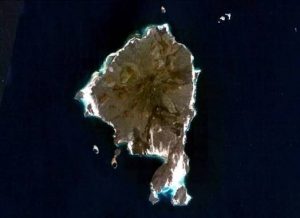
Yemen’s Houthi rebels recently claimed they are attempting to rescue a boat carrying 14 Indian nationals near Zuqar Island in the Red Sea, alleging that it was targeted by Saudi Arabia.
- Zuqar Island is a Yemeni island in the southern Red Sea, forming part of the Hanish Islands archipelago.
- It lies between the coasts of mainland Yemen and Eritrea, near the Bab-el-Mandeb strait, which connects the Red Sea to the Gulf of Aden.
- Despite its proximity to the African continent, the island is considered a part of Asia because it sits on the Asian continental shelf.
- It has strategic importance because of its location along one of the world’s key maritime routes.
- The island consists of a shield volcano overlain by basaltic pyroclastic cones and spatter cones, which produce youthful-looking pahoehoe lava flows.
Pahoehoe Lava Flows:
- Pahoehoe is a type of basaltic lava characterized by a smooth, often shiny, and billowy surface.
- This highly fluid lava spreads in thin sheets and forms ropy folds as it continues to flow beneath a hardening crust.
- The surface of pahoehoe lava flows can appear gently undulating or broadly hummocky, with liquid lava beneath the surface wrinkling it into tapestry-like folds that resemble twisted rope.
- These flows are typically fed internally by streams of liquid lava.
What is Locus Coeruleus (LC)?
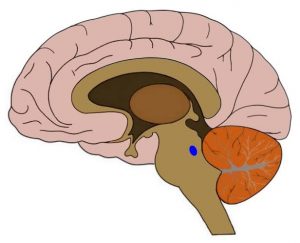
Previously thought to broadcast the same chemical signal throughout the brain, a new study finds that the locus coeruleus (LC) actually sends targeted messages that help control learning, attention, and behavior, according to new research conducted in mice.
- The Locus Coeruleus (LC) is a small nucleus (cluster of nerve cells) located in the pons, a part of the brainstem.
- The Pons act as a connection between the cerebrum and cerebellum.
- The Locus Coeruleus gets its name from the Latin words for “blue place.”
- Although it contains only a small fraction of the brain’s neurons, it produces norepinephrine (NE), a chemical messenger that helps regulate attention, learning, heart rate, and the body’s reactions to stress and excitement.
- LC is the primary source of norepinephrine to the brain.
- Scientists have long assumed that the LC operates like a loudspeaker, sending essentially the same norepinephrine signal across the brain.
- However, in a new study using brain imaging, recordings of neural activity, genetic techniques, and behavioral experiments, researchers discovered that the LC communicates through several distinct pathways.
- Rather than broadcasting one general message, it delivers signals to specific destinations, with different groups of neurons responding to different experiences.
- Different groups of cells communicate with specific regions of the nervous system.
- These pathways determine where signals trigger the release of norepinephrine, creating a much more organized communication network than previously recognized.
- Neurons in the upper (dorsal) portion of the LC primarily connect to the cerebral cortex and forebrain.
- Meanwhile, cells in the lower (ventral) portion send their signals mainly to the brainstem and spinal cord.
- This arrangement allows different parts of the LC to influence separate brain functions.
- Norepinephrine plays a central role in regulating attention and mood, making it an important target for medications used to treat depression, anxiety, and ADHD.
- Neurons in the LC are also among the earliest brain cells to deteriorate in Alzheimer’s disease, suggesting that the new findings could have implications for understanding and treating these conditions.
- Current treatments that influence norepinephrine can affect multiple brain circuits at once, sometimes producing beneficial effects in one region while causing unwanted effects elsewhere.A clearer map of the LC’s specialized pathways could help scientists develop therapies that act more selectively on the circuits involved in particular symptoms.
Arabian Black Electric Ray:
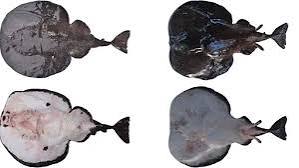
Researchers have discovered a new species of electric ray, named the Arabian Black Electric Ray (Tetronarce ramanamurthyi), in the deep waters of the southeastern Arabian Sea.
- Arabian Black Electric Ray was discovered in the Arabian Sea.
- It is the first confirmed record of the genus Tetronarce in the northern Indian Ocean.
- It features a uniform dark bluish-black or dark brown upper body surface with a whitish belly, lacking any skin bumps (papillae) around its breathing holes (spiracles).
- It forms an independent evolutionary lineage well-separated from all other known electric ray species globally.
- Electric Ray refers to a type of cartilaginous fish capable of producing an electric shock.
- These rays are characterized by their flat bodies and enlarged pectoral fins that are fused to their heads.
- The electric rays are found worldwide in tropical, subtropical, and temperate bodies of water and are commonly found to inhabit and prefer shallow waters
- These are mesopredators, typically prey on smaller animals
- They have electric shock producing ability which helps them to stun their prey.
Zavodovski Island:
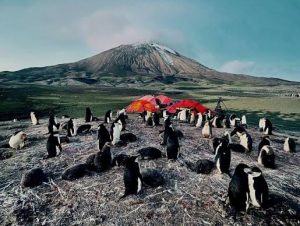
According to research by the British Antarctic Survey (BAS), the number of breeding chinstrap penguins on the Zavodovski Island declined nearly 63% in 14 years.
- Zavodovski Island is an uninhabited volcanic island situated in the Traversay Islands subgroup of the South Sandwich Islands in the South Atlantic Ocean.
- Zavodovski Island hosts the world’s largest known chinstrap penguin colony.
- The basaltic stratovolcano on the island, known as Mount Curry, has a large lava platform extending east from two parasitic cones on the side of the main edifice.
- The chinstrap penguin (Pygoscelis antarcticus ) is a species of penguin that inhabits a variety of islands and shores in the Southern Pacific and the Antarctic Oceans.
- Its name stems from the narrow black band under its head, which makes it appear as if it were wearing a black helmet, making it easy to identify.
- It is also known as Ringed penguin, Bearded penguin, and Stonecracker penguin, due to its loud, harsh call.
- They are highly social birds, gathering in large colonies, where they live and breed.
- It mainly feeds on Antarctic krill, tiny, shrimp-like creatures that live in the ocean and form an important part of the Antarctic food chain.
- Conservation Status:
- IUCN Red List: Least Concern
Indo-Tibetan Border Police: In News

Prime Minister of India extended his greetings to all personnel of the Indo-Tibetan Border Police (ITBP) on their Raising Day.
- Indo-Tibetan Border Police is a Central Armed Police Force functioning under the Ministry of Home Affairs, Government of India.
- It guards the India-China borders ranging from the Karakoram Pass in Ladakh to Jachep La in Arunachal Pradesh.
- It was raised in 1962, in the wake of the Sino-Indian War of 1962, for deployment along India’s border with China’s Tibet Autonomous Region.
- ITBP was initially raised under the CRPF Act. However, in 1992, parliament enacted the ITBPF Act, and the rules thereunder were framed in 1994.
- In 2004, ITBP was declared as a full-fledged central armed police force under the Ministry of Home Affairs.
- Motto: “Shaurya-Dridhata-Karma Nishtha” (Valour – Determination – Devotion to Duty).
- It is known as one of the most specialized mountain forces in the world, ITBP operates in some of the harshest and most remote areas.
- ITBP trains its personnel in mountaineering, skiing, and tactical combat, in addition to maintaining readiness for disaster response and relief operations in the Himalayan region.
- Headed By: It is headed by a Director General under the Ministry of Home Affairs.
- Headquarters: New Delhi.
Sakharov Prize 2026:

The International Criminal Court and its officials won the EU’s 2026 Sakharov human rights prize.
- Sakharov Prize is European Union’s highest honour dedicated to human rights work.
- It was established in 1988 and inaugural prize was jointly conferred to Nelson Mandela and Anatoli Marchenko.
- It is named after Soviet physicist and political dissident Andrei Sakharov.
- It is awarded annually by the European Parliament during its plenary session.
- This prize consists of € 50, 000 endowments, along with an official citation.
- Recognizes individuals, groups, or organizations that make an outstanding contribution to defending human rights, freedom of thought, free expression, minority rights and international law.
International Criminal Court:
- It is a permanent and independent criminal court established to prosecute offenders of serious crimes in the international community.
- It is the only permanent international criminal tribunal.
- It was created by the Rome Statute, which came into force on July 1, 2002
- ICC investigates and, where warranted, tries individuals charged with the gravest crimes of concern to the international community.
- Specifically, the ICC is intended to prosecute the following crimes: Genocide, Crimes against humanity, War crimes and the crime of aggression.
- There are 125 member countries (China, India, Israel, Russia, and the United States are not ICC parties).
- Composition:
- Judges: The court has eighteen judges, each from a different member country, elected to non-renewable nine-year terms.
- The Presidency:
- Consists of three judges (the President and two Vice-Presidents) elected from among the judges.
- It represents the Court to the outside world and helps with the organization of the work of the judges.
UNEP Emissions Gap Report 2026:
The United Nations Environment Programme (UNEP) has released the 17th edition of its flagship Emissions Gap Report (EGR) 2026, titled “The Point of Return: Urgent emissions cuts needed to come back from overshoot of 1.5°C”.
- The report notes that the opportunity to limit global warming to 1.5°C with “no or limited” overshoot has been lost. The report arrives just before COP31 (31st Conference of the Parties to the UNFCCC) (Antalya, Türkiye, November 2026).
- The UNEP EGR 2026 warns of an inevitable 1.5°C overshoot under current trajectories, highlighting inadequate emission cuts, insufficient NDCs and the need for urgent global climate action.
- India must accelerate renewable energy, strengthen carbon markets, decarbonise heavy industries and secure climate finance while upholding climate justice, CBDR-RC and developmental equity.
Key findings of UNEP’s Emissions Gap Report 2026:
- The End of the “No Overshoot” 1.5°C Pathway: Decades of insufficient climate action have made overshooting the 1.5°C warming limit inevitable.
- UNEP’s lowest-overshoot scenario estimates a 66% chance of limiting peak warming to 1.7–1.8°C and a 50% chance of returning to 1.5°C by 2100, provided stringent emission cuts begin immediately.
- Without immediate mitigation, every five years of emissions at current levels would add approximately 200 GtCO₂, increasing peak warming by around 0.1°C.
- The pathway also requires about 320 GtCO₂ of carbon dioxide removal this century, whose large-scale feasibility remains uncertain.
- The gap between conditional NDCs and the lowest 1.5°C overshoot pathway is projected to widen from 5 GtCO₂e in 2030 to 16 GtCO₂e in 2035.
- The apparent narrowing of the 2030 implementation gap largely reflects the USA’s withdrawal from the Paris Agreement, rather than stronger climate action.
- G20 members (excluding the African Union) account for approximately 76% of global GHG emissions, making accelerated action by major emitters critical to closing the emissions gap.
- Under current policies, only six G20 members are likely to meet their unconditional 2030 Nationally Determined Contributions (NDCs) targets.
- Temperature outlook: Global warming is projected to reach 2.8°C by 2100 under current policies, falling to 2.6°C if all NDCs are implemented and to 2.1°C if all net-zero pledges are also fulfilled.
- The efforts under the Paris Agreement have reduced projected warming from 4°C to 2.8°C, but this remains above the 1.5°C goal.
- Progress on the First GST outcomes: The first Global Stocktake (GST) at COP28 called for tripling renewable energy capacity, doubling energy-efficiency improvement rates by 2030, transitioning away from fossil fuels, reducing methane emissions and halting deforestation.
- Progress is evident, with renewable capacity growing three times faster than projected in 2015 and solar PV seven times faster.
- Global renewable capacity could reach 11,500 GW by 2030, while electric vehicles account for around one in four cars sold worldwide. However, fossil fuel consumption and subsidies continue to rise.
- Deforestation must decline more than ten times faster to meet the 2030 target. Thus, renewable energy expansion alone is insufficient without fossil fuel phase-down and stronger action on non-CO₂ emissions.
- As of September 2026, 124 Parties covering 76% of global emissions had submitted new NDCs.
- However, their impact on projected warming remains negligible, as emission reduction targets remain insufficient.
- Only India, Tunisia and Uzbekistan retain emissions-intensity targets, and full implementation would reduce 2035 emissions by just 3.5–4 GtCO₂e compared with 2030 NDC levels.
- Limiting the 1.5°C overshoot requires global GHG emission reductions of 18% by 2030, 45% by 2035 and 69% by 2040, relative to 2025 levels, far exceeding existing NDC commitments.
- India:
- Low Per Capita Burden: Despite being the third-largest absolute emitter (~4.5 GtCO₂e) after China and the US.
- India’s per capita emissions (~3.1 tCO₂e) are less than half the world average (6.4 tCO₂e), underscoring the principle of Common But Differentiated Responsibilities (CBDR-RC).
- NDC Compliance: India is one of only six G20 members projected to meet its unconditional 2030 targets under current policies, driven by structural shifts towards renewables and robust domestic policies like the Carbon Credit Trading Scheme (CCTS) and PM Surya Ghar: Muft Bijli Yojana.
- However, the report notes a caveat, because India uses an intensity target rather than an absolute reduction target, absolute emissions are projected to rise between 2030 and 2035 due to GDP growth.
India-Poland Relations:
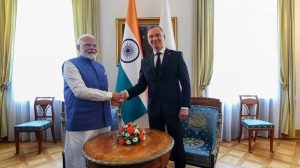
The Prime Minister of the Republic of Poland paid an official visit to India. During the visit, high-level bilateral talks were held to review and impart fresh momentum to the India-Poland Strategic Partnership, which was established during the Indian Prime Minister’s landmark visit to Warsaw in August 2024.
- India and Poland are deepening cooperation in trade, defence, counter-terrorism, clean energy and emerging technologies, with Poland serving as a gateway to the European Union.
- Differences over Russia, defence technology-sharing barriers, trade concerns and visa delays need to be addressed through stronger institutional mechanisms, joint manufacturing and improved connectivity.
- Acknowledging Poland’s recent achievement of crossing the USD 1 trillion GDP mark and India’s trajectory toward a USD 10 trillion economy, the leaders set a target to double bilateral trade by 2030 (from the current level of over USD 6 billion). They also agreed to resume the bilateral working group on agriculture.
- A new forward-looking framework was proposed to support military manufacturing, joint development, co-production, and technology partnerships.
- The leaders stressed the urgency of signing the pending Agreement on Mutual Protection and Exchange of Classified Information, a critical prerequisite for deep defense-technology sharing.
- Both countries agreed to strengthen collaboration in artificial intelligence (AI), semiconductors, quantum technologies and startups, alongside cooperation in critical minerals, battery recycling and rare-earth refining.
- Poland officially announced its decision to join the Coalition for Disaster Resilient Infrastructure (CDRI).
- India also invited Poland to join the International Solar Alliance (ISA), Global Biofuels Alliance (GBA), and the Indo-Pacific Oceans Initiative (IPOI).
- Poland reaffirmed its support for India’s membership of a reformed and expanded United Nations Security Council (UNSC) and its candidature for a non-permanent seat for 2028–29.
- Both nations strongly condemned the April 2025 terrorist attack in Pahalgam (J&K).
- They called for the early adoption of the UN Comprehensive Convention on International Terrorism (CCIT) and agreed to initiate a specific bilateral dialogue on counter-terrorism.
AgriVoltaics World Conference 2026:
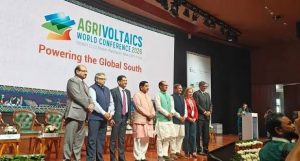
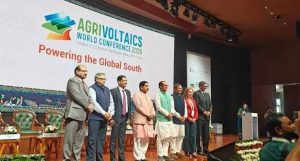
The 7th AgriVoltaics World Conference (AWC) 2026 was held at Bharat Mandapam, New Delhi, under the theme “Powering the Global South.” It marked the first time the conference was hosted in the Global South. India hosted the conference for the first time in the Global South.
- Agrivoltaics refers to the dual use of land for agriculture and solar photovoltaic energy generation, allowing farming and electricity production to coexist.
- Hosted by the Ministry of New and Renewable Energy (MNRE), with support from Germany’s Federal Ministry for the Environment, Climate Action, Nature Conservation and Nuclear Safety (BMUV), in partnership with Conexio-PSE.
- It aims to increase farmers’ incomes, improve land-use efficiency, promote clean energy and build climate-resilient agricultural systems.
- The AgriVoltaics Pitch Hub provided a platform for startups to showcase technologies and connect with investors and industry leaders.
- These included the India Agrivoltaics Alliance’s Decision-Making Tool, the International Water Management Institute’s Book of Abstracts, and MNRE’s AgriPV Policy Handbook.
- The initiative promotes farmers’ transition from traditional food producers (Annadatas) to clean-energy producers (Urjadatas), creating additional rural income opportunities.
- The Government announced plans to introduce a major agrivoltaics programme under the next phase of PM-KUSUM, enabling farmers to generate solar electricity while continuing agricultural cultivation.
- India’s estimated agrivoltaic potential ranges from 3,000 GW to nearly 14,000 GW, with Maharashtra, Rajasthan, Andhra Pradesh, Madhya Pradesh, Karnataka and Uttar Pradesh identified as high-potential states.
France Reports 1st Human Case of Shamonda Virus:
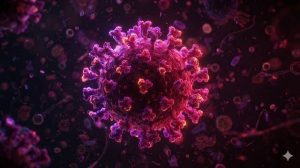
France documented the world’s first-ever human fatality caused by the Shamonda virus, a pathogen previously known to infect only livestock, prompting health investigations by the World Health Organization (WHO).
- Shamonda virus is a vector-borne virus belonging to the genus Orthobunyavirus (under the family Peribunyaviridae) and is part of the Simbu serogroup.
- First isolated in cattle in Nigeria in 1965, it was historically confined to parts of Africa and Asia before emerging in Europe (including France and Germany) in 2026.
- It primarily infects livestock, particularly cattle, sheep, goats and horses, with infections also reported in alpacas.
- The virus spreads via the bites of infected Culicoides midges (small flies).
- There is no evidence of human-to-human transmission, and no direct animal-to-human transmission has been documented. However, vertical transmission (infected mother to offspring) can occur in livestock.
- It causes fever, reduced milk yield, and severe reproductive disorders, including spontaneous abortions, stillbirths, and congenital deformities in newborns.
- Currently, there are no specific vaccines or antiviral treatments available.
- Disease management relies strictly on vector-control measures (eliminating midge breeding sites, insect repellents).
- Global health bodies like the WHO state that the threat to the general population remains low. This spillover event is considered a rare anomaly attributed to the victim’s severely immunocompromised state.
Green Diwali Campaign 2026:
WWF-India’s Environment Information, Awareness, Capacity Building and Livelihood Programme (EIACP) Programme Centre–Resource Partner (PC-RP), supported by the Ministry of Environment, Forest and Climate Change (MoEFCC), launched the nationwide Green Diwali Campaign to promote cracker-free and environmentally responsible celebrations under Mission LiFE.
- The campaign aims to encourage environmentally responsible celebrations and reduce air pollution and waste generated during Diwali.
- It will engage schools, colleges, educational institutions, resident welfare associations and local communities, with special focus on the 130 cities covered under the National Clean Air Programme (NCAP).
- Green Diwali Pledge : Citizens are encouraged to avoid firecrackers, motivate family and neighbours to do the same, use diyas and energy-efficient lights, avoid single-use plastics, segregate waste and buy local products.
- Community Participation: Educational institutions and community groups are encouraged to organise pledge drives through assemblies, classes, rallies and community meetings.
- Carbon Footprint Survey: WWF-India encourages citizens to assess the environmental impact of their daily activities and consumption patterns through its online Carbon Footprint Survey and adopt sustainable lifestyle habits.
- Mission LiFE: The campaign aligns with Mission LiFE (Lifestyle for Environment), which promotes sustainable consumption, environmentally conscious behaviour and community participation in environmental protection.
World Wide Fund for Nature (WWF):
- Established in 1961, the World Wide Fund for Nature (WWF) is a global conservation organisation headquartered in Gland, Switzerland, dedicated to protecting nature, conserving biodiversity and reversing environmental degradation.
- Operates across six continents and nearly 100 countries, focusing on conserving critical ecosystems, including forests, rivers, wetlands, savannas and oceans, while supporting sustainable livelihoods.
Japan’s MMX Mars Mission:
Japan’s Martian Moons eXploration (MMX) mission, led by JAXA, was launched aboard an H3 launch vehicle to study Mars’s moons, Phobos and Deimos, and return material from Phobos to Earth.MMX will study the origin, composition, gravity, internal structure and surface of Phobos, while also observing Deimos, Mars’s only two natural satellites.It will collect regolith, loose dust, soil and rock fragments, from Phobos. This would be the world’s first sample-return mission from the Martian system.A small French-German rover, IDEFIX, will examine the low-gravity surface and help assess terrain conditions for sampling.MMX builds on JAXA’s asteroid sample-return experience through Hayabusa and Hayabusa2, demonstrating advanced navigation, landing and return-capsule capabilities.
Ukraine Strikes Oil Infrastructure in St. Petersburg:
Ukraine launched a major long-range drone offensive against Russia, with strikes causing fires at an oil-export terminal and depot in St. Petersburg, Russia.St. Petersburg: St. Petersburg is a major port city in northwestern Russia, situated on the Neva River at the head of the Gulf of Finland, which forms part of the Baltic Sea.Founded by Tsar Peter the Great in 1703, it served as the capital of the Russian Empire from 1712 to 1918.Formerly known as Petrograd (1914–1924) and Leningrad (1924–1991), it is Russia’s second-largest city and an important cultural, industrial and maritime centre.Its strategic location provides access to the Baltic Sea.St. Petersburg serves as the northern gateway of the 7,200-km multimodal International North–South Transport Corridor (INSTC), connecting Russia with India’s Mumbai Port through Azerbaijan and Iran.