
Today’s Current Affairs: 25th Aug 2026 for UPSC IAS exams, State PSC exams, SSC CGL, State SSC, RRB, Railways, Banking Exam & IBPS, etc
Table of Contents
Periyar Cow:
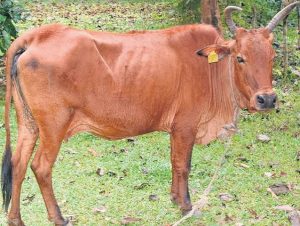
The ICAR National Bureau of Animal Genetic Resources registered Periyar Cow as an indigenous cattle breed.
- Periyar Cow is also locally known as ‘Periyar Kullan’ (Periyar dwarf), is only the second native cattle breed from Keralam to receive national recognition.
- First was Vechur cow, which was recognised in 1996.
- It is locally known as Kuttampuzha cattle and Andukanni,
- It is traditionally found across Periyar River basin and adjoining plantation and forest landscapes regions of Ernakulam and Thrissur.
- It has distinctive ability to thrive under semi-feral, low-input management and agroforestry conditions, with extensive grazing on naturally available vegetation.
- It has remarkable adaptation, resilience and ecological fitness.
Cloud and AI Skilling Initiative:
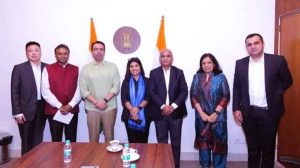
The govt launched the nationwide cloud & AI skilling initiative in collaboration with Amazon Web Services.
- It aims to provide foundational AI and cloud literacy through Amazon Web Services (AWS) digital training content.
- It offers intensive, job-ready training to participants through the AWS re/Start program.
- AWS re/Start program is a structured training programme covering cloud infrastructure, networking, security, programming, databases and AI fundamentals.
- It was launched by the National Skill Development Corporation (NSDC) and Cultus Education in collaboration with Amazon Web Services (AWS).
- It will be delivered entirely online through Cultus Education, NSDC’s selected delivery partner.
- It is supported by the Ministry of Skill Development and Entrepreneurship (MSDE).
- It will focus on youth in Tier 2 and Tier 3 cities across all states and Union Territories.
- It address the challenges faced by youth including limited access to globally recognised technical training, few connections to technology employers, and an absence of credentials needed to compete for cloud and AI roles.
- The initiative is designed to create meaningful social and economic impact by expanding access to high-quality technology training and employment opportunities for youth across India, particularly in underserved and emerging talent hubs.
- The initiative will also include a national hackathon, where participants will present cloud and AI projects.
United Kingdom Maritime Trade Operations:

A tanker was boarded by six armed people who took control of the vessel and diverted it towards Somalia, the United Kingdom Maritime Trade Operations (UKMTO) said recently.
- It is a British Royal Navy-sponsored organisation that was formed in 2001 with an office in Dubai to handle distress calls during maritime security threats.
- In 2014, it was moved to Portsmouth in the K.
- It is the primary point of contact for commercial vessels with military forces in the region.
- The UKMTO works in West Asia and the Indian Ocean Region through an information framework agreement and operates a “Voluntary Reporting Scheme (VRS) within the Voluntary Reporting Area (VRA)” outlined in a maritime security chart.
- UKMTO issues several categories of communication to the maritime community. These are in the form of Warnings, Advisories, Reports, and Records of Maritime Information Exchange Meetings.
- The UKMTO hosts all warnings on its website as well as hosting notices from partner organisations.
What is Narwhal?
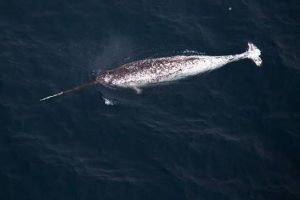
Scientists recently discovered that a narwhal’s uniquely straight tusk grows strong because opposing twists in its inner and outer collagen fibril layers create internal tension that keeps it straight.
- Narwhal is a medium-sized toothed whale that belongs to the family Monodontidae.
- The only other member of this family is the beluga whale.
- Scientific Name: Monodon monoceros
- They live in the Arctic Ocean, mostly in the Atlantic sector, but they have also been recorded in the Pacific sector.
- Their largest numbers live around Canada, Greenland, and eastern Russia.
- They usually migrate from under the ice in the winter to inshore waters in the spring and coastal waters in the summer.
- It is best known for its tusk—a long, spiraled tooth that usually only the males develop. (Females occasionally do.)
- Recent observations suggest that the males use their tusks to hunt fish and to detect the level of salt in the waters through which they swim.
- Narwhals have stout, torpedo-shaped bodies with a low dorsal ridge in place of a dorsal fin and a concave-shaped tail fin.
- Like belugas, narwhals have short paddle-shaped front flippers, but they lack their extremely flexible neck and well-defined beak.
- Adult narwhals are light grey with numerous irregular black spots; the spots are more numerous on the back and fewer on the belly.
- Narwhals tend to travel in groups of 15 to 20, though larger gatherings of hundreds or even thousands of individuals have been observed.
- They are one of the deepest diving whales in the world and can hold their breath for 25-30 minutes at a time.
- Narwhals feed on fish, squid, and shrimp.
- They use sound to communicate with each other, as well as to navigate their surroundings, hunt, and see.
- Conservation Status:
- IUCN Red List: Least Concern
Endoscopic Camera:
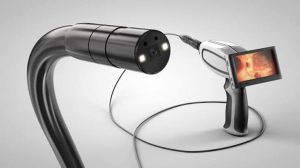
A Chhattisgarh professor and five students were recently arrested for allegedly leaking an entomology exam using an endoscopic camera.
- It is a device used to view, capture, and record videos in small, hard-to-reach places of the human body with limited to no visibility.
- It allows doctors to visualize the surgery or diagnostic procedure on a larger medical-grade screen, like a TV display, a computer monitor, or a stereoscopic viewing console.
- Most modern endoscope camera modules utilize “chip-on-tip” technology, where the lens and imaging electronics are combined into a miniature package located at the end of the device.
- Endoscopic cameras illuminate the anatomical area through fiber optics or LEDs on the tip, and the image signal is transferred out from the camera on an electrical cable.
- The light source must provide sufficient brightness and illumination angle to ensure true-color properties and brilliant image presentation to aid medical professionals in their diagnoses and procedures.
- There are many types of endoscopes used for diagnostic, preventative, and surgical applications:
- Cystoscope: This is used to study the inside of the bladder, urethra, urinary tract, and prostate (in men) and is often inserted through the urethra.
- Laryngoscope: This is an endoscope used to view the larynx or the voice box and is inserted through the mouth.
- Otoscope: The otoscope is designed for visual examination of the eardrum and the passage of the outer ear.
- Gastroscope: This is used to check the upper part of the digestive system, which includes the inside of your throat, food pipe (esophagus), and stomach.
- Laparoscope: A laparoscope is inserted through the abdomen to study the stomach, liver, abdominal organs, and female reproductive organs such as the fallopian tubes, uterus, and ovaries.
- Arthroscope: An arthroscope is an endoscope that’s inserted into the joint through a small incision near the site.
- Duodenoscope: This is a long flexible endoscope inserted through the mouth to the top of the small intestine (duodenum).
- It has revolutionized numerous fields due to its ability to inspect internal or hard-to-reach areas without requiring invasive procedures.
- Its use has expanded across various sectors such as industry, research, and even security.
Terrier Cyber Quest 2026 (TCQ 3.0):
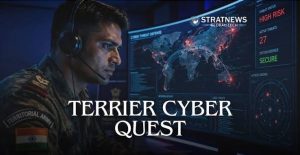
The Territorial Army, along with CyberPeace, recently launched the third edition of Terrier Cyber Quest 2026 (TCQ 3.0), a national-level hackathon focused on cybersecurity, defence and digital threats.
Terrier Cyber Quest 2026:
- It is a national-level hackathon focused on cybersecurity, defence, and digital threats.
- It is being organised by the Territorial Army in collaboration with CyberPeace (an Indian non-partisan civil society organisation).
- The competition aims to bring together talent from educational institutions, industry, research organisations, government bodies, and the Armed Forces.
- Participants will work on technology-based solutions to address emerging cybersecurity and national security challenges.
- This year’s competition will be held across three tracks.
- Participants will identify security flaws in simulated critical infrastructure system The challenge will begin with an online Capture-the-Flag round, followed by a live final round.
- AI Kavach track will focus on artificial intelligence and machine learning. Participants will develop solutions for detecting threats, identifying unusual activity, and improving cyber defence.
- Content creators, communicators, and influencers can take part in this track. They will be asked to create digital campaigns on threats such as deepfakes, phishing, online scams, and misinformation.
- The hackathon gives students, technology enthusiasts, and other participants a chance to showcase their skills and work on real-world cybersecurity challenges linked to national security.
- Winners could further get a chance to visit defence establishments and contribute to future cybersecurity initiatives with the Territorial Army.
KN-30 Missile:
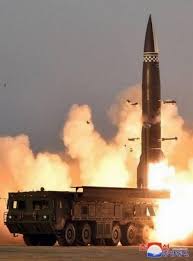
Russia recently received North Korea’s KN-30 ballistic missile for the first time, according to Ukraine’s defence intelligence directorate (HUR).
- The KN-30 is the Western designation for the North Korean Hwasong-11C ballistic missile, also known as the Hwasong-11Da.
- It is an enlarged version of the Hwasong-11 family and belongs to the short-range ballistic missile class.
- It is 10.1 to 10.2 m in length and 1.26 m in diameter.
- It is powered by a solid-fuel engine and launched from a mobile ground-based launcher.
- The use of solid-fuel engines offers distinct advantages in terms of faster response times, longer storage capacity, and reduced deployment complexity compared to traditional liquid-fuel missiles.
- Its estimated range reaches 600-900 km, and its claimed warhead mass reaches 2,500 kg.
- Maximum speed is approximately Mach 5-6.
- The missile can fly in a low quasi-ballistic profile at nearly 50 km in altitude, which reduces the engagement window compared with a higher and more conventional ballistic trajectory.
Squint Eye:
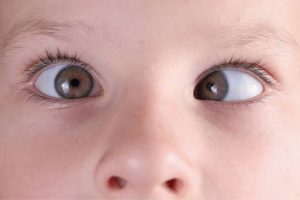
A recent study estimated that horizontal strabismus affects 1.81% of the global population, or about 138.5 million people.
- Squint Eye is medically known as strabismus.
- It is a condition in which the two eyes do not align properly.
- It can affect children and adults and, when it develops during childhood, can interfere with the normal development of vision.
- In this condition one eye may turn inwards towards the nose (esotropia), outwards (exotropia), upwards or downwards, while the other eye remains focused on an object.
- Strabismus occurs when the systems that control eye movement and alignment do not work properly together.
- Genetic factors can play a role, and children with a family history of strabismus are at higher risk.
- It is also more common in children with certain neurological or developmental conditions. Being born prematurely or with low birth weight are recognised risk factors.
- In adults, strabismus can develop due to conditions such as diabetes, thyroid eye disease, stroke, neurological disorders or trauma.
- Treatment: Glasses are often the first treatment when a refractive error contributes to the misalignment. Surgery may be needed when glasses and other treatments do not adequately correct the misalignment.
Long Tailed Marmot:

Shri Amarnath Ji Yatra brings thousands of pilgrims into a fragile Himalayan ecosystem where long‑tailed marmots live.
- Long Tailed Marmot is a rodent of the high-altitude areas of the Kashmir Himalaya.
- It is also known as the golden marmot and is a member of the Sciuridae family.
- It has vibrant golden fur and has relatively long tail, robust body, and golden-brown coat that vary among subspecies.
- It inhabits alpine meadows and rocky slopes, where its life is closely linked to the seasonal availability of vegetation.
- They are found in parts of Central Asia and South Asia, including Kyrgyzstan, Tajikistan, Kazakhstan, Afghanistan, Pakistan, China, and Northwestern India.
- In India, they are found in Jammu and Kashmir and Ladakh.
- Herbivorous by nature, it feeds on vegetation in its alpine habitat.
- It is a diurnal and social mammal that thrives in challenging alpine habitats.
- Conservation Status:
- IUCN Red List: Least Concern
Thiksey Monastery:

US Ambassador to India Sergio Gor visited the historic Thiksey Monastery in Ladakh.
- Thiksey Monastery is one of the largest and most prominent monastic complexes located in central Ladakh.
- It was founded in 1433 which belongs to the Gelug sect.
- It was founded by Spon Palden Sherabwith his Master Jangsem Sherab Zang (the founder of Gelugpa school of Tibetan Buddhism).
- The structure and architecture of Thiksey resembles the Potala Palace of Lhasa, Tibet.
- Features of Thiksey Monastery:
- The twelve storey complex resembles the Potala Palace of Lhasa and is one of the most visually striking monasteries in India.
- It is also home to the statue of Maitreya Buddha, installed in the 1980s.
- It houses stupas, statues, thangkas, wall paintings and ancient artifacts showcasing Buddhist artistic richness.
- An annual festival held in the monastery precincts is known as the Gustor ritual, which is held from the 17th to 19th day of the ninth month of the Tibetan calendar (October–November).
- Thiksey functions as a major centre for monastic education and spiritual training in the Ladakh.
Surge in India’s Merchandise Exports:

Data released by the Ministry of Commerce and Industry revealed that India’s merchandise exports surged by nearly 20% year-on-year in July 2026, reaching USD 44.2 billion.
- This growth has been achieved despite the ongoing geopolitical turmoil in West Asia, driven largely by strategic market diversification and the rerouting of maritime trade.
- India’s merchandise exports rose nearly 20% YoY to USD 44.2 billion in July 2026, but the widening trade deficit highlights persistent challenges in export competitiveness, technology, logistics and global value-chain integration.
- India needs to move beyond petroleum-led export growth and low-cost assembly towards high-value manufacturing, deeper GVC integration, stronger R&D, resilient supply chains and effective FTA utilisation to emerge as a competitive global manufacturing hub.
- Goods exports registered a year-on-year growth of 19.6% compared to July 2025. Conversely, merchandise imports grew at a slower pace of 17.5% to reach USD 76.2 billion.
- Services exports grew by a modest 6.4% to USD 35.9 billion, while services imports increased faster at 9.5% to USD 18.9 billion.
- The combined trade deficit widened to USD 15 billion from USD 11.4 billion in July 2025, mainly because services imports grew faster than services exports.
- The export surge was overwhelmingly concentrated in the petroleum sector, which accounted for approximately 39% of the total growth in July 2026, spurred by elevated global prices.
- Electronic goods exports grew by an impressive 30.7% between April and July 2026, nearly doubling their overall share in India’s merchandise exports. Engineering goods also witnessed an 18.2% expansion.
- Significant, positive traction was recorded in the exports of marine products, meat, dairy, poultry, and traditional handicrafts.
Exercise Udara Shakti 2026:

The Indian Air Force (IAF) participated in Exercise Udara Shakti 2026, a bilateral air exercise with the Royal Malaysian Air Force (RMAF) at Subang Airbase, Malaysia.
- The exercise reflects India’s growing defence cooperation with Southeast Asian partners under its Act East Policy and Indo-Pacific strategy, following the IAF’s participation in Exercise Pitch Black 2026 in Australia.
- Udara Shakti is a bilateral air exercise between India and Malaysia aimed at enhancing air combat capabilities, operational interoperability, tactical coordination and mutual understanding between the IAF and RMAF.
- The IAF deployed four Rafale fighter aircraft from 101 Squadron along with two C-17 Globemaster III strategic airlift aircraft. The RMAF participated with Su-30MKM fighter aircraft, F/A-18D Hornets and an A400M transport aircraft.
- The exercise involved high-intensity combat sorties, dissimilar air combat training, dissimilar basic fighter manoeuvres and air-to-air refuelling operations to improve combat readiness and operational effectiveness.
- The exercise included exchanges on training doctrines, integrated operations, mission planning and maintenance practices, enabling both air forces to share best practices and operational experiences.
- Exercise Udara Shakti strengthened India–Malaysia defence relations, enhanced the ability of both air forces to operate together, and contributed to regional security cooperation in the Indo-Pacific region.
- Other Military Exercises Between India and Malaysia: Samudra Laksamana (Indian Navy) and Exercise Harimau Shakti (Indian Army).
The SAVE America Act:

U.S. President has renewed calls for Congress to pass the SAVE America Act, citing concerns over voter identification and non-citizen voting in U.S. elections.
- The Safeguard American Voter Eligibility (SAVE America) Act is proposed U.S. legislation aimed at tightening voter registration and identification requirements for federal elections.
- It requires documentary proof of U.S. citizenship for voter registration and photo identification for voting, including mail-in ballots.
- Aim is to strengthen the integrity of federal elections by ensuring that only eligible U.S. citizens register and vote, while creating mechanisms to identify and remove ineligible non-citizens from electoral rolls.
Key Features:
- Proof of Citizenship: Requires a passport, birth certificate or naturalisation documents, along with government-issued photo identification, for new registrations or updates.
- Photo ID for Voting: Requires voters to present photo identification, while mail-in voters must submit a copy of their photo ID.
- Citizenship Verification: Allows States to cross-check electoral rolls with the U.S. Department of Homeland Security to identify potential non-citizens.
- Penalties for Violations: Election officials who register individuals without the prescribed documentation could face up to five years’ imprisonment.
India Becomes World’s 2nd-Largest Supplier of Seafarers:
India has emerged as the world’s second-largest supplier of seafarers to the global shipping industry, according to the BIMCO-ICS Seafarer Workforce Report 2026, marking a major milestone in India’s maritime sector.
- India contributes 311,936 seafarers, accounting for 12.16% of the global seafaring workforce. The Philippines remains the largest supplier of seafarers globally.
- India supplies 140,718 officers, accounting for 13.41% of the global officer workforce, and 171,218 ratings, representing 11.29% of global ratings serving aboard merchant vessels.
- The report estimates the global seafaring workforce at around 2.57 million, against a demand of nearly 2.55 million, highlighting the shortage of qualified maritime professionals, particularly officers.
- India’s share of the global seafaring workforce increased from 5.2% in 2015 and around 6% in 2021 to 12.16% in 2026, enabling India to rise from the fifth-largest supplier to the second-largest supplier of seafarers globally.
- Expansion of maritime training institutes, modernisation of infrastructure, improved skill development and alignment with international standards have enhanced the quality and global employability of Indian seafarers.
- Digitisation of certification and regulatory services by the Directorate General of Shipping (DGS) has improved transparency and efficiency. Compliance with the International Maritime Organization’s International Convention on Standards of Training, Certification and Watchkeeping for Seafarers (STCW) has strengthened global recognition of Indian maritime professionals.
- Recent reforms, including the Inland Vessels Act, 2021, Merchant Shipping Act, 2025, Indian Ports Act, 2025, Coastal Shipping Act, 2025, Bills of Lading Act, 2025 and Carriage of Goods by Sea Act, 2025, aim to modernise maritime governance, strengthen seafarer welfare, simplify regulations and align Indian shipping laws with international conventions.
- Mission 20% aims to increase India’s share of the global seafaring workforce from 12.16% to 20%, with the goal of ensuring that one out of every five seafarers worldwide is Indian.
- A skilled maritime workforce strengthens India’s position as a global maritime talent hub, enhances its role in international trade and supply chains, and supports the objectives of Maritime India Vision 2030 and Maritime Amrit Kaal Vision 2047.
Polysilicon:

The Ministry of New and Renewable Energy (MNRE) announced that it is formulating a dedicated subsidy scheme to establish 30 GW of domestic polysilicon manufacturing capacity by 2030.
- Polycrystalline silicon (commonly referred to as polysilicon or poly-Si) is a high-purity, hyper-refined crystalline form of elemental silicon composed of multiple microscopic crystallites separated by grain boundaries.
- It serves as the fundamental upstream raw material and chemical feedstock for producing solar photovoltaic (PV) ingots/wafers and semiconductor integrated circuits.
- Mined quartz or silica sand (SiO2) is reduced with carbon sources (coke, charcoal) in a submerged electric arc furnace at temperatures around 1,900 degree C to produce metallurgical silicon of 98–99% purity.
- The pulverized MG-Si is reacted with hydrogen chloride gas at elevated temperatures to form volatile Trichlorosilane or monosilane.
- The liquid trichlorosilane undergoes multi-stage fractional distillation to strip out microscopic traces of metal impurities, boron, and phosphorus.
Chemical Vapor Deposition (Siemens Process / FBR): In the dominant Siemens process, purified TCS mixed with hydrogen is fed into high-temperature reactor bell jars, chemically decomposing to deposit hyper-pure polysilicon onto heated silicon filament rods. Alternatively, continuous Fluidized Bed Reactor (FBR) technology produces granular beads at lower energy consumption.
Key Characteristics of Polysilicon:
- Ultra-High Chemical Purity: Categorized into:
- Solar-Grade (SoG-Si): Purity ranging from 6N to 9N (99.9999% to 99.9999999%).
- Electronic/Semiconductor-Grade (EG-Si): Extreme purity from 9N to 11N (99.999999999%), where foreign impurity atoms are limited to less than 1 part per billion (ppb).
- Capital &Energy-Intensive Production: Demands massive continuous electricity supply and capital expenditure to maintain high-temperature furnaces and complex closed-loop recycling loops.
- Semiconductor & Optical Bandgap Properties: Possesses an intrinsic electronic bandgap that makes it an optimal semiconductor base for converting incident solar photon energy into electric currents via the photovoltaic effect.
- Polycrystalline Morphology: Characterized by internal crystallographic grain boundaries with random orientations, which are melted and re-crystallized via the Czochralski (Cz) growth process to pull single-crystal (monocrystalline) ingots.
The Mangrol, the third Anti-Submarine Warfare Shallow Water Craft:

The Indian Navy received ‘Mangrol’, the third indigenously built Anti-Submarine Warfare Shallow Water Craft (ASW-SWC) constructed by Cochin Shipyard Limited (CSL) in Kochi.
- Mangrol is the third vessel of the Mahe-class Anti-Submarine Warfare Shallow Water Craft (ASW-SWC). It is a compact, stealthy, and highly maneuverable littoral combat vessel designed specifically to track, detect, and neutralize subsurface threats in shallow coastal waters where larger warships face operational constraints.
- Developed By:
- Builder: Cochin Shipyard Limited (CSL), Kochi, under an eight-ship contract with the Ministry of Defence.
- Indigenous Content: Built with over 80% indigenous systems and components.
- Legacy & Namesake: Named after the maritime fishing town and minor port of Mangrol in Junagadh district, Gujarat. It carries forward the legacy of the erstwhile INS Mangrol, a naval minesweeper decommissioned in 2004.
- Aim: To provide dedicated, multi-role littoral combat power to conduct full-spectrum coastal anti-submarine operations, subsurface surveillance, mine warfare, and Low-Intensity Maritime Operations (LIMO) across India’s Exclusive Economic Zone (EEZ).
Key Characteristics:
- Waterjet (Pump-Jet) Propulsion: Powered by three marine diesel engines coupled to high-efficiency waterjets rather than conventional screw propellers. This ensures high maneuverability, rapid acceleration in shallow drafts, and significantly lowered radiated underwater acoustic noise to prevent sonar detection.
- Compact Littoral Dimensions: Measures 78 metres in length with a displacement of 896 to 1,100 tonnes, capable of reaching speeds up to 25 knots with a range of 1,800 nautical miles and an endurance of up to 14 days.
- Dedicated Sub-Hunting Weaponry: Fitted with a forward-mounted RBU-6000 anti-submarine rocket launcher, 324 mm lightweight torpedo tubes (for Advanced Light-Weight Torpedoes – ALWT), and advanced torpedo countermeasures.
- Advanced Sonar & Sensor Suite: Integrates indigenous DRDO-developed hull-mounted sonars (HMS), Low-Frequency Variable Depth Sonar (LFVDS), and an integrated combat management system optimized for detecting quiet conventional submarines in noisy shallow-water thermoclines.
- Surface Warfare & Asymmetric Defense: Equipped with a 30 mm naval surface gun and two 12.7 mm stabilized remote-controlled guns (SRCGs) for point defense against fast attack craft, unmanned surface vessels (USVs), and asymmetric aerial threats.
The Australia confirms first H5N1 bird flu:
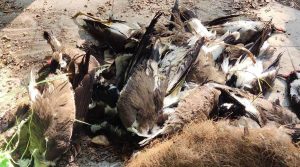
Australia confirmed its first mainland case of Highly Pathogenic Avian Influenza (HPAI) H5N1 in a mammal after the virus was detected in a dead long-nosed fur seal at Beachport, South Australia.
- H5N1 is a subtype of the Influenza A virus belonging to the Orthomyxoviridae family. Classified as a Highly Pathogenic Avian Influenza (HPAI) virus, it is characterized by two primary surface glycoproteins: Hemagglutinin type 5 (H5) and Neuraminidase type 1 (N1). It primarily infects wild aquatic birds and domestic poultry, but possesses severe cross-species zoonotic potential.
- Origin & Evolution:
- First Detection (1996): First isolated from a farmed goose in Guangdong Province, southern China (known as the Gs/Gd lineage).
- Human Outbreak (1997): First documented human outbreak occurred in Hong Kong in 1997, causing severe respiratory illness and fatal cases.
- Global Clade 2.3.4.4b Outbreak: In recent years, a highly transmissible panzootic lineage (Clade 2.3.4.4b) emerged, spreading via migratory bird flyways across Europe, the Americas, Antarctica, and ultimately reaching Australia.
- Causes systemic disease and near-100% mortality in chickens and turkeys, often within 48 hours.
- Repeated infections in mammals could favour mutations enabling binding to human-type α-2,6 receptors.
- Human infections are rare with no sustained transmission, but reported cases have shown ~50% fatality.
- Can remain infectious in water, soil and bird faeces, especially in cold and coastal environments.



