
Today’s Current Affairs: 25th jun 2026 for UPSC IAS exams, State PSC exams, SSC CGL, State SSC, RRB, Railways, Banking Exam & IBPS, etc
Table of Contents
Volcan de Fuego:
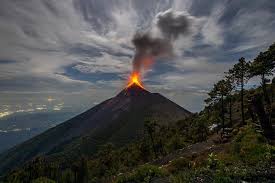
Tourists on Guatemala’s Volcan de Fuego were caught off guard when the volcano erupted recently, and burning rocks began to rain down, forcing them to scramble down the slopes.
- Volcan de Fuego, which translates to “Volcano of Fire” in Spanish, is an active volcano located in Guatemala.
- It is a relatively young basaltic stratovolcano.
- It is one of three large stratovolcanoes overlooking Guatemala’s former capital, Antigua.
- It forms part of the Central American Volcanic Arc, a chain of volcanoes stretching from Guatemala to Panama.
- Guatemala lies on the Pacific “Ring of Fire” and experiences frequent seismic and volcanic activity.
- It lies on the boundary between the Cocos Plate and the Caribbean Plate.
- Fuego has what scientists call an “open-vent system.”
- This means the volcano keeps a clear pathway for gas and magma to escape.
- Because of this open vent, it releases pressure through smaller, more frequent eruptions.
- The Fuego is known for its vulcanian activity, occasionally accompanied by pyroclastic flows.
- It is one of the most active volcanoes in Central America.
Vitamin B3:

A clinical trial is exploring whether high doses of vitamin B3 could give patients with glioblastoma a better chance against aggressive brain cancer.
- Vitamin B3, or Niacin, is a water-soluble vitamin.
- Water-soluble vitamins dissolve in water. Leftover amounts of the vitamin leave the body through the urine.
- The body keeps a small reserve of these vitamins, but they have to be taken on a regular basis to maintain the reserve.
- It is naturally present in many foods, added to some food products, and available as a dietary supplement.
- The body gets niacin through food, but it also makes small amounts from the amino acid tryptophan, which can be found in protein sources like turkey and other animal foods.
- The two most common forms of niacin in food and supplements are nicotinic acid and nicotinamide.
- Niacin works in the body as a coenzyme, with other enzymes dependent on it for various reactions.
- Niacin helps to convert nutrients into energy, create cholesterol and fats, create and repair DNA, and exert antioxidant effects.
- Due to Niacin’s positive effects on cholesterol levels, it may help prevent heart disease.
- Additionally, it may reduce oxidative stress and inflammation, which are associated with atherosclerosis, or the hardening of the arteries.
- It is found in many foods, both from animals and plants.
- A severe niacin deficiency leads to pellagra, a condition that causes a dark, sometimes scaly rash to develop on skin areas exposed to sunlight; bright redness of the tongue; and constipation/diarrhea.
- Other signs of severe niacin deficiency include:
- Depression
- Headache
- Fatigue
- Memory loss
Ranthambhore Tiger Reserve:
A captive-bred Indian vulture released in Maharashtra’s Melghat in January this year has covered an astonishing 3,334 km, soaring across states before reaching the Ranthambhore Tiger Reserve in Rajasthan.
- Ranthambhore Tiger Reserve is located in the Sawai Madhopur district of southeastern Rajasthan.
- It derives its name from the Ranthambore Fort (a World Heritage Site) situated within its precincts.
- It is located at the junction (great boundary fault) of the Aravalis and Vindhyan ranges.
- The area was once a royal hunting ground for the Maharajas of Jaipur.
- It is one of the largest tiger reserves in northern India.
- It boasts a spectacular landscape filled with boulder-strewn highland plateaus, lakes, and rivers dotted with old forts and abandoned mosques.
- It is bounded to the north by the Banas River and to the south by the Chambal River.
- There are several lakes in the park known as Padam Talab, Raj Bagh Talab, and Malik Talab.
- It is dry deciduous forests and open grassy meadow.
- Pure sands of Dhok tree (Anogeissus pendula) interspersed with grasslands at the plateaus, and other species like Acacia, Capparis, Zizyphus, Prosopis, etc are found here.
- It consists of leopard, caracal, jungle cat, sambar, chital, chinkara, and wild boar.
- Peacocks, partridges, green pigeons, parakeets, sparrows, prinias, warblers, etc. are examples of avifauna.
Burevestnik Missile: In News
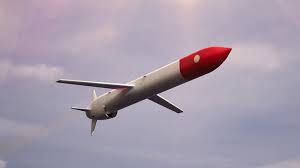
Russia’s mysterious Burevestnik cruise missile, known to NATO as SSC-X-9 Skyfall, recently returned to the spotlight after new research suggested the weapon may leave a trail of radioactive material in its wake as it flies.
- The Burevestnik, whose name translates as “storm petrel“, is a ground-launched, low-flying nuclear-powered, nuclear-armed cruise missile.
- It was developed by Russia.
- It is the world’s first nuclear-powered cruise missile.
- It is one of six strategic weapons that the Russian President introduced in a 2018 speech.
- NATO refers to it as the SSC-X-9 Skyfall.
- It is powered by a small nuclear reactor, which heats up air to propel the missile forward.
- Its nuclear propulsion gives the missile much longer range than traditional turbojet or turbofan engines that are limited by how much fuel they can carry.
- That propulsion gives it virtually unlimited range, allowing it to loiter for days, circling the enemy’s air defenses and attacking from an unexpected direction.
- The missile is also designed to fly at low altitudes, much lower than a conventionally powered cruise missile, which would make it harder for air-defence radar to detect.
Indian National Centre for Ocean Information Services:
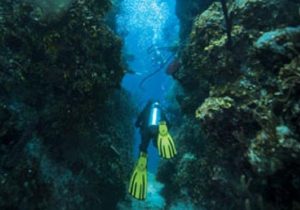
Indian National Centre for Ocean Information Services (INCOIS) started releasing Specialized El Nino Bulletins to highlight the possible impacts of the ongoing El Nino on the Maritime Sectors.
- Indian National Centre for Ocean Information Serviceswas established as an autonomous body in 1999 under the Ministry of Earth Sciences (MoES) and is a unit of the Earth System Science Organisation (ESSO).
- It is mandated to provide ocean information and advisory services to society, industry, government agencies and the scientific community through sustained ocean observations and constant improvements through systematic and focussed research.
- It is a permanent member of UNESCO’s Intergovernmental Oceanographic Commission (IOC).
- It established the Indian Tsunami Early Warning Centre (ITEWC) which provides tsunami alerts within 10 minutes, serving India and 28 Indian Ocean countries.
- It is located in Hyderabad, Telangana.
- Initiatives of INCOIS:
- Search and Rescue Aided Tool (SARAT): It is to assist the Indian Coast Guard, Navy and Coastal Security Police, in locating individuals or objects lost at sea.
- SynOPS visualization Platform: It integrates real-time data to strengthen response coordination during extreme events.
Pradhan Mantri Rashtriya Bal Puraskar 2026:
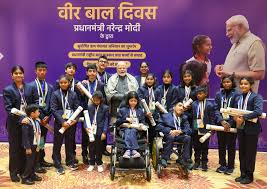
The Ministry of Women and Child Development has invited nominations for the Pradhan Mantri Rashtriya Bal Puraskar (PMRBP) 2026.Recommendations are also invited from certain government entities and offices.Each awardee is given a medal, a cash prize of 1 Lakh and certificate.The awardees are selected by a committee constituted by the Union Minister for Women and Child Development and headed by the Secretary of the Ministry.
- Pradhan Mantri Rashtriya Bal Puraskar is nation’s highest civilian honour for children.
- It is presented annually by the President of India on Veer Bal Diwas.
- Veer Bal Diwas is observed annually on December 26 in memory of Sahibzada Zorawar Singh and Sahibzada Fateh Singh.
- It recognises exceptional achievements in six distinct categories namely: Bravery, Social Service, Environment, Sports, Art and Culture, Science and Technology
Eligibility for Pradhan Mantri Rashtriya Bal Puraskar:
- A child should be an Indian Citizen.
- A child above the age of 5 years and not exceeding 18 years (as of 31st July of respective year).
- The act/incident/achievement should have been within 2 years of the last date of receipt of application/nomination for the year of consideration.
- The number of awards will be 25, however, any relaxation to this maximum number may be permitted at the discretion of the National Selection Committee.
- A child may be nominated in more than one category, although the committee reserves the right to consider only one application.
- Any individual or institution can nominate a child. Children may also apply through self-nomination.
Antaram idukki:
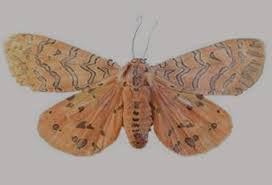
A team of researchers has discovered a new genus and species of tiger moth from the southern Western Ghats and named it as Antaram idukki.
- Antaram idukki belongs to the tiger moth subfamily Arctiinae (Erebidae).
- It was discovered in Kerala’s Idukki district.
- It is currently known only from Idukki and is distinguished from related genera by a unique combination of external and genital morphological characters.
- Tiger moths play a crucial ecological role as pollinators, particularly for plants that bloom at night.
- They also serve as an important food source for birds, bats and other wildlife, while acting as biological indicators of environmental change.
- Moths are insects that belong to the order Lepidoptera, which they share with butterflies.
- Characteristics:
- Highly adapted, they live in all but polar habitats.
- They often have duller colors compared to butterflies, which helps with Some, like the luna moth or atlas moth, are vividly colored.
- Moth antennae are often feathery, unlike the thin and clubbed antennae of butterflies.
- Most moths are active at night, but some are diurnal.
- The larvae and adults of most moth species are plant eaters. Larvae in particular do considerable damage to ornamental trees and shrubs and to many other plants of economic importance.
India Hosts 16th BRICS National Security Advisers Meeting:
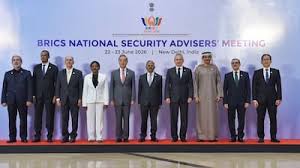
As the chair of BRICS 2026, India hosted the BRICS National Security Advisers’ (NSA) Meeting in New Delhi. Chaired by India’s NSA Ajit Doval, the high-level conclave took place against the backdrop of significant geopolitical shifts and rising tensions in West Asia.
- India welcomed the US – Iran Islamabad MoU and highlighted the opening of the Strait of Hormuz as a critical step to relieve supply chain bottlenecks and ensure global energy security.
- A “forward-looking” discussion took place with the Chinese Foreign Minister, noting progress toward the gradual normalization of India-China ties and emphasizing that stable, predictable relations build mutual trust.
- Reviewed the ongoing situation in West Asia and discussed cooperation under the BRICS platform as well as India-Iran bilateral ties.
- India’s Role in BRICS 2026:
- Chairship: India holds the BRICS Chairship for the fourth time in 2026 (having previously held it in 2012, 2016, and 2021).
- The chairmanship of the forum is rotated annually among the members, in accordance with the acronym B-R-I-C-S.
- The NSA meeting serves as a key preparatory track to set the stage for the BRICS leaders’ summit in India later in the year.
- Theme: The 2026 chairship is guided by the theme “Building for Resilience, Innovation, Cooperation and Sustainability,” reflecting a humanity-first approach.
Padma Awards 2026: Second Set

The President of India conferred the second set of 65 Padma Awards, 2026, during the second Civil Investiture Ceremony held at Rashtrapati Bhavan.
- The Padma Awards are one of India’s highest civilian honours, conferred in three categories: Padma Vibhushan (exceptional and distinguished service; 2nd-highest civilian award after Bharat Ratna), Padma Bhushan (distinguished service of high order), and Padma Shri (distinguished service in any field).
- Padma Vibhushan Awardees: Presented to former Supreme Court judge K.T. Thomas for Public Affairs and eminent Malayalam journalist P. Narayanan for Literature and Education.
- Padma Bhushan Awardees: Included American oncologist Dattatreyudu Nori, industrialist S.K.M. Maeilanandhan, social worker and educationist Vellappally Natesan, and posthumously to the late Jharkhand Mukti Morcha founder Shibu Soren.Among the popular sports and entertainment personalities honoured at the ceremony, tennis legend Vijay Amritraj, actor Mammootty, and playback singer Alka Yagnik were explicitly conferred the Padma Bhushan.
- Padma Shri Awardees:
- Chandramouli Gaddamanugu: Indian aerospace scientist at Defence Research and Development Laboratory who led the Akash missile system from development to deployment during Operation Sindoor.
- Budhri Tati: A social worker focusing on education and women empowerment in the previously Naxal-affected Bastar region of Chhattisgarh.
- Guru Sangyusang Pongener: An 81-year-old folk artist and cultural guardian from Nagaland.
- Vladimir Mestvirishvili: A Georgian coach awarded posthumously for mentoring Indian Olympic wrestling medallists (Sushil Kumar, Yogeshwar Dutt, Ravi Dahiya).
- Asok Kumar Haldar: Prominent Dalit author.
- The Padma Shri was awarded to cricketer Rohit Sharma, hockey player Savita Punia, actor R. Madhavan, and posthumously to the late actor Satish Shah.
India’s Emerging Technology Ecosystem:
Scientists studying the comet 3I/ATLAS have determined that this interstellar visitor is remarkably ancient – formed an estimated 10 to 12 billion years ago in a primordial planetary system.India is increasingly being recognised as an emerging global technology power, moving beyond its earlier image as merely a large digital consumer market.This transformation is being driven by Digital Public Infrastructure (DPI), indigenous innovation, startups, and mission-mode initiatives in Artificial Intelligence (AI), semiconductors, quantum technologies, supercomputing, cloud computing and cybersecurity.Over the last decade, India has made technology a key driver of its Viksit Bharat vision by building digital infrastructure, expanding access and strengthening innovation. This effort was supported by mission-mode programmes in emerging technologies, capacity-building initiatives and trusted Digital Public Infrastructure, making Digital India the foundation of India’s wider technology transformation.
Prime Minister Released 23rd Instalment of PM-KISAN:
The Prime Minister released over ₹18,880 crore as the 23rd instalment of PM-KISAN in West Bengal. Nearly 9.44 crore eligible farmers, including more than 2.18 crore women farmers, received assistance through the Direct Benefit Transfer (DBT) system under the PM KISAN Utsav Diwas. PM-KISAN is a Central Sector Scheme launched in 2019 to provide assured income support to landholding farmer families with cultivable land.The Union Budget 2026–27 allocated ₹60,000 crore for PM-KISAN, reflecting continued support for farmers’ income security.More than ₹4.46 lakh crore has been disbursed through 23 instalments, making PM-KISAN one of the world’s largest DBT initiatives; more than 23% of beneficiaries are women.Under the scheme, each eligible farmer family receives ₹6,000 per year in three equal installments of ₹2,000 each.The amount is transferred directly into Aadhaar-seeded bank accounts through the Direct Benefit Transfer (DBT) mechanism.The scheme aims to increase farmers’ income, support purchase of agricultural inputs such as seeds and fertilisers, improve crop health and productivity, and reduce dependence on informal credit.
Dolphin Conservation in Gujarat:
Gujarat has recorded more than 680 dolphins along its 4,087-km coastline, highlighting the State’s growing importance in marine biodiversity conservation.The latest dolphin survey covered major coastal and marine areas of Gujarat, especially the Gulf of Kutch, which has emerged as a key dolphin habitat.Dolphins were recorded across the Marine National Park and Marine Sanctuary, the southern and northern Gulf of Kutch, and coastal areas of Bhavnagar and Morbi, showing a wider distribution along Gujarat’s coast.Gujarat’s marine waters commonly host Indo-Pacific Humpback Dolphins and Bottlenose Dolphins.
The Twin Climate and Energy Crises:
United Nations (UN) Secretary-General António Guterres delivered a critical address at London Climate Action Week, warning that the world is simultaneously confronting twin climate and energy crises.The UN chief described the modern global landscape as a tale of two crises driven entirely by a shared addiction to fossil fuels. The first is an accelerating climate crisis that is pushing global temperatures toward catastrophic, irreversible ecological tipping points.The second is an acute energy crisis triggered by direct conflicts in West Asia, which has exposed the severe economic risks of relying on volatile hydrocarbon networks where a single chokepoint disruption can trigger a massive inflationary shock.The world has officially experienced its 11 hottest years on record, with average annual temperatures on track to exceed the 1.5°C threshold agreed upon under the Paris Agreement in the near future.According to the International Energy Agency (IEA), the scale of the current West Asian energy upheaval rivals the oil shocks of the 1970s and the market turmoil of the Ukraine war combined.Driven by high oil prices during the Middle East conflict, the world’s eight largest fossil fuel companies pocketed an additional $6.5 billion in windfall profits in the first quarter of 2026 alone.
Thewa Art:
During Prime Minister of India visit to Slovakia, he gifted Thewa motif cufflinks to Slovak President Peter Pellegrini, bringing global attention to Rajasthan’s centuries-old Thewa craft.Thewa is an extraordinary traditional jewelry-making and decorative craft that involves the precise, delicate fusion of hand-carved sheets of pure gold onto vibrant, specially treated molten glass. The final artifact creates an illusion of a gold-rich, heavily ornamented piece while using minimal gold, making it look as though it glows from an internal light source.Exclusively practiced and preserved in the Pratapgarh district of Rajasthan, India.The craft holds a prestigious Geographical Indication (GI) status (awarded in 2013–2014).
NAFED’s digital auction portal ‘NAFEX.in’:
Union Home Minister will launch NAFED’s digital auction portal ‘NAFEX.in’ in New Delhi to modernize agricultural auctions and improve transparency in cooperative marketing.NAFEX.in is a digital agricultural auction platform developed by the National Agricultural Cooperative Marketing Federation of India (NAFED).It provides an online, transparent, and technology-driven mechanism for conducting auctions of agricultural commodities and cooperative produce.Aim is to enhance transparency, efficiency, and accountability in agricultural auctions,to strengthen cooperative marketing and provide a seamless digital trading ecosystem for farmers and stakeholders.
Functions:
- Conducts online auctions for agricultural commodities, eliminating manual processes and increasing transparency.
- Enables competitive bidding, helping determine fair market prices through transparent price discovery mechanisms.
- Connects farmers, cooperatives, traders, processors, and institutional buyers through a common digital platform.
- Reduces paperwork, speeds up transactions, and facilitates easier monitoring and record management.
International Scientific Panel on AI:
The United Nations has set up its first global scientific body on artificial intelligence, appointing 40 experts to the newly formed Independent International Scientific Panel on AI.Professor B. Ravindran, head of the Centre for Responsible AI at IIT Madras, has been named as the sole Indian representative on the panel for a three-year term.The Independent International Scientific Panel on AI is a newly established global scientific advisory council. It serves as a non-political, technical backbone designed to evaluate and map out the global state of artificial intelligence technology and its rapidly changing scientific boundaries. Established under the aegis of the United Nations General Assembly (UNGA).
Members:
- Total Composition: Consists of 40 globally recognized experts selected from diverse international scientific backgrounds.
- Term Limit: Members are appointed to serve a fixed three-year term.
- Indian Representation: Professor B. Ravindran from IIT Madras stands as the lone Indian scientist selected to serve in this inaugural cohort.