
Today’s Current Affairs: 26th Sep 2026 for UPSC IAS exams, State PSC exams, SSC CGL, State SSC, RRB, Railways, Banking Exam & IBPS, etc
Table of Contents
Etruscan Civilization:
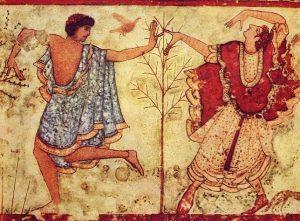
Archaeologists recently unearthed a monumental 2,700-year-old tomb at Vulci, an important ancient Etruscan town north of Rome.
- Etruscan Civilization was a pre-Roman Mediterranean civilization that flourished between the 8th and 3rd centuries BCE.
- The Etruscans, also known as the Tyrrhenians, inhabited the area that is now Italy.
- Their country was called Tuscia, or Etruria, which was located in the central part of the Italian peninsula.
- They played a significant role in the cultural and political development of early Rome.
- They established a confederation of twelve city-states.
- One of the key features of Etruscan society was their system of government.
- The Etruscans were ruled by a series of kings, who were elected by the members of the aristocratic families.
- This system of government was highly decentralised, with each city-state having its own king and its own system of laws and governance.
- Etruscan society was marked by a high degree of leisure and luxury, evident in their art, elaborate burial practices, and the status of women, who experienced more equality compared to many contemporary cultures.
- The Etruscans were skilled traders and builders, known for their wealth derived from local metal deposits and fertile agricultural land.
- The Etruscans possessed the biggest iron reserves in the whole of the western Mediterranean.
- They had a strong navy and dominated the seas on the western coast of Italy.
- They developed advanced architectural techniques, including the use of the arch and vault.
- Etruscans were the first in the Mediterranean region to construct a city on the basis of a grid plan.
- In this plan, most of the streets were laid in a north-south direction with a few streets crossing them from the east-west direction.
- Despite their many accomplishments, the Etruscan civilization began to decline in the 5th c. BC, as they were gradually absorbed into the expanding Roman Republic.
- The Romans were heavily influenced by Etruscan culture and adopted many of their traditions and practices, such as their system of government, their religious beliefs, and urban planning.
Digital Connectivity Rating Platform:

The Telecom Regulatory Authority of India (TRAI) launched the Digital Connectivity Rating (DCR) Platform.
- Digital Connectivity Rating Platform is an integrated digital platform designed for rating of digital connectivity of properties across residential, commercial, and government properties.
- It was launched by the Telecom Regulatory Authority of India.
- Objective is to encourage property managers to build digitally connected and future ready smart properties and assess whether properties are equipped with robust digital infrastructure, enhancing user experience for tenants, residents, and businesses.
- The platform provides a public interface for consumers to view the properties rated for digital connectivity.
- It brings Property Managers (PMs) registered Digital Connectivity Rating Agency (DCRA) and consumer onto a common digital interface.
- They can register their properties in category of Public, Government, Commercial, Private etc., submit rating applications, upload the prescribed information and documents, select a registered DCRA and track the status of their application through the platform.
- The platform supports both constructed and under-construction properties.
- They can access assigned applications, undertake assessments, record observations and test results, manage supporting documentation and complete the rating process in accordance with the prescribed framework.
- Field assessments will be facilitated through a dedicated DCRA mobile app.
- They can search for a rated property by property name, certificate ID or location.
- They can view the property’s digitally signed rating certificate and verify its authenticity through the QR code provided on the certificate.
What is the mBridge Project?

Saudi Arabia quietly exited the China-led mBridge digital currency project in 2025, saying it was part of its original plan.
- mBridge is a cross-border payments platform designed to allow central banks to transact directly using central bank digital currencies (CBDCs).
- It is a joint project launched in 2021 between the Bank for International Settlements (BIS) innovation hub and the Bank of Thailand, the Central Bank of the United Arab Emirates, the Digital Currency Institute of the People’s Bank of China, and the Hong Kong Monetary Authority.
- The project aimed to explore a multi-CBDC platform shared among participating central banks and commercial banks, built on distributed ledger technology (DLT) to enable instant cross-border payments and settlement.
- The project aimed to tackle key inefficiencies in cross-border payments, including high costs, low speed, and operational complexities.
- It also aims to address financial inclusion concerns, particularly in jurisdictions where correspondent banking (which connects countries to the global financial system) has been in retreat, causing additional costs and delays.
- The system is designed to potentially reduce the need for the US dollar to act as an intermediary currency.
- The platform uses blockchain technology, which makes all the participating banks connect to the same network, which is shared among them.
- The blockchain is a shared digital record which helps keep in tracking the transactions, including maintaining who has paid whom and how much.
- Participating central banks as well as monetary organisations use their own computers on the mBridge network, which are called as validating nodes.
- They play a role in maintaining the transactions that have taken place as well as also help in maintaining the shared digital record to maintain clarity on the transactions that have taken place.
- This means that international payments no longer pass through several banks, rather they are settled directly through one shared platform, mBridge in this case.
- The mBridge platform is often said to be a China-led cross-border digital currency project.
- China has been involved in this project since the very beginning in 2021, as the Digital Currency Institute of the People’s Bank of China was one of the founding partners.
What is Basic Customs Duty (BCD)?
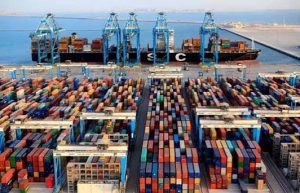
The Government recently reduced the Basic Customs Duty (BCD) on major imported crude edible oils with a view to moderating domestic edible oil prices.
- Basic Customs Duty (BCD) is a type of tax imposed on goods imported into India.
- It is the principal custom duty levied on imported goods.
- It is levied under the Customs Act, 1962.
- It is calculated as a percentage of the assessed value of the goods, i.e., it is fixed based on the ad-valorem, with rates set out in the Customs Tariff Act, 1975.
- There is no specific rate of BCD, and it can vary on the basis of the country of origin and the types of goods being imported.
- The Central Government holds the power to exempt specific goods from BCD.
- It protects domestic manufacturers from underpriced foreign competition by raising the landed cost of comparable imports.
- It generates revenue for the central government, since customs duty remains a significant indirect tax stream.
- It also functions as a policy lever. The government raises or removes BCD on specific inputs to support sectors such as electronics, renewable energy, and defence manufacturing.
- Because BCD applies before Integrated GST (IGST) on imports, it directly affects the final landed cost that a business builds into its pricing.
- The calculation of BCD involves several steps:
- Classification of Goods: Imported goods are classified under specific Harmonized System (HS) codes, which determine the applicable duty rate.
- Assessment of Value: The value of the goods is assessed based on the transaction value, including the cost of goods, insurance, and freight (CIF).
- Application of Duty Rate: The BCD rate for that HS code is applied to the assessed CIF value to arrive at the duty payable.
Exercise Varuna:

INS Trishul reached Toulon, France to participate in the exercise ‘VARUNA’.
- Exercise Varuna is the bilateral maritime exercise conducted between the Indian Navy and the French Navy.
- This year it is the 24th edition of exercise Varuna.
- It will witness professional engagements in harbour and at sea, including cross-deck visits, operational interactions and sporting engagements.
- These engagements will provide opportunities for both Navies to share experiences and Best Practices, enhance interoperability and foster greater mutual understanding.
INS Trishul:
- It is a front-line Talwar-class guided missile frigate of the Indian Navy,
- It joined the arsenal of the Indian Navy in 2003.
- It is equipped for multi-dimensional maritime
- It has a top speed in excess of 30 knots and an endurance of 30 days at sea.
- Trishul became the second Indian warship to incorporate an eight cell KBSM 3S-14NE Vertical Launcher.
- It was the first to upload the new Indian/Russian designed missile, the supersonic BrahMos PJ-10 AShCM (anti-sub/ship/surface cruise missile).
What is Marfan Syndrome?

Researchers recently published the first molecular characterization of Marfan syndrome in domestic cats.
- Marfan Syndrome is a genetic condition that affects the connective tissue in the body.
- Connective tissue helps support structures in the body, including organs, bones, and blood vessels.
- It most commonly affects the heart, eyes, blood vessels, and bones.
- It is a hereditary.
- There’s a change in the fibrillin-1 or FBN1 gene that gives your cells instructions to make fibrillin, a protein.
- This protein helps connective tissue stay strong and flexible.
- There’s no cure for Marfan syndrome, so treatment focuses on managing the symptoms and reducing the risk of complications.
- Treatment usually includes medicines to keep your blood pressure low. This helps reduce the strain on your aorta.
- Many people with Marfan syndrome eventually require preventive surgery to repair the aorta.
Tokay Gecko:

The Directorate of Revenue Intelligence intercepted two persons at Bandar Chalia Gaon Ground, Mariani, Assam and seized 86 live Tokay Geckos from them.
- The tokay gecko or gekko gecko is an arboreal lizard species.
- It is one of the largest gecko species.
- There are two variants of tokay geckos: a red-spotted and a black-spotted.
- Its body is bluish-grey with bright orange, red, or yellow spots.
- They live in tropical rainforests, rock crevices or manmade environments with a variety of microhabitats.
- They are found across southeast and east Asia.
- They are solitary, nocturnal hunters and are more likely to sit and wait for prey than to actively forage.
- The tokay gecko can cast off its tail in defense, breaking it off at several sections.
- This species communicate vocally, using calls to find members of the opposite sex during the breeding season and as a means of defense.
- They are carnivores (insectivores) that feed mainly on insects and small vertebrates.
- Conservation Status:
- IUCN Red List: Least Concern
- The Wildlife (Protection) Act, 1972: Schedule I
- CITES: Appendix-II
Deen Dayal Upadhyaya- Grameen Kaushalya Yojana:
The Ministry of Rural Development is set to roll out Deen Dayal Upadhyaya- Grameen Kaushalya Yojana (DDU-GKY) 2.0 training batches across most of the States/UTs from October 2026.
- Deen Dayal Upadhyaya- Grameen Kaushalya Yojana is a Centrally Sponsored Scheme launched in 2014, under the National Rural Livelihoods Mission.
- It provides placement linked skill training to poor rural youth.
- Nodal Ministry: Ministry of Rural Development
Key Features:
- It has been providing placement-linked skill training to rural youth aged 15-35 years from poor households.
- It also promotes social inclusion through mandatory coverage of SC/ST communities (50%), women (33%), and persons with disabilities (5%).
- The Government notified the upgraded DDU-GKY 2.0 Guidelines in 2025 and framework provides training across multiple sectors based on industry requirements, including aerospace and aviation, agriculture, beauty and wellness, green jobs, healthcare, textiles, and others.
- Initiatives under DDU-GKY 2.0:
- Roshni: It addresses the specific needs of Left-Wing Extremism (LWE)-affected districts notified by the Ministry of Home Affairs.
- It mandates residential skill training, with 40% coverage for women candidates.
- The initiative has been extended to Aspirational Districts, focusing on local infrastructure, education, health, natural resources, and traditional skills.
- Himayat: It is a special DDU-GKY scheme for Jammu & Kashmir and Ladakh.
- It covers rural and urban youth, including BPL and APL persons, and supports wage, self, and gig employment.
- The scheme is 100% centrally funded and implemented with State support through dedicated Mission Management Units.
- North East: Acknowledging the challenges of unique topography of the North Eastern States, out of the total allocation for DDU-GKY, 10% is earmarked for the North-Eastern States.
- Hard to reach Areas: It has provision for Special Area Allowance where Project implementing agencies shall be eligible for a payment at the rate of an additional 10% of the Base training cost per candidate.
What is Transfer Pricing?

The Finance Minister recently urged BRICS nations to share their experiences on treaty interpretation and multilateral negotiations in international taxation, saying global transfer pricing disputes “disproportionately” burden developing countries.
- Transfer pricing refers to the prices of goods and services that are exchanged between companies under common control.
- For instance, when a subsidiary company provides goods or services to its parent company or another subsidiary within the same group, the price set for these transactions is known as the transfer price.
- They represent a complex and important aspect of business, in particular for companies operating in different tax jurisdictions.
- The transfer pricing method is generally used by multinational companies (MNCs) and their subsidiaries or sister companies to allocate income and expenses.
- Effective but legal transfer pricing takes advantage of different tax regimes in different countries by raising transfer prices for goods and services produced in countries with lower tax rates.
- In some cases, companies even lower their expenditure on interrelated transactions by avoiding tariffs on goods and services exchanged internationally.
- The benefits of transfer pricing are tax savings, profit allocation among subsidiaries, and enhanced financial efficiency.
- However, transfer pricing must comply with international regulations to avoid issues such as tax evasion.
- Companies must comply with the transfer pricing rules established by the countries in which they operate, adhering to the arm’s length principle (ALP) to ensure transactions are priced as if they were between unrelated parties.
- ALP: Related parties price transactions as if they were transactions on an open market.
- The Indian transfer pricing regulations (ITPR) require that income arising from ‘international transactions’ between ‘associated enterprises’ be computed with reference to the ALP.
- International transfer pricing disputes arise mainly as countries seek to ensure MNCs are subject to tax on profits attributable to their respective jurisdictions.
- Accordingly, differences in allocation of taxable income among countries can give rise to disputes among taxpayers and tax authorities as well as those in different jurisdictions.
OECD has become the latest global body to raise its growth forecast for India:

OECD has become the latest global body to raise its growth forecast for India recently, predicting that India’s economy will grow by 7.1% in 2026-27, up from the 6.3% forecast earlier.
- OECD (Organisation for Economic Co-operation and Development) is an international organization established with the aim of fostering economic growth and development among member countries.
- It succeeded the Organisation for European Economic Co-operation (OEEC), which focused on distributing Marshall Plan aid post-World War II.
- The convention establishing the OECD was signed on Dec. 14, 1960, by 18 European countries, the United States, and Canada and went into effect on Sept. 30, 1961.
- OECD members are typically democratic countries that support free-market economies.
- Current Members: 38 countries.
- Headquarters: Paris, France.
- The stated goal of the OECD is to shape policies that foster prosperity, equality, opportunity and well-being for all.
- The organization’s activities encompass a wide range of areas, including trade, industry, agriculture, and environmental protection, with a focus on sustainable development.
- The governance structure consists of the OECD Council, the OECD Secretariat, and numerous committees that address specific topics such as public governance and climate change.
- Lacking the power to enforce its decisions, the OECD is essentially a consultative assembly that pursues its program through moral suasion, conferences, seminars, and numerous publications.
- The OECD publishes economic reports, statistical databases, analyses, and forecasts on the outlook for economic growth worldwide.
- Major Reports Published by the OECD:
- OECD Economic Outlook
- PISA (Programme for International Student Assessment)
- Health at a Glance
- Country Peer Review Reports
- The organization also seeks to eliminate bribery and other financial crime
- The OECD maintains a so-called “black list” of nations that are considered uncooperative tax havens.
- India is one of the many non-member economies with which the OECD has working relationships in addition to its member countries.
- India has been an OECD Key Partner since 2007.
OLED (Organic Light-Emitting Diode):

India is currently investigating LG Electronics and Samsung for allegedly paying lower tariffs on imported display parts that go into making panels for OLEDs.
- OLED (Organic Light-Emitting Diode) refers to a class of light-emitting devices where the emissive layer is composed of carbon-based organic molecules that glow when excited by an electric current.
- The OLED structure consists of a multilayer array of thin organic films sandwiched between two electrodes, at least one of which is transparent, allowing light emission. When electrical current is applied, a bright light is emitted.
- OLEDs differ from both traditional LEDs (inorganic diodes that emit light at specific points) and LCDs (which rely on liquid crystals and a backlight).
- Instead, OLEDs are self-emissive surfaces which means every pixel generates its own light.
- OLED displays provide the best image quality, and they can also be made transparent, flexible, foldable, and even rollable and stretchable.
- An OLED display have the following advantages over an LCD display:
- Improved image quality: Better contrast, higher brightness, fuller viewing angle, a wider color range, and much faster refresh rates.
- Lower power consumption.
- Simpler design that enables ultra-thin, flexible, foldable, and transparent displays
- Better durability: OLEDs are very durable and can operate in a broader temperature range.
- Advanced OLED configurations include PHOLED (Phosphorescent OLED) variants, which use phosphorescent phosphors to increase light efficiency, and WOLED (White OLED), used in lighting technology to generate white light with a wide colour spectrum.



