
Today’s Current Affairs: 27th jul 2026 for UPSC IAS exams, State PSC exams, SSC CGL, State SSC, RRB, Railways, Banking Exam & IBPS, etc
Table of Contents
Kusha Long-Range Surface-to-Air Missile (LR-SAM):

The Defence Research and Development Organisation (DRDO) successfully conducted the maiden flight test of the Kusha Long-Range Surface-to-Air Missile (LR-SAM) from Dr APJ Abdul Kalam Island off the coast of Odisha.
- Project Kusha is India’s indigenously developed, long-range air defence missile system. Often dubbed India’s indigenous answer to the Russian S-400 Triumf, it is a fully automated, scalable surface-to-air missile ecosystem designed to detect, track, and destroy enemy aerial threats at standoff distances.
- Developed by the Defence Research and Development Organisation (DRDO) in partnership with public and private defense industry partners.
- Monitored and validated under the Ministry of Defence from the Integrated Test Range (ITR) in Odisha.
- Aim is to build a scalable, multi-layered national air defence shield—aligning with the vision of the integrated “Sudarshan Chakra” national air umbrella—to protect critical civilian and strategic assets while eliminating reliance on foreign air defence imports.
Key Features of Project Kusha:
- Three-Tiered Interceptor Family: Comprises three distinct missile variants tailored for tiered engagement envelopes:
- M1 Variant: Engagement range up to 150 km.
- M2 Variant: Engagement range up to 250 km.
- M3 Variant: Extended engagement range up to 350 km.
- Wide Altitude and Operational Envelope: Designed to neutralize fast-moving targets across various altitudes, spanning low-flying cruise missiles to high-altitude reconnaissance aircraft
- Fully Integrated Indigenous Subsystems: Includes locally developed active electronically scanned array (AESA) radars, command and control centers, automated battle management software, and high-precision missile seekers.
- High Interception Success Rate: Engineered to perform hit-to-kill and proximity-detonation interceptions against complex electronic target profiles and saturation attacks.
Chandipura Virus (CHPV):

Nine deaths, including two young girls from Rajasthan receiving treatment in Gujarat, have been confirmed due to the Chandipura virus (CHPV) outbreak.
- The Chandipura virus (CHPV) is an acute vector-borne pathogen belonging to the Rhabdoviridae family (the same family as the rabies-causing Lyssavirus). It is transmitted to humans via insect bites and causes AcuteEncephalitis Syndrome (AES)—a rapid, life-threatening inflammation of active brain tissues.
- First isolated in 1965 from human serum samples during an outbreak of dengue/chikungunya-like fever in Chandipura village, Maharashtra, India.
- Caused major child mortality outbreaks in 2003–2004 across Maharashtra, Northern Gujarat, and Andhra Pradesh, with case fatality rates (CFR) ranging from 55% to 78%.
- Endemic to central and western India (particularly rural, tribal, and peripheral regions of Gujarat, Maharashtra, Rajasthan, and Andhra Pradesh) where sandfly breeding conditions thrive.
- Spread primarily through the bites of infected female Phlebotomine sandflies (Phlebotomus papatasi) and select mosquito species (Aedes aegypti). The virus resides in the salivary glands of these vectors.
- Almost exclusively targets children below 15 years of age, whose developing central nervous systems are highly vulnerable to viral encephalitis.
- Characterized by an unusually rapid progression. Onset begins with sudden high fever, severe headache, body ache, and vomiting, escalating within hours to seizures, altered sensorium, brain inflammation, and potential mortality within 24 to 48 hours of hospital admission.
- Outbreak cycles peak during the monsoon season due to increased sandfly breeding in cracked mud walls, cattle sheds, and unpaved (kutcha) rural housing structures.
- Does not transmit directly from human to human through respiratory droplets or physical contact.
- There is currently no approved antiviral drug or preventive vaccine available for Chandipura virus infection.
- Treatment relies strictly on emergency supportive care in intensive care units (ICUs).
The Global Mining and Metals Water Dataset Report:

The International Council on Mining and Metals (ICMM) released its Global Mining and Metals Water Dataset, revealing that nearly two-thirds of global mining and metals processing facilities face high physical water risk.
- The Global Mining and Metals Water Dataset report represents the first comprehensive, cross-commodity analysis evaluating the mining sector’s exposure to physical water risks worldwide.
- Developed by ICMM in collaboration with research partners, the report overlays point-location data from 12,000 mining and metals facilities across 148 countries/regions with primary water risk datasets.
Key Findings in the Report:
- Most Common Threat (BaselineWater Stress): 38% of all facilities operate in catchments experiencing high/extremely high water stress or arid conditions. Over 70% of these stressed facilities are also exposed to high baseline water depletion (27% of global facilities).
- Extreme Drought Concentrations: 27% of global sites face high drought risk. In Africa and the Middle East, this exposure reaches 81%. In countries like Zambia, Ghana, and Uzbekistan, 100% of mining facilities face high drought risk, while South Africa stands at 96%.
- Elevated Flood Risk in Refining: While global flood exposure sits at 14%, specific processing stages face far higher hazards—notably steel production (27%), alumina refining (27%), molybdenum (25%), and aluminium smelting (24%).
- Interannual Unpredictability in Oceania: 16% of global facilities experience high year-to-year water supply variability. Oceania exhibits extreme exposure, with 74% of its facilities (and 79% in Australia) subjected to severe supply fluctuations.
- Compound Risk Hotspots (Convergence of 3+ Risks): 5% of global facilities face high risk across three or more physical indicators simultaneously. These compound clusters concentrate in Chile, Peru, the Western United States, southern Africa, northern China, central India, and western Australia.
- Vulnerability ofCritical Energy Transition Minerals: Key clean energy transition commodities face above-average risk profiles.
- Example: Platinum Group Elements (74% drought risk), Manganese (21% compound exposure), and Copper (9% compound exposure) operate in highly vulnerable catchments.
- Chile’s Dual Pressure: Chile—the world’s top copper producer and a major lithium supplier—sees 86% of its facilities facing high baseline water stress and high interannual variability concurrently.
Punjab Becomes First State to Introduce Artificial Intelligence as Mainstream Subject:

Punjab has become the first Indian state to introduce Artificial Intelligence (AI) as a mainstream subject from Classes I to XII under the Sarbat.AI initiative.
- Punjab has launched Sarbat.AI, India’s first statewide initiative to make Artificial Intelligence (AI) a mainstream school subject from Classes I to XII.
- The programme integrates AI into the school curriculum to equip students with future-ready digital and technological skills.
- Aim is to build an AI-literate, innovation-driven, and ethically responsible student community by providing equitable access to AI education and preparing learners for the future digital economy.
Key Features:
- Phased Implementation: Phase I covers Classes VIII–XII through the Computer Science curriculum, followed by Classes I–VII with age-appropriate AI education.
- Global Standards-Based Curriculum: Designed using best practices from Singapore, Finland, the UAE, and the US, aligned with UNESCO’s Ethical AI Framework.
- Technology-Driven Learning: Uses live online classes, recorded lectures, project-based learning, continuous assessments, and a dedicated Learning Management System (LMS).
- Large-Scale Capacity Building: Will benefit 25,172 schools and 31.5 lakh students, with 12,424 Computer Science teachers initially trained and over 2 lakh teachers to be progressively upskilled.
Brazil’s Amazon Records Historic Low in Forest Fires:

Forest fires in Brazil’s Amazon declined to their lowest level since records began in 1985, marking a sharp recovery from the severe fire season of 2024 and highlighting progress in forest conservation.
- A delayed rainy season, reduced deforestation, and greater community vigilance prevented the spread of fires and reduced combustible forest fuel.
- Most fires in 2024 were man-made, linked to agricultural land clearing, deforestation, and illegal mining.
- Scientists warned that a possible Super El Niño could bring an extended dry season, increasing the likelihood of future forest fires.
- The Amazon Rainforest, the world’s largest tropical rainforest, covers about 6 million sq. km across nine South American territories, with nearly 60% located in Brazil.
- It spans the Amazon River Basin, the world’s largest river basin.
- It is bounded by the Guiana Highlands (North), Andes Mountains (West), Brazilian Plateau (South), and the Atlantic Ocean (East).
- Characterized by high rainfall, high humidity, and uniformly warm temperatures, supporting a dense evergreen rainforest ecosystem.
- The Amazon hosts nearly 10% of the world’s known wildlife species, making it one of the planet’s richest centres of biodiversity.
- Notable flora include Brazil nut, rubber, mahogany, cedar, and rosewood, while fauna include the jaguar, capybara, tapir, sloth, anaconda, caiman, toucan, and macaw.
- Important protected regions include Yasuni National Park (Ecuador), Jaú National Park, Tumucumaque National Park, Pico da Neblina National Park (Brazil), Manu National Park and Pacaya-Samiria National Reserve (Peru), and Amacayacu National Natural Park (Colombia).
- Often called the “Lungs of the Earth,” the Amazon functions as a major carbon sink, helping regulate the global climate and supporting ecological balance.
- Originating in the Peruvian Andes, the Amazon River is the world’s largest river by discharge and the second-longest river after the Nile. Major tributaries include the Rio Negro, Madeira, and Xingu.
Establishment of Fast-Track Courts : NEET Protest

The Prime Minister of India announced the establishment of Fast-Track Courts (FTCs) to ensure swift and stringent punishment for individuals and syndicates involved in public examination paper leaks.
- This policy directive comes in response to the massive nationwide protests over irregularities in the NEET-UG 2026 examination.
- Subsequently, the Delhi High Court constituted a Special Fast-Track Court to exclusively try offences under the Public Examinations (Prevention of Unfair Means) Act, 2024, with all pending cases under the Act transferred to the new court for speedy disposal.
- The Prime Minister of India announced the establishment of Fast-Track Courts (FTCs) to ensure swift investigation and speedy trials in public examination paper leak cases, aiming to strengthen deterrence and restore public confidence in the integrity of competitive examinations.
- While FTCs provide timely judicial remedies, preventing paper leaks requires broader institutional reforms, including strengthening the National Testing Agency (NTA), implementing the Dr. K. Radhakrishnan Committee (2024) recommendations, adopting secure digital technologies, and enhancing accountability.
- Fast-Track Courts (FTCs) are specialized judicial mechanisms established to expedite the trial and disposal of specific, high-priority, or long-pending cases, thereby reducing the immense backlog burdening India’s regular subordinate judiciary.
- The Supreme Court has repeatedly read the right to a speedy trial into Article 21 (Right to Life and Personal Liberty) (e.g., Hussainara Khatoon v. Home Secretary, State of Bihar, 1979).
- Unlike regular courts governed strictly by uniform codes of criminal procedure, there is no single central legislation that universally establishes or governs all fast-track courts.
- Instead, they are created through periodic finance commission recommendations, specific central schemes, or high court notifications.
BHAVYA Rasayan Scheme:

The Union Cabinet approved the Bharat Audyogik Vikas Yojana Rasayan (BHAVYA Rasayan) scheme.
- BHAVYA Rasayan Scheme was launched for the establishment of three dedicated chemical parks across the country.
- It is designed to promote the development of the chemical industry across the entire value chain, including upstream, downstream and ancillary industries.
- The scheme will be implemented over five years, from FY 2026-27 to FY 2030-31.
- Features of BHAVYA Rasayan Scheme:
- Financial Assistance: The Centre will provide financial assistance of up to ₹1,000 crore for each chemical park, subject to a minimum contribution of ₹500 crore by the respective state government.
- Selection Process: The chemical parks will be developed by state governments through a challenge-based selection process, with each park requiring at least 2,000 acres (8 sq. km.) of contiguous, encumbrance-free land.
- The parks will feature plug-and-play infrastructure tailored to the needs of the chemical sector, including
- Common Effluent Treatment Plants (CETPs), Treatment, Storage and Disposal Facilities (TSDFs), water supply and distribution systems, solvent recovery and distillation facilities, steam generation and distribution networks, interconnected pipeline systems, and logistics and warehousing infrastructure.
Kuldiha Wildlife Sanctuary : In News
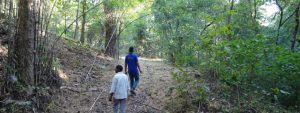
A 26-year-old farmer was critically injured in a suspected leopard attack in the Kuldiha Wildlife Sanctuary in the Balasore district recently.
- Kuldiha Wildlife Sanctuary is situated in the Balasore District of Odisha.
- It is spread across the Chota Nagpur Plateau region.
- It is connected to Simlipal National Park through hills called Sukhupada and Nato.
- It is characterized by its complex topography, which includes rolling hills, valleys, and plateaus that contribute to its microclimates.
- The local tribal communities, including the Santhal and Munda, maintain a deep-rooted spiritual connection to Kuldiha.
- The sanctuary is also home to unique geological formations, such as the ancient rock shelters adorned with petroglyphs that date back thousands of years.
- It contains mixed deciduous forest.
- It is dominated by species such as Sal (Shorea robusta) and various bamboo species.
- The dense forests of the region are home to wild animals like the elephants, leopards, deer, bison and Malabar giant squirrels.
- The forest also houses a variety of birds. Some of them are like white-rumped shama, parrot, hornbills, and peafowl.
United Nations Commission on International Trade Law:
India’s External Affairs Minister addressed the inaugural session of international conference of 60th anniversary commemoration of the United Nations Commission on International Trade Law (UNCITRAL).
- United Nations Commission on International Trade Law is a subsidiary body of the UN General Assembly established in 1966.
- It is the core legal body of the U.N,’s system in the field of international trade law.
- Mandate is to further the progressive harmonization and unification of the law of international trade.
- The organization is responsible for helping to facilitate international trade and investment.
- It is formulating modern, fair, and harmonized rules on commercial transactions.
- The Commission is composed of 70 member States elected by the General Assembly.
- There are five regional groups represented within the Commission: African States; Asian States; Eastern European States; Latin American and Caribbean States; Western European and Other States.
- The General Assembly elects members for terms of six years; every three years the terms of half of the members expire.
- India is a founding member of this organization.
- Headquarters: Vienna, Austria
Ceratocaudia antigua : a new species of long-necked dinosaur
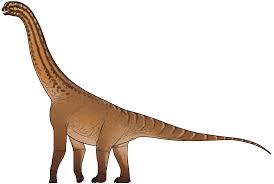
Scientists recently discovered a new species of long-necked dinosaur named Ceratocaudia antiqua in western India that possessed a unique, horn-like tail crest.
- Ceratocaudia antigua is a new species of long-necked dinosaur.
- It was discovered following excavations in the Kaladongar Formation of the Kachchh Basin in the Kutch district of Gujarat.
- Living roughly 170 to 180 million years ago during the Jurassic period, this diminutive giant reaches only about seven meters in length, significantly smaller than its more famous 20-meter-long relatives like Brachiosaurus.
- Ceratocaudia is distinguished by several physical traits that set it apart from its closest relatives.
- The most striking feature is a curved, horn-like crest atop its front tailbones.
- It also possessed a unique notch on its neck vertebrae and specific shapes in its lower leg bones, the tibia and fibula, which have not been seen in other sauropods.
- Furthermore, its tail vertebrae show a rare transition from flat-ended joints to “ball-and-socket” joints near the tip, a feature usually reserved for much later dinosaur species.
- The name Ceratocaudia antiqua reflects these physical and historical traits.
- The genus name is derived from the Greek words ‘cerato’ (meaning horn) and ‘caud’ (meaning tail), referring to the unique spike on its vertebrae.
- The species name, ‘antiqua’, is Latin for “old” or “ancient,” highlighting that this is one of the earliest known macronarian dinosaurs, a group of long-necked giants characterised by their large, boxy skulls and wide nostrils.
- Ceratocaudia now stands as the earliest diagnosable member of its lineage in India and one of the oldest in the world .