
Today’s Current Affairs: 28th April 2026 for UPSC IAS exams, State PSC exams, SSC CGL, State SSC, RRB, Railways, Banking Exam & IBPS, etc
Table of Contents
Siang Upper Multipurpose Project (SUMP):
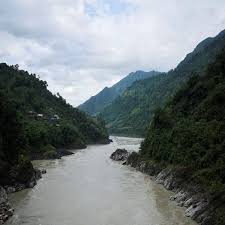
More than 330 students from Boleng in Arunachal Pradesh recently took part in a three-day school exhibition centred on river conservation and sustainable infrastructure, with a strong focus on the proposed Siang Upper Multipurpose Project (SUMP).
- Siang Upper Multipurpose Project (SUMP) is a proposed 11,000 MW hydropower project on the Siang River near the Geku Village in the Upper Siang district of Arunachal Pradesh.
- The Siang River is the upper course of the Brahmaputra
- It is envisioned as one of India’s largest hydropower reservoirs and as a strategic countermeasure to China’s proposed 60,000 MW super dam on the Yarlung Tsangpo (Brahmaputra) in Tibet’s Medog County.
- This project aims to not only harness hydropower but also to control flooding and erosion downstream in the upper Brahmaputra basin.
- The area is primarily inhabited by the Adi Tribe, an indigenous community with a strong connection to the Siang River.
- Jointly undertaken by the National Hydroelectric Power Corporation (NHPC) and the North Eastern Electric Power Corporation (NEEPCO).
Lake Issyk-Kul:
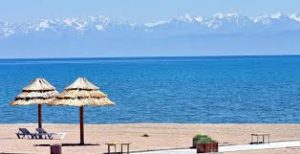
Underwater archaeologists recently unveiled a hidden city in Lake Issyk-Kul, revealing a lost civilization from seven hundred years ago.
- Lake Issyk-Kul is located in northeastern Kyrgyzstan.
- Surrounding the lake are the snowcapped Tian Shan mountains (the Heaven’s mountains).
- It has an endorheic basin, meaning it has no outflow to other bodies of water like rivers or oceans.
- The water in the lake is blue and brackish.
- It is after Lake Titicaca in South America, the world’s second-largest high mountain lake.
- It is the second-largest saline lake in the world after the Caspian Sea. It is also the largest lake in Kyrgyzstan.
- It ranks seventh in the list of the deepest lakes in the world.
- Owing to its depth, low salinity, and warm springs, it does not freeze, even in winter. Issyk-Kul translates as “hot lake”.
- From the lakeshore, all major landscape types, from subtropical to tundra, occur in close succession.
- In 1976, it was included on the Ramsar list as a wetland of international importance.
Eulophia picta:
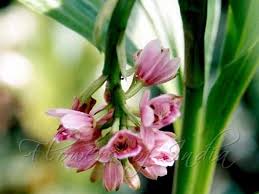
Scientists recently identified a rare orchid species, Eulophia picta, in central Andhra Pradesh, marking the first recorded presence of this species in the region.
- Eulophia picta is a medium-to-small, hot-growing terrestrial orchid.
- It is commonly known as Nodding Swamp Orchid or pink nodding orchid.
- It is found from India to Southeast Asia to Australia in moist grasslands, sandy areas behind beaches, and rainforests.
- It is also found in semi-deciduous and deciduous dry lowland forests at elevations up to 1000 m, with underground, spherical pseudobulbs.
- A distinctive leafy species with three to five broad, smooth, ribbed leaves and pale pink, rarely white flowers.
- The flowers do not open but remain as a tube.
- The distinctive inflorescence is hooked like a shepherd’s crook when plants are flowering but straightens as the prominently ribbed seed capsules develop.
- It thrives in full sun to partial shade, making it versatile for various garden settings.
Vitamin E : Study
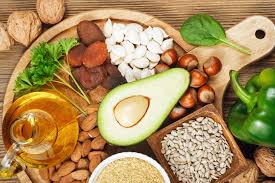
Researchers recently found that a daily 300 mg dose of vitamin E improves liver tissue in adults with metabolic dysfunction-associated steatohepatitis, a serious form of fatty liver disease where fat buildup triggers inflammation and damage in the liver.
- It is a fat-soluble vitamin with several forms, but alpha-tocopherol is the only one used by the human body.
- The body stores vitamin E in fatty tissue and the liver.
- The main role of vitamin E is to act as an antioxidant, scavenging loose electrons—so-called “free radicals”—that can damage cells.
- Vitamin E helps keep your immune system healthy, promotes good eye health, and supports healthy skin.
- It helps form red blood cells and widen blood vessels to keep blood from clotting inside
- It helps the body use vitamin K.
- Food Sources:
- Foods rich in vitamin E include vegetable oils such as canola and olive oils, nuts, and seeds.
- Meats, dairy, leafy greens, and fortified cereals also have vitamin E.
- People who have digestive disorders or do not absorb fat properly (e.g., pancreatitis, cystic fibrosis, celiac disease) can develop a vitamin E deficiency.
- The following are common signs of a deficiency:
- Retinopathy (damage to the retina of the eyes that can impair vision)
- Peripheral neuropathy (damage to the peripheral nerves, usually in the hands or feet, causing weakness or pain)
- Ataxia (loss of control of body movements)
- Decreased immune function
Dopamine : New Study
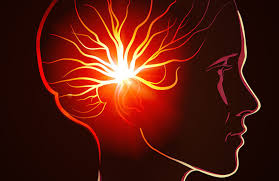
Researchers recently showed for the first time that dopamine dysfunction in the entorhinal cortex, a critical memory-related brain region, contributes directly to impaired memory formation.
- Dopamine is a hormone and a type of neurotransmitter, or chemical messenger, made in your brain.
- Your nervous system uses it to send messages between nerve cells. These messages also travel between your brain and the rest of your body.
- This unique neurotransmitter affects your body, brain, and behavior.
- Dopamine is the chemical that mediates pleasure in the brain.
- It is released when your brain is expecting a reward.
- When you come to associate a certain activity with pleasure, mere anticipation may be enough to raise dopamine levels.
- It’s a big part of our unique human ability to think and plan. It helps us focus, work towards goals, and find things interesting.
- Dopamine also plays a role in these functions:
- learning and attention
- mood
- movement
- heart rate
- kidney function
- blood vessel function
- sleep
- pain processing
- lactation
- High or low dopamine levels are associated with diseases including Parkinson’s disease, restless legs syndrome, and attention deficit hyperactivity disorder (ADHD).
- Dopamine is also made in other parts of your body, where it acts as a hormone.
- Dopamine acts as a hormone to help:
- relax or tighten your blood vessels when needed
- control your salt levels and urine production
- control how much insulin you make
- slow down some parts of your digestion
- Dopamine is found in humans as well as animals, including both vertebrates and invertebrates.
Sahayog Portal:

The Delhi High Court has asked the Union government to clarify whether social media platform X Corp. should be required to participate in the Sahyog portal in cases linked to human trafficking, child trafficking and national security.
- Sahayog Portal is an online platform launched in 2024 to help remove illegal content from the internet quickly.
- It allows government agencies to send takedown notices directly to social media platforms and other online intermediaries.
- It operates under Section 79(3)(b) of the IT Act, 2000, giving it legal backing.
- It ensures that intermediaries act fast while retaining safe harbour protections.
- Nodal Ministry: Union Home Ministry
- Features of Sahayog Portal:
- Centralised Communication: Connects government agencies, state/UT nodal officers, and 65 online intermediaries in a single platform.
- Automated Takedown Notices: Sends quick, documented notices to intermediaries for prompt removal of unlawful content.
- Legal Backing: Operates under Section 79(3)(b) of the IT Act, 2000, ensuring legal enforcement and consequences for non-compliance.
- Separate from Section 69A: Focuses on intermediaries’ responsibility to disable unlawful content rather than government blocking powers.
Reconstitution of NITI Aayog:
The Government of India has reconstituted the National Institution for Transforming India (NITI Aayog), appointing Ashok Kumar Lahiri as Vice-Chairperson, succeeding Suman K. Bery, and inducting new five full-time members, of whom three have strong backgrounds in health, biotechnology, and deep tech.This overhaul marks a departure from its traditional economist-heavy composition, signaling a stronger focus on science, technology, and health sectors.The restructuring aligns with NITI Aayog’s recent push to improve the “Ease of Doing Research and Development in India.” It underscores the necessity for adaptable, innovation-driven regulatory frameworks rather than rigid academic silos.The NITI Aayog was formed via a resolution of the Union Cabinet in 2015, replacing the erstwhile Planning Commission.NITI Aayog serves as the apex public policy think tank of the Government of India, and the nodal agency tasked with catalysing economic development and fostering cooperative federalism through the involvement of State Governments in the economic policymaking process using a bottom-up approach.
Barbary Macaque:
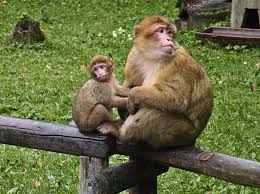
Scientists have observed that the Gibraltar’s Barbary Macaques eat soil (geophagy) to counter ill effects of tourist-derived junk food.
- Barbary macaques are one of 25 species of macaque found around the world.
- They’re the only macaque species living outside Asia and the only non-human primate in North Africa and Europe.
- They are most commonly found in high-altitude mountains, rocky cliffs, and gorges. The ideal habitat of this species is cedar forest.
- They are mainly found in Africa, Asia and Europe.
- The natural range of these primates covers the Atlas Mountains of Algeria and Morocco in North Africa.
- The Barbary monkeys have also been introduced from Morocco to Gibraltar, where these animals currently occur in a small population.
- Conservation Status:
- IUCN Red List: Endangered
Blackbuck : Increase In Number
Chhattisgarh’s Barnawapara Wildlife Sanctuary has reported a steady increase in its blackbuck population following a reintroduction programme initiated in 2018.Blackbuck is medium-sized antelope native to India and Nepal.The blackbuck mostly lives in open grasslands, dry scrub areas, and thinly forested areas.It is widespread in the states of Rajasthan, Gujarat, Madhya Pradesh, Tamil Nadu, Odisha, and other areas throughout peninsular India.Blackbuck is known for its beautiful spiraling horns.Males are characterised by dark coats and spiral horns, while females are generally lighter in colour and often lack horns.It has been declared as the state animal by the governments of Punjab, Haryana, and Andhra Pradesh.Conservation Status: It is classified as ‘Least Concerned’ under the IUCN Red List.One of the most serious threats to this species’ population is the destruction of habitat.



