
Today’s Current Affairs: 28th Oct 2026 for UPSC IAS exams, State PSC exams, SSC CGL, State SSC, RRB, Railways, Banking Exam & IBPS, etc
Table of Contents
What are SGLT2 Inhibitors?
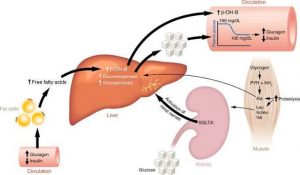
New research uncovers the potential benefits and risks of sodium-glucose cotransporter 2 (SGLT2) inhibitors for adults aged 80 years or older with chronic kidney disease (CKD).
- SGLT2 (Sodium-Glucose Cotransporter-2) inhibitors are a class of medications primarily used to treat Type 2 diabetes (T2D).
- T2D, the most common type of diabetes, is a disease that occurs when the blood glucose, also called blood sugar, is too high.
- SGLT2 Inhibitors manage blood sugar by helping kidneys remove extra glucose.
- SGLT2 is a protein in the kidneys that reabsorbs glucose.
- Typically, when glucose in the blood flows through the kidneys, some glucose goes back into the bloodstream.
- SGLT2 inhibitors block that process, so the kidneys don’t reabsorb glucose.
- The use of SGLT2 inhibitors is as follows:
- They also help improve kidney and heart health for people with chronic kidney disease (CKD) or heart failure.
- They can slow the progression of kidney disease and reduce the risk of needing dialysis.
- SGLT2 inhibitors also lower the risk of heart failure flare-ups.
- Common SGLT2 inhibitors:
- Dapagliflozin
- Empagliflozin
- Canagliflozin
- Ertugliflozin
- Some of the side effects include:
- Higher risk of developing genital and urinary tract infections
- Urinating more frequently
- Flu like symptoms
- Nausea
- Joint pain.
Greater Flamingo:
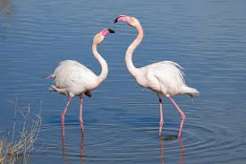
Greater flamingos, usually found in coastal wetlands, have been recently spotted at Veeranam Lake in Cuddalore district, Tamil Nadu, in a rare occurrence that researchers say could be linked to altered rainfall patterns.
- Greater Flamingo is the most widespread and largest species of the flamingo family.
- Scientific Name: Phoenicopterus roseus
- The Greater flamingo inhabits Africa, the Middle East, southern Europe, and the Indian subcontinent.
- They occur in relatively shallow water bodies, such as saline lagoons, salt pans, large alkaline or saline lakes, and estuaries.
- Breeding takes place on sandbanks, mudflats, sandy or rocky islands, or open beaches.
- Features:
- It is a large bird with an elegant body, a long and slender neck, and extremely long legs.
- Its plumage is predominantly pale pink, with more intense shades on the wings and black wingtips.
- The beak is thick, downward-curved, and pink with a black tip.
- The legs are long, thin, and bright pink, perfectly adapted for moving through shallow waters.
- Juveniles have a gray-brown coloration, with some pink on their underparts, tail and wings, with the legs and beak being mainly brown.
- They are a highly social species, nesting in large, dense colonies.
- They feed by filtering water with their specialized beaks, consuming crustaceans, algae, and small invertebrates.
- Conservation Status:
- IUCN Red List: Least Concern
Veeranam Lake:
- Veeranam Lake (Veeranarayanan Lake) is a man-made lake located Tamil Nadu.
- It is among the oldest and largest man-made lakes in Tamil Nadu.
- Built during the 10th century CE by Rajaditya Chola, the son of Parantaka Chola I, the lake stands as a remarkable example of the Chola Empire’s engineering excellence and irrigation planning.
- It was constructed to strengthen irrigation and support the northern territories of the Chola kingdom.
- The lake is fed by Vadavar river and Sengal stream.
- It continues to serve as a lifeline for agriculture in the region and is also an important source of drinking water for Chennai through the New Veeranam Water Supply Scheme.
- Veeranam Lake is closely associated with Kalki Krishnamurthy’s celebrated historical novel Ponniyin Selvan.
Defence Acquisition Council (DAC):
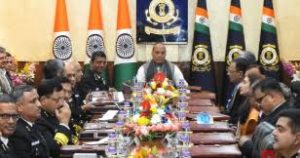
The Defence Acquisition Council (DAC) recently accorded Acceptance of Necessity (AoN) for capital acquisition proposals worth approximately ₹2.12 lakh crore for the three services, with about 82% of the procurements to be sourced from the domestic industry.
- Defence Acquisition Council (DAC) is the highest decision-making body of India’s Ministry of Defence on procurement.
- Main Objective is to ensure expeditious procurement of the approved requirements of the armed forces in terms of capabilities sought and time frame prescribed by optimally utilizing the allocated budgetary resources.
- It was formed after the Group of Minister’s recommendations on ‘Reforming the National Security System’, in 2001, post-Kargil War (1999).
- Composition:
- The Defence Minister is the chairman of DAC.
- Its members include senior civil and military leaders of the Ministry of Defence, among them the Chief of Defence Staff (CDS) and chiefs of the Army, Navy, and Air Force; the Defence Secretary; and other senior officials responsible for finance, production, and acquisition.
- Functions:
- Give in-principle approval to long-term perspective planning, as applicable under the current framework.
- Categorisation of the acquisition proposals relating to ‘Buy’, ‘Buy & Make’, and ‘Make’.
- Look into issues relating to single vendor clearance.
- Take decisions regarding the Transfer of Technology under the ‘Buy & Make’ category of acquisition proposals.
- Field trial evaluation.
- The categorisation decisions taken by the DAC are especially significant, because they influence whether contracts flow to Indian designers and manufacturers or to foreign suppliers.
- Through its approvals, the DAC effectively sets the direction of India’s military modernisation.
Phuket Island:
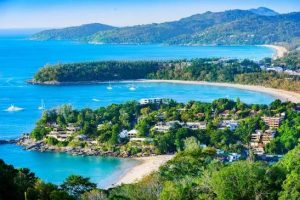
Flash floods recently inundated several areas of the island of Phuket in Thailand, one of the country’s major tourist destinations.
- Phuket Island is Thailand’s largest island and sits on the Andaman Sea, a marginal sea of the northeastern Indian Ocean.
- Located in southern Thailand, it lies off the country’s western coast.
- It is known as the “Pearl of the Andaman Sea”.
- It was settled as early as the 1st century BCE.
- Located on trading routes between India and China, Phuket was subjected to foreign influences long before many other parts of Thailand.
- Phuket first became part of a Thai state during the thirteenth century when Thai armies from Sukhothai wrestled control of the island from the Sirivijaya Empire based in Sumatra.
- Phuket is first mentioned as a major source of tin in the sixteenth century when the island became an important source of revenue for the Thai kingdom at Ayutthaya, as well as an important trading post.
- It was also during this period that the first Europeans arrived on Phuket.
- Due to Phuket’s abundant supply of tin and its importance as a trading port, the island’s economy continued to prosper.
- The British secured a tin mining concession and nearly claimed Phuket as part of the British Empire.
- The residents of Phuket comprise Thais who have migrated from the mainland, ethnic Chinese, Malays, and Chao Leh or ‘sea-gypsies’ who are the original inhabitants of Phuket.
- The island features a hilly and mountainous landscape, with forests and agricultural plantations covering parts of its interior.
- It is reached by bridge (Sarasin Bridge) from the mainland to the north across a narrow strait.
- Phuket city, located in the southeastern portion of the island, is a major port and commercial centre.
- The island has also become a major seaside resort.
What is Spinal Muscular Atrophy (SMA)?
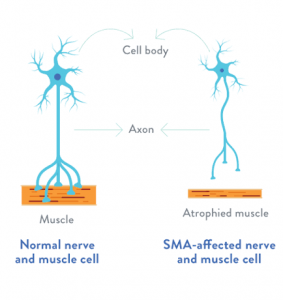
An initiative launched by the Keralam government to make the treatment for Spinal Muscular Atrophy (SMA) accessible to more patients is now courting controversy.
- Spinal Muscular Atrophy (SMA) is a group of inherited neuromuscular disorders cause certain muscles to become weak and waste away.
- It is a progressive disorder that can cause life-threatening
- In SMA, the nerves that control muscle strength and movement break down.
- These nerves (called motor neurons) are in the spinal cord and lower part of the brain.
- They can’t send signals from the brain to the muscles to make them move.
- Because the muscles don’t move, they get smaller (or atrophy).
- The weakness in SMA tends to be more severe in the muscles that are close to the center of the body (proximal muscles) than in the muscles farther away from the body’s center (distal muscles).
- Muscle weakness tends to worsen with time.
- Motor neurons need a protein called SMN (survival motor neuron) to work.
- Most kinds of SMA are caused by a problem with a gene that makes this protein, called the SMN1 gene.
- When this gene mutates (changes in some way), it can’t make enough protein for the motor neurons to work properly.
- The motor neurons break down and can’t send signals to the muscles.
- Types of SMA:
- It is classified as type 1, 2, 3, or 4 depending on age of onset.
- SMA type 1 (infantile-onset SMA or Werdnig-Hoffman disease): It is the most severe It is also the most common. Babies with this type usually show signs of the disease before 6 months of age.
- SMA type 2 (intermediate SMA): It is a moderate to severe type of SMA. It is usually first noticed between 6 and 18 months of age.
- SMA type 3 (juvenile SMA, Kugelberg Welander syndrome): It is the mildest type that affects children. The signs of the disease usually show up after age 18 months.
- SMA type 4 (adult SMA): It is rare and often mild. It usually causes symptoms after 21 years of age.
- The term “5q SMA” is often used to refer to all 4 common types of SMA.
- Healthcare providers classify them based on the age of onset, as well as the severity and life expectancy.
- There isn’t a cure for SMA.
- Treatment for SMA mainly seeks to manage symptoms and prevent complications.
India’s Immersive Technology:
According to figures cited in a government backgrounder, India’s immersive technology market generated revenue of about $1.26 billion in 2023 and is projected to reach approximately $7.82 billion by 2030.
- Immersive technologies are an emerging suite of technologies that create interactive, engaging and realistic digital experiences.
- These can combine the physical and digital worlds.
- They enable users to interact with digital content in ways that feel more natural and experiential.
- Users can interact with digital objects and respond to simulated situations.
- Unlike conventional digital media, these technologies can engage multiple senses and create a stronger sense of presence.
- The three most common forms of immersive technology are Virtual Reality (VR), Augmented Reality (AR), and Mixed Reality (MR). Collectively, these technologies are often referred to as Extended Reality (XR).
- Extended Reality (XR) refers to technologies that combine real and digital environments through computer systems and wearable devices.
- It creates different levels of interaction between people and digital content. XR includes Virtual Reality (VR), Augmented Reality (AR) and Mixed Reality (MR).
- Virtual Reality (VR) creates a completely digital environment that surrounds the user.
- It mainly engages sight and sound to create a strong sense of presence.
- Users can explore and interact with this simulated environment using specialised devices.
- Augmented Reality (AR) adds digital information to the user’s existing physical surroundings. It can engage sight and sound, while keeping the real-world environment visible.
- For example, AR can display directions, information or digital objects over the physical world.
- Mixed Reality (MR) combines the physical and digital worlds in an interactive environment.
- It can engage sight and sound, while allowing digital objects to interact with physical surroundings. Users can see and interact with digital objects as if they were part of the real environment.
Hydroseeding:
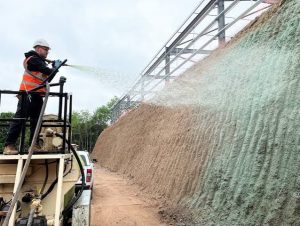
Tata Steel has introduced hydroseeding technology at its West Bokaro Division in Jharkhand.
- Hydroseeding is a modern technique for sowing seeds by spraying a slurry mixture of seeds, water, fertilizers, mulch, and soil stabilizers onto the soil surface using specialized equipment.
- It aims to stabilise dump slopes, prevent soil erosion and accelerate green restoration through modern technology.
- Process of Hydroseeding:
- Preparing Slurry: The process involves preparing a slurry of seeds, mulch, fertiliser and water. This mixture is loaded into a hydroseeder.
- The slurry is then sprayed onto the prepared soil surface using a hose or cannon.
- Equipment and Technology: It is carried out using purpose-built hydroseeders available in a range of tank sizes and output capacities to suit different project scales.
- These machines are designed to properly mix fibre mulch, seed and additives while delivering an even, controlled spray pattern.
- The machine can spray up to 50 metres and cover dump slopes up to 80 metres.
- It is widely used for lawn development, slope stabilization, erosion control, and ecological restoration in difficult or uneven terrains.
- Advantages:
- Compared to traditional seeding methods, it is faster, cost-effective, and suitable for large areas.
- It is especially useful on mine overburden dumps and rugged terrain where conventional plantation is difficult and time-consuming.
- It controls erosion on open slopes, strengthens slopes, reduces landslide risks, promotes faster plant growth and natural greenery, retains soil moisture for germination.
Integrated Atmospheric Chemistry and Aerosol Toxicity Analysis Laboratory:
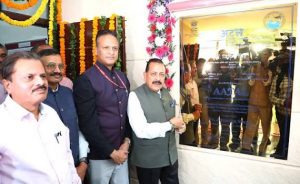
Union Minister of State for Science and Technology and Earth Sciences inaugurated the world’s first- of -its-kind ‘Air Pollution Analysis’ facility for Delhi NCR known as ‘Integrated Atmospheric Chemistry and Aerosol Toxicity Analysis Laboratory (AATAL).
- Integrated Atmospheric Chemistry and Aerosol Toxicity Analysis Laboratory is a specialised facility aimed at identifying the sources, composition and potential health impacts of air pollution in Delhi-NCR.
- It is established under Mission Mausam.
- It is designed to provide real-time information on pollution sources and their relative contributions, helping authorities move beyond Air Quality Index (AQI) readings to develop targeted pollution-control measures.
- Features of AATAL:
- It is equipped to analyse atmospheric gases, aerosols, fine particulate matter (PM2.5), metals, toxic elements and other pollutants.
- Its capabilities will help distinguish between pollution sources, including vehicular emissions, industrial activity, biomass and crop-residue burning, construction and road dust, and pollution transported from neighbouring regions.
- It will also examine the chemical characteristics of pollutants to improve scientific understanding of their potential toxicity and implications for public health.
- AATAL has been integrated with IITM’s AIRWISE, or Air Quality Warning and Integrated Decision Support System for Emissions, which combines air-quality observations, forecasts and source-apportionment information.
- AIRWISE provides forecasts at a spatial resolution of 400 metres for the next 72 hours, enabling authorities to assess how pollution levels and their likely sources may vary across different parts of Delhi.
- The system is intended to help identify locations likely to experience deteriorating air quality and provide advance information for preventive action.
- It would help the Commission for Air Quality Management (CAQM) and other agencies plan targeted interventions and assess their effectiveness.
Special Executive Magistrates (SEMs):

A Special Executive Magistrate (SEM) court in Delhi granted bail to Cockroach Janta Party (CJP) activists after accepting their surety bonds, turning down the Delhi Police’s plea for a three-day custody extension.
Special Executive Magistrates (SEMs):
- It is a specialized administrative office appointed by the state government (or central government in Union Territories) for a specific term, area, or situational purpose to execute preventive law-and-order and administrative functions rather than regular judicial adjudications.
- In commissionerate systems like Delhi, police officers of the rank of Assistant Commissioner of Police (ACP) and above are frequently designated as SEMs.
Constitutional and Statutory Laws Governing SEMs:
- Article 50 of the Constitution: Directs the separation of the judiciary from the executive in public services; hence, SEMs belong strictly to the executive wing and do not exercise sovereign judicial trial powers.
- Section 15, Bharatiya Nagarik Suraksha Sanhita (BNSS), 2023: The State Government to appoint Executive Magistrates or police officers not below the rank of Superintendent of Police / ACP as Special Executive Magistrates for defined terms and jurisdictions.
- Section 163 of BNSS: Empowers Executive Magistrates to issue urgent prohibitory orders in cases of nuisance or apprehended danger.
Powers and Functions of SEMs:
- Executing Peace andGood-Behaviour Bonds: Authorised under Section 126 BNSS to order individuals likely to commit a breach of peace or disturb public tranquility to show cause and furnish a peace bond (with or without sureties) for up to one year.
- Conducting Summary Preventive Inquiries: Conducts structured inquiries under Section 135 BNSS into police inputs to assess whether apprehended threats to public order are substantiated before enforcing bonds.
- Issuing Prohibitory & Dispersal Orders: Exercises emergency powers under Section 163 BNSS to prohibit unlawful assemblies, restrict processions, prevent obstruction, and avert imminent threats to human life and public safety.
- Preventive Detention on Bond Default: Can remand a person to custody under Section 135(3) or Section 141 BNSS if they fail to furnish required sureties during an inquiry or breach the conditions of a signed bond.
- No Power of Criminal Trial or Conviction: Unlike Judicial Magistrates, an SEM cannot take cognizance of criminal offenses, conduct formal trials, frame charges, or convict and sentence individuals to penal terms.
- Subject to Judicial Review: All orders and detentions sanctioned by SEMs are quasi-judicial actions amenable to revision before Sessions Courts and subject to writ jurisdiction and judicial review by the High Courts under Articles 226 and 227.
11 Crore Farmer IDs Under Digital Agriculture Mission:
The Ministry of Agriculture and Farmers’ Welfare achieved the target of creating 11 crore Farmer IDs under the Digital Agriculture Mission, five months ahead of the 31st March 2027 deadline.
- The target was completed on 23rd October 2026, with over 6 crore farmers already receiving benefits through Farmer ID-based service delivery.
- Farmer ID is A unique digital identity for farmers, created by linking farmers’ details with their digitised land records under the Farmer Registry of AgriStack, facilitating access to agricultural services and government schemes.
Digital Agriculture Mission
- Approved by the Union Cabinet on 2nd September 2024, under the Ministry of Agriculture and Farmers’ Welfare, with a total outlay of ₹2,817 crore, including a central share of ₹1,940 crore.
- Objective is toDevelop Digital Public Infrastructure (DPI) for agriculture to enable data-driven governance, efficient service delivery and farmer-centric digital solutions.
- Key Components:
- AgriStack: Includes the Farmer Registry, Geo-referenced Village Maps and Crop Sown Registry, created and maintained by States/UTs.
- Krishi Decision Support System (Krishi DSS): Integrates satellite imagery, weather, soil, reservoir and groundwater data to support crop mapping, yield estimation, drought/flood monitoring and evidence-based agricultural planning.
- Soil Profile Mapping: Supports village-level mapping of soil characteristics for sustainable land use and crop planning.
Cyclone Arnab:
The India Meteorological Department (IMD) issued a Red Alert for Andhra Pradesh and Odisha as cyclonic storm ‘Arnab’ intensified into a Very Severe Cyclonic Storm (VSCS) over the west-central Bay of Bengal.It is a mature, intense tropical cyclone classified by the IMD as a Very Severe Cyclonic Storm (VSCS)—characterized by a low-pressure core, organized deep convective spiral rainbands, and sustained maximum surface wind speeds between 64 and 89 knots (118–166 kmph).Originated as an atmospheric low-pressure system over the east-central and adjoining southeast Bay of Bengal.It intensified sequentially into a depression, deep depression, and named cyclonic storm before tracking west-northwestward into the west-central Bay of Bengal.
61st Meeting of the International Committee of Legal Metrology:
India is hosting the 61st Meeting of the International Committee of Legal Metrology (CIML) in New Delhi, marking the first time the country has hosted this apex international gathering.International Committee of Legal Metrology is the working, executive, and principal decision-making committee of the International Organization of Legal Metrology (OIML). It consists of designated high-level legal metrology officials representing each OIML Member State and is responsible for steering the technical, administrative, and strategic operations of the organisation.Established under the intergovernmental convention that created the OIML, signed in Paris on October 12, 1955 (entered into force in May 1958).Operational secretariat functions are managed by the International Bureau of Legal Metrology (BIML) based in Paris, France.