
Today’s Current Affairs: 29th April 2026 for UPSC IAS exams, State PSC exams, SSC CGL, State SSC, RRB, Railways, Banking Exam & IBPS, etc
Table of Contents
Nilgiri Tahr:
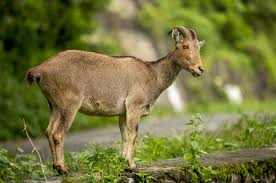
The Tamil Nadu Forest Department has commenced the third synchronised survey of the Nilgiri Tahr
- The Nilgiri Tahr is a mountain ungulate endemic to the southern part of the Western Ghats.
- It is also known by the name Nilgiri Ibex or simply Ibex. Locally the animal is called ‘Varayaadu’.
- It is the only mountain ungulate in southern India.
- It inhabits the open montane grassland habitat of the southwestern ghats montane rain forests ecoregion.
- It is found in the Western Ghats and in states of Kerala and Tamil Nadu.
- The Eravikulam National Park (Kerala) has the highest density and largest surviving population of Nilgiri tahr.
- Conservation Status:
- IUCN: Endangered
- Wildlife (Protection) Act of India, 1972: Schedule I.
- Habitat loss due to rampant deforestation, competition with domestic livestock, hydroelectric projects in Nilgiri tahr habitat, and monoculture plantations.
Cyborg Botany:

Scientists across many institutions are exploring the cyborg botany field which transforms plants into living circuit boards.
- Cyborg Botany is a hybrid system that integrates living plants with electronic components.
- It is an intersection of biology, materials science, and engineering.
- The word ‘cyborg’ itself comes from ‘cybernetic organism’, a concept long associated with science fiction.
- Its goal is to use the biological processes of living plants and merge them with artificial electronic functionality.
- These can be directly embedded into plant cell walls, where they can function as biosensors, picking up biochemical changes as they happen.
- Certain conductive polymers such as PEDOT (a biodegradable, electrically conductive material) can act as living wires within plant tissue, carrying signals from the plant’s cells to an external device.
- Plants face two broad types of stress: biotic stress, such as pest infestations and disease, and abiotic stress, such as drought and extreme temperatures.
- If a sensor embedded in a crop plant could flag a moisture deficit or a disease signal days or weeks before the physical symptoms appear.
- Farmers could intervene early by applying water and nutrients or treatments only where and when they are needed.
Thrissur Pooram:

Even as the celebrations of the Thrissur Pooram festival was scaled down in view of the firework unit explosion that claimed around 15 lives, thousands thronged the ground of the Vadakkunnathan temple in Thrissur city recently to witness the festival.
Highlights:
- Elephant Processions: Over 50 richly adorned elephants carry idols amid Panchavadyam music and melam beats.
- Kudamattam: Thrilling parasol exchanges between rival groups showcase precision and flair.
- Fireworks Spectacle: Midnight display features aerial bursts and ground effects lasting hours.
- Panchapradakshinam: Deities circle the ancient Vadakkunnathan Temple in a sacred ritual.
- Ilanjithara Melam: A mesmerizing performance of traditional instruments.
Thrissur Pooram :
- It is one of the most popular temple festivals in Kerala.
- It is held at the Thekkinkadu Maidanam of Vadakkunnathan Temple in the heart of the Thrissur district, every year in the Malayalam month of Medam (April-May).
- The history of Thrissur Pooram dates back over 200 years.
- Often called the “Mother of all Poorams.” It was the brainchild of Raja Rama Varma, or famously known as Sakthan Thampuran, the Maharaja of Cochin (1790–1805).
- It unites ten temples in a spectacular display of devotion and rivalry.
- Major participants include Paramekkavu Bhagavathy Temple and Thiruvambady Krishna Temple.
Bnei Menashe: In News

The Government of India’s advisory about the security situation in Israel, amid the ongoing war in West Asia, came into focus recently when Israel airlifted around 240 individuals from Mizoram to Tel Aviv as part of Israel’s ‘Operation Wings of Dawn’.
- The Bnei Menashe, known in India as the Shinlung, is an ethnic community that hails from the northeastern states of Mizoram and Manipur.
- They are a community of about 10,000 people from Tibeto-Burman ethnic group They include members of the Chin, Kuki, and Mizo groups.
- The population claims to be descendants of the Biblical tribe of Manasseh, one of the Ten Lost Tribes of Israel, which were exiled by the Assyrian Empire in 722 BC.
- They are Christians converted into Jews and observe traditional Jewish practices and celebrate holidays such as Sukkot.
- After a centuries-long exodus through Persia, Afghanistan, Tibet, and China, the community reached India’s northeast and settled in Manipur and Mizoram.
- Historians believe this community may have arrived in India within the last 300–500 years.
- Their ancestors were exiled long before the Roman dispersion, but they continued to practice Judaism across the generations, even if not in a contemporary Orthodox way.
- Once they came into contact with Israel and global Jewry in the 1980s, they embraced modern Jewish learning and practice.
- Nearly half of the ‘Bnei Menashe’ population migrated to Israel over a period of time and became its citizens.
- Operation Wings of Dawn:
- In 2025, the Israeli government launched ‘Operation Wings of Dawn’ to facilitate the immigration of the remaining members of the Bnei Menashe community to Israel.
- The programme includes flights, conversion classes, housing, Hebrew lessons, and other benefits.
- According to the recent Israeli Government plan, approximately 1,200 community members are expected to immigrate to Israel by the end of 2026.
- A second stage, slated for completion by 2030, will bring an additional 4,600 people, effectively completing the arrival of the entire community.
Leaf Spot Diseases:
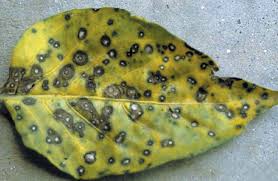
With leaf spot disease in arecanut plantations remaining a major concern for growers, the three-year field demonstrations launched by two premier government institutes in Karnataka to guide farmers on how to manage the disease by adopting a package of practices will complete a year soon.
- Leaf spot is the name given to a group of plant diseases caused by fungi, bacteria, or other microorganisms.
- These pathogens exploit the leaf’s surface and, once established, can quickly proliferate, producing visible spots or lesions.
- The spots on the leaves can be small or large. Leaf spot also interferes with the plant’s photosynthesis.
- If left untreated, leaf spot can eventually severely damage the plant’s foliage.
- Heavily infected leaves turn yellow and brown, shrivel, and drop prematurely.
- Almost every region around the world is susceptible to some form of leaf spot disease.
- The prevalence and severity depend on local climate conditions, with humid and wet environments particularly conducive to the spread and growth of these pathogens.
- They are common on vegetables, bedding plants, fruit trees, ornamental trees and shrubs.
- The two main types of leaf spot are either fungal or bacterial, with 85% of plant diseases caused by fungi.
- While not caused by a pathogen, certain environmental conditions can cause symptoms that resemble leaf spots.
- Factors such as water stress, sun scald, chemical burn from pesticides or herbicides, or nutrient imbalances can lead to spot-like lesions on leaves.
- Leaf spot diseases present a serious threat to global agriculture, impacting food production, economic stability, and environmental health.
Controlling and preventing leaf spot diseases require a combination of cultural, biological, and chemical methods.
INS Kalpeni:
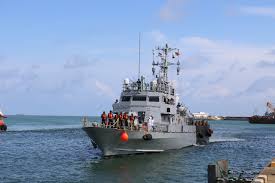
An Indian Navy fast attack craft, INS Kalpeni, recently arrived at Gan in the Addu Atoll, marking a significant step in the ongoing maritime engagement between India and the Maldives.
- INS Kalpeni is a fast attack craft of the Indian Navy.
- It belongs to a series of 10 Fleet Car Nicobar class Waterjet Fast Attack Craft (FAC) built by the Garden Reach Shipbuilders and Engineers (GRSE), Kolkata for the Indian Navy.
- It was commissioned into the Indian Navy on October 14, 2010.
- The ship is named after Kalpeni Island in the Lakshadweep group of islands.
- The ship is based at Kochi under the Southern Naval Command with the primary role of Coastal Surveillance and Defence.
- It specialises in anti-smuggling, Vessel Boarding Search & Seizure as well as Search & Rescue operations.
- The main armament of the ship is 30 mm CRN 91 Gun with an Optronic Pedestal Sight as its Director.
- In addition the 49-metre-longship has been fitted with 11 Machine guns of various types and shoulder launched IGLA Surface to Air Missiles to neutralise aerial threats.
Pushkarmema curajae:
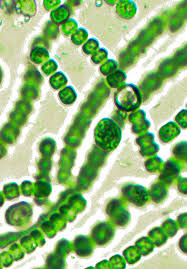
Researchers from the Central University of Rajasthan recently identified a new species of cyanobacteria named Pushkarmema curajae from Pushkar Lake in Ajmer.
- It is a new species of cyanobacteria.
- It was identified from Pushkar Lake in Ajmer, Rajasthan.
- The genus name Pushkar and species name curajae are dedicated to Pushkar Lake and Central University of Rajasthan.
curajae could potentially be used to develop drugs, biofertilizers, and even nutrient-rich supplements that improve immunity and overall health. - Cyanobacteria are photosynthetic microscopic organisms found naturally in all types of water.
- They were originally called blue-green algae (though they are not true algae) because dense growths often turn the water green, blue-green, or brownish-green.
- They are usually unicellular, though they often grow in colonies large enough to see.
- They are prokaryotic organisms (lack a true nucleus and membrane-bound organelles).
- While often a green or blue-green colour, they can also be white, brown, blue, yellow-brown, or red.
- They live in fresh, brackish (combined salt and fresh water), and marine water.
- They photosynthesise like plants and have similar requirements for sunlight, nutrients, and carbon dioxide to grow and produce oxygen.
- In addition to being photosynthetic, many species of cyanobacteria can also “fix” atmospheric nitrogen—that is, they can transform the gaseous nitrogen of the air into compounds that can be used by living cells.
- They have the distinction of being the oldest known fossils, more than 3.5 billion years old.
- The cyanobacteria have also been tremendously important in shaping the course of evolution and ecological change throughout earth’s history.
- The oxygen atmosphere that we depend on was generated by numerous cyanobacteria during the Archaean and Proterozoic Eras.
- High nutrient concentrations can promote a population explosion of these organisms and result in algal blooms, especially during warm weather.
- Cyanobacterial blooms lead to deterioration of water quality and production of toxins by some species.
- Exposure to algal toxins has been linked to fatalities of livestock, wildlife, and pets.
Abhilekh Patal Portal:

The Prime Minister of India urged citizens to explore the ‘Abhilekh Patal’ portal for a deeper understanding of India’s historical legacy.
- It is a full-featured web-portal to access the National Archives of India’s reference media and its digitized collections through the internet.
- It is a digital repository thoughtfully curated by the National Archives of India (NAI).
- It has a mission to provide easy access to India’s historical archives, comprising of an astounding 7 million records.
- Its purpose is to ensure the effortless accessibility of historical records, reaching across geographical borders to engage a diverse global community.
- The archival collections available through the Abhilekh Patal portal cover a wide range of historical records preserved by the National Archives of India.
- These include:
- Public records transferred from various Ministries and Departments of the Government of India
- Private papers of eminent personalities
- Archival reference media such as photographs, maps, microfilms and rare documents
- Digitised historical government files and archival collections maintained by NAI
National Archives of India:
- It was established on 11 March 1891 at Calcutta (Kolkata) as the Imperial Record Department, it is the biggest archival repository in South Asia.
- It is the repository of the non-current records of the Government of India and is holding them in trust for the use of record creators and general users.
- It has a vast corpus of records viz., public records, private papers, oriental records, cartographic records and microfilms, which constitute an invaluable source of information for scholars-administrators and users of archives.
- Head office: New Delhi
- It has one Regional Office in Bhopal and three Records Centres at Bhubaneswar, Jaipur and Puducherry.
- Nodal Ministry: Ministry of Culture, Government of India.
India-Germany Defence Ties Strengthened:

India’s Defence Minister held comprehensive bilateral talks with the German counterpart in Berlin, aimed at bolstering the India-Germany strategic defence partnership and expanding military-to-military cooperation.
- The two nations signed and exchanged the Defence Industrial Cooperation Roadmap and an Implementing Arrangement for Cooperation in UN Peacekeeping Training.
- The leaders highlighted the significance of the India-EU Security and Defence Partnership as a critical framework to enhance joint capabilities, ensure regional stability, and reinforce the broader Indo-German strategic alignment.
- Germany welcomed the institutionalization of service-level staff talks.
- Furthermore, India anticipates the German Air Force’s participation in Exercise Tarang Shakti, a major multilateral air exercise scheduled to be held in India in late 2026.
- In 2026, India and Germany are marking 75 years of diplomatic relations (established 1951) and 25 years of their Strategic Partnership (established 2000).
- India–Germany defence cooperation is anchored in the 2006 Defence Cooperation Agreement and its 2019 implementation arrangement, supported by regular high-level defence dialogues.
- Military ties have deepened through naval port calls, PASSEX exercises. Air force cooperation has expanded via Exercise Tarang Shakti, reflecting growing interoperability and strategic trust.
- Reflecting growing maritime cooperation, German Navy officers joined Exercise MILAN 2024 as observers.
UK Reaffirms Sovereignty Over Falkland Islands:

The United Kingdom reaffirmed that sovereignty over the Falkland Islands rests with it, amid reports of a possible review of the U.S. stance on the issue.
- The UK emphasised the principle of self-determination, noting that islanders have overwhelmingly expressed their desire to remain a British Overseas Territory.
- Argentina reiterated its claim over the islands (Malvinas) and called for renewed bilateral negotiations to resolve the dispute.
Falkland Islands - The Falkland Islands (also called Malvinas) are a self-governing British Overseas Territory in the South Atlantic Ocean. They lie about 300 miles east of the southern coast of South America.
- The territory consists of two main islands—East Falkland and West Falkland—and several hundred smaller islands and islets.
- The islands have been under British control since 1833 (except for the brief Argentine occupation during the 1982 Falklands War), though sovereignty is still disputed by Argentina.
Oil India Discovers Hydrocarbons in Libya:
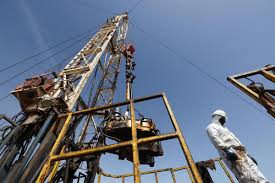
Oil India Ltd. reported a fresh oil and gas discovery in Libya’s onshore exploration block Area in the Ghadames Basin, reflecting India’s strategy of diversifying overseas energy assets.
- The latest well has been declared the fifth hydrocarbon discovery in the block by Libya’s National Oil Corporation, indicating strong resource potential.
- Exploration resumed after the lifting of force majeure in June 2023, and further appraisal activities will be carried out to assess resource potential and facilitate development.
- Libya is a North African country located along the Mediterranean Sea, bordered by Egypt, Sudan, Chad, Niger, Algeria and Tunisia.
- It holds the largest proven oil reserves in Africa, making it a significant player in global energy markets.
- The Ghadames Basin, spanning parts of western Libya, is one of North Africa’s major hydrocarbon‑rich sedimentary basins.
- The region has experienced political instability, which has impacted oil exploration activities, including periods of force majeure in oil blocks.
US Waiver Ends on Chabahar Port:
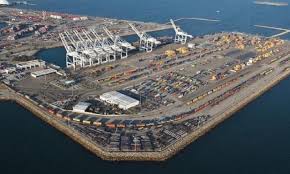
The U.S. sanctions waiver on Iran’s Chabahar Port ended on 26th April 2026, creating uncertainty over India’s long-standing connectivity project through Iran to Afghanistan and Central Asia.
- India now faces a strategic choice between reducing/exiting its involvement in the project or risking exposure to U.S. sanctions.
- To minimise sanctions risk, the government has withdrawn personnel from Chabahar, prepaid its $120 million investment commitment, and is considering transferring India’s stake in the Shahid Beheshti Terminal to an Iranian company. However, this transfer is still under discussion and has not yet been implemented.
- Chabahar is Iran’s closest oceanic port to India, located in Sistan-Baluchistan province on the Makran coast along the Gulf of Oman.
- It consists of two terminals—Shahid Kalantari and Shahid Beheshti, with India involved in developing the latter.
- The Chabahar port agreement was signed in 2003, with a trilateral pact (India–Iran–Afghanistan) in 2016 to operationalise connectivity.
- The project provides access to Afghanistan and Central Asia bypassing Pakistan.
- Provides an alternative route to Afghanistan and Central Asia bypassing Pakistan.
- Acts as a gateway to the International North-South Transport Corridor (INSTC) connecting India to Russia, Central Asia and Europe.
Economic & Connectivity Advantage: Reduces transport cost and time, improving trade efficiency while providing India direct access to Central Asian markets like Kazakhstan and Uzbekistan. - Enhances India’s regional influence as an alternative to China’s Gwadar Port, while enabling delivery of humanitarian aid to Afghanistan.
Orange Economy:

India is shifting its growth strategy to centralize creativity, culture, and content through the Orange Economy, aiming to transform its vast cultural assets into scalable global Intellectual Property (IP).
- The Orange Economy is an economic model powered by creativity, cultural expression, and intellectual property. It spans diverse fields such as design, film, animation, VFX, gaming, fashion, digital media, and immersive storytelling, focusing on monetizing cultural assets as internationally scalable and reusable resources.
- Data and Statistics:
- Digital Reach: India has over 1.028 billion internet subscribers, including more than one billion broadband users, making it a premier market for digital entertainment.
- Gaming Sector: India is the world’s second-largest gaming market with approximately 42.5 crore gamers; the sector reached ₹16,428 crore in FY23 with a 28% CAGR.
- Creator Impact: Between 2 to 2.5 million active creators in India influence $350–400 billion in consumer spending, a figure projected to hit $1 trillion by 2030.
- Economic Contribution: YouTube’s creative ecosystem alone contributed over ₹16,000 crore to India’s GDP in 2024 and supported over 930,000 full-time equivalent jobs.
Nasha Mukt Bharat Abhiyaan (NMBA) 2.0 App:
The Ministry of Social Justice and Empowerment has launched the upgraded Nasha Mukt Bharat Abhiyaan (NMBA) 2.0 App to strengthen real-time monitoring and coordination under the National Action Plan for Drug Demand Reduction (NAPDDR).
- The NMBA 2.0 App is an upgraded centralized digital platform designed to strengthen implementation, reporting, and monitoring of the Nasha Mukt Bharat Abhiyaan (NMBA) across India.
- Aim:
- To improve real-time reporting, monitoring, and institutional coordination under the National Action Plan for Drug Demand Reduction (NAPDDR).
- To expand citizen participation in awareness, treatment access, and de-addiction support through digital tools and public engagement.
Key Features:
- Citizen Access and e-Pledge:Citizens can now directly access the app for undertaking e-Pledge activities, viewing IEC material, receiving helpline support, and locating nearby de-addiction centres.
- Real-Time Monitoring ofGrant-in-Aid Institutions (GIAs): GIAs receive role-based access for real-time reporting of activities, along with transparent tracking of Anudan (grant) status for better fund utilization and accountability.
- Nearest De-Addiction Centre and Feedback System:The app helps users identify the nearest de-addiction centre for faster treatment access and includes a public feedback mechanism for continuous policy improvement.
Artemether-Lumefantrine : Designed For Newborns

The World Health Organization (WHO) has cleared the first child-friendly version of artemether-lumefantrine specifically designed for newborns and infants weighing between 2 and 5 kg.
- A child-friendly formulation of a standard malaria therapy, now prequalified by the WHO for use in newborns and very young infants. Artemether-lumefantrine is a specialized two-drug combination therapy used to treat malaria by targeting the parasites in the bloodstream at different stages of their lifecycle.
- Aim is to close a long-standing treatment gap for babies weighing 2 to 5 kg, ensuring they receive quality-assured medicine instead of adjusted doses of adult or older-child formulations.
Key Features:
- Dual-Action Therapy: The medication combines two components: artemether, which acts rapidly to reduce the number of parasites in the blood, and lumefantrine, which stays in the system longer to clear remaining parasites and prevent the illness from returning.
- Precision Dosing: Unlike previous methods that required adjusting doses meant for older children—which risked harmful mistakes or side effects—this drug is specifically formulated for the weight class of newborns.
- This status allows global agencies and public health programs to procure the medicine reliably for high-burden regions.
- Specifically designed for the most vulnerable group—infants weighing as little as 2 kg.
Right to Safe Travel on National Highways under Article 21:

The Supreme Court has declared that the safety of commuters against road accidents and the right to safe passage on highways are part of the fundamental right to life under Article 21 of the Constitution.
- Alarming Statistics: National Highways (NHs) comprise merely 2% of India’s total road network but account for nearly 30% of all road fatalities, highlighting severe infrastructural and administrative vulnerability.
- Constitutional Interpretation: The Court held that Article 21 imposes a positive obligation on the State to ensure a safe environment, extending beyond protection from unlawful death; fatalities due to avoidable hazards reflect failure of this duty.
- Immediate Prohibitions: The Court issued an immediate ban on the construction or operation of any new commercial structures, dhabas, or eateries within the right-of-way of any National Highway.
- Strict Parking Regulations: Heavy and commercial vehicles are strictly prohibited from parking or stopping on any National Highway, carriageway, or paved shoulder, except at officially designated lay-bys and wayside amenities to prevent blind-spot collisions.
- Enforcement Actions: District Magistrates have been directed to demolish or remove all unauthorized structures within 60 days.
- Furthermore, no licenses or trade approvals within highway safety zones can be granted without prior clearance from the National Highway Authority of India (NHAI) or the Public Works Department (PWD).
- Institutional Mechanism: A ‘District Highway Safety Task Force’ must be constituted in every district nationwide to monitor and enforce highway safety protocols.
BRICS Deputy Foreign Ministers and Special Envoys Meeting:
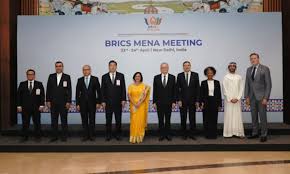
The meeting of BRICS Deputy Foreign Ministers and Special Envoys on the Middle East and North Africa (MENA) in New Delhi concluded without a joint consensus, highlighting deep divisions among members over the West Asia conflicts and the Israel–Palestine issue.
- Unable to agree on a joint statement, India (as the current BRICS Chair) issued a Chair’s Statement reflecting discussions rather than a unified position.
- This document acknowledged discussions on the Palestine issue, the Gaza situation, the role of United Nations Relief and Works Agency (UNRWA), and the unacceptability of attacks on the United Nations Interim Force in Lebanon (UNIFIL).
- Indian diplomats faced staunch opposition from almost all other members for attempting to dilute language criticizing Israel’s bombardment of Gaza and Lebanon.
- India even suggested replacing the term “Israel” with “occupying power” in certain contexts.
- India sought to remove references to “East Jerusalem” as the capital of a future Palestinian state – a change consistent with India’s bilateral statements since 2017 but a point of friction within the broader BRICS forum.
- The deeply polarized environment reflects the complexities of the newly expanded bloc, which now comprises Brazil, Russia, India, China, South Africa, Egypt, Ethiopia, Iran, Indonesia, and the UAE.



