
Today’s Current Affairs: 2nd jul 2026 for UPSC IAS exams, State PSC exams, SSC CGL, State SSC, RRB, Railways, Banking Exam & IBPS, etc
Table of Contents
Arul Mihu Navasakthi Vinayagar Temple:
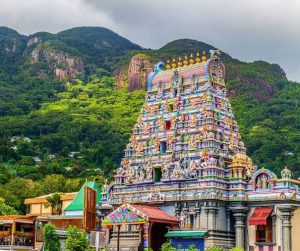
The Prime Minister recently visited the Arul Mihu Navasakthi Vinayagar Temple during his three-day State visit to Seychelles.
- Arul Mihu Navasakthi Vinayagar Temple is a Hindu temple located in Victoria, the capital of Seychelles.
- It is the only Hindu temple in Seychelles.
- The temple was built in 1992 by the Hindu community living in Seychelles, which constitutes around 2% of the population.
- The temple is dedicated to Lord Vinayagar (or Lord Ganesha), and is located in the heart of Victoria on Mahé Island.
- It looks very similar to the famous temples of Tamil Nadu and other parts of South India, with its vibrant and intricate Dravidian architecture.
- Its most striking feature is the colourful gopuram, or entrance tower, which rises nearly 100 feet into the sky.
- The tower is covered with beautifully carved statues of Hindu gods, goddesses, and mythological figures.
- Every statue is painted in bright colours, making the temple stand out against the green hills.
- At its centre is the garbha griha, or “womb chamber,” where the principal deity, Lord Vinayagar, is enshrined.
- The temple also has a mandapam, an open hall used for religious ceremonies, prayers, and celebrations.
Ayushman Sarathi:
The Government of India recently launched Ayushman Sarathi, the official Pradhan Mantri Jan Arogya Yojana (PM-JAY) WhatsApp chatbot.
- Ayushman Sarathi is a WhatsApp chatbot that will enable beneficiaries to access key services under the Ayushman Bharat Pradhan Mantri Jan Arogya Yojana (AB PM-JAY).
- The Chatbot is developed by the National Health Authority (NHA).
- The chatbot is built on secure API-based integration with existing PM-JAY systems and is more than just an information bot.
- It is a functional tool that will deliver real-time information and perform services directly within the chat window.
- It provides users with quick and convenient access to essential PM-JAY services anytime and anywhere, reducing the need for physical visits to healthcare facilities.
- This gives beneficiaries 24/7 access to Ayushman Bharat scheme services.
- It lets users check their eligibility under PM-JAY, apply for and download their Ayushman Card, complete eKYC, link Aadhaar, lock or unlock their PM-JAY card, among other services.
- As the Ayushman Bharat scheme offers Rs 5 lakh insurance to all elderly aged 70 and above, they can access their Ayushman Vaya Vandana Card, which is issued specifically to seniors, enabling them to avail of the scheme’s benefits.
- Users can also view their wallet balance and treatment history, locate nearby empanelled hospitals, register, track or withdraw grievances, request a callback, and submit feedback after hospital discharge.
Malaprabha River:
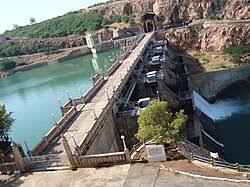
The Malaprabha River, which flows through parts of the Guledgudda taluk in Karnataka, has dried up recently, causing severe hardship for people living along its banks.
- It is an important tributary of the Krishna River and flows through Karnataka.
- The river originates in the Western Ghats, in the Sahyadri hill range, at Kanakumbi village in the Belgaum district.
- The Shri Mauli Devi temple marks the birthplace of Malaprabha at Kanakumbi; the place has a long history going back to prehistoric times, and it’s a pilgrimage center.
- From there, it flows eastward and then northeast, finally merging with the Krishna River at the confluence point known as Kudala Sangama in the Bagalkot district.
- Malaprabha’s main tributaries are Bennihalla, Hirehalla, and Tuprihalla.
- There is a dam known as Renukasagar built on this river.
- It is home to several ancient temples and heritage sites, including the renowned Aihole, Pattadakal, and Badami temple complexes.
Southern Birdwing:

The rare Southern Birdwing, one of India’s largest butterflies, has been recorded in the Kollapur Range of the Amrabad Tiger Reserve, marking its first documented sighting in Telangana.
- The Southern Birdwing, also called the ‘Sahyadri Birdwing’, is a large and striking butterfly endemic to South India, primarily in the Western Ghats.
- Scientific Name: Troides minos
- It is India’s second largest butterfly
- It is the state butterfly of Karnataka.
- Found in the Western Ghats.
- Found in diverse habitats from lowland evergreen forests near the coast to mixed deciduous forests, dry scrub, and agricultural fields.
- Conservation Status:
- IUCN Red List: Least concern.
Academic Bank of Credits:
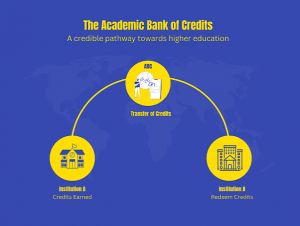
The Academic Bank of Credits (ABC) and the Automated Permanent Academic Account Registry (APAAR) are building a trusted digital ecosystem for academic records, making education more flexible, transparent, and accessible for every learner.
- It is a revolutionary digital platform by the Ministry of Education, Government of India.
- It is regulated by the University Grants Commission (UGC).
- It is built to support every learner’s journey by providing a digital platform for storing, managing, transferring, and redeeming academic credits earned by students from recognised educational institutions.
- The main objective of ABC is to create a flexible, learner-friendly education system in which learning achievements can be recognised, stored, and used throughout a person’s life.
- It supports the vision of the National Education Policy (NEP) 2020 and the National Credit Framework (NCrF).
- Students register on the ABC portal and receive a unique ABC ID or APAAR ID linked to their Aadhaar and DigiLocker account.
- Students belonging to eligible Higher Education Institutions (HEIs) can use the ABC facility.
- Academic institutions upload credit data directly to the ABC portal against each student’s account.
- Students can accumulate, transfer, and redeem credits across HEIs without losing academic progress.
- Credits are valid for a maximum of 7 years or the duration prescribed by the relevant academic discipline. Once redeemed, credits cannot be reused.
- Credit redemption and certificate issuance are handled by academic institutions via the National Academic Depository (NAD) platform.
- The NAD serves as the backbone of ABC, securely storing all academic awards and records.
- Key Features of Academic Bank of Credits:
- Academic Mobility: Students can study across multiple HEIs and transfer their credits seamlessly between programmes and institutions.
- ABC provides students with a seamless, consent-based document exchange system that streamlines verification and significantly reduces processing time.
- Multiple Entry and Exit (MEE): ABC enables the MEE framework under NEP 2020.
- SWAYAM Integration: Students may avail up to 40% of credits from the SWAYAM online platform.
- National Credit Framework (NCrF): ABC is aligned with the NCrF, covering academic, vocational, and experiential learning.
Bengal Fox:
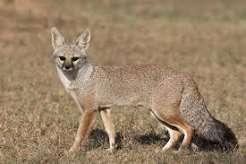
Researchers and conservationists from many districts in the state of Tamil Nadu, where the Bengal fox (Vulpes bengalensis) used to thrive, have reported no sightings of the species in the last few years.
- Bengal Fox is also known as Indian Fox or the Indian fox, is a small-sized carnivorous mammal.
- It is native to the Indian subcontinent, including India, Nepal and Pakistan and is widespread throughout its range.
- These foxes are found in the Himalayan foothills to the tip of the Indian peninsula.
- It generally prefers foothills and non-forested regions such as open grassland, thorny scrub, semi-desert and arid environments.
- It is known for its monogamous behaviour, forming lifetime bonds.
- Bengal fox populations alter their active periods from daytime to crepuscular and nocturnal habits.
- These foxes are ‘edge species’, inhabiting habitats between forests and agricultural areas.
- Its breeding season typically occurs from December to January and gestation period is 50-60 days.
- Conservation Status:
- IUCN: Least Concern
- Wildlife Protection Act, 1972: Schedule II
- Habitat loss, the fragmentation of open scrubland, direct persecution during traditional festivals, and the encroachment of feral dogs bringing disease into fox territories.
Interplanetary Coronal Mass Ejections:

Indian astrophysicists have uncovered new insights into how large solar eruptions called Interplanetary Coronal Mass Ejections (ICMEs) evolve thermally during their journey from the Sun to the Earth.
- Interplanetary Coronal Mass Ejections are massive blasts of magnetized plasma released from the Sun’s outer atmosphere, which then travel through interplanetary space.
- When those ICMEs are directed towards Earth and encounter Earth’s magnetic field, they can disturb it and cause geomagnetic storms.
- They produce colorful, dazzling auroras in Earth’s upper atmosphere.
- The level of activity of the Sun has an 11-year cycle, and more ICMEs are created during the maxima of these cycles.
- ICMEs are responsible for the most severe of geomagnetic storms when they impinge upon Earth’s magnetosphere.
- ICMEs also provide an enormous plasma laboratory to study physical processes in space.
- Impacts of Interplanetary Coronal Mass Ejections: These storms have adverse effects on satellite operations, GPS and radio communications, aviation routes, and power grids.
SARAS Shakti:
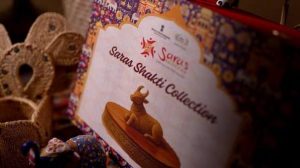
The Ministry of Rural Development launched the SARAS Shakti Collection and the SARAS Shakti Coffee Table Book during the Rashtriya Gramin Vikas Sammelan (RGVS) 2026.
- SARAS Shakti is a flagship branding and marketing initiative under the Deendayal Antyodaya Yojana–National Rural Livelihoods Mission (DAY-NRLM).
- It showcases premium products made by women Self-Help Groups (SHGs) to promote rural entrepreneurship and expand market access.
- Aim:
- To strengthen women-led rural enterprises through branding, product promotion, and wider market linkages.
- To position SHG products in premium institutional and consumer markets while supporting the vision of Lakhpati Didis and Viksit Bharat.
- Key Features:
- Curated Product Collection: Showcases premium handlooms, handicrafts, textiles, wellness products, home décor, and traditional foods made by women SHGs.
- SARAS Shakti Coffee Table Book: Documents the diversity, quality, success stories, and market potential of SHG enterprises across India.
- Market Access Platform: Enhances branding, packaging, digital marketing, and institutional market linkages for rural products.
- Women Enterprise Promotion: Supports over 10 crore women associated with SHGs under DAY-NRLM, encouraging sustainable livelihoods and entrepreneurship.
Delhi Electric Vehicle Policy 2.0:

The Delhi government notified its new Electric Vehicle Policy 2.0, with the policy likely to come into effect from 1st July 2026 and remain valid till 31st March 2030.
Key Provisions of Delhi Electric Vehicle Policy 2.0:
- The policy aims to make Delhi a leading electric mobility hub by focusing on high-polluting and high-use vehicle segments such as two-wheelers, three-wheelers, commercial goods vehicles, school buses, aggregator fleets and government transport fleets.
- It aims to achieve at least 30% electrification of Delhi’s total vehicle fleet by 31st March 2030, building on the success of the EV policy 2020, under which Delhi achieved around 14% EV penetration by 2025.
- From 1st January 2027, only electric three-wheelers and N1 category trucks will be registered in Delhi; from 1st April 2028, only electric two-wheelers will be registered.
- Already registered fossil-fuel vehicles will be allowed to complete their full lifecycle.
- School buses will have to convert at least 10% of their fleet to EVs within two years of notification of the policy, with a broader target of 30% electrification by 2030.
- The government has allocated ₹7,000 crore for policy implementation, with an overall investment plan of ₹15,000 crore, including charging infrastructure, purchase incentives and scrapping incentives.
- EV buyers will get purchase incentives, road tax exemption and registration fee waiver. Two-wheelers will receive incentives up to ₹30,000 in the first year, ₹20,000 in the second year and ₹10,000 in the third year. Three-wheelers will receive ₹50,000, ₹40,000 and ₹30,000 respectively, while N1 commercial trucks will get a subsidy up to ₹1 lakh in the first year.
- Scrapping incentives will be provided for vehicles below BS-IV emission norms, including around ₹10,000 for two-wheelers, ₹25,000 for three-wheelers, ₹1 lakh for four-wheelers, ₹50,000 for N1 trucks and ₹15,000 for Gramin Seva units completing their lifecycle.
- The policy plans to install more than 30,000 public charging points, with around ₹1,000 crore allocated for charging infrastructure.
- The Transport Department will act as the nodal agency for implementing the policy, while Delhi Transco Ltd. will develop charging infrastructure in coordination with the power department and distribution companies.
- Electric N2 trucks carrying loads between 3.5 and 12 tonnes will be exempted from “No Entry” timings for 10 years, but this benefit will apply only to the first 1,000 N2 trucks purchased within three months of policy notification.
- The policy clearly excludes hybrid vehicles from subsidies, as the government wants to focus only on pure EVs because of their zero-emission benefits.
The Centralised IT-Enabled System (CITES) Project:

The Employees’ Provident Fund Organisation (EPFO) recently carried out a planned nationwide database consolidation under its Centralised IT-Enabled System (CITES) project.
- The Centralised IT-Enabled System (CITES) Project is a sweeping technological and structural modernisation of the EPFO’s service delivery architecture.
- It replaces a legacy, decentralised, and heavily fragmented system with an automated, rule-based processing engine powered by a single, centralized national database.
- Managed and deployed by the Employees’ Provident Fund Organisation (EPFO), under the Ministry of Labour and Employment, Government of India.
- Core Technical Architect: Designed, built, and engineered by the Centre for Development of Advanced Computing (C-DAC).
- Aim:
- To decouple subscribers from specific physical regional offices, allowing any PF field office across India to process any member’s request.
- To eliminate persistent technical and procedural delays associated with manual claims, particularly for pension approvals and deceased member settlements.
RBI Scam Compensation Framework:
The Reserve Bank of India (RBI) has issued final amendments to its Limiting Customer Liability in Digital Transactions framework.
- Effective January 1, 2027, the one-year pilot expands protection against social engineering scams and introduces monetary compensation for victims of small-value digital fraud.
- The framework is a regulatory financial safety net designed to protect bank customers from digital payment frauds. It upgrades the RBI’s 2017 circular, which only protected against unauthorised hacking hacks.
- The modern mechanism introduces Fraudulent Electronic Banking Transactions (EBTs) as a legal concept, making individuals eligible for reimbursement even if they accidentally shared credentials due to deception or coercion.
- Regulator: The Reserve Bank of India (RBI).
- Aim:
- To provide economic relief to victims of modern digital scams, including digital arrests, phishing, and fraudulently stolen One-Time Passcodes (OTPs).
- To shift the legal burden of proof onto the bank, forcing financial institutions to actively prove customer negligence rather than automatically denying fraud claims.
Features and Rules of the Policy:
- The Payout Formula: Individual victims (including sole proprietors) suffering scam losses up to ₹50,000 can claim 85% of their net loss, capped at a maximum of ₹25,000.
- The Breakpoint: For losses below ₹29,412, victims get exactly 85% of the amount. For losses between ₹29,412 and ₹50,000, the payout is capped at a flat ₹25,000.
- The Cap: Scams exceeding ₹50,000 are completely excluded from this specific reimbursement track.
- Frequency: This financial remedy can be claimed only once in a customer’s lifetime. For joint accounts, only one holder may file the claim.
e-OCI Card:
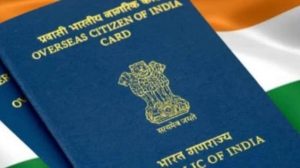
Union Home Minister and Minister of Cooperation launched the FCRA 2.0 Portal and the highly anticipated e-OCI (Electronic Overseas Citizen of India) Card in New Delhi.
- The Electronic Overseas Citizen of India (e-OCI) Card is a citizen-centric, paperless documentation framework designed for the global Indian diaspora. It converts the traditional, physical OCI stamp-and-booklet layout into an institutionalized, securely verifiable digital credential.
- Ministry: Ministry of Home Affairs (MHA), Government of India.
- Aim:
- To eliminate physical paperwork, verification delays, and administrative overhead costs for more than 50 lakh OCI holders.
- To integrate diaspora credentials directly with real-time digital immigration security lines across all Indian airports.
Key Features of the e-OCI System:
- Elimination of the Age-20 Booklet Re-issue: Scraps the complex rule that forced cardholders to get a fresh physical OCI booklet re-issued whenever they received a new passport after turning 20 years old.
- Seamless Online Passport Updates: Cardholders simply log in to update their new passport numbers and details online without needing physical submissions or in-person verification.
- Lifelong Unique Registration: Assigns an unchangeable, unique digital registration number to each cardholder to ensure secure, lifelong tracking.
- End-to-End Digital Workflow: Applicants can submit applications, upload supporting documents, clear security profiles, and download their approved digital e-OCI cards directly via ociservices.gov.in.
- Advanced OCR Analysis: Uses Optical Character Recognition (OCR) technology to automatically verify uploaded foreign passports, reducing data errors and processing times.
- Virtual Mobile Portability: Cardholders can safely store and display their digital credentials on mobile devices, removing the risk of losing or damaging physical booklets during international travel.
Key Benefits Preserved Under the Scheme:
- Registered e-OCI cardholders continue to enjoy robust statutory rights under Section 7A of the Citizenship Act, 1955:
- Lifelong Visa Status: Grants a multiple-entry, multi-purpose lifelong visa to visit India for any general purpose.
- FRRO Exemptions: Complete exemption from reporting or registering with local police authorities or Foreigners Regional Registration Officers (FRRO), regardless of the length of stay in India.
- Economic Parity: Grants equal status with Non-Resident Indians (NRIs) across economic, educational, and financial sectors—excluding the right to buy agricultural or plantation properties.
- Frictionless Employment: Permits cardholders to take up employment in India without needing to apply for a separate commercial employment visa.
The General Dhiraj Seth Takes Over As The Chief Of The Army Staff:
General Dhiraj Seth has formally assumed charge as the 31st Chief of the Army Staff (COAS) of the Indian Army, succeeding General Upendra Dwivedi, who retired after more than 40 years of distinguished service.General Dhiraj Seth, PVSM, UYSM, AVSM, is a highly decorated four-star general officer of the Indian Army. Commissioned into the elite Armoured Corps (specifically the 2nd Lancers / Gardner’s Horse) in December 1986, he brings nearly four decades of rich military experience to the top post and is the first officer from the Armoured Corps to lead the force since 1997.
The Interoperable Criminal Justice System (ICJS):
The Ministry of Home Affairs (MHA) announced that the nationwide rollout of the Interoperable Criminal Justice System (ICJS) is on track, with all investigations and trials under the BNS, BNSS, and BSS to be digitally recorded from January 1, 2027.The Interoperable Criminal Justice System (ICJS) is a unified national digital platform that integrates the main, traditionally isolated pillars of the criminal justice delivery network into a single conversational ecosystem.It replaces legacy, paper-driven workflows with a secure cloud-based data framework hosted on the government’s MeghRaj cloud infrastructure.Nodal Agency: National Crime Records Bureau (NCRB) under the Ministry of Home Affairs, Government of India.Technology Partner: Developed and architected by the National Informatics Centre (NIC).
Mandu’s Khurasani Imli Gets GI Tag:
Mandu’s(M.P) iconic Baobab fruit, locally known as Khurasani Imli, has received a Geographical Indication (GI) tag, giving it official recognition and protection.It is a light green fruit with a tangy sweet-sour taste, known for its unique nutritional, medicinal, and cultural value in the Mandu region.The Baobab tree, scientifically called Adansonia digitata, is famous for its huge water-storing trunk and inverted-tree-like branches, making it a major landmark of Mandu.The tree is believed to have been introduced to Mandu nearly six centuries ago by Afghan and Arab traders and later adapted to the local climate and terrain.Mandu has India’s largest naturally occurring population of Baobab trees, with officials estimating more than 1,000 trees in the region.Tribal communities have long used the fruit pulp, juice, seeds, and dried bark for health purposes, including treating diabetes, digestive problems, fever, and fatigue.The tag is expected to benefit tribal families through better income, organised marketing, cooperatives, value-added products, new plantations, and conservation, though dedicated government conservation programmes and scientific research are still lacking.The GI tag is expected to improve branding, marketing and value-added industries around Baobab-based products, directly benefiting tribal families involved in collection and processing.
Gitchak nakana: First Blind Aquifer-Dwelling Fish in Northeast India
An international team of taxonomists discovered a new genus and species of blind, aquifer-dwelling fish named Gitchak nakana from a dug-out well in Assam, marking the first such record in Northeast India and the Eastern Himalayan landscape.The name is derived from the Garo language, where ‘Gitchak’ means red (referring to the fish’s striking red life color), and ‘na-tok kana’ translates to ‘blind fish’ (due to the absence of eyes).It belongs to a new genus within the family Cobitidae (a family of true loaches).It is a highly specialized subterranean (groundwater-dwelling) fish, found in extremely low numbers in a single dug-out well. The exact location was withheld to protect the vulnerable population.This discovery provides the first clear evidence that the Eastern Himalayas harbor highly specialized subterranean phreatobitic (aquifer-dwelling) fauna.Prior to this discovery, such evolutionarily distinct subterranean fish were primarily known only from the lateritic lowlands of the Western Ghats in southern India.Subterranean fishes, such as the Blind Catfish (Horaglanis krishnai) of Kerala, are among the world’s most evolutionarily distinct fishes, specially adapted to life in underground aquatic habitats.



