
Today’s Current Affairs: 2nd May 2026 for UPSC IAS exams, State PSC exams, SSC CGL, State SSC, RRB, Railways, Banking Exam & IBPS, etc
Table of Contents
Mount Dukono:
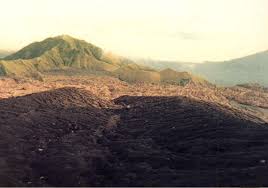
Mount Dukono in eastern Indonesia erupted recently, sending an ash column up to 1,400 meters above its summit.
- It is an active volcano located on Halmahera Island in North Maluku, Indonesia.
- It is a complex volcano presenting a broad, low profile with multiple summit peaks and overlapping craters.
- It is part of the Pacific Ring of Fire, a region with high tectonic activity.
- Since its first eruption in 1933, the volcano has exhibited significant volcanic activity, including frequent eruptions and smoke emissions.
- Eruptions have been explosive and also produced lava flows and mudflows.
- It often produces ash plumes that can reach several kilometers into the atmosphere.
- The tropical rainforest surrounding the volcano is home to various endemic flora and fauna species.
Korowai Tribe:
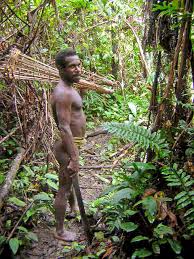
Papua’s Korowai tribe, often labelled ‘cannibals’, is re-examined as myths fade, revealing a misunderstood culture shaped by isolation, conflict, and historical misrepresentation.
- The Korowai tribe is a group of indigenous people who live in the southeastern part of Papua, Indonesia.
- The tribe has unique cultural practices and a unique way of living in treehouses high above the ground.
- The Korowai people have a deep connection to the forest, which they rely on for their survival.
- They hunt and gather food from the forest, including wild animals and plants.
- They live high up in the trees which they built on the tree trunks.
- The Korowai people were totally disconnected from the outside world until the 1970s.
- They have been sensationalised in modern media for their association with cannibalism, a practice of eating human flesh.
- While it is believed that the tribe historically practised cannibalism as part of their spiritual and social beliefs, it has largely faded over time.
Leprosy : Notifiable Disease
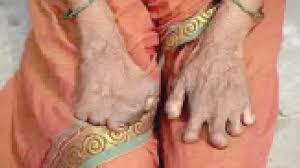
Leprosy will be declared a notifiable disease under the Delhi Epidemic Diseases Act, making it mandatory for all healthcare providers to report every new case of leprosy to the District Leprosy Officer, the government recently.
- Leprosy, also known as Hansen’s disease, is an infectious disease caused by a type of bacteria called Mycobacterium leprae.
- It primarily affects the skin, the peripheral nerves, the mucosa of the upper respiratory tract, and the eyes.
- It is a neglected tropical disease (NTD).
- People affected by the disease often face social isolation and discrimination, particularly in regions where the illness is more common.
- The disease is transmitted through droplets from the nose and mouth of an untreated case of leprosy, containing the causative agent, following prolonged, close contact.
- The disease does not spread through casual contact (like shaking hands or hugging, sharing meals or sitting next to each other).
- The patient stops transmitting the disease upon initiation of treatment.
- Leprosy is a curable disease.
- The currently recommended treatment regimen consists of three medicines (dapsone, rifampicin, and clofazimine) and is referred to as multi-drug therapy (MDT).
Girnar Wildlife Sanctuary:
Ten years after it was notified as an eco-sensitive zone (ESZ), a committee of monks recently demanded scrapping of this conservation status for the Girnar Wildlife Sanctuary that houses 54 lions so that all religious activities can be organized freely.
- It is located in the Junagadh district of Gujarat.
- It spans the rugged terrain of the Girnar hills, which are a part of the Saurashtra region.
- Girnar has a rich cultural and religious significance with Hindu and Jain temples situated on the hills.
- Predominantly dry deciduous forests with species like teak, dhak, acacia, and other drought-resistant plants.
- The sanctuary supports a mix of dense forest, open scrub, and grasslands.
- It is filled with abundant wildlife, including Asiatic lions, spotted deer, Sambar, Chousinghas, Chinkaras, leopards, Indian golden jackals, and around 300 species of birds, which include both resident and migratory.
- It serves as an extension of the Gir National Park’s lion population.
DAMPE Satellite:
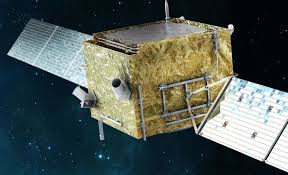
China’s DAMPE space telescope recently made an observation on the acceleration of cosmic rays, such as nuclei of hydrogen, helium, etc., and found that the intensity of the cosmic radiation decreases more rapidly upon reaching a specific high-energy threshold.
- DAMPE (Dark Matter Particle Explorer), also known as “Wukong”, is China’s first astronomical satellite.
- It is a powerful space telescope for high-energy gamma-ray, electron, and cosmic ray detection.
- The satellite was launched into a polar, sun-synchronous orbit with an altitude of 500 km in 2015.
- The main scientific objective of DAMPE is to measure electrons and photons with much higher energy resolution and energy reach than achievable with existing space experiments in order to identify possible dark matter signatures.
- It also has great potential in advancing the understanding of the origin and propagation mechanism of high-energy cosmic rays, as well as in new discoveries in high-energy gamma astronomy.
Hepatitis:
According to the WHO’s Global Hepatitis Report 2026 India remains among the countries bearing the highest burden of hepatitis-related deaths.
- It is an inflammation of the liver that is caused by a variety of infectious viruses and non-infectious agents.
- It is commonly the result of a viral infection, but there are other possible causes of hepatitis.
- These include autoimmune hepatitis and hepatitis that occurs as a secondary result of medications, drugs, toxins, and alcohol.
- Autoimmune hepatitis is a disease that occurs when your body makes antibodies against your liver tissue.
- Common Symptoms: Fatigue, flu-like symptoms, dark urine, pale stool, abdominal pain, loss of appetite, unexplained weight loss, yellow skin and eyes, which may be signs of jaundice.
- Classification of Hepatitis Virus:
- Hepatitis A: It is the result of an infection with the hepatitis A virus (HAV). This type of hepatitis is an acute, short-term disease.
- Hepatitis B: The hepatitis B virus (HBV) causes hepatitis B. This is often an ongoing, chronic condition.
- Hepatitis C: It comes from the hepatitis C virus (HCV). It is among the most common bloodborne viral infections and typically presents as a long-term condition.
- Hepatitis D: It is a rare form of hepatitis that only occurs in conjunction with hepatitis B The hepatitis D virus (HDV) causes liver inflammation like other strains, but a person cannot contract HDV without an existing hepatitis B infection.
- Hepatitis E: It is a waterborne disease that results from exposure to the hepatitis E virus (HEV). It is mainly found in areas with poor sanitation and typically results from ingesting fecal matter that contaminates the water supply.
- There are vaccines that can help protect against many hepatitis viruses.
- There are vaccines for prevention against Hepatitis A, B and D.
- However, there is no vaccine for Hepatitis C or E.
Whitley Awards:
Indian conservationists Barkha Subba, Parveen Shaikh win Whitley Awards for conservation of Himalayan salamander and endangered Indian skimmer.
- It is often called as the “Green Oscars,”
- It recognises grassroots conservation leaders in the Global South.
- It is given by the UK charity Whitley Fund for Nature (WFN).
- It provides winners with £50,000 in project funding over one year to scale up local solutions to biodiversity loss.
Himalayan salamander:
- It is a lizard-like amphibian species.
- Although it resembles a lizard, it lacks scales on its body.
- It is endemic to India (the Darjeeling region), Nepal and Bhutan,
- Salamanders return to their natal site to breed and lay eggs—a process known as philopatry, which makes them highly vulnerable to changes in habitat and wetland health.
- The wetlands where Himalayan salamanders breed are culturally revered water bodies, associated with local deities and rituals.
- Conservation Status: IUCN: Vulnerable
Indian skimmer:
- It is one of the three species that belong to the skimmer genus Rynchops in the family Laridae.
- It gets its name from the way it feeds, flying low over the water surface and ‘skimming’for fish.
- It occurs primarily on larger, sandy, lowland rivers, around lakes and adjacent marshes
- It is mainly found in India, Bangladesh, and Pakistan, with some populations extending to Nepal and Myanmar.
- In India, one of the key areas for spotting Indian Skimmers is the Chambal River.
- Conservation status: IUCN: Endangered
Jamaica:
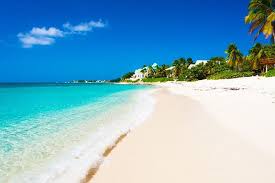
India has deployed its flagship Aarogya Maitri portable healthcare infrastructure in Jamaica, viewed as part of India’s broader outreach to CARICOM countries.
- It is a large island nation located in the west-central Caribbean in the Greater Antilles archipelago.
- It is situated to the south of Cuba; to the west of Hispaniola Islands (Haiti & the Dominican Republic) and to the northwest of Cayman Islands.
- It is surrounded by the Caribbean Sea.
- Capital City: Kingston
- The tropical climate is influenced by the sea and the northeast trade winds, which are dominant throughout the year.
- It consists of Blue Mountains (highest point), John Crow Mountains, Don Figuero Mountains, Santa Cruz, etc.
- Major Rivers: Rio Minho (the longest river of Jamaica), Black River, Rio Cobre
- Natural Resources: Jamaica’s main natural resources are bauxite, gypsum and limestone.
Aarogya Maitri:
- ‘Aarogya Maitri’ project is a humanitarian initiative that extends India’s commitment to global health and disaster relief.
- The Bharat Health Initiative for Sahyog Hita & Maitri (BHISHM), part of Project Aarogya Maitri, is an innovative emergency medical aid program.
- At its core are compact, portable “mini cubes” filled with essential medicines and equipment, designed for rapid deployment in various emergencies.
INS Mahendragiri:
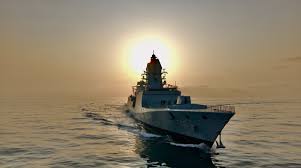
The INS Mahendragiri was delivered to the Indian Navy at Mazagon Dock Shipbuilders Limited (MDSL) Mumbai.
- It is the sixth ship of Nilgiri Class (Project 17A).
- It was designed by Warship Design Bureau (WDB).
- It was built at Mazagon Dock Shipbuilders Limited (MDSL) Mumbai.
- These ships are configured with Combined Diesel or Gas (CODOG) propulsion plants.
- Comprising a diesel engine and a gas turbine that drive a Controllable Pitch Propeller (CPP) on each shaft, and state-of-the-art Integrated Platform Management System (IPMS)
- The potent weapon and sensor suite comprises anti-surface, anti-air, and anti-submarine warfare systems.
- Project 17A frigates are versatile multi-mission platforms designed to address current and emerging challenges in the maritime domain.
- The five already delivered to the Navy are INS Nilgiri, INS Himgiri, INS Udaygiri, INS Taragiri and INS Vindhyagiri.
- P17A ships are fitted with an advanced weapon and sensor suite like MF-STAR active phased array radar, BrahMos supersonic cruise missiles, and Barak-8 long-range surface-to-air missiles, designed for superior anti-air, anti-surface and anti-submarine warfare.
Incentive Scheme for Promotion of Critical Mineral Recycling:
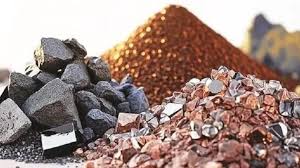
The Ministry of Mines has approved 58 companies under the Incentive Scheme for Promotion of Critical Mineral Recycling as eligible for participation.
- It is part of the National Critical Mineral Mission (NCMM), which is aimed at building the domestic capacity of and supply chain resilience in critical minerals.
- The Scheme will have a tenure of six years from Financial Year 2025-26 to Financial Year 2030-31.
- Eligible feedstock is e-waste, Lithium Ion Battery (LIB) scrap, and scrap other than e-waste and LIB scraps.
- Expected beneficiaries will be both large, established recyclers, as well as small, new recyclers (including start-ups), for whom one-third of the scheme outlay has been earmarked.
- It is applicable to investments in new units as well as expansion of capacity and modernization and diversification of existing units.
- It provides incentive for the recycling value chain, which is involved in the actual extraction of critical minerals, and not the value chain involved in only black mass production.
- The incentives include a 20% capital subsidy on plant and machinery for projects that commence production within the stipulated timeframe and an operational subsidy tied to incremental sales.
- The operational support will be provided in tranches—40% in the second year and 60% in the fifth year—on meeting specific sales thresholds.
- To ensure wider participation, the total incentive has been capped at ₹50 crore per large entity and ₹25 crore per small entity, with limits on operating subsidies of ₹10 crore and ₹5 crore, respectively.
Cauvery Water Management Authority:
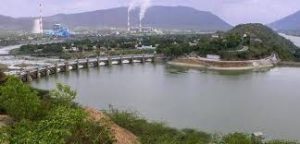
The Cauvery Water Management Authority (CWMA) has reaffirmed the 2018 Supreme Court verdict by directing Karnataka to ensure the timely release of water to Tamil Nadu for the month of May 2026.
- The Central Government, in June 2018, established two key bodies under the Cauvery Water Management Scheme 2018, i.e., the Cauvery Water Management Authority (CWMA) and the Cauvery Water Regulation Committee (CWRC).
- Notified under Section 6A of the Inter-State River Water Disputes Act, 1956, the CWMA is a statutory, quasi-judicial body. It ensures the implementation of the modified Cauvery Water Disputes Tribunal (CWDT) award as directed by the 2018 Supreme Court ruling.
- The authority is headquartered in New Delhi and operates under the Union Ministry of Jal Shakti.
- A senior eminent engineer or an IAS officer (Secretary/Additional Secretary rank) appointed by the Centre for a 5-year term.
- Members:
- Two Full-Time Members (Water Resources and Agriculture).
- Two Part-Time Members from the Central Government.
- Four Part-Time Members representing the basin states (Karnataka, Tamil Nadu, Kerala, and Puducherry).
- Secretary: An engineer from the Central Water Engineering Services.
- Key Functions: The CWMA’s primary goal is to “secure compliance and implementation” of the final water-sharing formula:
- Water Apportionment: It regulates and controls the release of water from reservoirs in the Cauvery basin (like Krishnarajasagara and Kabini in Karnataka, and Mettur in Tamil Nadu).
- In years of poor rainfall, the CWMA determines how the “distress” (water shortage) will be shared proportionately among the states.
- It collects daily data on water levels, inflows, and storage positions with the help of its subordinate body, the CWRC.
- It advises states on improving water-use efficiency through micro-irrigation and changing cropping patterns.
- The CWMA was created to replace the earlier ad-hoc Cauvery River Authority and provide a permanent, independent mechanism for water management.
- It aims to reduce frequent litigation and political conflicts between Karnataka and Tamil Nadu by providing a technical and administrative platform for monitoring and decision-making.
International Workers’ Day 2026 (May Day):

Every year, the 1st of May is observed globally as International Workers’ Day, commonly known as May Day or Labour Day. It is a day dedicated to honoring the historic struggles, sacrifices, and subsequent gains made by the labor movement and workers worldwide.
- May Day: Traces its origins to the Haymarket Affair at Haymarket Square in Chicago, where a peaceful workers’ rally demanding an eight-hour workday turned violent after a bomb was thrown, amid the harsh conditions of the Industrial Revolution, when workers were often forced to labor 10–16 hours in unsafe environments.
- In 1889, the Second International declared 1st May as International Workers’ Day to honor the Haymarket Martyrs, symbolizing the global struggle for fair working hours based on the principle of 8 hours for work, 8 hours for rest, and 8 hours for personal life.
- The International Labour Organization theme for May Day 2026 is “Ensuring a Healthy Psychosocial Working Environment” highlights rising workplace stress, burnout, and mental health issues, urging governments and employers to prioritize psychosocial risk management alongside physical well-being.
- First Celebration in India: May Day was first formally observed in India on 1st May 1923, in Madras (Chennai).
- The event was organized by Malayapuram Singaravelu Chettiar, a communist leader and the founder of the Labour Kisan Party of Hindustan.
- The 1923 celebration is historically significant as it marked the first time the symbolic Red Flag (representing labor and communist ideology) was hoisted in India.
India’s 1st Green Methanol Production Plant:
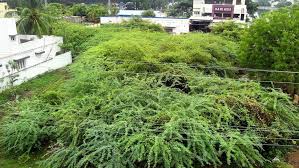
The invasive shrub Prosopis juliflora, which has long threatened biodiversity in Kutch’s Banni Grasslands, is set to be used as feedstock for India’s first green methanol production plant.
- The plant at Deendayal Port Authority, Gujarat, will have an initial capacity of 5 tonnes per day and use gasification technology to convert biomass into syngas (H₂, CO, CO₂), which is then processed into methanol.
- It is a demonstration project, with future plants expected to scale up to 100–500 tonnes per day.
- The project supports India’s push for green ports and clean shipping fuels, reduces dependence on imported fossil fuels, and aligns with the International Maritime Organisation’s goal of achieving net-zero emissions in international shipping by 2050, thereby promoting the adoption of green fuels like methanol.
- Green methanol is a low-carbon, renewable liquid fuel and chemical feedstock produced from biomass (bio-methanol) or green hydrogen.
- It acts as a sustainable, net-zero alternative to conventional fossil-based methanol, capable of reducing greenhouse gas emissions by 60–95%.
- Prosopis juliflora is a Mexican-origin invasive shrub that was introduced in India during the 1920s and later widely expanded in Gujarat in 1961 to check desertification.
- It is known by different local names such as gando baval (Gujarat), vilayati keekar (North India), and velikathan (Tamil Nadu).
- Over time, it has aggressively spread across the Banni grasslands, crowding out native grasses, reducing biodiversity, and degrading fragile ecosystems.
US Returns 657 Stolen Antiquities to India:
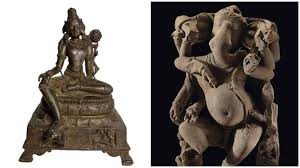
The United States has repatriated 657 antiquities valued at nearly USD 14 million to India, marking a significant victory in the global crackdown on transnational cultural property trafficking networks.
Key Recovered Antiquities
- Bronze Avalokiteshvara: A standout piece is a bronze figure of Avalokiteshvara (Bodhisattva of Infinite Compassion in Mahayana Buddhism) from Sirpur (Chhattisgarh), inscribed by the craftsman Dronaditya. He is seated on an inscribed double-lotus base.
- Red Sandstone Buddha: A standing red sandstone Buddha with the right hand raised in abhaya mudra, symbolising protection/fearlessness.
- Dancing Ganesha: Sandstone figure of Dancing Ganesha looted from a temple in Madhya Pradesh.
Procedure for Bringing Back the Antiquities:
- Pre-1947 (Colonial Period): Retrieval depends on cultural diplomacy, bilateral negotiations, and goodwill. No international legal framework existed.
- 1947–1976: Recovery relied on bilateral diplomacy and domestic laws such as the Antiquities (Export Control) Act, 1947. The 1970 UNESCO Convention was not yet ratified by India (ratified in 1977), making returns difficult due to limited evidence and international mechanisms.
- Post-1976: Governed by the Antiquities and Art Treasures Act, 1972, which came into force in 1976. The Act prohibits the export of antiquities by private persons; export is permitted only by the Central Government or authorised agencies, and only with the required permit. Therefore, unauthorised export after 1976 is legally easier to challenge.
Operation WHITE STRIKE:
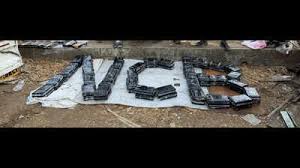
The Operation WHITE STRIKE led to the seizure of 349 kg of high-grade cocaine worth ₹1,745 crore in the Mumbai logistics corridor.
- A large-scale anti-narcotics operation conducted by the Narcotics Control Bureau (NCB) targeting an international cocaine trafficking syndicate operating through India’s logistics networks.
- Aim:
- To dismantle organized narcotics supply chains and disrupt transnational drug networks.
- To implement India’s zero-tolerance policy against drug trafficking through intelligence-driven enforcement.
Key Features:
- Two-Stage Coordinated Raids: Initial interception in Kalamboli followed by a second major seizure in Bhiwandi warehouses.
- Bottom-to-Top Intelligence Approach: Small consignment tracking led to uncovering a large-scale international syndicate.
- Advanced Concealment Detection: Cocaine hidden in imported machinery cavities with multi-layer packaging, indicating high sophistication.
Padma Doree:

The North Eastern Handicrafts and Handlooms Development Corporation (NEHHDC) officially launched ‘Padma Doree’, a cross-regional initiative merging Northeast India’s Eri silk with Madhya Pradesh’s Chanderi traditions.
- Padma Doree is a unique cross-cultural textile initiative that fuses two distinct Indian heritage crafts: the Eri (Ahimsa) silk of Northeast India and the intricate Chanderi weaving of Madhya Pradesh.
- It represents a blend of fiber and finesse, combining the warmth and durability of Eri silk with the delicate motifs and sheer texture of Chanderi.
- The North Eastern Handicrafts and Handlooms Development Corporation (NEHHDC).
- The primary goal is to promote a sustainable and integratedtextile ecosystem that links different geographical regions of India.
- It seeks to elevate indigenous knowledge systems into the contemporary luxury market while ensuring the economic empowerment of local artisans.
Advanced Stealth Frigate Mahendragiri:
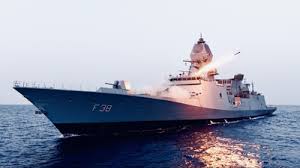
The Indian Navy received the delivery of ‘Mahendragiri’, the sixth Project 17A indigenous stealth frigate, from Mazagon Dock Shipbuilders Limited (MDL).
- Mahendragiri (Yard 12654) is the sixth ship of the Nilgiri-class (Project 17A) It is a follow-on to the Project 17 (Shivalik-class) frigates, featuring significantly improved stealth features, advanced weaponry, and high levels of automation. It is named after a mountain peak in the Eastern Ghats of Odisha.
- Built By:
- Manufacturer: Mazagon Dock Shipbuilders Limited (MDL), Mumbai.
- Designer: Warship Design Bureau (WDB), the Indian Navy’s in-house design organization.
- The primary aim of the Project 17A ships is to provide the Indian Navy with versatile, multi-mission platforms capable of countering modern threats in the Indian Ocean Region (IOR) while achieving maximum Aatmanirbharta (self-reliance) in defense manufacturing.
Bargi Dam : In News
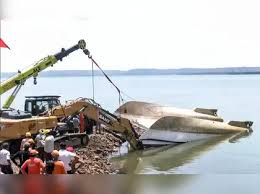
Madhya Pradesh Chief Minister ordered a high-level inquiry following a tragic cruise boat capsize at Bargi Dam that resulted in nine deaths.
- Bargi Dam is one of the most significant multipurpose river valley projects in Central India. It serves as a vital source of water for drinking, irrigation, and hydropower, while also functioning as a major eco-tourism hub in the Jabalpur district.
- Construction Period: Construction began in 1974.
- It was one of the first major dams to be completed (1988) among the planned chain of 30 large dams on its parent river.
- The dam is built across the Narmada River, which is the fifth-largest river in the Indian subcontinent and often referred to as the Life Line of Madhya Pradesh.
- The dam is part of the Narmada Valley Project, a massive undertaking by the state government to harness the river’s potential.
- Over the decades, the backwaters (reservoir) created by the dam have been developed into a scenic destination, officially promoted by the Madhya Pradesh Tourism Board through facilities like the Maikal Resort.
Canine Distemper Virus:
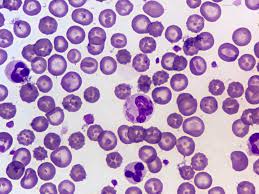
A tigress and her last surviving cub recently died at the Mukki quarantine facility in Madhya Pradesh’s Kanha Tiger Reserve following a suspected outbreak of Canine Distemper Virus (CDV).
- Canine Distemper Virus is a highly contagious and potentially fatal viral disease caused by a single-stranded RNA virus of the Paramyxoviridae family (the same family as measles and mumps).
- It is a multi-systemic disease, meaning it attacks the respiratory, gastrointestinal, and central nervous systems of a wide variety of mammals.
- First Reports: Officially reported in Spain in 1761 and described by Edward Jenner in 1809.
- Viral Discovery: Henri Carré identified the viral cause in 1905.
- The virus has historically threatened endangered species, contributing to the near-extinction of the black-footed ferret and causing significant declines in Serengeti lion populations.



