
Today’s Current Affairs: 2nd Sep 2026 for UPSC IAS exams, State PSC exams, SSC CGL, State SSC, RRB, Railways, Banking Exam & IBPS, etc
Table of Contents
AstroRad:

An Israeli company named StemRad has, along with Lockheed Martin, recently developed a vest called AstroRad for spaceflight.
- AstroRad is a wearable, radiation-shielding vest designed for space travel by the Israeli company named StemRad, with support from the Israel Space Agency and Lockheed Martin.
- It protects astronauts’ vital organs from dangerous space radiation beyond low-Earth orbit (LEO).
- It reduces Radiation Exposure Induced Death (REID) while eliminating the possibility of Acute Radiation Syndrome (ARS) due to solar particle events.
- The AstroRad uses a proprietary smart shielding design to selectively protect those organs and tissues which are most sensitive to radiation in terms of REID probability.
- This approach provides the greatest biological impact of protection with the least amount of mass.
- Tissue-weighting factors are assigned to organs and tissues in the body to reflect the variance in radiation sensitivity, with organs such as the lungs, bone marrow, colon, stomach, breasts, and ovaries being among the most sensitive.
- Selective protection of these organs, and tissue-resident stem cell concentrations within them was accomplished by designing variable shielding thickness to complement the body’s own shielding.
- The shielding in the AstroRad comprises a polymer with a high abundance of hydrogen, which is advantageous for shielding against space radiation because it minimizes the generation of secondary radiation.
- Individual solid shielding elements are organized into a scale-like architecture to allow for uninhibited, comfortable movement of the astronauts while wearing the AstroRad.
Ghepan Lake:
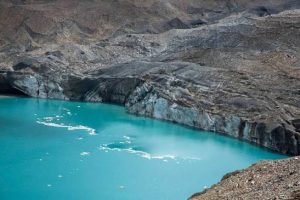
Learning from the devastation caused by the flood resulting from a glacial burst in Nepal, the Lahaul-Spiti district administration recently decided to further strengthen monitoring and precautionary measures regarding the Ghepan Glacial Lake.
- Ghepang Ghat glacial lake, known locally as Ghepan Lake, is a high-altitude glacial lake located in the Lahaul region of Himachal Pradesh.
- It is situated at an altitude of 4,070 meters.
- Named after Ghepan, the protector deity of Lahaul, the lake has deep ties to local culture and faith.
- The lake is known for its enchanting turquoise blue waters and glacial surroundings.
- A total of three hanging glaciers feed Ghepan Lake. It is unusual to see this kind of setting of glaciers feeding alpine lakes at this height, as it happens deep in the Himalayas, above 15,000 feet.
- The lake is a popular but challenging trekking destination, with the trek generally beginning from Sissu in the Lahaul Valley.
- Over the past three decades, rapid glacier melt has expanded the lake at an alarming pace, turning it into a serious threat for communities living downstream.
- A sudden collapse could release a huge volume of water, rocks, and debris, a type of disaster known as a glacial lake outburst flood.
- The widening of this lake is not an isolated event; it reflects the wider impacts of climate change in the Western Himalaya.
What is Rotenone?
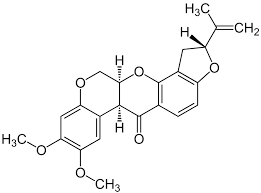
In a remote corner of Southcentral Alaska, state biologists carried out a dramatic restoration: they treated an entire lake with rotenone, a plant-derived piscicide, to wipe out an invasive population of northern pike.
- Rotenone is a naturally occurring compound derived from the roots of tropical plants in the genus Derris, Lonchocarpus, or Tephrosia.
- It is commonly used as an insecticide and a pesticide.
- It has been used for decades in fisheries management to remove unwanted fish from lakes and streams.
- When applied at carefully calculated concentrations, it blocks oxygen uptake in fish gills, killing fish while leaving most other aquatic organisms unaffected.
- The chemical breaks down relatively quickly in sunlight and warm water.
- Currently, rotenone is commercially available as either a wettable powder or liquid.
- Northern Pike is a freshwater predatory fish belonging to the pike family (Esocidae).
- Scientific Name: Esox lucius
- They are native in all of the circumpolar regions.
- They can be found through much of the northern reaches of the USA, parts of Alaska, Canada, Europe, and Asia in both rivers and lakes as well as the brackish waters of the Baltic Sea.
- Unfortunately this hearty fish species is often found out of its northern native range, where they can become a nuisance because they devour other native fish such as trout, perch, and bass.
- Their elongated slender bodies help them hide in weeds and among logs and rocks to ambush prey half their size.
- They have a long head and flattened snout. Their mouths are enormous, with a one-way road of teeth.
- These aggressive fish are striking in appearance, usually brownish green on top and sides covered with whitish bar-like spots.
- The fins are dashed with red and brown streaks and darker dots, and the belly is cream-colored and white
- Conservation Status:
- IUCN Red List: Least Concern
Attunli Hydroelectric Project:
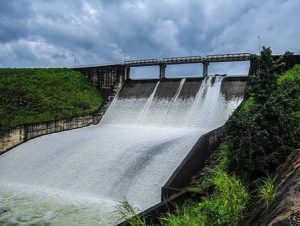
The Expert Appraisal Committee (EAC) for River Valley and Hydroelectric Projects recently recommended environmental clearance for SJVN Limited’s 680 MW Attunli Hydroelectric Project in Dibang Valley district of Arunachal Pradesh.
- Attunli Hydroelectric Project is a 680 MW run-of-river hydropower project in the Dibang Valley district of Arunachal Pradesh.
- The project envisages an 85-metre concrete gravity dam across the Tangon (Talo) river, along with a 7.955 km head race tunnel, a 93-metre surge shaft, and twin pressure shafts.
- The underground powerhouse will be equipped with four 170 MW Francis turbines, while a tailrace tunnel will discharge water back into the river.
- It is expected to generate around 2,728 million units annually.
- The project was initially conceived by Attunli Hydro Electric Power Company Limited, a joint venture of Jindal Power and the Hydro Power Development Corporation of Arunachal Pradesh, before being allotted to Satluj Jal Vidyut Nigam (SJVN).
- SJVN is a collaborative venture between the government of India and the state government of Himachal Pradesh.
Liocheles gracilipalpus : New species of scorpion
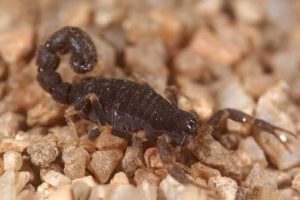
A team of researchers recently discovered and formally described a new species of scorpion named liocheles gracilipalpus from the Shivalik Hills of Reasi district in Jammu and Kashmir.
- It is a new species of scorpion belonging to the Hormuridae family.
- It was discovered from the Shivalik Hills of the Reasi district in Jammu and Kashmir at an elevation of 1,655 metres above sea level.
- The name Liocheles gracilipalpus refers directly to its distinctive anatomy, with ‘’gracilis’’ meaning ‘’slender’’ and palpus referring to the pedipalp.
- It had unusually long and slender pedipalps — the pincer-like appendages characteristic of scorpions.
- It is relatively large for its genus, measuring between 34.8 and 43.2 mm in total length.
- Its body ranges from greyish brown to dark brown, while the legs and tail are lighter in colour.
- The researchers also observed marked sexual dimorphism, with differences between males and females particularly evident in the structure of the pedipalps.
- It was found beneath flat rocks near a man-made wall at the type locality.
- The species appeared to be relatively abundant there and was recorded across an elevation range extending from 1,655 metres down to Reasi town, located at around 600 metres.
- Interestingly, the scorpion was not restricted to undisturbed natural habitats. Researchers observed individuals in human-inhabited areas, including wood-storage sheds.
- Before the latest finding, L. australasiae, L. nigripes and L. schalleri were among the species of the genus recorded from India.
Tetragonula nagalandensis: New species of stingless honey bee
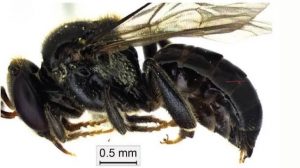
Scientists have discovered a new species of stingless honey bee and named it as Tetragonula nagalandensis.
- Tetragonula nagalandensis is a species of stingless honey bee discovered in Nagaland.
- The name nagalandensis was chosen as a tribute to the state of Nagaland, where the bee was first discovered in the Medziphema region.
- It brings the total number of known stingless bee species in the country to 19.
- Under a microscope, the researchers found distinct differences in the male’s underside and reproductive organs, specifically a C-shaped notch and a sharply curved penis valve.
- It is notably smaller, with a body length of about 5 millimetres.
- Unlike common honey bees that build hives in trees or buildings, these bees are subterranean, living under the soil.
- Its home is also unique; as it builds compact clusters of brood cells protected by several thin layers of wax and organic material to survive the damp, underground environment.
- Stingless bees are vital pollinators for local crops and wild vegetation.
Coral Bleaching:
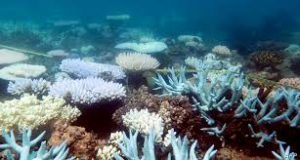
The seventh Status of Coral Reefs of the World report by the Global Coral Reef Monitoring Network (GCRMN) said that Coral bleaching events becoming more frequent and recovery periods had shortened dramatically.
- It happens when corals experience stress in their environment due to changes in temperature, pollution or high levels of ocean acidity.
- Under stressed conditions, the zooxanthellae or food-producing algae living inside coral polyps start producing reactive oxygen species, which are not beneficial to the corals.
- So, the corals expel the colour-giving zooxanthellae from their polyps, which expose their pale white exoskeleton, giving the corals a bleached appearance.
- This also ends the symbiotic relationship that helps the corals to survive and grow.
- Increased Ocean temperature caused by climate change is the leading cause of coral bleaching.
- Storm generated precipitation can rapidly dilute ocean water and runoff can carry pollutants, which can bleach near shore corals.
- When temperatures are high, high solar irradiance contributes to bleaching in shallow water corals.
- Exposure to the air during extremely low tides can cause bleaching in shallow corals.
- Corals are marine invertebrates or animals not possessing a spine.
- Each coral is called a polyp and thousands of such polyps live together to form a colony, which grows when polyps multiply to make copies of themselves.
- Corals share a symbiotic relationship with single-celled algae called zooxanthellae.
- The algae provide the coral with food and nutrients, which they make through photosynthesis, using the sun’s light.
- In turn, the corals give the algae a home and key nutrients. The zooxanthellae also give corals their bright colour.
Ramon Magsaysay Award 2026:

Singaporean lawyer and diplomat Tommy Koh, Myanmar activist Bo Kyi and Bangladeshi social worker Runa Khan have been named winners of this year’s Ramon Magsaysay Awards.
- Ramon Magsaysay Award is Asia’s premier prize and highest honor, celebrates greatness of spirit and transformative leadership in Asia.
- It was first given in 1958 and named after former Philippine president Ramon Magsaysay.
- It is presented in formal ceremonies in Manila, Philippines on August 31st.
- The Awardees, annually selected by the RMAF board of trustees, are presented with a certificate and a medallion with an embossed image of Ramon Magsaysay.
- From 1958 to 2008, the Award was given in six categories annually:
- Government Service: To recognize outstanding service in the public interest in any branch of government, including the executive, judicial, legislative, or military;
- Public Service: To recognize outstanding service for the public good by a private citizen;
- Community Leadership: To recognize leadership of a community toward helping the disadvantaged have fuller opportunities and a better life;
- Journalism, Literature, and Creative Communication Arts: To recognize effective writing, publishing, or photography or the use of radio, television, cinema, or the performing arts as a power for the public good;
- Peace and International Understanding: To recognize contributions to the advancement of friendship, tolerance, peace, and solidarity as the foundations for sustainable development within and across countries.
- Emergent Leadership: To recognize an individual, forty years of age or younger, for outstanding work on issues of social change in his or her community, but whose leadership may not yet be broadly recognized outside of this community.
- The category of Emergent Leadership was inaugurated in 2000 and is supported by a grant from the Ford Foundation.
- Starting in 2009, the Ramon Magsaysay Award is no longer being given in fixed Award categories, except for Emergent Leadership.
- The winners are presented with a certificate and a medallion with an embossed image of Ramon Magsaysay.
Sharp Tailed Sandpiper:
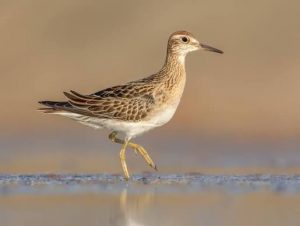
Rare sharp-tailed sandpiper was spotted in Chandu village, Gurgaon.
- The sharp-tailed sandpiper (Calidris acuminata ) is a small wader bird.
- It is a medium-sized sandpiper with distinct cap.
- Breeding adults are heavily marked with chevrons and spots on the underparts and have a rich chestnut cap and white eye-ring.
- Nonbreeding adults are duller grayish-brown with a drab brown cap.
- It is found in freshwater marshes and coastal mudflats, sometimes inland.
- It breeds in northern Siberia, in an area that extends from the Lena river delta on the eastern Arctic Ocean southeastward to the Kolyma region.
- It migrates south over East Asia to its main non-breeding grounds in Australia and New Zealand.
- It feeds on seeds, worms, molluscs, crustaceans, and insects after rainfall, and often forages in agricultural pastures and in the shallow-water edges of wetlands.
- Threats: Pollution, altered sediment flows, and rise in sea levels are major reasons for its population decline.
- Conservation Status:
- IUCN Red List: Vulnerable
RPwD Act, 2016: Bridging the Post-18 Disability Support Gap

Nearly a decade after the enactment of the Rights of Persons with Disabilities (RPwD) Act, 2016, the discourse around disability rights remains largely confined to basic early education and accessible infrastructure.
- Ground reports from Keralam expose a critical, unaddressed policy blind spot: the severe systemic vacuum in post-adulthood institutional support for Persons with Disabilities (PwDs), which transfers an unsustainable, lifelong caregiving burden onto their families, precipitating deep socio-economic distress.
- The RPwD Act, 2016 and various schemes provide legal, financial, healthcare, accessibility and rehabilitation support for PwDs, but gaps persist in adult care, social security, employment and independent living.
- India must strengthen respite care, supported living, caregiver support, early intervention, skill development and inter-departmental convergence to reduce the caregiving burden and ensure dignity, inclusion and long-term security for PwDs and their families.
- The RPwD Act, 2016 provides a framework for inclusion, education and empowerment, but families continue to face a major support gap after Class XII and beyond 18 years.
- Lack of adequate adult day-care, assisted living, vocational rehabilitation and supported housing leaves parents uncertain about their children’s future.
- Existing disability-support systems remain largely parent-dependent, with mothers often becoming full-time caregivers.
- This forces many women to leave education and employment, resulting in income loss, reduced economic independence and social isolation. Continuous caregiving, sleep deprivation and financial stress can adversely affect mental health, increasing the risk of anxiety, depression and caregiver burnout.
- Although disability pensions and other social-security measures exist, inadequate awareness, accessibility and last-mile implementation leave eligible families excluded.
- Limited awareness about early identification, developmental milestones, diagnosis and evidence-based rehabilitation makes families vulnerable to fraudulent “miracle cures”.
- Such exploitation can result in asset liquidation, high out-of-pocket expenditure and delayed professional intervention.
- Disability rehabilitation involves Health, Education and Social Justice Departments, but inadequate inter-departmental convergence creates fragmented service delivery.
- Parents often lack temporary institutional support when they need to attend to medical emergencies, employment, travel or other essential responsibilities.
- Families caring for female PwDs face additional concerns relating to personal safety, bodily autonomy and menstrual hygiene.
- The shortage of community living facilities, vocational training and supported employment restricts the ability of persons with intellectual and developmental disabilities to achieve greater self-reliance.
- The existence of laws and schemes does not automatically ensure effective rehabilitation, inadequate audits, weak beneficiary tracking and limited last-mile monitoring often prevent PwDs from receiving their entitled services.
- For instance, ramps may be installed in DTC buses to meet accessibility requirements but remain unused due to poor maintenance, operational gaps or lack of monitoring, highlighting the gap between formal accessibility and actual usability.
- Behavioral nudges and awareness campaigns are needed to promote social acceptance and ensure that available infrastructure is properly used.
FSSAI Proposes Front-of-Pack Warning Labels for Packaged Foods:

The Food Safety and Standards Authority of India (FSSAI) has tightened regulatory scrutiny over misleading food claims and submitted a proposal to the Supreme Court for Front-of-Pack Warning Labels (FoPWL).
- While these measures aim to curb deceptive marketing and promote healthier diets, public health experts have flagged critical loopholes in the proposed warning labels that could allow unhealthy foods to escape scrutiny.
- FSSAI proposed a prominent red, hexagonal warning symbol on the front of packaged foods that are High in Fat, Sugar, and/or Salt (HFSS).
- The labels will read “High Sugar”, “High Salt”, “High Fat”, or “Highly Sweetened Beverage” based on nutrient-of-concern thresholds established under the Dietary Guidelines for Indians, 2024, issued by the Indian Council of Medical Research–National Institute of Nutrition (ICMR-NIN).
- The proposed label text is designed to appear in a font size one point larger than that used in the nutrition information table on the back of the pack.
- Phased Implementation:
- Phase I will cover products high in two or more specified nutrients (added fat, added sugar, and salt) and specified sweetened beverages.
- Phase II will extend the warning to products high in any one of these nutrients.
- Exemptions: Single-ingredient food products and foods inherently rich in fat, sugar, or salt (e.g., ghee, edible oil, salt, sugar, jaggery, and honey) are proposed to be exempted.
Per Drop More Crop:
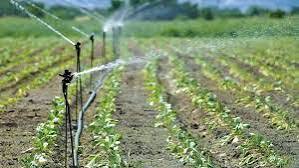
The Government highlighted the progress of Per Drop More Crop (PDMC), a micro-irrigation scheme aimed at improving water use efficiency and agricultural productivity through efficient irrigation practices.
- As of July 2026, PDMC has brought over 115 lakh hectares under micro-irrigation coverage, with DBT-based financial assistance and digital implementation improving transparency, farmer access, and adoption of resource-efficient agriculture.
- The Per Drop More Crop (PDMC) scheme promotes efficient water use at the farm level through micro-irrigation systems such as drip irrigation and sprinkler irrigation.
- It is a Centrally Sponsored Scheme aimed at improving water use efficiency and agricultural productivity by delivering water directly to crops with minimum losses.
- The initiative began in January 2006 as the Centrally Sponsored Scheme for Micro Irrigation.
- It was upgraded to the National Mission on Micro Irrigation (NMMI) in 2010–11.
- During FY 2014–15, it became part of the National Mission on Sustainable Agriculture (NMSA) under the On Farm Water Management (OFWM) component.
- From 2015–16 to 2021–22, it was implemented as Per Drop More Crop (PDMC) under the Pradhan Mantri Krishi Sinchayee Yojana (PMKSY).
- Since 2022–23, PDMC has been implemented under the Pradhan Mantri Rashtriya Krishi Vikas Yojana (PM-RKVY).
- Financial Assistance for Micro-Irrigation: Under PDMC, farmers receive financial support for installing micro-irrigation systems up to 5 hectares per beneficiary.
- Small and marginal farmers receive 55% assistance, while other farmers receive 45% assistance. A total of ₹8,123.24 crore of central assistance has been released during the last three years.
- Agriculture consumes more than 80% of India’s available water resources, while only around 50% of the net sown area has irrigation facilities.
- PDMC addresses this challenge by promoting micro-irrigation, which improves water use efficiency, reduces water losses, and supports sustainable agricultural production.
Aranmula Uthrattathi Boat Race:
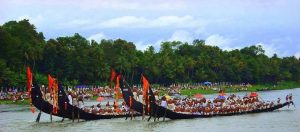
The Aranmula Uthrattathi Vallamkali (boat race) is one of Kerala’s most iconic traditional events, symbolising the State’s cultural heritage, devotion and community spirit. Aranmula is a heritage village located on the banks of the Pamba River and is famous for the GI-tagged Aranmula Kannadi (metal mirror), a unique traditional craft of Kerala.
- The Aranmula Uthrittathi Vallamkali is one of the oldest traditional boat races of Kerala. It is held annually on the day of the Uthrittathi asterism in the Malayalam month of Chingam (August–September) on the Pamba River in Pathanamthitta district.
- The boat race is associated with the Aranmula Sree Parthasarathy Temple, dedicated to Lord Krishna. It is considered a religious offering and is conducted as part of the temple’s traditions and Onam celebrations.
- According to tradition, the event originated when local snake boats came to protect the Thiruvona Thoni (boat carrying offerings for the Thiruvonam feast at the temple) from attackers.
- The incident symbolises community unity, devotion, and collective protection of traditions.
- Palliyodams (Sacred Snake Boats): The boats used in the race are known as Palliyodams. Unlike ordinary snake boats, they are taller and uniquely designed, with elaborate decorations. More than 100 oarsmen row these boats in perfect coordination, accompanied by traditional boat songs (Vanchippattu).
- The race showcases Kerala’s traditional boat-making skills, performing arts, music, and community participation. Traditional songs such as Kuchelavritham, Bheeshmaparvam, and Santhanagopalam are associated with the event.
Mission Zero: Depalpur’s Legacy Waste Transformation
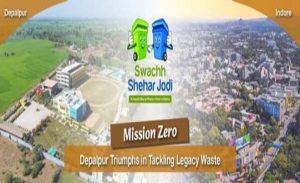
Depalpur, Madhya Pradesh, became the first city under the Swachh Shehar Jodi initiative to achieve Zero Legacy Waste, remediating 1,250 metric tonnes of legacy waste accumulated over five years under SBM-U 2.0.
- It is a scientific legacy-waste remediation and urban waste-management initiative undertaken by Depalpur Nagar Parishad with Indore Municipal Corporation under the Swachh Shehar Jodi initiative of Swachh Bharat Mission-Urban 2.0 (SBM-U 2.0).
- It follows the Each One Teach One model, where experienced mentor cities transfer waste-management practices to mentee cities.
Key Findings:
- Zero Legacy Waste: Depalpur completely remediated 1,250 metric tonnes of waste accumulated at its dumpsite over five years.
- Four-Bin Segregation: Achieved 100% door-to-door collection with segregation of municipal waste into four categories.
- Resource Recovery: Around 4.5 tonnes of plastic, metal and glass were recovered and supplied to authorised recyclers.
- RDF Processing: Around 50–60 tonnes of Refuse Derived Fuel (RDF) was sent to the NEPRA plant in Indore and subsequently to cement factories for co-processing.
- Mentor–Mentee Model: Over 500 ragpickers from Indore participated alongside Depalpur’s machinery, demonstrating structured peer learning and inter-city cooperation.
Mission Rangeen Machhli 2031:
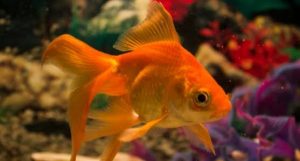
Vice-President of India released the Mission Rangeen Machhli 2031 Strategic Action Plan for Ornamental Fisheries Development during a fisheries outreach programme at Agatti in Lakshadweep.
- Mission Rangeen Machhli 2031 is an initiative by the Government of India to develop, regulate, and scale the ornamental fisheries sector (breeding, rearing, and trading of decorative fish for home aquariums and commercial displays) into an organized, globally competitive industry.
- Organisations Involved: Department of Fisheries, Ministry of Fisheries, Animal Husbandry & Dairying, Government of India.
- Location Focus: Lakshadweep Islands (launched from Agatti Island).
Key Features of Mission Rangeen Machhli 2031:
- Standardized Value Chain SOPs: Establishes nationwide Standard Operating Procedures (SOPs) covering broodstock management, captive breeding, hatchery protocols, disease prevention, and safe live-fish packaging/transportation.
- Comprehensive Biosecurity & Quality Framework: Sets up standardized quarantine mechanisms, fish health surveillance, and quality assurance to prevent invasive pathogens and meet stringent international import standards.
- End-to-End Traceability & Certification: Implements traceability systems to verify captive-bred origins, preventing illegal capture of endangered reef fauna and enabling global sustainability certifications.
- Cluster-Based Value Chain Integration: Aligns with the Pradhan Mantri Matsya Sampada Yojana (PMMSY) to build specialized infrastructure clusters for production, processing, air-cargo logistics, and domestic/export market linkages.
- Livelihood & Women Empowerment: Focuses on training coastal fishers, youth, and women-led Self-Help Groups (SHGs) in low-investment, high-return backyard ornamental fish rearing and reef-friendly aquaculture.
The Permanent Court of Arbitration:
The Permanent Court of Arbitration (PCA) ruled that the Indus Waters Treaty (IWT) remains in force and restricted certain works on the Ratle Hydroelectric Project.India rejected the ruling, calling the arbitration illegally constituted and its decision null and void.The Permanent Court of Arbitration (PCA) is an intergovernmental organization dedicated to facilitating international arbitration, conciliation, and fact-finding for disputes arising between states, state entities, intergovernmental organizations, and private parties.Despite its name, it is not a traditional standing court with permanent judges; rather, it is a permanent institutional framework that provides administrative support, procedural rules, and registries for ad-hoc arbitral tribunals.Founded in 1899 during the first Hague Peace Conference under the Convention for the Pacific Settlement of International Disputes (convened by Czar Nicholas II of Russia).The convention was revised at the second Hague Peace Conference in 1907.Headquarters: Peace Palace, The Hague, Netherlands.India and Pakistan: Both have been Contracting Parties to the PCA since 1950, adhering to the 1899 and 1907 Hague Conventions.Aim: To provide the international community with accessible, flexible, and peaceful legal mechanisms to settle inter-state and commercial disputes that diplomacy fails to resolve, avoiding recourse to armed conflict.
Exercise Super Garuda Shield:

The United States and Indonesia kicked off their annual joint military drills, Super Garuda Shield, spanning until September 11 across multiple Indonesian regions.
- Super Garuda Shield is a flagship annual multilateral joint military exercise hosted by the Indonesian National Armed Forces (TNI) and co-led by the United States Indo-Pacific Command (USINDOPACOM).
- Originally established in 2006 as a bilateral army exchange (Garuda Shield), it expanded significantly into a combined, joint-service, multilateral war-game covering land, air, maritime, and cyber domains.
- Nations Involved: Indonesia and the United States.
- Participating & Observer Nations: 13 additional international partners, including Japan, South Korea, Australia, Canada, the United Kingdom, France, Singapore, and others across the Indo-Pacific and NATO partner networks.
- Aim is to strengthen combined interoperability, tactical readiness, and multilateral cooperation among partner militaries, enhancing collective capabilities in regional deterrence, crisis response, territorial defense, and Humanitarian Assistance and Disaster Relief (HADR).