
Today’s Current Affairs: 30th jul 2026 for UPSC IAS exams, State PSC exams, SSC CGL, State SSC, RRB, Railways, Banking Exam & IBPS, etc
Table of Contents
Koldam Hydro Power Project:
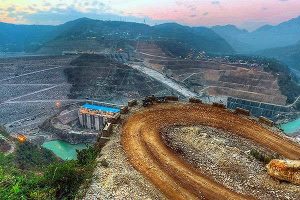
The Koldam NTPC Hydroelectric Project generated over 3512 million units of power in 2025-26, the highest ever since the project was commissioned.
- Koldam Hydro Power Project is located on the Satluj River in the Bilaspur District of Himachal Pradesh.
- It is located just upstream of the Bhakra reservoir.
- The total capacity of the project is 800 MW.
- The project involved the construction of a 167m-high rock-and-gravel-filled clay-core dam.
- It also necessitated the construction of an upstream coffer dam as well as a downstream coffer dam.
- The reservoir created by the dam can hold up to 560 million cubic metres of water.
- It is owned and operated by India’s biggest power utility National Thermal Power Corporation (NTPC).
- The output from the power plant is conveyed to the national grid via a 400kV direct current (D/C) line.
- Himachal Pradesh receives 15% of the generated power free of cost and 12% at bus-bar rate.
- The project also benefits Delhi, Haryana, Punjab, Rajasthan, Uttar Pradesh, Jammu and Kashmir, and Chandigarh.
Kikai Caldera:
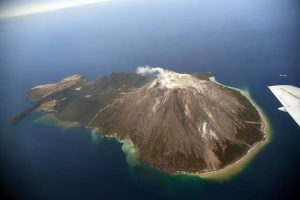
A vast reservoir of magma beneath Japan’s Kikai caldera appears to be filling again, offering scientists a rare glimpse into how some of Earth’s largest volcanoes recover after catastrophic eruptions.
- Kikai Caldera is a massive submarine caldera with three small islands, parts of the caldera rim, that project above sea level.
- It is located in the East China Sea just south of Kyushu, Japan.
- It is still active, producing a scattered array of minor eruptions in recent decades.
- Research has found evidence of new volcanic activity beneath the Kikai Caldera, pointing to the formation of a lava dome and raising concerns about its potential to erupt again.
Pithora Painting : GI Tag
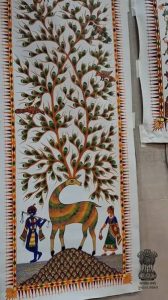
The Pithora painting, a centuries-old wall art tradition of Gujarat’s Rathwa tribal community, recently received a Geographical Indication (GI) tag.
- Pithora Painting is a traditional tribal wall art that has originated in the tribal regions of Gujarat, mainly in Panchmahal and Chhota Udaipur.
- It is done by tribes such as the Rathwa, Bhil, and Bhilala, who hold a strong belief in nature, spirits, and divine powers.
- It holds a long history, and its existence dates back to around the 13th century.
- It is named after Pithora De, who is their tribal god and is associated with marriage, prosperity, and the well-being of the tribe.
- Traditionally, Pithora paintings were created on the walls of home The paintings were often commissioned during significant life events, such as weddings, births, and festivals, serving as a means of invoking blessings and protection from deities.
- Traditionally executed by specialist ritual painters known as Lakharas, under the guidance of a priest called Badwa.
- Traditionally, walls are prepared by applying a mixture of cow dung and clay.
- Artists use natural pigments derived from minerals, plants, and other organic materials to create the colors for their paintings.
- Common colors include red, yellow, green, and blue, each derived from specific natural sources.
- Painters use a combination of bamboo sticks, cotton and wooden stencils to create their art.
- The paintings show tribal and Hindu deities, horses, animals, and scenes from daily life like farming, hunting, and dancing.
- It plays a crucial role in preserving tribal stories, beliefs, and customs and helps to teach younger generations about their culture.
- Although it is traditionally practiced only as wall art, today’s generation of pithora painters use paper and canvas that they sell commercially.
- It has been awarded a Geographical Indication (GI) tag in 2026.
Tigidia singhal:
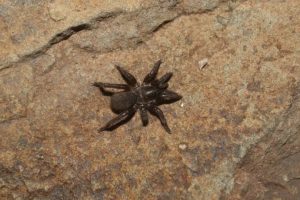
Researchers recently described a new trapdoor spider species, Tigidia singhal, from the semi-arid grasslands of the Deccan Plateau.
- Tigidia singhal is a new species of trapdoor spider.
- It was discovered from the semi-arid grasslands of the Deccan Plateau in Maharashtra.
- The discovery brings the number of Tigidia species in India to eight. Spiders of the genus Tigidia occur only in Madagascar, Mauritius, and India.
- Until now, species of this genus were known from peninsular India’s tropical evergreen and deciduous forests, particularly the Western and Eastern Ghats.
- Singhal is the first record of this genus from a semi-arid open natural ecosystem.
- Trapdoor spiders are long-living, sedentary spiders that spend most of their lives in burrows, rarely leaving except to search for a mate.
- The doors of silk, soil, moss, and leaves that many species construct to camouflage their burrows give this group its name.
- This adaptation has great advantages for the spider, providing protection against desiccation and predators and enabling efficient prey capture.
- They feed by quickly opening the trap door and grabbing an insect or other arthropod that is passing close by.
- Trapdoor spider burrows aerate soil, maintain soil structure, and provide microhabitats for other organisms.
- Highly sensitive to habitat disturbances, these spiders also serve as ecological indicators, with their presence suggesting a healthy ecosystem and rich soil biodiversity.
- They belong to the infraorder Mygalomorphae, which also includes tarantulas and funnel-web spiders.
- The genus Tigidia falls within the family Barychelidae (brush-footed spiders) — one of India’s nine mygalomorph families.
Bhavani River: In News
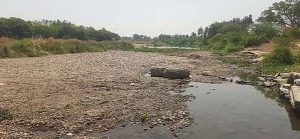
Large stretches of the Bhavani River near Kooduthurai at Bhavani have been recently engulfed by water hyacinth, prompting farmers and residents to urge the State government to remove the invasive aquatic weed.
- Bhavani River is a major tributary of the Cauvery River flowing through the states of Kerala and Tamil Nadu.
- It is the second largest river in Tamil Nadu.
- It originates from the Western Ghats in the Nilgiri Hills, located in the Nilgiris district of Tamil Nadu.
- The river emerges from Bhavani Lake.
- From there, it flows into Kerala, passing through the Silent Valley National Park.
- After flowing through Kerala, the river turns and flows back into Tamil Nadu.
- Finally, the river merges with the Cauvery River in the town of Bhavani, at a location known as Bhavani Sangameshwarar Temple, a significant pilgrimage site for Hindus.
- It is a “perennial” river, which means it flows all year round and never dries up.
- The drainage basin spans covering parts of Tamil Nadu, Kerala, and Karnataka:
- The largest tributaries are West and East Varagar, which come from the Nilgiris.
- Major Dams:
- Bhavani Sagar Dam
- Kodiveri Dam.
Japan : Earthquake
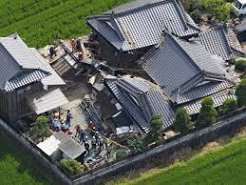
Japanese Prime Minister said that 13 people were confirmed dead after a powerful earthquake struck the southern Japanese city of Kumamoto.
- Japan is an island nation in East Asia, situated in the Northwestern Pacific Ocean.
- It is bordered by the Pacific Ocean, Sea of Okhotsk, Sea of Japan and East China Sea.
- Capital City: Tokyo
- It comprises a chain of islands stretching in a northeast–southwest arc.
- Over 80% mountainous, with rugged terrain.
- Main Islands (north to south): Hokkaido, Honshu, Shikoku, and Kyushu.
- It ranges from subarctic in the north to humid subtropical in the south.
- It is located on the Pacific Ring of Fire – a major zone of earthquakes and active volcanoes.
- Highest peak: Mount Fuji, which is a stratovolcano.
- Major mountain ranges: Japanese Alps.
- Major rivers: Shinano River (longest), Tone River, Kiso River.
- It mainly consists of Coal, iron ore, zinc, lead, copper, sulfur, gold, and silver.
SHetA2 Therapy:
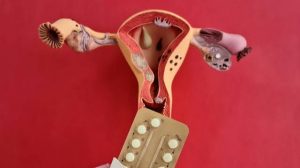
A new cervical cancer SHetA2 pill showed promise by stopping Human Papillomavirus (HPV) from turning cancerous.
- SHetA2 is a small molecule therapy that is designed to stop an HPV infection from causing cancer.
- Small molecule therapies are chemically manufactured, low-weight compounds that can easily be absorbed by the body.
- It is designed to treat HPV-induced cervical dysplasia and cervical cancer.
- It is developed through collaboration between scientists at ICMR’s National Institute of Cancer Prevention and Research (NICPR) and the University of Oklahoma’s Stephenson Cancer Center in the US.
- This therapy targets three proteins in the human body called mortalin, heat shock cognate (hsc70), and glucose regulated protein 78 (Grp78).
- These are essential for the proliferation of the cancer-causing oncoprotein of the virus.
- It works by breaking the connection between the HPV-E7 protein and a host protein inside human cells.
- Normally, this host protein protects E7 and allows it to keep damaging healthy cells. When SHetA2 breaks this connection, the harmful E7 protein is destroyed by the body’s normal immune defences
- The therapy is meant for those who have developed precancerous lesions of cervical cancer.
- The therapy has, at present, been evaluated in an oral, capsule form.
Human Papillomavirus (HPV):
- HPV is the most common sexually transmitted infection (STI), and there are more than 100 types of HPV.
- However, some types of HPV infection cause skin growths called warts, and some types of HPV infection can cause cancer.
- The virus that causes HPV infection is transmitted through skin-to-skin contact.
- Most people get a genital HPV infection through direct sexual contact, including vaginal, anal, and oral sex.
- About 80% of people – both men and women – will get an HPV infection at some point in their lives.
- Symptoms may include warts on the genitals or anus or cancerous growths in the mouth or throat.
- There’s no cure for HPV. HPV vaccination is the most effective way to prevent HPV-related cancers.
Malvi Camel:
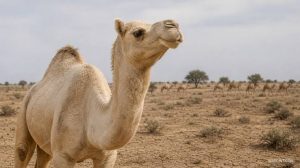
It was observed that the rare malvi camel breed is facing threat of extinction and which prompted a conservation initiative by the National Research Centre on Camel (NRCC).
- It is one of the nine recognised camel breeds in India.
- It is primarily found in Madhya Pradesh’s Malwa region and parts of Rajasthan such as Kota, Bundi, Jhalawar and Baran.
- It is also valued for milk production, with a female capable of yielding around 4-5 kg of milk per cycle.
- It is known for its distinct white colour and is considered the smallest among India’s camel breeds.
- Malvi camels are generally medium-sized with a robust build.
- They often have a light brown to reddish-brown coat and a well-developed hump.
- These camels are well-adapted to both semi-arid and slightly more humid conditions, as the Malwa region experiences a range of climatic conditions compared to the harsher desert environments of other camel breeds.
- These are known for their endurance and strength, making them suitable for carrying loads and performing work, including transportation and agricultural tasks.
Soliga Tribe:
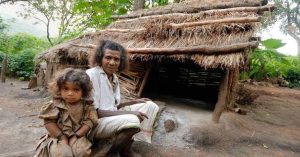
A recent study showed that fortress conservation approach has led to uprooting, ongoing distress and despondency worldwide, and offers the Soligas in the Biligiri Rangaswamy Temple Wildlife Sanctuary (BRTWS) as a prime conservation exemplar.
- The term “Soliga” literally translates to “children of bamboo”, which reflects the tribe’s relationship with nature and their belief that they too have emerged from it.
- They are a group of indigenous, forest-dwelling people found mostly in Tamil Nadu and Karnataka.
- They reside in the peripheral forest areas near Biligiri Rangana Hills and Male Mahadeshwara Hills.
- Soligas was the first tribal community living inside a tiger reserve and getting their forest rights recognised by a court in a judgment in 2011.
- The Dravidian language sholaga is spoken by the Soliga. They also speak Kannada and Tamil.
- The Soligas live in single-room huts, built of bamboo and mud.
- They believe in coexisting with the environment and have indigenous ways of using nature to make unique utility products, such as the ‘jottai’, which is a cup made out of leaves.
- Along with adhering to Hindu customs, the Soliga people practice naturism and animism.
- The traditional economy of the Soliga is mostly based on shifting cultivation and collection of minor forest produce.
Andromeda Galaxy:
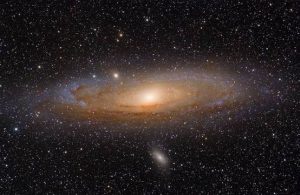
A major new study using data from Nasa’s Hubble Space Telescope has found that star formation in Andromeda has been declining for the past 500 million years.
- Andromeda Galaxy is also known as M31, comparable in size to our Milky Way galaxy.
- It is a large spiral galaxy located approximately 2.5 million light years from Earth.
- It is named for its celestial location in the constellation of Andromeda.
- It is the closest major galaxy to the Milky Way and is visible to the naked eye.
- It is currently transitioning to its ‘middle age’, away from being a vibrant, active galaxy and towards a quiescent state
- It is a barred spiral galaxy, so-called for the bar-like structure formed by the stars in its center.
- It is observed that this galaxy is moving towards the Milky Way at approximately 110 km/s.
- Hubble Space Telescope is named in honour of the trailblazing astronomer Edwin Hubble which was launched by the NASA.
- It is a large, space-based observatory, which has revolutionized astronomy since its launch and deployment by the space shuttle Discovery in 1990.
- Hubble’s domain extends from the ultraviolet through the visible (which our eyes see) and into the near infrared.
- It is one of NASA’s Great Observatories Programs.
Tackling Non-Revenue Water for a Water-Secure Viksit Bharat:
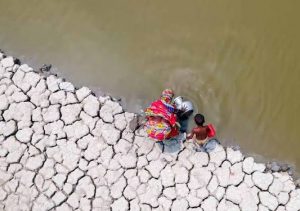
India’s ambition to build a ‘Viksit Bharat’ relies heavily on its urban centres, which are increasingly facing acute water stress due to groundwater over-exploitation, rapid urbanization, and climate change, bringing urban water governance into sharp policy focus.
- A major policy concern is that urban utilities lose more than 30% of the water they supply as Non-Revenue Water (NRW), undermining municipal finances, reducing service efficiency, and threatening long-term urban water security.
- India’s urban water crisis is driven by high Non-Revenue Water (NRW), groundwater depletion, rapid urbanisation, climate change, and fragmented governance, threatening water security and the vision of Viksit Bharat.
- Achieving sustainable urban water governance requires reducing NRW, promoting wastewater reuse, strengthening Urban Local Bodies (ULBs), adopting smart water technologies, conserving groundwater, and implementing integrated, climate-resilient water management aligned with SDG 6.
- Non-Revenue Water (NRW) refers to water that has been treated and pumped into the municipal distribution system but is “lost” before it reaches the consumer or is billed. It primarily consists of:
- Water lost due to leakages from aging pipelines, broken valves, and overflowing reservoirs.
- Water lost due to inaccurate metering, unauthorized connections (theft), and unbilled public consumption (such as free public standposts).
- In advanced global cities, NRW is maintained strictly under 10%. Conversely, in most Indian metropolitan areas, it ranges between 40% to 50%.
- This means nearly half the water treated at a high cost yields zero municipal revenue and never reaches the tap.
World Hepatitis Day (WHD) 2026:
The world observed World Hepatitis Day on 28th July to raise awareness about viral hepatitis, one of the deadliest infectious diseases.
- The theme for World Hepatitis Day 2026 is “Hepatitis: Let’s Break It Down,” calling for the removal of financial, social and systemic barriers to hepatitis services.
- Hepatitis is inflammation of the liver caused by viral infections, toxic substances such as alcohol and certain drugs, or autoimmune disorders.
- The five main hepatitis viruses are types A, B, C, D and E.
- Chronic hepatitis B and C account for more than 90% of deaths and disability associated with viral hepatitis. They are major causes of cirrhosis, liver failure and liver cancer.
- Viral hepatitis causes nearly 1.34 million deaths and around two million new infections every year. About 287 million people live with chronic hepatitis B or C, and most remain unaware of their infection.
- India has an estimated 29 million people with chronic hepatitis B and 5.5 million with chronic hepatitis C, placing it second among the ten countries with the highest hepatitis burden. India also accounts for around 10–15% of the global hepatitis B carrier pool.
- According to India’s 2021 HIV Sentinel Surveillance, hepatitis B seroprevalence was about 0.85%, or roughly 1 in 118 people, while hepatitis C seroprevalence was 0.29%, or around 1 in 345 people.
- Seroprevalence refers to the proportion of people in a surveyed sample who test positive for a disease.
- India’s hepatitis B diagnosis rate is only about 2.4%, meaning that most infected people have never been tested. The absence of early symptoms allows the disease to progress silently.
- Hepatitis B birth-dose vaccination reaches only around 63% of newborns in India, although third-dose coverage during early childhood is about 93%. Delayed birth-dose vaccination increases the risk of preventable mother-to-child transmission.
- Most people show no symptoms during the early stages. Possible warning signs include persistent fatigue, poor appetite, nausea, abdominal discomfort, dark urine and jaundice.
- Low awareness, misinformation, stigma, weak integration of hepatitis services into primary healthcare and high treatment costs prevent people from accessing timely testing and care.
- The WHO aims to achieve a 90% reduction in new hepatitis B infections, a 65% reduction in hepatitis-related deaths and 90% diagnosis coverage by 2030.
Western Ghats Ecologically Sensitive Area: 7th Draft Notification
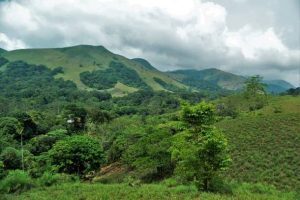
The Union Ministry of Environment, Forest and Climate Change (MoEFCC) has reissued the draft notification (for the 7th time) proposing an Eco-Sensitive Area across the Western Ghats (originally 1st issued in 2014), after the previous draft lapsed without being finalized.
- The draft remains open for public objections for 60 days, while the Centre and the six Western Ghats States continue to disagree over the villages and areas to be included within the ESA.
- The proposed ESA encompasses a massive 56,825.7 sq. km spread across six states: Karnataka (highest at 20,668 sq. km), Maharashtra, Kerala, Tamil Nadu, Goa, and Gujarat (lowest at 449 sq. km).
- The draft recommends a complete ban on commercial mining, stone quarrying, sand mining, the establishment of new thermal power plants, highly polluting “red category” industries, and large-scale construction projects.
- Hydel power generation projects will be strictly regulated.
- The notification explicitly clarifies that agriculture, plantation activities, and the day-to-day livelihood of local communities will remain unaffected.
- Like the previous draft, the 7th draft notification also proposes phased implementation of the ESA on a state-wise or combined basis, allowing notification without waiting for consensus from all six states.
- An expert committee headed by Sanjay Kumar formed in 2022, tasked with examining state objections and discrepancies in village demarcations, has been granted a tenure extension until July 2027.
Bank of Baroda Data Breach on Dark Web:

Public sector lender Bank of Baroda (BoB) has initiated a forensic investigation following an alleged data breach that reportedly leaked around 1 TB of customer-related data onto the dark web, raising fresh concerns over cybersecurity in the banking sector.
- The bank stated that its core banking systems were not compromised and continue to remain secure.
- Cyber incidents, such as the Tata Electronics ransomware attack (2026), BSNL data breach (2024), WazirX crypto heist (2024), ICMR data leak (Dark Web, 2023), Air India cyberattack (2021), and the latest Bank of Baroda data breach, have raised serious concerns over India’s cybersecurity preparedness, data privacy, critical information infrastructure protection, and cyber resilience.
- The World Wide Web consists of three broad layers:
- Surface Web: Publicly accessible and indexed by search engines (e.g., normal websites, news sites).
- Deep Web: Unindexed but legitimate parts of the web requiring authentication (e.g., banking portals, private email inboxes, corporate databases).
- Dark Web: A small, intentionally hidden subset of the Deep Web that requires specific software (like the Tor browser) to access.
- It anonymizes user traffic and IP addresses, making it a safe haven for illegal marketplaces, cybercrime, and data trafficking.
Pickaxe Mountain:
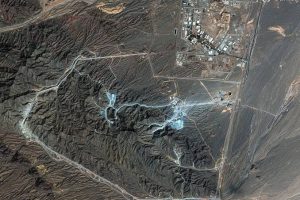
Pickaxe Mountain in Iran has gained global attention after US threatened military strikes, amid reports that the mountain may conceal deep underground nuclear facilities linked to Iran’s nuclear programme.
- The developments have also revived discussions on India’s decision not to launch a pre-emptive strike on Pakistan’s Kahuta nuclear facility in the 1980s despite strategic considerations.
- Situated roughly 220 km south of Tehran near Natanz, Pickaxe Mountain is a prominent ridge within the Karkas Range (Reshteh Kuh-e Karkas), which spans over 100 km between Kashan and Ardestan in an arid plateau.
- The range forms part of the Urumieh-Dokhtar magmatic belt, created through the subduction of the Neo-Tethyan Ocean under the Iranian continental plate prior to the Arabia-Eurasia continental collision over the last 66 million years.
- The bedrock is predominantly made of mechanically strong volcanic rocks (including andesite, rhyolite, and dacite) interbedded with pyroclastic deposits and volcanic tuffs.
- Extensive network of fault zones, fractures, and varied rock densities scatter seismic and kinetic shock waves, making military penetration and blast modelling unpredictable.
- The high energy required to fracture intact volcanic rock combined with deep-seated natural subterranean shielding complicates kinetic strikes, offering Iran an asymmetrical strategic advantage alongside control near key maritime chokepoints like the Strait of Hormuz.
Fields Medal 2026:

The Fields Medal 2026, one of the world’s most prestigious awards in mathematics, has been awarded to Yu Deng, John Pardon, Jacob Tsimerman and Hong Wang for their exceptional contributions to mathematical research.
- Established in 1936 through the efforts of Canadian mathematician John Charles Fields, the Fields Medal is awarded by the International Mathematical Union. It recognises both outstanding existing mathematical achievements and the promise of future contributions.
- The Fields Medal is awarded once every four years to mathematicians who are below 40 years of age at the time of the award. Between two and four mathematicians may be honoured in each cycle.
- The medals and cash prizes are financed by a trust established by J.C. Fields at the University of Toronto. In 2026, the prize fund also received support from the Fields Institute.
- 2026 Awards:
- Hong Wang became the 3rd woman to receive the Fields Medal after Maryam Mirzakhani (2014) and Maryna Viazovska (2022).
- Yu Deng and Hong Wang became the 1st Chinese nationals to win the medal since Shing-Tung Yau in 1982.
- Indian-origin mathematicians Manjul Bhargava and Akshay Venkatesh won the Fields Medal in 2014 and 2018, respectively.
- Strong mathematical capability supports progress in fields such as artificial intelligence, physics and engineering, making the awards an indication of China’s growing scientific and technological strength.
The EU AI Transparency Code:
The European Union will require clear labelling of AI-generated content under Article 50 of the Artificial Intelligence Act (AIA).To implement this, the EU introduced the Code of Practice on Transparency of AI-Generated Content, providing a common compliance framework to curb deception, deepfakes, and synthetic misinformation.The EU AI Transparency Code is a practical, voluntary compliance instrument designed by independent experts under the EU AI Office to help providers and deployers satisfy Article 50 of the EU AI Act.It targets synthetic media—spanning deepfake videos, altered images, synthetic voice clones, and unverified AI-generated text—by requiring machine-readable markings and human-visible disclosures. Non-compliance with the overarching legal mandates carries severe administrative penalties of up to €15 million or 3% of global annual turnover.
The Madanapalle Municipality Waste Management Model:
Madanapalle Municipality in Andhra Pradesh is emerging as a model Zero Waste City under Swachh Bharat Mission-Urban (SBM-U) 2.0 through scientific waste management and resource recovery.An integrated scientific solid waste management model implemented by Madanapalle Municipality (Andhra Pradesh) under Swachh Bharat Mission-Urban (SBM-U) 2.0.It focuses on source segregation, decentralized waste processing, recycling, resource recovery, and legacy waste remediation to achieve the goal of a Zero Waste City.Aim is to minimize landfill waste through scientific processing, maximize resource recovery, and promote a sustainable, circular urban economy.



