
Today’s Current Affairs: 30th jun 2026 for UPSC IAS exams, State PSC exams, SSC CGL, State SSC, RRB, Railways, Banking Exam & IBPS, etc
Table of Contents
Ocean of Opportunity:

During his official three-day State Visit to Seychelles, Prime Minister of India co-launched a transformative bilateral roadmap to turn the Indian Ocean Region (IOR) into an Ocean of Opportunity.
- The Ocean of Opportunity is a strategic framework for inclusive maritime development in the Indian Ocean Region (IOR). It promotes partnerships based on mutual respect while integrating maritime security, the blue economy, digital connectivity, and climate resilience, especially among SIDS such as Seychelles, Mauritius, Maldives, and Sri Lanka.
- India officially extended a massive, rupee-denominated umbrella Line of Credit worth ₹1,250 crore to fund priority infrastructure development projects across Seychelles.
- The bilateral defense payload included gifting an advanced Fast Patrol Vessel, 10 utility vehicles, and 5 Laser Radial class tactical boats to the Seychelles Defence Force.
- To protect the island from supply chain shocks linked to the West Asia crisis, India shipped 8,500 metric tonnes of structural cement and 500 metric tonnes of staple rice.
- The medical package included delivering a first batch of 6 modern ambulances alongside a team of specialized Indian paramedics to train local technicians.
The Indian Ocean as the Ocean of Opportunities:
- The strategy ensures that international cooperation is dictated by sovereign equality and institutional trust rather than sheer economic or military size.
- By signing the landmark National Payments Corporation of India (NPCI) agreement to roll out Unified Payments Interface (UPI) networks, the vision makes cross-border retail trade highly accessible.
- The joint SESEL (Sustainability, Economic Growth, and Security through Enhanced Linkages) blueprint opens up new, future-ready business pathways in healthcare, commercial space observation, and sustainable agriculture.
- The framework builds regional capacity by setting up decentralized vocational centers, such as the newly launched Seychelles Professional and Technical Education Centre.
- The platform enables joint marine science exploration, allowing member states to tap into underwater resources safely while respecting local ecological baselines.
The Flamingo Revolution:

Thousands of protesters in Albania have launched the Flamingo Revolution against a US$1.6 billion luxury coastal resort project linked to Jared Kushner, son-in-law of U.S. President Donald Trump.
- The Flamingo Revolution is a mass environmental and civil society protest movement in Albania opposing a luxury tourism project in ecologically sensitive coastal areas.
- The protests began in May 2026 after approval of a US$1.6 billion coastal development project on Sazan Island and the Vjosa-Narta wetland, linked to Jared Kushner’s investment group.
- Public opposition intensified over alleged lack of consultation, environmental damage, and changes to protected-area laws permitting construction.
- Aim:
- To halt the luxury resort project in ecologically sensitive zones.
- To protect biodiversity, ensure transparent governance, and oppose corruption in public decision-making.
- Key Features:
- Environmental Protection: Opposes construction in the Vjosa-Narta wetland, a habitat for flamingos, sea turtles, and Mediterranean monk seals.
- Anti-Corruption Movement: Expanded beyond ecological concerns to challenge alleged cronyism, opaque approvals, and misuse of public resources.
- Flamingo as Symbol: Protesters use flamingo cut-outs to represent biodiversity conservation and resistance against destructive development.
- International Attention: The movement has drawn support from environmental groups, while the European Parliament has urged Albania to halt construction in protected areas.
The Rural Internal Audit Portal:
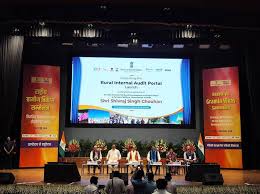
Union Minister for Rural Development launched the AI-enabled ‘Rural Internal Audit Portal’ during the Rashtriya Gramin Vikas Sammelan at Pusa Campus, New Delhi.
- The Rural Internal Audit Portal is an AI-powered, unified cloud-based digital ecosystem designed to manage the entire lifecycle of public internal audits.
- Conceived by the Office of the Chief Controller of Accounts (CCA), it replaces fragmented, paper-intensive, and manual auditing with a standardized, data-driven framework.
- Nodal Ministry: Spearheaded by the Ministry of Rural Development, Government of India.
- Development Partner: Built and architected in active collaboration with the National Informatics Centre (NIC).
- Aim:
- To digitize, standardize, and simplify internal public audits to maximize institutional accountability and eliminate systemic financial leakages.
- To transition from simple compliance check-lists to data-driven, risk-based audit planning using advanced predictive modeling.
- To establish a central repository of historical audit trails and Action Taken Reports (ATRs) while moving entirely toward paperless and environmentally sustainable governance.
Shastrarth Tradition:
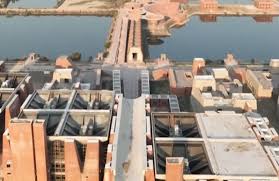
Addressing the 135th episode of his monthly radio programme Mann Ki Baat, Prime Minister Narendra Modi lauded Nalanda University for successfully reviving the ancient Indian tradition of Shastrarth (scholarly debate).
- Shastrarth (derived from Shastra meaning scriptures/knowledge and Artha meaning meaning/interpretation) is the ancient Indian philosophical system of disciplined, structured, and open public debate.
- It is not an unmonitored argument, but a deeply formalized intellectual discourse where scholars defense-test their philosophical schools of thought, spiritual interpretations, and scientific theories against opposing ideas.
- The practice dates back thousands of years, finding deep mention in the Upanishads and early Vedic assemblies (Sabhas and Samitis).
- It served as the central pedagogical tool in India’s ancient residential universities like Nalanda, Vikramashila, and Takshashila, where international scholars gathered to debate.
- Legendary Shastrarth encounters shaped Indian intellectual history, such as the historic 8th-century debate between Adi Shankaracharya and Mandana Misra on Vedic philosophy, and modern socio-religious debates like Swami Dayanand Saraswati’s Kashi debate in 1869.
- Aim:
- To move past personal opinions and identify objective philosophical or scientific truth through open peer review.
- To systematically defense-test new academic treatises, logic systems, and commentaries before they are accepted into mainstream Indian school curricula.
Exercises Valiant Shield 2026

Valiant Shield 2026 (VS26) is a biennial, high-intensity multinational field training exercise. Initially launched in 2006 as a unilateral, U.S.-only military drill, it evolved in 2024 into a major multilateral platform to seamlessly integrate allied combat forces across sea, air, land, space, and cyberspace.
Nations Involved:
- Lead Nation: United States.
- Core Participating Allies: Japan, Australia, Canada, and New Zealand.
Key Features:
- Conducted across Guam, the Northern Mariana Islands, Japan, and surrounding waters including the Philippine Sea and Mariana Islands Range Complex.
- Deploys the Typhon Missile System and HIMARS at Japan’s Kanoya Air Base to conduct anti-ship warfare and precision strike exercises.
- Includes testing of Australia’s MQ-28A Ghost Bat, an AI-enabled autonomous collaborative combat aircraft (loyal wingman drone).
Exercise Resolute Dragon 26:

Resolute Dragon 26 is an annual, bilateral field training exercise conducted in Japan.
- It is specifically engineered to rehearse, refine, and strengthen joint command-and-control architectures and multi-domain maneuver tactics between U.S. expeditionary units and Japanese ground forces.
- Nations Involved: United States and Japan.
- Key Features:
- Concentrates on defending key maritime routes and remote island chains during simulated Indo-Pacific crisis scenarios.
- Conducted across Kyushu and the Nansei Islands, integrating the U.S. Army, Navy, Air Force, and Japan Self-Defense Forces.
- Deploys NMESIS (anti-ship), MADIS (air and drone defence), and TRUAS (autonomous logistics drone) to enhance coastal combat capabilities.
The Hamburg Sustainability Conference (HSC) 2026:

The United Nations Sustainable Development Solutions Network (SDSN) released its 2026 Sustainable Development Report during the third Hamburg Sustainability Conference (HSC).
- The Hamburg Sustainability Conference (HSC) is a prominent international, hybrid multi-stakeholder platform designed to catalyze action and rescue the unravelling United Nations Sustainable Development Goals (SDGs). Operating as a direct counterweight to growing global military expenditures and multilateral fatigue, it focuses on building practical economic, digital, and environmental alliances between the Global North and Global South.
- Established In: The premiere edition of the annual conference was successfully convened on October 7–8, 2024. The 2026 meeting marks its third consecutive global session.
- Theme of HSC 2026: The 2026 conference is convened under the official operating theme: Together we co-create sustainable development.
Pillars of the Conference:
- Pillar 1: Resilient Economies, Technology and theFuture of Our Planet: Focuses on industrial decarbonization, creating common standards for nature-aligned investments, and scaling up the Hamburg Declaration on Responsible AI for the SDGs to leverage digital innovation without creating deep public exclusions.
- Pillar 2: Risk, Uncertainty and Conflict: Addresses the economic fallout and blockages caused by geopolitical conflicts, exploring how ecological risks alter global supply chains (from fertilizers to critical minerals).
- Pillar 3: Ensuring theFuture of Human Collaboration: Challenges the design of old international organizations, seeking to build localized alliances to restore trust across the Global North-South divide.
Netra Airborne Early Warning and Control (AEW&C) System:

India’s indigenous Netra Airborne Early Warning and Control (AEW&C) system has received Final Operational Clearance (FOC), marking its readiness for full operational use by the Indian Air Force (IAF).
- Netra is India’s 1st indigenously developed airborne surveillance and battle-management system, developed by the Centre for Airborne Systems (CABS) under the Defence Research and Development Organisation (DRDO).
- India is the 5th country, after the United States, Russia, Israel and China, to develop an indigenous AEW&C capability, strengthening its defence technology base and self-reliance.
- The system is integrated on the Brazilian Embraer EMB-145I aircraft platform and functions as an “eye in the sky” by detecting, tracking, identifying and monitoring airborne as well as maritime targets.
- Netra is equipped with an Active Electronically Scanned Array (AESA) radar, Identification Friend or Foe (IFF) system, mission computer, secure communication networks, Electronic Support Measures (ESM), Communication Support Measures (CSM) and self-protection systems.
- AEW&C systems act as force multipliers in modern warfare by providing early warning, real-time battlefield awareness and airborne command-and-control support for fighter aircraft and air-defence assets.
- India’s airborne situational awareness programme began in the early 1980s under Project Guardian, using a modified HS-748 Avro aircraft as the Airborne Surveillance Platform (ASP); the programme suffered a setback after the 1999 Arakkonam crash and was later revived in 2004.
- Netra proved its operational value during the 2019 Balakot strikes and Operation Sindoor in 2025, where it enhanced surveillance, situational awareness and network-centric operations of the IAF.
- Since the system is developed indigenously, India has greater control over its software, source codes, interface documents and upgrade pathways, allowing confidential capability enhancement without dependence on foreign manufacturers.
- The Cabinet Committee on Security (CCS) has approved six more upgraded Netra Mk-1A systems, while the future Netra Mk-2 programme on Airbus A321 aircraft is expected to further strengthen India’s airborne surveillance, network-centric warfare and defence self-reliance.
Rakhigarhi Skeletons Transferred for Scientific Research:
Human skeletal remains from Rakhigarhi, a major Harappan archaeological site in Haryana, have been formally handed over by the Archaeological Survey of India to the Anthropological Survey of India, a national research institute under the Union Ministry of Culture, for detailed scientific study.The handover was carried out under a recently signed Memorandum of Understanding between the two institutions. Three complete skeletons and related skeletal fragments have been shifted to the Anthropological Survey of India’s Kolkata laboratory.Rakhigarhi, spread across about 550 hectares, is considered one of the largest known settlements of the Harappan Civilisation, also referred to as the Indus Valley Civilisation or Indus-Saraswati Civilisation.Excavations at the site have revealed planned settlements, drainage systems, craft production centres, trade networks, and burial grounds, indicating continuous habitation from the Early Harappan to the Mature Harappan periods.Mound Number 7 at Rakhigarhi has been identified as a major burial area, from where 56 human skeletons were recovered, including the remains of a woman dated to around 4,600 years ago.
China’s LineShine Becomes World’s Fastest Supercomputer:

China’s LineShine supercomputer, based in China, has topped the latest TOP500 ranking, replacing El Capitan of the United States as the world’s fastest publicly ranked supercomputer. Frontier ranked third, and Aurora ranked fourth, both from the United States, while JUPITER Booster from Germany completed the top five.
- The TOP500 list, published twice a year since 1993, ranks the world’s most powerful supercomputers using the High Performance LINPACK (HPL) benchmark, which measures how quickly machines solve complex mathematical problems.
- LineShine is located at the National Supercomputing Center in Shenzhen and has achieved a performance of around 2.19 exaflops, meaning it can perform over two quintillion calculations per second.
- Its debut expands the global exascale club from four to five systems and marks the first time Asia, North America and Europe simultaneously host HPL exaflop-class supercomputers.
- LineShine runs entirely on general-purpose Central Processing Units (CPUs) and is the first TOP500 system to cross two exaflops using a CPU-only architecture, unlike many Artificial Intelligence (AI)-focused systems that rely heavily on Graphics Processing Units (GPUs).
- LineShine reflects the growing merger of traditional High-Performance Computing (HPC) and Artificial Intelligence (AI), as future scientific research increasingly requires systems that can handle both numerical simulations and machine-learning workloads.
- Used for advanced tasks such as AI-assisted weather forecasting, rainfall prediction across East Asia, and atomic-level simulations of magnetic materials.
- The achievement is significant because LineShine has been developed largely with Chinese technology, despite U.S. export restrictions on advanced AI chips and semiconductor tools.
The Guardian of the Blue Horizon Award:
Prime Minister of India has been conferred with the high presidential distinction, ‘Guardian of the Blue Horizon’, by the President of Seychelles, Dr. Patrick Herminie.The ‘Guardian of the Blue Horizon’ is an elite Presidential Distinction and the highest honor bestowed by the Republic of Seychelles. It is specifically designed to recognize exemplary international leadership in environmental conservation, climate resilience, green growth, and the sustainable management of marine ecosystems.
Conferred By: The honor was presented to Prime Minister Modi at a special state ceremony in Victoria, Mahé, by the 6th President of the Republic of Seychelles, H.E. Dr. Patrick Herminie.



