
Today’s Current Affairs: 31st jul 2026 for UPSC IAS exams, State PSC exams, SSC CGL, State SSC, RRB, Railways, Banking Exam & IBPS, etc
Table of Contents
Danube River:
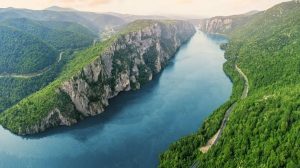
The remains of a mammoth were recently discovered in northern Bulgaria as Danube River levels reached a historic low, revealing bones potentially thousands of years old.
- Danube River is the second-longest river of the European continent, after the Russian Volga River.
- It flows from the confluence of the Brigach and Breg rivers, close to the German town of Donaueschingen in the Black Forest region of Germany.
- The river passes through 10 European nations: Germany, Austria, Hungary, Serbia, Bulgaria, Croatia, Slovakia, Moldova, Ukraine, and Romania.
- It ultimately drains into the Black Sea via the Danube Delta.
- The Danube delta is located in the Tulcea County of Romania and it is comparatively young and continuously growing.
- It is a UNESCO World Heritage Site renowned for its rich biodiversity.
- The Danube is fed by major tributaries like the Inn, Drava, Sava, Tisza, Prut, and Siret.
- The Danube River flows directly through many significant European cities, including four national capitals – Vienna (Austria), Bratislava (Slovakia), Budapest (Hungary), and Belgrade (Serbia).
- Countries along the river ship goods from ports of Belgrade, Serbia; Budapest, Hungary; Vienna, Austria; and Regensburg, Germany.
- Through the Rhine-Main-Danube Canal, it connects the North Sea at Rotterdam to the Black Sea at Sulina, forming a trans-European inland waterway.
Vitamin A : In News
Higher levels of vitamin A were significantly associated with better lung function in children and adults with asthma.
- Vitamin A is a fat-soluble vitamin primarily stored in the liver.
- Although vitamin A is often considered a single nutrient, it is actually a group of fat-soluble compounds, including retinol, retinal, and retinyl esters.
- There are two types of vitamin A that are found in the diet.
- Preformed vitamin A is found in animal products such as meat, fish, poultry, and dairy foods.
- Precursors to vitamin A, also known as provitamin A, are found in plant-based foods such as fruits and vegetables. The most common type of provitamin A is beta-carotene.
- In order to use these two types of vitamin A, the body must convert them into the active forms of the vitamin, retinal and retinoic acid.
- Foods with the highest levels of vitamin A include:
- Beef liver and other organ meats
- Some types of fish such as herring and salmon and cod fish oil
- Eggs
- Dairy products such as cheese and fortified milk
- Fortified breakfast cereals
- Orange and yellow vegetables and fruits, such as carrots, sweet potatoes, mangos, and cantaloupe
- Broccoli, spinach, and most dark green, leafy vegetables.
- It supports cell growth, immune function, fetal development, and vision.
- One of the best-known functions of vitamin A is its role in vision and eye health.
- It is also known as retinol because it produces the pigments in the retina of the eye.
- Vitamin A promotes good eyesight, especially in low light.
- Vitamin A helps protect surface tissues such as the skin, intestines, lungs, bladder, and inner ear.
- It supports immune function by promoting the growth and distribution of T cells, a type of white blood cell that protects the body from infection.
- Vitamin A supports male and female reproductive health and fetal development.
- Vitamin A deficiency can lead to:
- Reversible night blindness
- Non-reversible corneal damage known as xerophthalmia
- Hyperkeratosis or dry, scaly skin.
Himalayan Chandra Telescope (HCT):

25 years of the successful operations of the Himalayan Chandra Telescope (HCT) atop Hanle in Ladakh was recently celebrated with a conference highlighting its history, engineering challenges, scientific research, and the road ahead.
- It is a 2 meter optical-infrared telescope named after Nobel laureate Subramaniam Chandrasekhar.
- It is located at the Indian Astronomical Observatory (IAO) in Hanle near Leh in Ladakh.
- The cloudless skies and low atmospheric water vapour make it one of the best sites in the world for optical, infrared, sub-millimetre, and millimetre wavelengths.
- The telescope is remotely operated using a dedicated satellite communication link from the Centre for Research & Education in Science & Technology (CREST), Indian Institute of Astrophysics (IIA), Hosakote, about 35 km northeast of Bangalore.
- Currently, the HCT hosts HFOSC (a spectrograph and camera in the optical), uTIRSPEC (a near-infrared spectrometer and imager), and HESP (a high-resolution Echelle spectrograph).
- HCT is used by astronomers from across India, to study objects as varied as planets and asteroids, to stars and galaxies.
- Some research highlights have been spectroscopy of comets, study of atmospheres of exo-planets, and participation in the discovery of the famous Trappist 1b exoplanet in the field of planetary science.
Sooty Bark Disease:
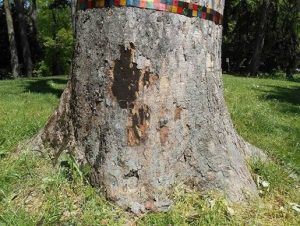
In British Columbia, Canada, maple trees have been observed with sooty bark disease, and researchers are working on ways to reduce the rate at which the disease spreads.
- Sooty Bark Disease (SBD) is a fungal disease of maple trees, which causes rapid wilting and mortality.
- The disease is caused by the fungus Cryptostroma corticale.
- It can also have implications for human health if fungal spores are inhaled.
- The fungus is endemic to the Great Lakes region of North America but is considered an introduced disease in Europe.
- It is most often noticed after periods of hot weather when extensive black sooty patches are revealed beneath the bark of affected trees.
- It is a disease which needs high temperatures for extended periods of time.
- The fungus may remain dormant inside a tree for years before becoming active under hot, dry conditions, and it can kill a tree in as little as three years.
- The main characteristic of sooty bark disease is the predominantly black discolouration caused by concentrated spore formation on the trunk.
- There is currently no control that exists for sooty bark disease.
Smooth Coated Otter:
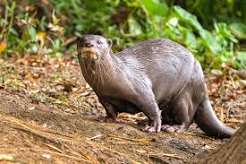
A recent study has identified evidence of a significant smooth coated otter population in Mettur dam and Cauvery River stretches of Salem district which prompted researchers to call for the area to be declared a protected freshwater habitat.
- Smooth Coated Otter is a species of otter, the only extant representative of the genus Lutrogale.
- It has rounder head, prominent naked noses, and flattened tails, webbed feet and strong dexterous paws that are armed with sharp claws.
- They live in southern and Southeast Asia, China, and India, and in Iraq there is a small population.
- It is mostly found in lowlands, coastal mangrove forests, peat swamp forests, freshwater wetlands, large forested rivers, lakes, and rice paddies.
- This species is equally comfortable on land and can travel long distances overland in search of suitable habitat.
- Features of Smooth-coated Otters:
- They are the largest otter in Southeast Asia.
- The fur of this species is smoother and shorter than that of other otters.
- They have short, tightly packed under fur and longer, water-repellant guard hairs.
- They are strong swimmers and hunt in groups. When fishing, they travel in a V-formation going upstream.
- Threats: Loss of habitat, habitat degradation due to water pollution from fertilizers and pesticides and poaching.
- Conservation Status:
- IUCN: Vulnerable
Raimona National Park: In News
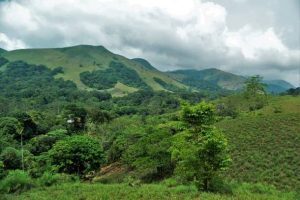
A firing incident was recently reported from the Athiabari Range of Raimona National Park in Assam’s Kokrajhar district, with a man suspected of involvement in illegal deforestation allegedly being shot by forest personnel.
- Raimona National Park is located in the Kokrajhar district of Assam within the Bodoland Territorial Region.
- It lies along the India-Bhutan border at the foothills of the Eastern Himalayas.
- It shares contiguous forest patches of Phibsoo Wildlife Sanctuary and Jigme Singye Wangchuck National Park in Bhutan.
- The Sankosh River flows along the western boundary.
- The Saralbhanga River lies on the eastern side.
- Pekua River forms the southern boundary.
- Mostly, this park flourishes with myriads of orchid species, other tropical rainforest species, and riverine grasslands.
- Other intriguing fauna includes varieties of bamboo and numerous wetland ecosystems.
- It boasts of an endangered primate species called the Golden Langur, which has been named the mascot of the Bodoland region.
- The park is also inhabited by various other species such as elephant, Bengal tiger, wild bison, white-spotted deer, clouded leopard, and wild buffalo.
e-Zero FIR System:

The Minister of State for Home informed that the government has introduced the system of registering e-Zero FIRs in cybercrime cases across eighteen States and Union Territories.
- It is a technology-based platform that enables the automated registration of Zero FIRs for value cyber financial crimes.
- It is a new mechanism where financial cybercrime complaints involving fraud above ₹10 lakh are automatically converted into FIRs if reported via the 1930 helpline or the National Cybercrime Reporting Portal (NCRP).
- It is enabled under Section 173 of the Bharatiya Nagarik Suraksha Sanhita (BNSS), 2023.
How Does the System Work? - Complaints of financial cybercrime losses above ₹10 lakh, once filed through 1930 or NCRP, will automatically trigger a Zero FIR at the e-Crime Police Station.
- This Zero FIR is immediately routed to the relevant territorial cybercrime police station, based on the complainant’s location.
- Victims are required to visit the cybercrime police station within 3 days to get the Zero FIR converted into a regular FIR.
- The process involves integration of: I4C’s National Cybercrime Reporting Portal (NCRP), and National Crime Records Bureau’s (NCRB) Crime and Criminal Tracking Network & Systems (CCTNS).
- It is led by the Indian Cybercrime Coordination Centre (I4C), Ministry of Home Affairs.
Pradhan Mantri Vidyalaxmi Scheme:
The Pradhan Mantri Vidyalaxmi scheme is positively contributing to the goals of Sustainable Development Goal 4 and NEP 2020 by advancing inclusive and equitable quality education.
- Pradhan Mantri Vidyalaxmi Scheme is a flagship initiative of Ministry of Education that seeks to make quality higher education accessible to deserving students facing financial constraints.
- It is available to students who have secured merit-based admission through competitive exams in any of the designated Quality Higher Education Institutions (QHEIs) in India.
- The scheme provides education loans for all degree and diploma courses.
- Eligibility Criteria for Higher Education Institutions:
- Top 100 ranked HEIs in the overall/ category-specific and/or domain-specific rankings in the latest list of National Institutional Ranking Framework (NIRF) published by the Ministry of Education
- Top 200 ranked HEIs under the governance of State/Union Territories governments in the latest list of NIRF published by the Ministry of Education
- All remaining HEIs under the governance of the Government of India.
- The repayment period of the education loan would be up to 15 years excluding the moratorium period (course period + 1 year).
- Loans up to ₹ 7.5 lakhs are provided 75% credit guarantee by Government of India.
- For students with up to ₹ 8 lakhs annual family income, the scheme provides for 3% interest subvention on loans up to ₹ 10 lakh.
- This is in addition to the full interest subvention already offered to students with up to ₹ Rs. 4.5 lakhs annual family income.
- The scheme offers affordable education loans with interest rates capped at the bank’s Externally Benchmarked Lending Rate (EBLR) + 0.5%.
- The educational loans are provided through Scheduled Banks, Regional Rural Banks (RRBs), and Cooperative Banks participating in the scheme.
- Under this, interest subvention and credit guarantee benefits are available only once for undergraduate, postgraduate, or integrated courses.
Machilipatnam ASW Warship:

The Machilipatnam (BY 529) Anti-Submarine Warfare Shallow Water Craft (ASW SWC) was launched.
- Machilipatnam ASW Warship is the seventh of the Mahe-class Anti-Submarine Warfare Shallow Water Craft (ASW-SWC).
- It derives its name from the historic port city of Machilipatnam, in Krishna district of Andhra Pradesh.
- It is built by Cochin Shipyard Limited (CSL) for the Indian Navy.
- It has a displacement of around 900 tonnes, a maximum speed of 25 knots and an endurance of 1,800 nautical miles.
- The ships are equipped with indigenously developed advanced systems, including hull-mounted sonar and low-frequency variable depth sonar, in line with the Government’s Atmanirbhar Bharat initiative.
- It is equipped for Underwater Surveillance, Anti-Submarine Warfare (ASW) operations, and Low Intensity Maritime Operations (LIMO), along with Mine Warfare capability.
- It has indigenous content exceeding 80 percent.
- It will further bolster coastal defence and enhance Maritime Domain Awareness.
DAANVEER Initiative:
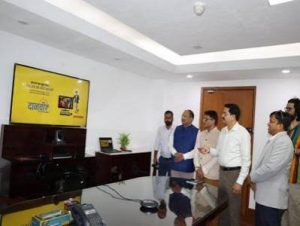
The Ministry of Panchayati Raj launched the DAANVEER initiative.
- It is a citizen participation initiative that enables individuals and organisations to voluntarily contribute computers to gram Panchayats.
- It is done through the ‘Meri Panchayat’ mobile application to strengthen digital infrastructure at the grassroots.
- It is an initiative of the Ministry of Panchayati Raj, it has been developed in collaboration with the National Informatics Centre (NIC) and DigiHaat.
- It provides an end-to-end digital and verifiable mechanism through which citizens and organisations can contribute towards the technology and infrastructure needs of gram panchayats.
- The initiative is available through the Meri Panchayat app, which is integrated with the DigiHaat marketplace.
- Donors can choose from pre-approved computer bundles mapped to state-specific technical specifications, while delivery details are automatically populated to eliminate additional paperwork.
- The platform also allows contributors to track their donations from dispatch to installation and provides them with a digital certificate of appreciation.
- Through this citizens can meaningfully participate in strengthening rural digital infrastructure while contributing to the broader vision of a digitally empowered and self-reliant rural India.
US -Saudi Arabia Nuclear Deal:

The US and Saudi Arabia signed a landmark Civil Nuclear Cooperation Agreement governed by Section 123 of the US Atomic Energy Act of 1954 (commonly known as the “123 Agreement”) along with a Bilateral Nuclear Safeguards Agreement, establishing the framework for a 30-year civilian nuclear partnership.
- The US announced that the agreement would proceed only if Saudi Arabia joins the Abraham Accords and normalises diplomatic relations with Israel, making the deal geopolitically contingent.
- Establishes a 30-year multi-billion-dollar civil nuclear partnership between the United States and Saudi Arabia.
- Enables the transfer of civil nuclear materials, equipment, technology, and expertise from the US to Saudi Arabia.
American nuclear companies will receive priority in developing Saudi Arabia’s civilian nuclear infrastructure. - Saudi Arabia will initially import nuclear fuel for its nuclear reactors.
- The agreement provides for a two-year joint feasibility study to assess the commercial viability of uranium enrichment in Saudi Arabia, potentially under a “black box” arrangement in which sensitive enrichment technologies remain under US control.
- If found viable, US companies will build and operate uranium enrichment facilities in the Kingdom, while sensitive enrichment technology will not be transferred to Saudi Arabia.
- Unlike the US -UAE Civil Nuclear Agreement (2009), Saudi Arabia is not required to permanently renounce uranium enrichment or spent fuel reprocessing (the so-called ‘Gold Standard’).
- The agreement does not mandate Saudi Arabia to adopt the International Atomic Energy Agency (IAEA) Additional Protocol, limiting the scope of intrusive inspections.
- However, critics argue that the agreement could set a precedent that gradually weakens global nuclear non-proliferation norms by legitimising the spread of dual-use nuclear technologies.
ILO Convention No. 193 on Decent Work in the Platform Economy:
At the 114th International Labour Conference in Geneva, the International Labour Organization (ILO) officially adopted Convention No. 193, titled “Decent Work in the Platform Economy”.
- Passed by an overwhelming majority of 406 votes in favor (including nations like China, Brazil, Germany, France, South Africa, and Japan) it marks the world’s first legally binding international treaty specifically designed for app-based gig and platform workers.
- Under the ILO’s tripartite voting framework (comprising government, employer, and worker representatives), India’s government delegates abstained, whereas both its employer and worker delegates voted in favor of the treaty.
- ILO Convention No. 193, the world’s first legally binding treaty on gig and platform workers, establishes minimum labour standards such as fair wages, social security, occupational safety, and algorithmic transparency, while India abstained citing domestic legal and policy considerations.
- As India’s gig economy expands rapidly, bridging the gap between existing laws and effective implementation through social security, algorithmic accountability, and balanced regulation will be crucial for ensuring inclusive and sustainable growth.
- ILO Convention No. 193: Adopted in June 2026, ILO Convention No. 193 establishes a minimum floor of labour rights, including fair wages, social security, and workplace protections regardless of whether workers are classified as employees, independent contractors, or platform partners.
- Key Provisions:
- Guarantees minimum wages, timely payment, occupational safety and health, and social security.
- Mandates algorithmic transparency, requiring platforms to explain automated decisions such as work allocation, wage determination, ratings, and account deactivation.
- Requires human oversight in significant automated decisions.
- Directs governments to classify workers based on the actual nature of work rather than contractual labels, preventing the misclassification of employees as independent contractors.
- India’s government abstained, while its employer and worker delegates voted in favour, reflecting differing positions within the ILO’s tripartite system.
- The Centre argues that the Code on Social Security, 2020 already provides a legal framework for gig and platform workers.
- India generally ratifies ILO Conventions only after ensuring full alignment with domestic laws.
- As labour is a Concurrent List subject, the Centre prefers retaining flexibility for States to frame their own labour regulations.
- The Convention’s provisions on worker reclassification and algorithmic transparency could increase compliance costs, affect the platform business model, and discourage digital innovation.
Gulveer Singh and Harjinder Kaur Win Silver at CWG 2026:

Indian long-distance runner Gulveer Singh became the 1st Indian man to win a Commonwealth Games medal in the 10,000 metres, securing silver at the 2026 Games in Glasgow. Indian weightlifter Harjinder Kaur also won silver in the women’s 69 kg category, taking India’s weightlifting medal tally to seven.
- Gulveer Singh
- The national record holder completed the race in 27 minutes 49.8 seconds, finishing behind Australia’s Ky Robinson, while David Mullarkey of the Isle of Man won bronze.
- It was India’s first Commonwealth Games medal in the 10,000m since Kavita Raut won bronze in the women’s event in 2010.
- The race also marked the first time since 1986 that no African athlete finished on the men’s 10,000m podium.
- With Gulveer’s achievement, India secured its second athletics silver at the Games, after Sarvesh Kushare’s medal in the men’s high jump.
- Harjinder Kaur
- Harjinder lifted 101 kg in the snatch and 126 kg in the clean and jerk, both personal bests, for a total of 227 kg.
- She remained in second place throughout the competition and broke the Commonwealth Games snatch record twice during her attempts.
- Canada’s Charlotte Simoneau won gold with a Commonwealth Games record total of 240 kg, while Australia’s Nya Phebe Hayman secured bronze with 218 kg.
- The medal marked Harjinder’s second consecutive Commonwealth Games podium finish and improved upon the bronze she won at Birmingham 2022.
The Coal Exchange Rules, 2026:
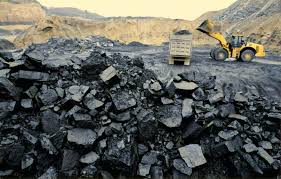
Union Minister of State for Coal and Mines, provided details in the Lok Sabha regarding the Coal Exchange Rules, 2026.
- The Coal Exchange Rules, 2026 establish a statutory regulatory and operational framework to set up and manage Coal Exchanges—centralized electronic trading platforms where buyers and sellers transact, trade, and enter into delivery-based spot contracts for coal, lignite, and their processed forms.
- Notified under Section 18B of the Mines and Minerals (Development and Regulation) Act, 1957 (MMDR Act).
- Aim is to transition India’s coal sector from legacy, non-market allocation models to a transparent, competitive, and market-driven electronic ecosystem—ensuring fair price discovery, information symmetry, and efficient supply delivery.
- Key Features:
- Statutory Oversight by CCO: The Coal Controller Organisation (CCO) evaluates, approves, renews, or revokes exchange registrations and exercises administrative control over bidding mechanisms, transaction fee ceilings, and bye-laws.
- Open Market Participation: Allows any entity—including commercial miners, captive mine owners, Public Sector Undertakings (PSUs), and non-regulated small and medium consumers—to trade delivery-based contracts.
- Dynamic Price & Quality Adjustment: Prices are discovered competitively through CCO-approved algorithms. Final trade settlements are dynamically adjusted based on actual coal quality certifications issued by accredited coal sampling agencies.
- Settlement Guarantee Fund (SGF): Exchanges must operate a dedicated Settlement Guarantee Fund managed by an independent committee, keeping at least 50% invested in safe, liquid instruments to manage counterparty risk.
- Market Surveillance &Audit Trail: Mandates a Market Surveillance Committee and a dedicated surveillance department to monitor daily trading, maintain automated audit trails for all bids, conduct CISA-certified IT system security audits, and operate a disaster recovery site.
- Grievance Redressal & Interventions: Establishes a dedicated Grievance Redressal Forum, empowering the CCO to issue interim orders, conduct inspections, and intervene to prevent cartelization, insider trading, or market manipulation.
The Houbara Bustard:
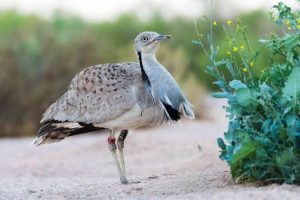
In a major cross-border conservation milestone, Uzbekistan, Kazakhstan, and the UAE released 672 captive-bred Houbara Bustards (Chlamydotis macqueenii) into Karakalpakstan’s Aral Sea region.
- The Houbara Bustard (specifically the Asian Houbara or MacQueen’s bustard, Chlamydotis macqueenii) is a medium-to-large, ground-dwelling migratory bird belonging to the bustard family (Otididae).
- It is renowned for its elusive nature and specialized adaptation to hyper-arid desert environments.
- Thrives in arid and semi-arid landscapes, including sandy and stony deserts, gravel plains, dry steppes, and open shrublands across Central Asia, the Middle East, North Africa, and parts of South Asia (such as the Thar Desert and Rann of Kutch).
- Conservation Status:
- IUCN Red List: Vulnerable
- CITES: Appendix I (Strictly prohibiting international commercial trade)
- Convention on Migratory Species (CMS): Appendix I (Requires strict protection across migratory corridors)



