Today’s Current Affairs: 3rd Sep 2026 for UPSC IAS exams, State PSC exams, SSC CGL, State SSC, RRB, Railways, Banking Exam & IBPS, etc
Table of Contents
Banks Seek CRR Cut on Green Deposits:
In a significant move to accelerate India’s transition towards a net-zero economy, public sector banks have approached the Reserve Bank of India (RBI) seeking a reduction in the Cash Reserve Ratio (CRR) applicable to green deposits.
- Banks have advocated for an initial CRR reduction of up to 100 basis points (1%) on green deposits to make green lending cheaper and prioritize it as a preferred credit option.
- Despite growth, green deposits raised in 2025-26 were only around Rs 4,000-5,000 crore, which is significantly below the critical mass required to fund India’s climate goals.
- According to the NITI Aayog report ‘Scenario towards Viksit Bharat & Net Zero – Financing Needs’, India requires a massive USD 22.7 trillion in cumulative investment to successfully achieve its net-zero transition.
- A lower CRR would reduce funding costs and free up capital, compensating banks for the higher compliance costs incurred in continuous project evaluation to prevent greenwashing (misuse of green funds).
- To ease the burden on domestic banks and NBFCs, India must finalize its under-development climate finance taxonomy and create a coordinated regulatory environment to attract long-term global capital.
- A green deposit is an interest-bearing deposit received by a regulated entity (such as a bank or an NBFC) for a fixed period.
- The proceeds from these deposits are earmarked strictly for allocation towards eligible green projects.
- Under the RBI Green Deposit Framework 2023, funds must be used for sectors like renewable energy, waste management, clean transportation, climate change adaptation, and energy efficiency.
- Green Deposits differ from Green Bonds, which are debt securities issued to raise funds for eligible green projects.
Cash Reserve Ratio (CRR):
- CRR is the percentage of a bank’s Net Demand and Time Liabilities (NDTL) that must be maintained as cash reserves with the RBI.
- Banks do not earn any interest on the money parked with the RBI under the CRR mandate.
- A high CRR drains excess liquidity from the banking system, reducing the banks’ lending capacity. Conversely, a lower CRR frees up capital, allowing banks to lend more money to borrowers.
26th Shanghai Cooperation Organisation Summit:
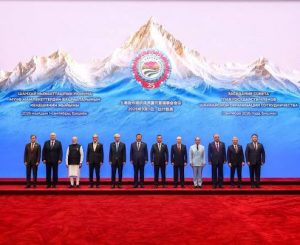
The 26th Meeting of the Council of Heads of State (CHS) of the Shanghai Cooperation Organisation (SCO) and the inaugural “SCO Plus” meeting were held in Bishkek, Kyrgyzstan.
- Marking the 25th anniversary of the SCO, the summit was chaired by Kyrgyzstan under the theme, “25 Years of the SCO: Together for Sustainable Peace, Development and Prosperity.”
- The 26th SCO Summit in Bishkek strengthened cooperation in regional security, counter-terrorism, connectivity, technology, environment and economic development, while adopting several institutional and cooperation measures.
- For India, the SCO remains an important platform to advance strategic autonomy, Central Asian connectivity, counter-terrorism and multi-alignment, while promoting a more multipolar world order.
- The SCO leaders signed and issued the Bishkek Declaration, reaffirming cooperation on regional peace, security, development and the organisation’s future direction.
- The leaders approved the Protocol on Amendments and Additions to the SCO Charter, aimed at updating the organisation’s institutional framework.
- It allows newer members, such as India, to actively participate in shaping the organization’s future structural and legal framework.
- The SCO leaders approved the regulations to establish the Universal Centre for Countering Challenges and Threats to the Security of SCO Member States.
- This aims to enhance intelligence sharing against terrorism, extremism, and organized crime.
- The leaders approved the regulations on the Executive Committee of the SCO Anti-Drug Centre and adopted programmes on combating drug addiction and countering the spread of synthetic drugs and their precursors up to 2030.
- Leaders signed an action plan for the development of ports and logistics centers across member states (2026–2030) and established the framework for the SCO “Green Technology Corridor”.
- The summit approved the SCO–CSTO–CIS Roadmap for trilateral cooperation among the SCO, Collective Security Treaty Organization (CSTO), and Commonwealth of Independent States (CIS).
- It also decided to sign a Memorandum of Understanding (MoU) between the SCO Secretariat and the African Union Commission, further expanding the SCO’s engagement with regional organisations.
- The SCO adopted a Plan of Cooperation on Ensuring International Information Security for 2026–2028.
- The leaders adopted an initiative on the Conservation and Sustainable Management of Biodiversity in SCO Member States for 2026–2031, along with a joint action plan.
- The rotating SCO chairmanship for 2026–2027 was handed over to Pakistan, which announced the theme “Turning Vision into Action: Connectivity, Innovation and Shared Prosperity” for its tenure.
- Lahore was also designated as the SCO Tourism and Cultural Capital for 2026–2027.
6th World Nomad Games:
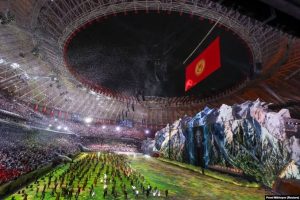
The Prime Minister of India attended the opening ceremony of the 6th World Nomad Games in Bishkek, Kyrgyzstan, highlighting India’s growing cultural and strategic engagement with Central Asia.
- World Nomad Games established via the 2012 Bishkek Declaration (Kyrgyzstan, Azerbaijan, Kazakhstan, Turkey) to promote the traditions, history and cultural heritage of nomadic peoples.
- First held in 2014, the World Nomad Games (WNG) has evolved into a UN-recognised biennial platform for intercultural dialogue and sustainable development, attracting participants from 90+ countries and hosted across regions including Central Asia, Türkiye and Kazakhstan.
- Distinct from the standard Olympics, the event emphasizes ancestral civilizational heritage over strict geopolitical ties, uniting nations to celebrate traditional nomadic survival practices like horseback riding, falconry, and indigenous wrestling.
- Features traditional athletic and tactical games such as Kok Boru, Kurash, Goresh, Mongol Bokh, archery, and Toguz Korgool.
- Cultural Programme Showcases indigenous music, crafts, cuisine, and festivals. It is officially inscribed on the UNESCO Register of Good Safeguarding Practices under the project title “Nomad Games: Rediscovering Heritage, Celebrating Diversity”.
- Dedicated to researching nomadic history, preserving traditional knowledge, and fostering intercultural dialogue.
- Fielded an 87-member contingent competing in traditional disciplines such as Kurash, Goresh, Mongol Bokh (wrestling), Kok Boru (equestrian), and Toguz Korgool (strategy board games).
- Kok Boru, a traditional Kyrgyz horseback game similar to polo, recognised by UNESCO as Intangible Cultural Heritage of Humanity in 2017.
Water Hyacinth Menace in Vembanad Lake:
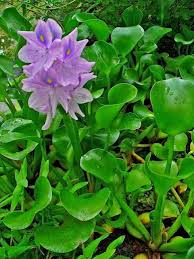
The State Wetland Authority Kerala (SWAK) is launching a one-month pilot project at Kumarakom, Kerala, to control the spread of invasive water hyacinth (Eichhornia crassipes) in Vembanad Lake using robotic technology.
- The project is being implemented under the National Plan for Conservation of Aquatic Ecosystems (NPCA) of the Ministry of Environment, Forest and Climate Change (MoEFCC).
- Vembanad Lake is a major Ramsar Wetland Site and one of the most important aquatic ecosystems of Kerala, supporting biodiversity, fisheries, tourism, and local livelihoods.
- Water hyacinth (Eichhornia crassipes) is a free-floating freshwater aquatic weed belonging to the Pontederiaceae family and is an invasive alien species.
- It is native to the Amazon Basin of South America and was introduced in many countries, including India, as an ornamental plant due to its attractive purple flowers.
- Water hyacinth reproduces rapidly and forms dense floating mats, blocking sunlight penetration and reducing dissolved oxygen levels, thereby affecting aquatic biodiversity.
- Excessive growth causes eutrophication and chokes rivers, lakes, ponds and wetlands, disrupting fisheries, navigation, irrigation channels, tourism activities and recreational use.
- Controlled through mechanical removal, biological control using Neochetina weevils, and reduction of nutrient pollution/sewage discharge to prevent excessive growth.
- Can be utilised for compost, bio-fertiliser, soil supplements, handicrafts, paper production, and phytoremediation (removal of pollutants from water).
Cyber-Physical Systems:

The Government has highlighted the growing importance of Cyber-Physical Systems (CPS) in building a technology-driven future. India is developing a strong CPS ecosystem through the National Mission on Interdisciplinary Cyber-Physical Systems (NM-ICPS).
- Cyber-Physical Systems (CPS) are intelligent systems that integrate the physical and digital worlds through sensors, computing systems, software, communication networks and actuators. They enable machines to sense, analyse, decide and respond to real-time conditions.
- CPS connects computation, communication, and physical processes through a continuous feedback loop. Sensors collect data from the environment, computing systems analyse the information, and actuators perform necessary actions.
- Examples of CPS Applications:
- Autonomous Vehicles: Driverless cars use sensors and AI-based systems to navigate roads with minimal human intervention.
- Smart Manufacturing: Smart factories use CPS for automated monitoring, optimisation and Industry 4.0 applications.
- Healthcare: Intelligent medical devices continuously monitor patients and support timely medical interventions.
- Smart Buildings: Automated systems regulate lighting, temperature, and energy use based on real-time conditions.
- CPS enables the development of intelligent, connected, and responsive systems, supporting advancements in areas such as automation, healthcare, transportation, manufacturing, and smart infrastructure.
Shakti Sharma Becomes 1st Non-Medical Woman Two-Star Officer:
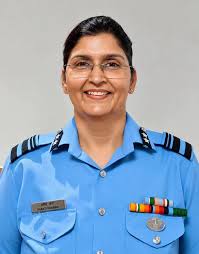
Shakti Sharma has achieved a historic milestone by becoming the first woman officer from the non-medical stream in the Indian Defence Forces to attain the rank of Air Vice Marshal or equivalent. Air Vice Marshal (AVM) is a two-star rank in the Indian Air Force, equivalent to Major General in the Indian Army and Rear Admiral in the Indian Navy.
- She was commissioned into the Education Branch of the Indian Air Force (IAF) on 18th June 1994 and has completed over three decades of service.
- During her career, she served in diverse roles across training establishments, field stations, Command Headquarters, and Air Headquarters, contributing to institutional development within the IAF.
- She played a key role in establishing IAF Chairs of Excellence at IIT Kanpur and Pune University to promote research, knowledge exchange, and strategic defence collaboration.
- Before becoming Air Vice Marshal, she became the first woman officer from the Tri-Services to command a Sainik School, serving as the Principal of Sainik School, Kapurthala.
- The Indian Air Force expanded career opportunities for women officers after granting Permanent Commission to women officers in selected branches from 2010, enabling greater career progression and leadership opportunities.
India Rejects Hague Court’s Ruling on Indus Waters Treaty:
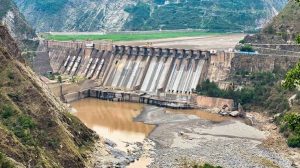
India rejected the Hague-based Court of Arbitration’s (CoA) ruling on the “abeyance” of the Indus Waters Treaty (IWT), terming it illegally constituted and asserting that it has no jurisdiction over India’s sovereign decisions.
- The CoA ruled that India’s decision to place the IWT in “abeyance” following the April 2025 Pahalgam terror attack was not permissible under the treaty or international law.
- The court stated that the treaty governs only water rights and does not address terrorism or the use of force.
- It concluded that cross-border terrorism does not establish a material breach of the water pact by Pakistan.
- The Court also imposed interim restrictions on certain construction activities at the Ratle project on the Chenab River until 90 days after the Neutral Expert gives a final decision, expected in 2027.
- In 2016, Pakistan sought a Court of Arbitration, while India requested a Neutral Expert to examine technical issues.
- India argues that simultaneous proceedings violate the IWT’s sequential dispute-resolution mechanism.
- The World Bank paused both processes in 2016 but allowed them to proceed simultaneously in 2022. India joined the Neutral Expert process but boycotted the CoA proceedings.
- India mai1ntains that CoA has no jurisdiction over India’s decision to keep the IWT in abeyance.
9th Foundation Day of India Post Payments Bank (IPPB):
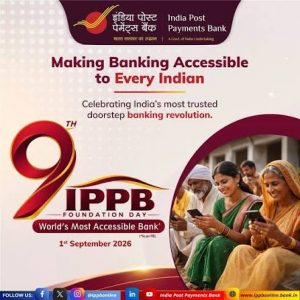
India Post Payments Bank (IPPB) celebrated its 9th Foundation Day (IPPB Day 2026) on 1st September 2026.
- India Post Payments Bank (IPPB) was launched on 1st September 2018 under the Department of Posts, Ministry of Communications, with 100% equity ownership by the Government of India.
- IPPB was established to create an accessible, affordable, and trusted banking system for the common citizen by removing barriers faced by the unbanked and underbanked population.
- IPPB leverages the extensive India Post network of around 1.65 lakh post offices, including approximately 1.40 lakh rural post offices, and nearly 3 lakh postal employees to provide doorstep banking services.
- IPPB has a customer base of 13.25 crore, with 77% customers from rural areas and 49% women customers. Around 6.5 crore DBT beneficiaries received government benefits worth approximately ₹1.55 lakh crore through IPPB.
- IPPB operates on the principles of Paperless, Cashless, and Presence-less banking by using India Stack, Core Banking System (CBS)-integrated smartphones, and biometric devices.
- New Savings Products:
- SHG Savings Account: It provides a simple and secure banking solution for Self Help Groups (SHGs) and rural micro-entrepreneurs.
- Surakshit Savings Account: It offers enhanced protection through ₹25,000 cyber-insurance coverage against risks such as phishing, spoofing, and SIM jacking.
- Sampoorna Savings Account: It combines financial security with health and cyber protection benefits through wellness and insurance features.