
Today’s Current Affairs: 4th Aug 2026 for UPSC IAS exams, State PSC exams, SSC CGL, State SSC, RRB, Railways, Banking Exam & IBPS, etc
Table of Contents
What is Leptospirosis?
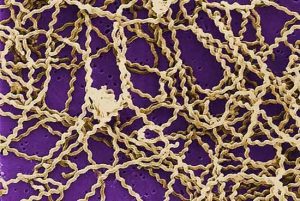
Leptospirosis, which began to be reported in Kerala since 1989, has been endemic in the State for the past three decades or more and has now become the communicable disease with the highest mortality profile.
- Leptospirosis is a flu-like bacterial disease that affects both humans and animals.
- It is caused by the bacterium Leptospira that can be found in contaminated water or soil.
- It is a zoonotic disease. This means it’s transmitted between animals and humans.
- Transmission:
- Contact with water or soil containing urine or body fluids from infected animals, especially after hurricanes, flooding, or heavy rainfall.
- Directly touching body fluids from an infected animal.
- Eating food or drinking water contaminated by the urine of an infected animal.
- The bacteria enter the body through cuts or abrasions on the skin or through the mucous membranes of the mouth, nose, and eyes.
- Person-to-person transmission is rare.
- Leptospirosis has a global distribution but is most common in tropical and subtropical regions, where warm temperatures, high humidity, and heavy rainfall favor the survival of Leptospira bacteria.
- People who work outdoors, such as those engaged in hiking, gardening, outdoor cleaning and maintenance, or handling animals, as well as people who participate in outdoor water sports like swimming or wading in contaminated lakes and rivers, are at higher risks of the disease.
- Common symptoms include high fever, severe headache, chills, muscle aches, and vomiting.
- Other symptoms, including jaundice, red eyes, abdominal pain, diarrhoea, or rash, may also occur.
- Without treatment, leptospirosis in people can lead to kidney damage, meningitis (inflammation of the membrane around the brain and spinal cord), liver failure, trouble breathing, and even death.
- It is treated with antibiotics, such as doxycycline or penicillin.
- Intravenous (IV) antibiotics may be needed for people who have more severe leptospirosis symptoms.
What is Lepidoptera?
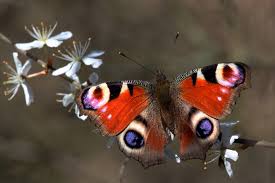
Scientists of the Zoological Survey of India (ZSI) have come out with a detailed Catalogue of Lepidoptera (Butterflies & Moths) of India recently.
- Lepidoptera is an insect order comprising species of butterflies and moths.
- This order of insects is second in size only to Coleoptera, the beetles.
- The name ‘’Lepidoptera’’ is derived from the Greek, meaning “scaly winged,” and refers to the characteristic covering of microscopic dustlike scales on the wings.
- With the exception of a few moths, all adult lepidopterans have two pairs of wings.
- Because of their day-flying habits and bright colors, the butterflies are more familiar than the chiefly night-flying and dull-colored moths, but the latter are far more varied and abundant.
- Lepidopterans live on every continent except Antarctica.
- Though they are far more numerous and diversified in the tropics, some species survive at the limits of polar vegetation.
- The life cycle of lepidopterans consists of four stages: egg, larva (caterpillar), pupa, and adult.
- They are mostly herbivorous (folivorous) as caterpillars and nectarivorous as adults.
- They play an important role in the natural ecosystem as pollinators and serve as primary consumers in the food chain.
- Conversely, their larvae (caterpillars) are considered very problematic to vegetation in agriculture, as they consume large quantities of plant matter (mostly foliage) to sustain growth.
- Silkworm (Bombyx mori), a moth, is the source of commercial silk.
Catalogue of Lepidoptera (Butterflies & Moths) of India:
- India is home to 13,703 species of lepidoptera, which is about 25% of the total lepidoptera found across the globe.
- Of the 13,703 species of lepidoptera, 1,417 are butterflies, and the remaining 12,286 are moths.
- Among the 13,703 species of lepidoptera, the scientists have identified and catalogued 2,205 species of Geometroidea, nocturnal pollinators taking over the “night shift” when daytime butterflies rest.
- These 2,205 species account for 8% of the world’s known species in this superfamily.
PowerBank-50:
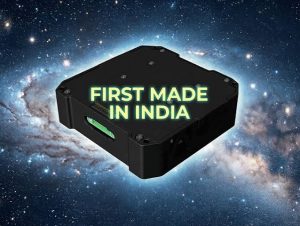
Hyderabad-based space startup TakeMe2Space recently announced that its PowerBank-50 satellite battery pack has now earned the ‘flight heritage’ tag.
- PowerBank-50 is an indigenously built satellite battery pack developed by Hyderabad-based spacetech startup TakeMe2Space.
- It is India’s first indigenously developed satellite battery to earn the coveted ‘flight heritage’ status.
- The recognition comes after the battery pack has successfully completed its first mission aboard Skyroot Aerospace’s Vikram-1 on its maiden flight — Mission ‘Aagaman’.
- Vikram-1 became the first privately developed Indian rocket to reach orbit, making India only the third country in the world, after the United States and China, where a private company has achieved orbital launch capability.
- A PowerBank-50 unit powered Cosmoserve Space’s experimental payload aboard the rocket’s Orbital Adjustment Module (OAM) at an altitude of 450 km.
- The battery performed as designed throughout launch and in the harsh conditions of space, including vacuum, radiation, and extreme temperature
PowerBank-50 Features:
- It is a compact lithium-ion battery pack designed specifically for small satellites.
- It stores over 50 Wh of energy and is equipped with an intelligent battery management system, onboard heaters, and an aluminium flight enclosure.
- Multiple PowerBank-50 units can be stacked together to power CubeSats and microsatellites, with an operational life of up to five years in low-Earth orbit.
Amboseli National Park:
Wildlife authorities in Kenya have launched an investigation after 15 elephants died over the past month in Amboseli National Park, with preliminary tests detecting a potential toxic substance in samples collected from the animals.
- Amboseli National Park s located in southern Kenya near the border with Tanzania.
- The name ‘’Amboseli’’ comes from the Maasai (nomadic pastoralists of East Africa) word “Empusel,” which means “salty, dusty place.”
- It covers approximately 392 sq.km.
- Though relatively small in size, the park is part of a much larger ecosystem that extends across the Kenya–Tanzania border, linking with protected areas surrounding Mount Kilimanjaro.
- Mount Kilimanjaro, Africa’s highest peak, rises dramatically just beyond the park’s boundary and provides one of the most recognizable backdrops in all of Africa.
- Amboseli is best known for its large herds of free-ranging African elephants.
- The geography of Amboseli is defined by a mix of dry lakebeds, open savannas, acacia woodlands, and lush wetlands fed by underground water flowing from the melting snow of Mount Kilimanjaro.
- The remnants of an ancient lake basin form the park’s central plains, which can appear dusty and arid for much of the year.
- In addition to its famous elephants, the park is home to lions, cheetahs, hyenas, and a variety of herbivores including zebras, wildebeest, buffalo, and giraffes.
- The wetlands attract numerous bird species, making Amboseli an important site for birdwatching, with flamingos, pelicans, and many migratory birds frequently observed.
- The Amboseli ecosystem was officially designated a UNESCO Biosphere Reserve in 1991.
Rakthamichthys anchi : New Species Of Blind and Blood-Red Eel
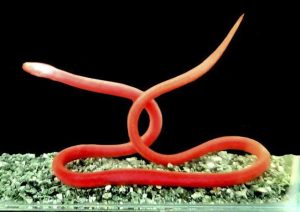
Scientists have discovered a new species of blind and blood-red eel from two non-descript dug-out wells located in a village in Assam’s Goalpara district and has been given the name Rakthamichthys anchi.
- Rakthamichthys anchi is a new species of phreatobitic synbranchid eel discovered in Assam.
- The name anchi is a Garo word meaning ‘blood’.
- The Rakthamichthys genus of phreatobitic (residing exclusively within the phreatic zone of groundwater aquifers) swamp eels (Synbranchidae) is endemic to India.
- It is now the second swamp eel of the genus to be discovered in the Northeast.
- Its body carries no pigment at all.
- Its blood red colour, which gives the species its name, actually comes from blood vessels showing through its almost transparent skin.
Eels:
- Eels are elongated, slender fish, of which there are over 500 species characterized by elongate wormlike bodies.
- They lack scales, and their dorsal and anal fins run continuously around their tail.
- Eels can be found in oceans across the globe, and many species can be found in freshwater habitats as well.
- Eels are primarily predatory fish with carnivorous diets. Some eel species are cannibalistic. Their diet typically consists of smaller fish, invertebrates, crustaceans etc.
Ujh Multipurpose Project:
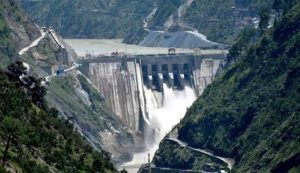
The Union Minister of State for Prime Minister’s Office recently reviewed the status and phased implementation roadmap of the Ujh Multipurpose Project in the Kathua district of Jammu and Kashmir.
- Ujh Multipurpose Project is a multipurpose (Hydropower, Irrigation, and Drinking) project in the Kathua District of Jammu and Kashmir on the River Ujh, which is a major tributary of River Ravi.
- The project, which was declared as a “national project” in the year 2008, involves the construction of a 116-metre-high concrete-faced rockfill dam.
- It is expected to generate between 186 MW and 212 MW of hydroelectric power.
- The project will also supply drinking water to the Kathua district and make water available for industrial use.
- Apart from its developmental significance, the project also has a crucial strategic dimension.
- Backed by the Ministry of Home Affairs, the project is expected to regulate water flows more effectively and help plug vulnerable cross-border infiltration routes along the riverbed.
- After construction of the project, utilization of waters of Eastern Rivers allotted to India as per the Indus Water Treaty would be enhanced by utilizing the flow that presently goes across the border unutilized.
Egypt : Earthquake
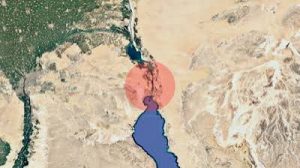
An earthquake measuring magnitude 5.4 struck off Egypt.
- Egypt is located in the northeast corner of Africa to the southwest corner of Asia.
- The Sinai Peninsula of Egypt acts as the land bridge between Africa and Asia continents.
- It has land borders with Sudan (south), Libya (west), Israel and the Gaza Strip (northeast).
- It has a coastline on the Mediterranean Sea (North) while the Red Sea and Gulf of Aqaba border it to the east.
- Capital City: Cairo
- It has a tropical climate and has high temperatures throughout the year.
- Its topography is marked by a striking contrast between its arid desert regions and the fertile Nile River Valley.
- The Nile River, the longest river in the world, flows from south to north through Egypt
- Its highest point Mount Catherine
- Egypt’s natural resources include petroleum, natural gas, phosphates, and iron ore.
Asiatic Wild Buffalo:
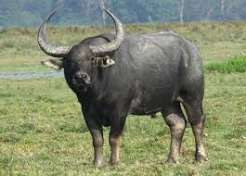
The Chhattisgarh Forest Department is planning to translocate wild buffaloes from Assam and keep them in enclosures at the Pamed Wildlife Sanctuary, the Udanti Sitanadi Tiger Reserve and the Indravati Tiger Reserve (ITR).
- Asiatic Wild Buffalo is the largest wild bovine in the world.
- Asiatic buffalo, Wild water buffalo, Asian buffalo, Wild Asian buffalo
- It includes swamps, flooded grasslands, other wetlands, alluvial plains, and densely vegetated river valleys.
- It is found in Southern Nepal, eastern and central India, southern Bhutan and western Thailand.
- India is home to more than 90% of the global wild water buffalo population, with most found in Assam and smaller populations in Meghalaya, Chhattisgarh and Maharashtra’s Kolamarka forests.
- These are diurnal and nocturnal animals.
- These are herbivorous (folivorous, graminivorous) animals and regular diet includes aquatic plants, crops, grasses, herbs, leaves, and bark of trees.
- Threats: Parasites and diseases, hunting, loss of habitat, interbreeding of wild buffaloes with domestic.
- Conservation Status:
- IUCN Red List: Endangered
- Wildlife Protection Act, 1972: Schedule I
National Roll-out Plan for the Vessel Communication and Support System:
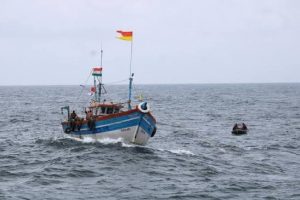
The Union Department of Fisheries approved the national rollout of the Vessel Communication and Support System (VCSS) under the Pradhan Mantri Matsya Sampada Yojana.
- It envisages installation of indigenously developed transponders on one lakh marine fishing vessels covering mechanized and motorized vessels of all 13 coastal States and UTs.
- It also focuses on establishment of the required earth station and associated communication infrastructure and development of the ‘Nabhmitra’ application in regional languages.
- The transponders are provided free of cost to eligible fishermen under the project.
- The project will be implemented on a 60:40 cost-sharing basis between the Centre and the States, while Union Territories will receive 100 per cent central assistance.
- Nodal Ministry: Ministry of Fisheries, Animal Husbandry & Dairying
- The Vessel Communication and Support System is a satellite based two-way communication system.
- It helps the fishers out at sea for sea-safety and security, provides alerts during adverse weather conditions, ‘No Fishing Zones’, International Maritime Boundary Line (IMBL) with geo-fencing and integration with the Nabhmitra App.
- It is being implemented with technical support of Indian Space Research Organization (ISRO).
- ISRO has also developed the ‘Nabhmitra’ application to provide real-time communication and support services to the marine fishing community.
- Nabhmitra’ application offers a range of features including periodic position reporting, two-way messaging, emergency and SOS alerts, automatic geo-fencing-based boundary crossing warnings, weather and cyclone advisories, emergency weather alerts, Potential Fishing Zone (PFZ) information, navigational assistance, and an e-Token/Trip Declaration system.
Cholanaikkan Tribe:
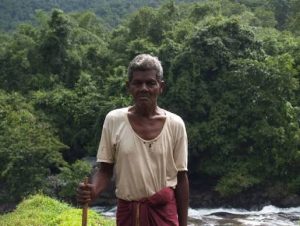
Members of the Cholanaikkan tribe came out from the forest to receive essential government documents at an event organised by the district administration in Kerala.
- Cholanaikkans are an ethnic tribal community distributed only in the Nilambur valley of Nilgiri Biosphere Reserve, Western Ghats of Kerala state.
- The Cholanaikkans (coolanaaykkan) are called the Cavemen of Kerala.
- These people are regarded as one of Asia’s last surviving cave-dwelling indigenous communities.
- They call themselves as Malanaikan or Sholanaikan. Shola or chola means deep thicket in the forest and naikan means king.
- They live deep in dense forest, mostly in rock caves called Kallulai (Kallu – rock, aalai – cave), near the banks of streams.
- They are divided into smaller groups called Jenmam. They have no fixed dwellings but prefer to live close to water sources.
- They speak the Cholanaikkan language, which is categorised into the Dravidian family by linguistic experts,
- They are largely depending on collecting forest produce for their livelihood, rarely come out of the forest.
- They are classified as a Particularly Vulnerable Tribal Group (PVTG).
Commonwealth Games 2026 : India’s Position

India finished 4th at the 2026 Commonwealth Games in Glasgow, achieving several landmark firsts.
- During the closing ceremony, India officially took over as the host nation for the landmark centenary 2030 Commonwealth Games in Ahmedabad, with Olympic champion Neeraj Chopra receiving the Commonwealth Flag and Jaismine Lamboria, who clinched the women’s 57kg boxing gold, led the Indian contingent as the flag bearer during the closing ceremony.
- India finished the campaign with 39 medals (13 Gold, 17 Silver, and 9 Bronze), securing the 4th position globally behind Australia, England, and Canada.
- Achieved the feat despite competing with a reduced contingent of 122 athletes following doping-related eligibility restrictions, and the exclusion of traditional medal-rich sports such as shooting, wrestling, badminton, hockey, and table tennis, which had contributed 25 of India’s 61 medals at the Birmingham 2022 Commonwealth Games.
- While the absolute medal count is lower than the 2022 Commonwealth Games in Birmingham (61 total medals).
- India’s Major Achievements:
- Top Medal Winners: Boxing emerged as India’s most successful discipline with 10 medals (7 Gold, 3 Silver), recording the highest boxing gold tally by any nation at a single Commonwealth Games.
- India recorded its best-ever Commonwealth Games para campaign, winning 7 medals, equalling the combined tally from all previous editions.
Major Success: - Javelin: Neeraj Chopra returned to the Commonwealth Games with a silver medal in men’s javelin throw, after missing Birmingham 2022.
- Judo Breakthroughs: Asmita Dey and Harsh Singh scripted history by becoming India’s first-ever Commonwealth Games gold medalists in Judo.
- Decathlon Success: Tejaswin Shankar became the first Indian to win a CWG medal in the decathlon, securing a bronze.
- Double Medalist: Track and field athlete Gulveer Singh emerged as India’s sole double medalist in Glasgow, securing a silver in the men’s 10,000m and a bronze in the 5,000m.
- Hat-trick: Mirabai Chanu became the first Indian weightlifter to win three consecutive Commonwealth Games gold medals, securing her historic titles at the Gold Coast 2018, Birmingham 2022, and Glasgow 2026 games.
- Women boxers led the charge with five gold medals (Sakshi Chaudhary, Preeti Pawar, Jaismine Lamboria, Priya Ghanghas, and Arundhati Choudhary).
Pradhan Mantri Viksit Bharat Rojgar Yojana:
The Pradhan Mantri Viksit Bharat Rojgar Yojana (PM-VBRY) completed one year of implementation on 1st August 2026, marking an important milestone in India’s efforts to expand formal employment and social security coverage.
- The Pradhan Mantri Viksit Bharat Rojgar Yojana (PM-VBRY) promotes first-time employment and supports additional job creation by offering incentives to both employees and employers.
- Implemented through a transparent framework administered by the Employees’ Provident Fund Organisation (EPFO), the scheme expands social security coverage and brings more workers into the organised workforce.
- Announced in August 2025, PM-VBRY is being implemented from 1st August 2025 to 31st July 2027 with an outlay of ₹99,446 crore.
- The scheme aims to generate employment for more than 3.5 crore people, including 1.92 crore first-time employees.
- EPFO-linked employment extends social security coverage to workers across different economic sectors. The scheme gives particular emphasis to labour-intensive manufacturing and supports employment generation in new and expanding industries.
- By encouraging formal job creation, PM-VBRY complements the National Manufacturing Mission and strengthens India’s industrial workforce.
- PM-VBRY provides separate incentives to first-time employees and employers to encourage formal employment and sustained job creation.
- Employees earning up to ₹1 lakh per month receive a one-time incentive equal to one month’s EPF wage capped at ₹15,000.
- The first instalment is paid after six months of service, while the second is paid after twelve months of continuous service and completion of a financial literacy programme.
- A portion is deposited in a designated savings instrument to encourage long-term financial security.
- Employers receive up to ₹3,000 per month for two years for each eligible additional employee earning up to ₹1 lakh and retained for at least six months.
- The incentive reduces hiring costs and promotes sustained job creation. For the manufacturing sector, support continues during the third and fourth years.
Registration of Births and Deaths (Amendment) Bill, 2026:
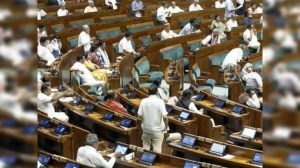
The Lok Sabha has passed the Registration of Births and Deaths (Amendment) Bill, 2026 through a voice vote without any debate, which seeks to strengthen the Registration of Births and Deaths Act, 1969 by tightening norms for delayed registration and aligning legal provisions with the Bharatiya Nagarik Suraksha Sanhita (BNSS), 2023.
Key Provisions:
- Registration of births and deaths delayed beyond two years will require an order from a Judicial Magistrate First Class (JMFC).
- Delayed registration between one and two years will continue to require approval from a District Magistrate (DM), Sub-Divisional Magistrate (SDM), or an authorised Executive Magistrate.
- Replaces references to the Code of Criminal Procedure (CrPC), 1973 with the Bharatiya Nagarik Suraksha Sanhita (BNSS), 2023, updating the definition of “Executive Magistrate.”
- The amendments aim to promote timely reporting of births and deaths, improving the reliability of civil registration records.
Registration of Births and Deaths Act, 1969: - The Registration of Births and Deaths (RBD) Act, 1969 (amended in 2023) mandates the registration of all births, deaths, and stillbirths at the place of occurrence.
- The Registrar General of India (RGI) oversees the national system, while Chief Registrars, District Registrars, and Local Registrars manage registration and issuance of certificates.
- Since October 2023, all registrations are maintained digitally through the Civil Registration System (CRS).
Reporting Timeline: Births, deaths, and stillbirths must be reported within 21 days of occurrence; delayed registration attracts the prescribed late fee.
The Geological Survey of India : In News
Smt. Varsha Ashok Aglawe assumed charge as the 54th Director General of the Geological Survey of India (GSI), becoming the first woman to lead India’s premier geoscientific organization in its 176-year history.The Geological Survey of India (GSI) is the premier national geoscientific agency responsible for creating and updating national geoscientific data, carrying out mineral resource assessments, and conducting fundamental geological research. It functions as an attached office under the Ministry of Mines, Government of India. It Conducts ground, airborne, satellite, and marine surveys using geophysical and geochemical methodologies to document India’s surface and subsurface geology.It Explores and scientifically assesses national mineral, energy, and water resources, with an intensified focus on deep-seated and critical minerals (lithium, rare earth elements, copper, cobalt).It Conducts geotechnical investigations for public infrastructure, seismotectonic evaluations, landslide zoning, glaciology, and natural hazard risk assessments.It Serves as the national clearing house and central repository for spatial and geoscientific databases via modern geoinformatics platforms.It Engages in multidisciplinary earth science research—including polar studies, paleontology, and climate change geology—in partnership with global and Indian academic institutions.



