
Today’s Current Affairs: 4th jul 2026 for UPSC IAS exams, State PSC exams, SSC CGL, State SSC, RRB, Railways, Banking Exam & IBPS, etc
Table of Contents
Direct Seeded Rice: In News
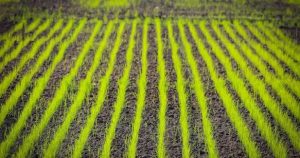
In a bid to mitigate the rainfall uncertainty due to the potential impact of El Nino, the Chhattisgarh government recently advised farmers to cultivate oilseeds and use Direct Seeded Rice (DSR) method in paddy for the upcoming kharif season.
- Direct Seeded Rice (DSR) is a modern farming technique where rice seeds are sown directly into the field, replacing the traditional method of transplanting seedlings from a nursery.
- DSR can be operationalized on soils ranging from medium texture (loam) to heavy texture (clay).
- However, it is recommended not to go for DSR if the soil is light textured and poorly drained.
- This method skips the labor-intensive step of transplanting, saving farmers time and effort.
- DSR uses less water (up to 50%) because it doesn’t require continuous flooding of the fields.
- By conserving water and reducing labor, DSR makes rice farming more efficient and sustainable.
- DSR also reduces greenhouse gas emissions, which helps combat climate change.
- It also offers a congenial soil environment for better growth and productivity of succeeding crops.
- It increases total income by reducing the cost of cultivation.
- Mechanized DSR also creates avenues for employment through new service provisions and is less labor-intensive and free from drudgery, hence more attractive to youth and women
Cyttopsis indica:
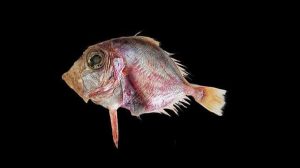
The Central Marine Fisheries Research Institute (CMFRI) in Kochi in Kerala recently discovered a new deep-sea fish named Cyttopsis indica from the Arabian Sea off southern Kerala.
- Cyttopsis indica is a new species of deep-sea fish.
- It was discovered from the Arabian Sea off southern Kerala.
- It belongs to the genus Cyttopsis, a primitive group of marine fishes commonly known as “dories.”
- Cyttopsis indica has been given the common name Indian Dory.
- It can survive under immense pressure by storing high levels of waxy compounds in their bodies, making some of them unsuitable for direct human consumption.
Central Marine Fisheries Research Institute (CMFRI):
- It was established by the Government of India on February 3rd 1947 under the Ministry of Agriculture and Farmers Welfare.
- It later became a member of the Indian Council of Agricultural Research (ICAR) family in 1967.
- The headquarters was shifted from Mandapam Camp in Tamil Nadu to Kochi in Kerala in 1971.
- Over the years CMFRI has emerged as a leading tropical marine fisheries research institute in the world.
- Mandate
- To monitor the exploitation and assess the under-exploitation of the marine fisheries resources of the Exclusive Economic Zone (EEZ).
- To understand the fluctuations in abundance of marine fisheries resources in relation to change in the environment.
- To develop suitable mariculture technologies for finfish, shellfish and other culturable organisms in open seas to supplement capture fishery production.
- To act as a repository of information on marine fishery resources with a systematic database.
- To conduct transfer of technology, post graduate and specialized training, education and extension education programmes.
- To provide consultancy services.
Borjuli Wetland:
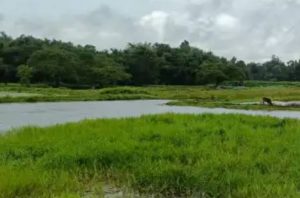
The Borjuli wetland in Assam‘s Sonitpur district has been declared a Biodiversity Heritage Site (BHS) by the National Biodiversity Authority.
- Borjuli Wetland is located in Assam‘s Sonitpur district
- It is known for harbouring a disease and pest-resistant variety of wild rice known as Oryza rufipogon.
- Oryza rufipogon, is the progenitor of present-day cultivated rice, Oryza sativa.
- It is resistant to pests and diseases and can tolerate flooding and saline conditions, making it a valuable genetic resource for developing climate-resilient crop varieties.
- It is photosensitive in nature and flowers during short days during the months of November and December.
- The seeds have a tendency to shatter as soon as they mature.
LokOS Platform:
LokOS platform has significantly expanded its reach across India, enabling large-scale digital transformation of community institutions.
- LokOS (Lok = People, OS = Operating System) is a web and mobile platform under the Deendayal Antyodaya Yojana-National Rural Livelihoods Mission (DAY-NRLM).
- It offers a comprehensive digital solution for managing Self-Help Groups (SHGs) and Community-Based Organizations (CBOs).
- The web application of LokOS supports administrators, E-bookkeepers, and transaction approvers in creating and approving SHGs, Village Organizations (VOs), Cluster Level Federations (CLFs), and their members.
- The mobile application enables efficient recording and management of Community-Based Organization (CBO) activities in the field.
- It has enabled large-scale digital integration of community institutions Cluster Level Federations (CLFs), Village Organizations (VOs), Self-Help Groups (SHGs) and SHG Members nationwide.
- LokOS supports the Lakhpati Didi initiative through large-scale outreach, beneficiary tracking, and digital monitoring.
- It currently covers 34 States/UTs.
- Key Features of LokOS App:
- End-to-End Digital Management: Registers and manages SHGs, Village Organizations (VOs), Cluster Level Federations (CLFs), and their members.
- Unique Digital IDs: Generates Aadhaar- and bank-linked digital identities for CBOs and members.
- Digital Financial Records: Records savings, loans, repayments, and other financial transactions.
- Livelihood Profiling: Captures livelihood data to support planning and convergence with government schemes.
- Role-Based Administration: Enables user management, approvals, monitoring, and reporting from village to national level.
- Real-Time Analytics: Provides dashboards and one-click reports for data-driven decision-making.
Giant African Snail: In News
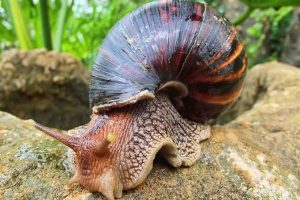
The invasive giant African snail (Lissachatina fulica) is spreading rapidly across Tirunavaya panchayat and has now entered school campuses, raising health concerns for children in Kerala.
- Giant African Snail is the common name for several large African land snail species. The most damaging of these pests is Lissachatina fulica.
- It is one of the world’s worst invasive species.
- It is native to East Africa but it has been widely introduced to other parts of the world through the pet trade, as a food resource, and by accidental introduction.
- It thrives in warm tropical climates with mild temperatures all year round and high humidity.
- It is found in agricultural areas, coastal areas and wetlands, natural and planted forests, riparian zones, scrublands and shrublands, and the urban zones.
- It is a hermaphrodite.
- The snails can carry the rat lungworm parasite (Angiostrongylus cantonensis), which can cause eosinophilic meningitis in humans.
7th National Water Awards:
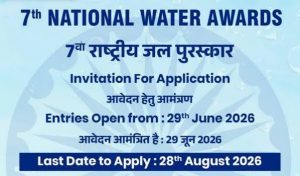
The Ministry of Jal Shakti has launched the 7th National Water Awards on the Rashtriya Puraskar portal of Ministry of Home Affairs.
- The first edition of the National Water Awards was introduced in the year 2018.
- It aims to sensitize the public about the importance of water and motivate them to adopt the best water usage practices.
- The objective of the National Water Awards is to encourage the stakeholders to adopt a holistic approach toward water resource management in the country as surface water and groundwater play a significant role in the water cycle.
- Eligibility for the awards: Any State, District, Urban Local Body, Dam Owning Agencies, & Industry who have done good work in the field of water conservation and management is eligible.
- Each winner would be provided a Trophy with a Citation.
- This year’s awards cover several categories, including Best State, Best District, Best Urban Local Body, Best Implemented Project in the Water Sector, and Best Industry for Corporate Social Responsibility (CSR) initiatives in the water sector.
- These awards are instituted by the Department of Water Resources, River Development and Ganga Rejuvenation, Ministry of Jal Shakti.
Nameri Tiger Reserve:
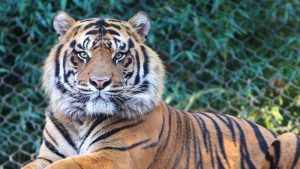
The population of tigers at the 344 square km Nameri Tiger Reserve in north-central Assam’s Sonitpur district has quadrupled in three years.
- Nameri Tiger Reserve is situated in the northern part of the Sonitpur district of Assam.
- It shares its northern boundary with the Pakke Tiger Reserve of Arunachal Pradesh.
- It has been carved out of two protected areas: Nameri National Park & Sonai-Rupai Wildlife Sanctuary, and two Reserve Forests: Naduar Reserve Forest & Balipara Reserve Forest.
- The area is drained by the Jia Bhoroli and its tributaries namely the Diji, Dinai, Doigurung, Nameri, Dikorai, Khari etc.
- Jia Bhoroli river of Assam is famous for the Golden Mahseer fish- The Tiger of Indian rivers.
- The habitat of Nameri is made up of tropical evergreen, semi-evergreen, moist deciduous forests, cane brakes and grassland.
- Flora: Hollong, Nahor, Simul, Orchids and Medicinal Plants
- Fauna: Leopard, Clouded leopard and Wild dog, Asian Elephant etc.
- Nameri is also famous for its large herds of elephants.
The Polygraph Test:
Pune Police have sought court permission to conduct a polygraph test on the accused in the Ketan Agarwal murder case, as such tests require the accused’s voluntary consent under Indian law.A polygraph test (popularly called a lie-detector test) is an investigative diagnostic procedure that continuously measures and records a subject’s physiological indicators during questioning. It operates on the core psychological premise that conscious deception triggers distinct, involuntary autonomic stress responses that deviate from an individual’s truthful baseline.The aim of a polygraph test is to generate investigative leads, verify or dispute a suspect’s alibi, and narrow down lines of inquiry.
Pashujanya Yudh Abhyas (PYA):
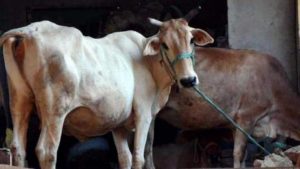
The Department of Animal Husbandry & Dairying (DAHD) conducted Pashujanya Yudh Abhyas (PYA), a five-day national mock drill in Vidisha, Madhya Pradesh.
- Pashujanya Yudh Abhyas (PYA) is a national-level mock drill conducted under the National One Health Mission to evaluate India’s preparedness, coordination, and emergency response for animal health emergencies and zoonotic disease outbreaks.
- Aim:
- Strengthen national preparedness for early detection, containment, and response to zoonotic disease outbreaks.
- Enhance inter-sectoral coordination among veterinary, public health, wildlife, laboratory, and administrative agencies under the One Health framework.
Key Features:
- One Health-Based Simulation: Simulated an Influenza A (H1N1) outbreak with potential spillover to humans and wildlife, testing the complete outbreak response chain.
- Multi-Agency Participation: Brought together DAHD, ICAR, ICMR, NCDC, NIHSAD, AIIMS Bhopal, MoEFCC, state departments, and district administration under the National Joint Outbreak Response Team (NJORT).
- End-to-End Emergency Response: Covered surveillance, early warning, laboratory diagnosis, epidemiological investigation, biosecurity, containment, movement control, and public communication.
- Gap Assessment &Capacity Building: Concluded with a structured debrief to identify operational gaps, improve emergency protocols, and strengthen future outbreak preparedness.
The I-2SEA Submarine Cable System:
A high-powered digital infrastructure consortium comprising Lightstorm, Microsoft, Singtel, and Tata Communications has officially signed contracts to begin the construction of the I-2SEA Submarine Cable System.The India-Southeast Asia (I-2SEA) Submarine Cable System is a next-generation, high-capacity undersea fiber-optic cable network. Unlike legacy subsea cables designed for standard web browsing, the I-2SEA is purpose-built to handle the massive, jitter-sensitive data packets required for artificial intelligence (AI) training model execution, graphics processing unit (GPU) clusters, and hyperscale cloud workloads.
Location:
The Southeast Asian Hubs: Connects Singapore (the region’s primary cloud interconnect center) and Kuala Lumpur (the core of Malaysia’s hyperscale data center corridor).
Dual Indian Landings: Features two distinct, strategically separate landing stations on India’s east coast:
Machilipatnam: Chosen to provide the shortest subsea access and fastest data transit directly to the massive AI data clusters in Hyderabad.
South Chennai: A brand-new, diverse landing site built to bypass existing, heavily congested maritime paths.
Battery Management System (BMS):
The government has directed Apple and Google to remove three battery management applications—BAT-BMS, Lossigy, and Epoch Li-ion—from their app stores due to critical cybersecurity and passenger safety risks.A Battery Management System (BMS) is an electronic control circuit integrated into an electric vehicle (EV) or energy storage pack powered by large-capacity lithium-ion batteries. It acts as the “brain” of the battery pack, managing the physical and electrical parameters of individual cells to maintain uniform performance and safety.The aim of a BMS is to eliminate performance variations among individual battery cells, allowing them to charge and discharge uniformly inside a large battery pack.



