
Today’s Current Affairs: 4th Nov 2026 for UPSC IAS exams, State PSC exams, SSC CGL, State SSC, RRB, Railways, Banking Exam & IBPS, etc
Table of Contents
Pradhan Mantri Jeevan Jyoti Bima Yojana : In News

The Pradhan Mantri Jeevan Jyoti Bima Yojana (PMJJBY) has recorded 13.07 lakh cumulative enrolments across Jammu and Kashmir, strengthening access to affordable life insurance and financial security for families across the Union Territory.
- Pradhan Mantri Jeevan Jyoti Bima Yojana is a flagship life insurance scheme launched by the Government of India to provide affordable life insurance coverage to the economically weaker sections of society.
- It was launched in May 2015 under the Ministry of Finance.
- It aims to increase access to life insurance across the country. It offers a one-year life insurance policy, renewable every year.
Pradhan Mantri Jeevan Jyoti Bima Yojana:
- Life Cover: Under PMJJBY, a life insurance cover of ₹2 lakh is provided in case of death of the insured due to any reason, natural or accidental.
- Premium Amount: ₹436 per annum (auto-debited from bank account).
- Eligibility: Indian citizens aged between 18 and 50 years.
- Renewal: Annual renewal up to the age of 55 years.
- Risk Coverage: Covers death due to both natural and accidental causes.
- Implementing Agencies: Public and private sector life insurance companies in tie-up with banks.
Asia-Pacific Broadcasting Union:

Prasar Bharati has received two major recognitions at the Asia-Pacific Broadcasting Union Prizes 2026, held in Colombo.
- Asia-Pacific Broadcasting Union is a not-for-profit, non-governmental organisation established in 1964.
- It is dedicated to advancing broadcasting and media cooperation across the Asia-Pacific.
- It serves as a central platform where members share content, exchange ideas, and collectively navigate the challenges shaping the future of media.
- Headquarter: Kuala Lumpur, Malaysia
Governance of Asia-Pacific Broadcasting Union:
- It is the supreme body of the ABU and, subject to the provisions of the Statutes, has all the powers necessary to achieve the objectives of the ABU.
- It comprises all the Full, Additional Full, and Associate members of the Union.
- The ABU’s “board of directors” is called the Administrative Council.
- It consists of 18 of its Full and Additional Full members, who are elected by the members at the annual General Assembly for a three-year term.
- The council meets twice-yearly to decide on policy matters, review the Union’s finances and consider current issues facing the Union.
Bupleurum Oslaense:

Botanists from the Botanical Survey of India have discovered and described a brand-new plant species, named Bupleurum oslaense.
- Bupleurum Oslaense is a new plant species discovered in the temperate forests of the Western Himalayas.
- It is a new member of the family Apiaceae.
- It shares genetic and structural similarities with Bupleurum petiolulatum (a relative native to China).
- It was found at an elevation of roughly 2,550 meters within the Govind Pashu Vihar National Park and Sanctuary in Uttarakhand, India.
- It has been categorised as “Critically Endangered.”
Exercise Tiger Triumph 2026:

The United States and Indian Armed Forces have commenced the fifth edition of the bilateral exercise Tiger Triumph 2026 in Visakhapatnam.
- Exercise Tiger Triumph 2026 is an India-U.S. tri-service Humanitarian Assistance and Disaster Relief (HADR) Exercise.
- It is aimed at strengthening defence cooperation, enhancing operational interoperability and improving their ability to respond jointly to regional crises and natural disasters.
- The exercise reflects the deepening convergence of India–US strategic maritime interests and the growing defence partnership between the two nations.
- From the Indian side include specialists from all domains of maritime operations from the Indian Navy, ground forces from the Indian Army and representatives from various units of the Indian Air Force, as well as Special Forces personnel from all three Services.
- A team from the NDRF will also participate for the first time in the 5th edition of Tiger Triumph 2026.
MINURSO’s 35-Year Mission Ends:
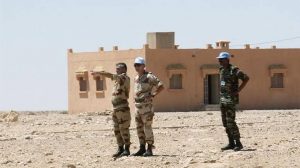
The United Nations Mission for the Referendum in Western Sahara (MINURSO) entered its liquidation phase after the UN Security Council (UNSC) failed to renew its mandate due to a US–Russia standoff, ending its 35-year peacekeeping presence.
- MINURSO established in April 1991 under UNSC Resolution 690 (1991) to implement a UN-brokered settlement plan between Morocco and the Polisario Front.
- Monitor the ceasefire and organise a referendum on self-determination, allowing a choice between independence and integration with Morocco. The referendum never occurred due to disagreements over voter eligibility.
- Hostilities resumed in November 2020, but MINURSO continued monitoring the security situation and advocating cessation of hostilities.
- Russia vetoed a US-backed draft resolution favouring Morocco’s autonomy proposal, which also sought to rename MINURSO as the UN Mission in Western Sahara (MINUSO).
- A competing Russian resolution to extend MINURSO’s mandate until October 2027 failed to secure the required votes, leaving the mission without a renewed mandate.
- The termination of MINURSO’s mandate does not change Western Sahara’s disputed legal status or extinguish the Sahrawi people’s right to self-determination. UN-led diplomatic efforts may continue independently of the mission.
UN CBD COP-17: Adoption of the Yerevan Pathway

The 17th Conference of the Parties (COP-17) to the UN Convention on Biological Diversity (CBD) concluded in Yerevan, Armenia adopting the Yerevan Pathway. India emphasized the urgent need for adequate, predictable finance and technology transfer from developed nations to implement the Kunming-Montreal Global Biodiversity Framework (KMGBF) effectively.
- Following the first global review of the KMGBF which showed insufficient progress, nations adopted the “Yerevan Pathway” to accelerate action and implementation ahead of the 2030 deadline.
- The pathway calls on member nations to align their national budgets and economic decisions with biodiversity goals, reform harmful subsidies, and strengthen monitoring mechanisms.
- Sevan Guidelines for Indigenous Peoples: Nations adopted the Sevan Guidelines to establish the operational rules for a new permanent subsidiary body under Article 8(j) of the Convention.
- These voluntary Sevan Guidelines empower Indigenous Peoples and Local Communities (IPLCs) by ensuring their rights, roles, and traditional ecological knowledge are structurally integrated into global biodiversity policy and decision-making.
- New Biodiversity Funding Pledges: Nearly USD 2 billion in new biodiversity funding was announced at the summit.
- This includes USD 560 million under the Global Environment Facility’s (GEF) (established at the 1992 Rio Earth Summit) latest replenishment and USD 500 million through the Species Recovery Alliance.
- The Asian Development Bank launched a biodiversity bond and investment incubator to promote nature-related investment.
- Diluted Stance on Harmful Subsidies: Reforming subsidies that harm nature was highly contentious. Attempts to include strong language that would “urge” countries to scale up the elimination of harmful subsidies were opposed by nations including Saudi Arabia, Russia, and India.
- The final text was softened to merely “encourage” countries to accelerate reform “in accordance with national circumstances”.
- Digital Sequence Information (DSI) and the Cali Fund: Negotiations continued on the benefit-sharing mechanism for genetic data (the Cali Fund), which was operationalized at the COP – 16 (2024).
- While technical disagreements prevented a definitive resolution, a pilot phase was agreed upon allowing the Steering Committee to issue certificates to companies that make voluntary contributions.
- COP-17 left unresolved several institutional and financing questions, including aspects of the Article 8(j) body’s governance, the future biodiversity-finance mechanism and the full implementation arrangements of the Cali Fund, essentially “kicking the can down the road” to COP18, which is scheduled to be held in Quito, Ecuador, in 2028.