
Today’s Current Affairs: 4th Sep 2026 for UPSC IAS exams, State PSC exams, SSC CGL, State SSC, RRB, Railways, Banking Exam & IBPS, etc
Table of Contents
India’s 1st “Green Forge” Complex Inaugurated:
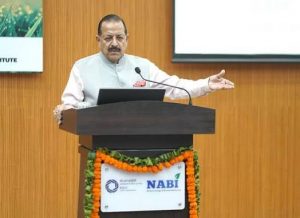
India’s first-of-its-kind Green Forge Complex was inaugurated at National Agri-food & Biomanufacturing Institute (BRIC-NABI) (an Autonomous Institute of the Department of Biotechnology) in Mohali, marking a major step in agricultural biotechnology and genetically modified (GM) crop research.
- The facility was inaugurated during the National Conclave on BioE3 (Biotechnology for Economy, Environment and Employment), 2026 reflecting India’s shift toward high-performance biomanufacturing.
- It provides advanced simulation chambers that can precisely regulate light, humidity, and temperature.
- This allows researchers to cultivate and experiment with GM crops to assess their suitability across varied and controlled environmental conditions before field deployment.
- The facility highlights the convergence of biotechnology with advanced simulation and Artificial Intelligence (AI), accelerating complex research in both agricultural and medical sciences.
- India’s bioeconomy has expanded from USD 10 billion in 2014 to approximately USD 200 billion, driven by private sector engagement and an enabling policy environment.
- Under BioE3 (Biotechnology for Economy, Environment and Employment) 2024 policy, the focus is shifting towards industry-ready manufacturing and translating research into products and technologies.
- The government is developing 22 biomanufacturing hubs and a National Bio-Foundry Network comprising eight specialized facilities to support start-ups, SMEs, and the translation of research into commercial products.
- The Department of Biotechnology (DBT) is actively supporting around 38 Carbon Capture and Utilisation (CCU) projects to capture emissions from hard-to-abate sectors like cement and steel through integrated biomanufacturing.
- The initiative is expanding into sustainable aviation fuels (SAF), the I3 PhD programme, and Space Biotechnology—including collaborations with ISRO on myogenesis and cyanobacteria growth experiments in space.
- BRIC-NABI is heavily integrating agri-biotechnology with bioprocess engineering to convert agricultural waste into high-value nutraceuticals (products derived from food sources that provide extra health and medical benefits besides basic nutrition) and biomaterials.
- The overall transformation toward a low-carbon, circular bioeconomy is directly aligned with India’s long-term climate and economic goals of achieving Net Zero by 2070 and Atmanirbhar Bharat.
Rani Avanti Bai Lodhi:

Defence Minister Rajnath Singh paid tribute to Rani Avanti Bai Lodhi, describing her patriotism and bravery as values that transcend social, caste and gender boundaries
- Rani Avanti Bai Lodhi was born on 16th August 1831 in Manakhedi village of Seoni district, Madhya Pradesh. Her father, Rao Jujhar Singh, was a zamindar, and her mother was Krishna Bai.
- From childhood, she developed skills in horse riding, sword fighting and administration, which later helped her in leading resistance against British rule.
- She married Vikramaditya Singh, son of King Lakshman Singh of Ramgarh princely state. After Vikramaditya Singh became king but remained ill due to health issues, Rani Avanti Bai took charge of the administration. The couple had two sons — Aman Singh and Sher Singh.
- British authorities brought Ramgarh under the Court of Wards system, declaring the king incapable of ruling and his heirs minors. Rani Avanti Bai opposed British control, removed British-appointed officials from Ramgarh and took over administration.
- She refused to accept British administrative control and encouraged farmers not to follow British revenue-related orders. This increased her popularity among the people.
- During the Revolt of 1857, she organised resistance against British rule and sent letters along with two black bangles to local rulers, zamindars, and landlords, urging them either to fight the British or accept defeat by wearing bangles.
- On 23rd November 1857, Rani Avanti Bai and her forces defeated the British army led by Mandla Deputy Commissioner Waddington in the Battle of Kheri, demonstrating her ability to organise armed resistance against British forces.
- In March 1858, British forces launched a major attack against Rani Avanti Bai and her troops. When surrounded by the enemy and facing certain capture, she chose self-sacrifice rather than surrender, becoming a symbol of resistance against colonial rule.
- Rani Avanti Bai Lodhi is remembered for her courage, leadership, self-respect and commitment to the freedom struggle. Her role highlights the contribution of women and regional leaders in India’s anti-colonial movement.
- Her legacy continues to be honoured through memorials, institutions and public celebrations, including initiatives such as the Rani Avanti Bai Lodhi Women’s Battalion of the Uttar Pradesh Provincial Armed Constabulary (PAC) at Badaun.
India’s 7.8% GDP Growth Debate:

The MoSPI rejected claims that India’s Q1 FY 2026–27 real GDP growth of 7.8% was inflated, stating that estimates use the 2022–23 base year, Producer Price Indices (PPI), and double-deflation methodology.
- Real GDP reached ₹81.36 lakh crore (7.8% YoY growth), while nominal GDP reached ₹88.27 lakh crore (10.3% YoY growth).
- Real GVA Outturn: Real GVA expanded by 8.2% to ₹73.82 lakh crore, outpacing nominal GVA growth of 11.5% (₹80.53 lakh crore).
Sectoral Drivers: - Manufacturing GVA: Grew 9.2% in real terms (compared to 7.7% nominal growth), yielding a negative implicit GVA deflator of -1.5%.
- Tertiary / Services: Surged 10.0%, anchored by Financial, Real Estate, and Professional Services at 12.1%.
- Primary Sector: Grew 2.9%, with Agriculture, Forestry & Fishing expanding at 3.6%.
- Mining & Quarrying: Contracted 2.4% in volume terms (IIP-based) but posted 22.3% nominal growth due to high global crude oil and metal ore price inflation (PPI up >60%).
- Demand-Side Strength: Gross Fixed Capital Formation (GFCF) expanded by 11.9% (up from 5.8% in Q1 FY26), and Private Final Consumption Expenditure (PFCE) grew by 7.1%.
Pichavaram Mangroves:

A comprehensive ecological-economic study conducted by the Institute for Social and Economic Change (ISEC), Bengaluru, valued the Pichavaram Mangrove Forest in Tamil Nadu at a total economic value (TEV) of ₹2,485.38 crore.
- Pichavaram Mangrove Forest is one of the largest and most ecologically vital estuarine mangrove ecosystems in India, spanning approximately 1,478.64 hectares. Classified as an intertidal forested wetland, it features a complex labyrinth of roughly 4,400 large and small canals permanently rooted in shallow brackish water, connecting river mouths, backwaters, and the Bay of Bengal.
- Located In Cuddalore district, Tamil Nadu, India.
- Coromandel Coast, situated between two prominent river mouths—the Vellar estuary to the north and the Coleroon (Kollidam) estuary to the south.
- Part of the Vellar-Coleroon estuarine complex, which feeds into the shallow Killai backwater system and communicates with the open sea through a narrow littoral sandbar channel.
Data Centre Boom & Climate Collision:

Experts warned that India’s $200-billion data centre boom, projected to reach 6.5 GW by 2030, could worsen water scarcity, power constraints and urban heat, highlighting the need for a National Sustainability Framework.
- The collision between data centres and climate reality refers to the mounting structural mismatch between digital infrastructure growth and physical carrying capacity. Data centres are massive consumers of base-load electrical power and freshwater.
- When clustered in water-stressed, power-congested metropolitan hubs without mandatory green-sourcing regulations, they divert potable municipal water, increase coal-based power generation due to grid constraints, and exacerbate local urban surface temperatures.
Key Data & Statistics:
- Rapid Capacity Growth: Installed capacity grew from 520 MW in 2020 to ~1.5 GW in 2026, with projections reaching 6.5 GW by 2030 (a fourfold surge in four years).
- Spike in Power & AI Demand: Power consumption is projected to jump from 13 TWh in 2024 to 57 TWh by 2030; the Ministry of Power estimates generative AI workloads will add 26.3 GW of new base-load demand by 2031–32.
- Massive Water Footprint: A single 100 MW data centre consumes approximately 2 million litres of water daily (~usage of 6,500 urban homes). Aggregate water use will escalate from 150 billion litres (2024–25) to 358 billion litres annually by 2030.
- Clean Energy Curtailment: Due to evacuation bottlenecks, India curtailed 300 GWh of renewable electricity in Q1 2026 alone (178 GWh in Northern and 122 GWh in Western regional grids), according to Ember Energy.
- Transmission Buildout Deficit: India has achieved only about 80% of its annual transmission targets over the last five years, leaving ~20 GW of renewable energy delayed by over four months.
- Micro-Climate Surface Warming: University of Cambridge satellite analysis revealed that data centres elevate ambient land surface temperatures by an average of 2°C within a 10 km radius, with extreme micro-climatic spikes reaching 9.1°C.
Reverse Vaccinology:
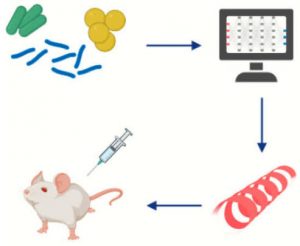
A team of British scientists have taken an important first step in developing vaccine against pneumonia by using reverse vaccinology.
- Reverse Vaccinology is an emerging concept in the field of vaccine development.
- It is defined as an innovative approach to vaccine development that utilizes bioinformatics and computational analysis.
- It identifies potential vaccine targets within pathogen genomes, allowing for the modeling of epitopes and the creation of tailored vaccines for improved efficacy and safety.
- Reverse vaccinology is a term coined by Rino Rappuoli in 2000.
- He described it as a method for vaccine design that uses the information obtainable from whole-genome analysis.
- It was first applied to the development of a vaccine against serogroup B Neisseria meningitidis (MenB).
- The concept of reverse vaccinology has also successfully been applied to many other pathogens, for example, Bacillus anthracis, Streptococcus pneumonia, M. tuberculosis.
- It involves the cloning and expression of all the proteins in an organism’s genome sequence that are predicted in silico to be surface exposed or secreted.
- Then each protein is screened, through high-throughput immunization.
- Scientists make the chosen proteins in a lab and test them in animal models to see if they safely cause immunity.
Limiting Overshoot Report:

A new Limiting Overshoot report suggests the world will likely “overshoot”, or temporarily breach, the 1.5°C target of warming above preindustrial temperatures within the next few years.
- It is released by the United Nations Environment Programme (UNEP).
- It has for the first time, set out an overshoot, peak and decline pathway, warning that breaching the 1.5°C global warming limit is now unavoidable.
- Key highlights of the Report:
- Even a scenario in which every country delivers on its national climate plan and net-zero target puts peak warming at 1.8°C
- According to the report, current policies point to a rise of about 2.6°C by 2100, with a range of 1.9–3.6°C.
- It warned that time spent above 1.5°C carries compounding costs such as faster sea-level rise, coral reef collapse, glacier loss exceeding a quarter of global mass by 2100, declines of up to 14% in global food production by 2050 without effective adaptation,
- Irreversible tipping points in the West Antarctic and Greenland ice sheets, the Atlantic Meridional Overturning Circulation and the Amazon.
- It placed significant stress on methane and suggested that cutting it is described as the most effective way to slow warming in the near term.



