
Today’s Current Affairs: 5th Aug 2026 for UPSC IAS exams, State PSC exams, SSC CGL, State SSC, RRB, Railways, Banking Exam & IBPS, etc
Table of Contents
Dikhow River : In News
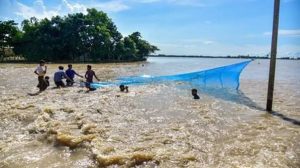
Flash floods from the Dikhow River recently submerged Assam’s Nepali Khuti, a self-reliant Gorkha dairy village, within two hours, destroying homes, livestock, and livelihoods completely.
- Dikhow River is an important south bank tributary of the Brahmaputra River.
- It originates in the Zunheboto district of Nagaland and enters into the Assam plain through Naginimara of the Sivsagar district of Assam.
- It flows through the Sivsagar district only to join with the river Brahmaputra at Dikhowmukh on its southern bank within the district.
- The river basin is surrounded by the Brahmaputra River in the north, the Buridihing basin in the east, the Jhanji basin in the west, and the Naga Hills in the south.
- The river leaves more than fifteen abandoned channels at different places in the Assam plain mostly in the form of Ox-bow Lakes.
Banderol Missile:

Russia’s new low-cost S8000 Banderol cruise missile is quietly changing the air war over Ukraine’s Black Sea coast.
- The S8000 Banderol, which translates to “package” or “small parcel,” is a cruise missile developed by Russia.
- It is primarily an air-launched munition, with the Orion unmanned aerial vehicle (UAV) serving as its primary launch platform.
- The missile is also integrated for use with the Mi-28 Havoc helicopter.
- However, reports indicate that Russian has developed a compact ground launcher for the S8000 Banderol, moving beyond its previous airborne carriers.
- The missile’s design prioritizes low production costs and simplified manufacturing, incorporating imported foreign components for key systems.
- Powered by a small, commercially available Chinese turbojet engine, it can travel up to 500 km.
- Its maximum speed is 620–650 km/h, and its cruising speed is 520–560 km/h.
- It carries a relatively small high-explosive fragmentation warhead that includes about 50 kilograms of explosives.
- The missile navigates using inertial and satellite guidance.
TRAI MyCall:

The Telecom Regulatory Authority of India (TRAI) recently launched a revamped version of “TRAI MyCall’, a mobile application that enables telecom consumers to directly assess and report the voice-calling experience.
- It is a mobile application launched by the Telecom Regulatory Authority of India (TRAI).
- It is a citizen-centric digital platform that empowers telecom consumers to share real-time feedback on their voice-calling experience, along with relevant network parameters.
- The feedback provided by consumers is visible to Telecom Service Providers (TSPs) as well as TRAI in an anonymised form.
- This feedback provides valuable insights to TSPs, helping them identify areas where network performance needs improvement and take targeted corrective measures.
- This consumer-driven approach is expected to enhance the overall Quality of Service (QoS).
- The platform also strengthens evidence-based regulatory oversight by enabling TRAI to assess the Quality of Experience (QoE) across telecom networks based on real consumer feedback.
- While network performance is evaluated using technical Quality of Service (QoS) parameters, the QoE perceived by consumers also provides an important perspective on service performance.
- The revamped TRAI MyCall application offers several consumer-friendly features, including:
- Instant rating of voice calls through a simple 1-5 star feedback system.
- Reporting of specific issues such as call drops, echo during calls, audio delay, cross connection, voice breaking, one party unable to hear the other, and calls taking too long to connect, which shall be available to the respective service provider for corrective action.
- Automatic post-call feedback prompts for seamless participation.
- Rating and feedback history on interactive map.
- Coverage Test feature to assess signal strength.
- Multilingual support with Bhashini.
- Telecom Regulatory Authority of India (TRAI) is a regulatory body responsible for overseeing the telecommunications industry in India.
- It was established under the Telecom Regulatory Authority of India Act, 1997, passed by Parliament.
- Objectives is to stimulate the growth and development of the telecommunication sector by creating favorable conditions.
Madura Island : In News

At least five people were killed and 41 remain missing after a ferry carrying 271 passengers and crew caught fire off Indonesia’s Madura Island recently.
- Madura Island is an Indonesian island located off the northeast coast of Java.
- It’s separated from Java by the narrow Madura Strait.
- It is known as “The Salt Island” because it produces a lot of salt.
- Madura Island has a mostly flat landscape. There are no big mountains or huge changes in height.
- Most of these people are Madurese.
- The Madura people are the third largest people group in Indonesia.
- The main language spoken here is Madurese.
- It is famous for its bull races held each year after the harvest.
- The main towns on the island include Bangkalan in the west, followed by Sampang, Pamekasan, and Sumenep further east.
- The principal industries are cattle raising and salt panning, the latter a government monopoly.
- Kapok, copra, and coconut oil are important products, as is teak from forests in the northwest.
Baba Baidyanath Dham Temple:
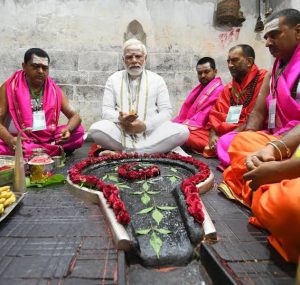
A large number of devotees thronged the Baba Baidyanath Dham temple in Jharkhand’s Deoghar on the first Monday of the holy month of Shravan.
- Baba Baidyanath Dham Temple is a Hindu temple dedicated to Lord Shiva located in Deoghar, Jharkhand.
- It is one of the 12 Jyotirlingas in India.
- This ancient temple has been mentioned in several ancient scriptures, such as Puranas, Vedas, Mahabharata, Ramayana,
- The mythological origin of Baidyanath Dham is tied to the legend of King Demon Ravana, who was granted a boon by Lord Shiva to take a sacred Jyotirlinga to his palace in Lanka.
- But he placed it on the ground in Deoghar, where the Lingam permanently resides.
- Historical records suggest the temple’s original construction in the 8th century by Puran Mal, an ancestor of the Nagavanshi dynasty.
- Over the centuries, the temple has seen numerous renovations and expansions, reflecting various architectural styles and cultural influences.
- The current structure is attributed to Raja Man Singh in the 16th century.
- The temple hosts the famous Shravani Mela, one of the largest annual religious gatherings in India.
- The temple showcases the classic Nagara style of North Indian architecture.
- The main temple is the Baidyanath Jyotirlinga Temple, which houses the lingam of Shiva.
- The temple is built of stone and has a pyramidal tower that rises to a height of 72 feet.
- The temple has a simple and elegant design, with a spacious hall, a sanctum, and a vestibule.
Ethiopia : Landslide
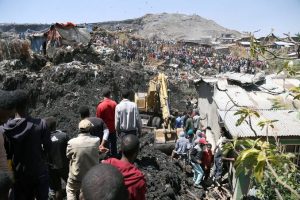
A landslide triggered by heavy rainfall in Ethiopia’s Amhara region killed 14 people and injured several others.
- Ethiopia is a landlocked country in the Horn of Africa.
- It lies entirely within tropical latitudes.
- It is bordered by six countries namely Eritrea (North), Djibouti (Northeast), Somalia (East), Kenya (South), South Sudan and Sudan (West).
- Capital City: Addis Ababa
- The five major topographic features of the country are the Rift Valley, Western and Eastern Highlands, and Western and Eastern Lowlands.
- The Denakil Plain, in which a depression known as the Kobar Sink, is found here in its rift valley.
- Most of Ethiopia has a tropical climate.
- Highest Point: Mount Ras Dejen
- It has three main rivers in Ethiopia are the Blue Nile, the Omo River, and the Awash River.
- Lake Tana which is located in the northwest of the Ethiopian Highlands.
- It mainly consists of metals and other natural resources such as gold, potash, natural gas, copper, and platinum.
Magnetorheological Fluid:
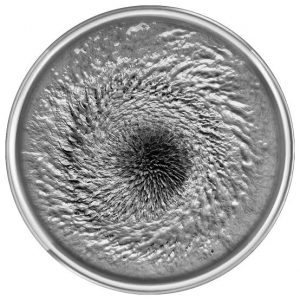
Scientists at the Indian Institute of Technology (IIT) Patna have developed an innovative hybrid magneto-rheometer that promises to advance research and applications of magnetorheological (MR) fluids.
- Magnetorheological Fluid is a fluid that has good magnetic properties.
- MR fluid responds to the magnetic field and changes its properties when a magnetic field is presented.
- These fluid can rapidly change their mechanical properties when exposed to a magnetic field, increasing in apparent viscosity, to the point of becoming a viscoelastic solid.
- These fluids contain magnetic micro-sized iron particles, non-magnetic-based fluid, and some additives in order to mitigate sedimentation and agglomeration.
- The various carrier fluids used in the preparation of MR fluids are mineral oil, silicon oil, castor oil, soybean oil, kerosene, synthetic oils, honge oil, organic oil, water-based oils, etc.
- However, for obtaining better vibration control, silicone oil is the most preferred one due to its higher viscosity index, lower friction characteristics, higher flash point, and higher shear strength.
- The fluid can transmit force which can be controlled with an electromagnet, giving rise to its many possible control-based applications.
- It is ideal for adaptive technologies such as brakes, clutches, shock absorbers, vibration control systems, dampers, actuators, and medical devices.
Vikram Sarabhai Medal:
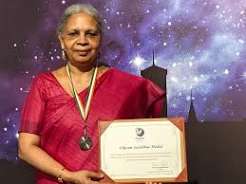
Astrophysicist Annapurni Subramaniam has been awarded the COSPAR Vikram Sarabhai Medal – 2026.
- Vikram Sarabhai Medal was constituted in 1990 in the honour of Vikram Sarabhai.
- It is an international medal awarded to scientists from developing countries for their outstanding contributions to the field of space research.
- It is awarded jointly by Committee on Space Research (COSPAR) and the Indian Space Research Organization (ISRO).
- For a candidate to be eligible for this award, her or his relevant work must have been carried out mainly in the five year period ending one year before the COSPAR Scientific Assembly at which the medal is to be presented.
- Other Indian recipients: Anil Bharadwaj (2024), Gurbax Singh Lakhina (2014) and UR Rao, (1996).
- Committee on Space Research was established in 1958.
- It is an international body affiliated to the International Science Council and United Nations (through UN-COPUS).
- COSPAR is one of the largest forums for space scientists and holds its scientific assembly biennially.
Glaw Lake: India’s 101st Ramsar Site
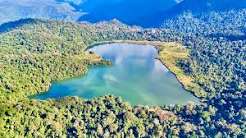
Glaw Lake was designated as India’s 101st Ramsar Site.
- Glaw Lake is located in the state of Arunachal Pradesh.
- It is Arunachal Pradesh’s first designated Ramsar Site.
- It is a freshwater lake in the Eastern Himalayas is a biodiversity hotspot, nestled within the Kamlang Tiger Reserve and Wildlife Sanctuary.
- The Lake is fed by perennial mountain streams and is surrounded by lush vegetation, supporting rich floral diversity.
- The wetland has over 150 tree species and 49 orchid species recorded within the site and its catchment, underscoring the ecological significance of Glaw Lake and its surrounding landscape.
- It supports high-altitude aquatic biodiversity, including endangered species such as the White-Bellied Heron and Clouded Leopard.
Ramsar Convention:
- It is an intergovernmental treaty that sets the framework for both national action and international cooperation to conserve and ensure the wise use of wetlands and their resources.
- It was adopted in 1971 in the city of Ramsar in Iran and came into force in 1975.
- It was the first intergovernmental agreement focused exclusively on a specific ecosystem, i.e. wetlands.
- The convention rests on the three main pillars:
- Conservation of wetlands of international importance,
- Promotion of the wise use of all wetlands within a country’s territory
- International co-operation on shared wetland systems and migratory species
India’s Solar Growth:
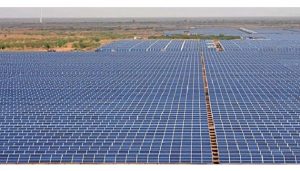
India’s installed solar power capacity has expanded more than fiftyfold, from about 3 GW in 2014 to 162.15 GW as of June 30, 2026, making solar power the largest component of the country’s renewable energy capacity.
- India’s solar expansion has been supported by favourable policies, infrastructure development, domestic manufacturing and public participation.
Solar parks, rooftop installations and solar-powered agricultural pumps have accelerated deployment, while the newly approved Pradhan Mantri Surya Sarovar Yojana (PM-SSY) represents the latest policy push. - India added 37 GW of solar capacity in 2025, surpassing the United States in annual additions and emerging as the world’s second-largest solar growth market, thereby strengthening its role in the global clean-energy transition.
- The National Solar Mission, Solar Parks Scheme, Green Energy Corridor Programme and competitive bidding created a strong framework for rapid solar deployment.
- Regional Expansion: Rajasthan, Gujarat, Karnataka, Tamil Nadu, Andhra Pradesh and Maharashtra account for a major share of India’s installed solar capacity.
- Large solar projects contribute around 118.79 GW, including major parks such as Bhadla in Rajasthan, Pavagada in Karnataka and Rewa in Madhya Pradesh.
- Grid-connected rooftop systems contribute 27.88 GW, to India’s solar capacity. The remaining capacity comes from hybrid projects, which combine solar power with battery storage or other energy sources, and off-grid systems, which supply electricity to areas not connected to the grid.
- India added 44.61 GW of solar capacity during FY 2025–26, nearly twice the 23.83 GW added in FY 2024–25.
- Domestic solar module manufacturing capacity expanded from 2.3 GW in 2014 to nearly 172 GW by March 2026.
- India’s total non-fossil fuel capacity reached 283.46 GW, including 274.68 GW of renewable energy capacity.
- FY 2025–26 recorded India’s highest-ever annual addition of non-fossil fuel capacity at 55.29 GW.
- Renewable sources met 51.5% of India’s electricity demand on 29th July 2025, marking the highest share recorded during the period.
150th Birth Anniversary of Pingali Venkayya:
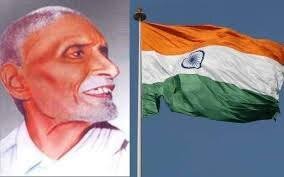
The Prime Minister paid tributes to Pingali Venkayya on his 150th birth anniversary (2nd August), commemorating his invaluable contribution as the designer of India’s National Flag (Tiranga) and highlighting its enduring role in inspiring patriotism and nation-building.
- Born on 2nd August 1876, in Krishna District, Andhra Pradesh, he joined the British Army at age 19 and fought in the Second Boer War (1899 – 1902) in South Africa, where he first met and formed a lasting association with Mahatma Gandhi.
- During the 1921 Indian National Congress (INC) session in Vijayawada, Pingali Venkayya designed and presented the Swaraj Flag on Khadi to Mahatma Gandhi.
- The draft design of the National Flag by Pingali Venkayya featured two horizontal bands red and green representing the Hindu and Muslim communities, with the spinning wheel (Gandhi Charkha) at the centre, the flag was later modified on Gandhi’s suggestion to include a white band (peace) and the charkha (spinning wheel), symbolising Swaraj and self-reliance.
- The design was officially adopted by the INC in 1931, becoming the basis of the modern Indian Tricolour.
- In 1947, an ad hoc committee of the Constituent Assembly recommended retaining the 1931 tricolour while replacing the Charkha with the Ashoka Chakra.
- The Constituent Assembly adopted the present National Flag on 22nd July 1947, and it officially became India’s National Flag on 15th August 1947.
Spain’s autonomous city of Ceuta:
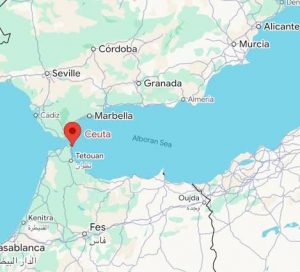
Spain’s autonomous city of Ceuta witnessed a major migration crisis in July 2026, as nearly 60,000 migrants attempted to enter the Spanish enclave from Morocco.
- Ceuta is an autonomous city of Spain located on the northern coast of Africa, bordering Morocco and facing the Strait of Gibraltar. It covers an area of about 18.5 sq. km and is situated on the Mediterranean coast.
- Ceuta, Melilla and the Plazas de Soberanía (comprising the Chafarinas Islands, Alhucemas Islands and Peñón de Vélez de la Gomera) are the only European territories on the African mainland.
- While Spain exercises sovereignty over them, Morocco has disputed their status and sought their return since gaining independence in 1956.
- It lies at the eastern entrance of the Strait of Gibraltar, one of the world’s most important maritime chokepoints connecting the Atlantic Ocean and the Mediterranean Sea.
- It constitutes one of the European Union’s (EU) only two land borders with Africa (the other being Melilla).
- Its strategic location makes it important for maritime security, trade and migration management.
- It is one of the shortest entry routes into Europe for migrants from Africa and West Asia.
- Ceuta remains a major hotspot for irregular migration, human trafficking and humanitarian crises, frequently triggering dangerous border crossings into the European Union.
- It also fuels Spain–Morocco diplomatic tensions, highlighting the challenge of balancing border security with international refugee and human rights obligations.
Nasha Mukt Yuva for Viksit Bharat Sankalp Abhiyan:

Prime Minister of India launched the Nasha Mukt Yuva for Viksit Bharat Sankalp Abhiyan, a nationwide campaign to build a drug-free youth population as the foundation of Viksit Bharat@2047.
Nasha Mukt Yuva for Viksit Bharat Sankalp Abhiyan:
- A nationwide mass awareness and behavioural change campaign aimed at preventing drug abuse among youth through community participation, sustained public engagement, and healthy lifestyle promotion.
- Aim is to build a drug-free, physically and mentally healthy youth population, enabling them to contribute to the vision of Viksit Bharat by 2047.
- Key Features:
- 100-Week National Campaign: The initiative will run for 100 weeks, with activities organised every Sunday across the country.
- Mass Community Participation: Supported by 125+ spiritual, educational, industrial, and public organisations, covering 28,000+ locations nationwide.
- Youth-Centric Awareness Activities: Promotes sports, art, culture, meditation, spirituality, and community service to encourage a drug-free lifestyle.
- Public Pledge Movement: Over one crore youth participated in taking a nationwide pledge against drug abuse.
- Rehabilitation & Social Reintegration: Encourages seeking professional help through rehabilitation centres and promotes giving recovering individuals a second chance.
Utkalmani Pandit Gopabandhu Das:
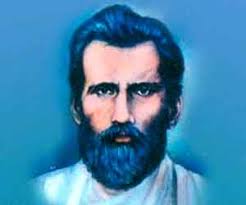
President of India unveiled the statue of eminent freedom fighter, social reformer, and pioneer journalist Utkalmani Pandit Gopabandhu Das at Lajpat Bhawan in New Delhi.
- Utkalmani Pandit Gopabandhu Das (1877–1928) was an iconic freedom fighter, social reformer, educationist, poet, and pioneering journalist from Odisha.
Revered with the title Utkalmani (meaning The Jewel of Odisha), he dedicated his life to national independence, linguistic consolidation of Odia-speaking regions, open-air education, and the selfless service of flood and famine victims
Contribution:
- Appointed as the founding President of the Utkal Pradesh Congress Committee (UPCC) in 1920, bringing Odisha into the mainstream of the national movement led by the Indian National Congress.
- Spearheaded Mahatma Gandhi’s Non-Cooperation Movement across Odisha, encouraging youth to leave British schools and courts, which resulted in his frequent arrests and imprisonment.
- Deeply aligned with Lala Lajpat Rai’s vision of social work, he joined the Servants of the People Society (Lok Sevak Mandal) and rose to become its national Vice-President.
- Played a pivotal role in the Utkal Sammilani, advocating for the administrative unification of fragmented Odia-speaking regions—a movement that ultimately led to Odisha becoming India’s first language-based province in 1936.
- Satyabadi Bana Bidyalaya (1909): Founded an open-air residential school at Sakhigopal near Puri based on the Gurukula model. The school broke caste barriers by requiring students of all backgrounds to dine and study together while fostering patriotism and moral character.
- Founding The Samaja (1919): Started the historic Odia newspaper The Samaja in 1919 to inform rural populations, promote literacy, and highlight British exploitation. Written in simple, lucid Odia prose, it became a voice for the marginalized.
- Literary Masterpieces: An acclaimed poet and essayist, he authored inspiring nationalist literature during his incarceration, including Bandi R Atmakatha (Story of a Prisoner), Dharmapada, and Kara Kabita.
Micro, Small and Medium Enterprises Development (Amendment) Bill, 2026:

Parliament passed the Micro, Small and Medium Enterprises Development (Amendment) Bill, 2026, after its approval by the Rajya Sabha.
- The MSME Development (Amendment) Bill, 2026 amends the Micro, Small and Medium Enterprises Development Act, 2006 to improve the business environment for MSMEs through faster payments, streamlined dispute resolution, flexible classification, and decriminalised compliance.
- Aim is to ensure timely payments to MSMEs, simplify business regulations, strengthen access to finance, and promote ease of doing business through digital and legal reforms.
Key Features:
Flexible Classification of MSMEs:
- Removes fixed statutory investment thresholds.
- Empowers the Central Government to classify MSMEs based on investment in plant & machinery/equipment and turnover through notifications.
- Makes MSME registration voluntary for all enterprises.
- Enables registration through a Central Government digital platform, with States also permitted to establish digital registration portals.
- Makes it mandatory for Central Public Sector Enterprises (CPSEs) to settle all MSME procurement invoices through the Trade Receivables Discounting System (TReDS).
- Allows Central and State Governments to extend this requirement to other public entities.
- Mandates that payment-related mediation before MSME Facilitation Councils or mediation providers must be completed within 90 days from the first hearing.
- Requires arbitration to commence within 30 days if mediation fails.
- Arbitration awards must be delivered within 90 days after completion of pleadings.
- Allows challenges against both arbitration awards and mediated settlement agreements.
- If court proceedings exceed six months, at least 50% of the awarded amount must be paid to the MSME supplier.
- Replaces criminal penalties with a graded system of warnings and monetary penalties for:
- Furnishing false registration information.
- Failure to provide information required by authorities.
- Non-reporting of MSME dues in annual accounts.
- Progressive Penalty Structure:
- Introduces higher penalties for repeated violations.
- Minimum penalty amounts will automatically increase by 10% every three years.
- Adjudication & Appeals:
- Appoints the Development Commissioner (MSME) as the adjudicating authority.
- Appeals against adjudication orders will lie before the MSME Secretary.
e-Pratyaropan digital platform:

During the 16th Indian Organ Donation Day event in New Delhi, Union Minister of State for Health Anupriya Patel unveiled the e-Pratyaropan Digital Platform.
- e-Pratyaropan is an integrated, national-level unified digital platform designed to digitize and streamline India’s organ donation and transplantation ecosystem.
- It serves as a central interface connecting hospitals, transplant surgeons, organ donors, waiting-list recipients, and administrative regulatory bodies into a single, technology-enabled framework.
- Nodal Ministry: Ministry of Health and Family Welfare (MoHFW), Government of India.
- Apex Implementing Agency: National Organ and Tissue Transplant Organisation (NOTTO).
- Aim is to establish a transparent, fair, and efficient organ donation framework that eliminates manual delays, prevents malpractices, maintains real-time organ registries, and speeds up organ matching and allocation to save lives.
Key Features:
- Unified National Registry & Waitlist Management: Maintains real-time digital databases for organ transplant waiting lists, deceased and living donors, tissue banks, and organ donation pledges.
- Automated & Transparent Organ Allocation: Uses protocol-based algorithms aligned with THOTA (Transplantation of Human Organs and Tissues Act) guidelines to allocate retrieved organs strictly on medical priority, geography, and urgency—eliminating discretionary biases.
- Hospital &Stakeholder Integration: Enables registered hospitals, ROTTOs, and SOTTOs to log transplant procedures, organ retrieval alerts, and recipient updates within mandatory timeframes (e.g., 48 hours post-procedure).
- Digital Identity Verification: Integrates mobile and digital ID platforms to facilitate organ donation pledges and issue authentic digital pledge certificates.
- Real-Time Organ Tracking Capabilities: Interoperable with the NOTTO Mobile App to monitor the movement of retrieved organs along green corridors and transport routes.
India’s Private Capex Revival:
India’s private sector capital expenditure (Capex), often regarded as the missing pillar of the country’s post-pandemic growth story, is witnessing a strong revival. Reserve Bank of India (RBI) data showing industrial credit growth of 19.2% year-on-year (YoY) in June 2026, up from 6.3% a year earlier, signals a transition from public investment-led recovery to a broad-based private investment cycle.India’s private capex cycle is witnessing a structural revival, driven by rising capacity utilisation, healthier corporate balance sheets, robust industrial credit growth, government-led crowding-in, and policy support such as the PLI Scheme and PM Gati Shakti, shifting growth towards manufacturing and infrastructure-led expansion.Sustaining the momentum requires addressing key challenges such as geopolitical uncertainty, imported inflation, high borrowing costs, regulatory bottlenecks and weak rural demand through faster project clearances, targeted credit support, logistics reforms and innovative financing mechanisms like InvITs and REITs.