
Today’s Current Affairs: 5th May 2026 for UPSC IAS exams, State PSC exams, SSC CGL, State SSC, RRB, Railways, Banking Exam & IBPS, etc
Table of Contents
Sikkim Becomes India’s First Paperless Judiciary State:
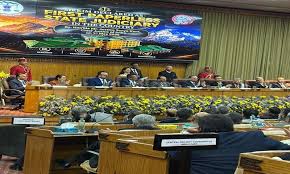
Sikkim has been declared the first state in India to adopt a fully paperless judiciary by Justice Surya Kant, marking a major milestone in digital justice delivery.
- The announcement was made by the Chief Justice of India during the National Conclave on Technology and Judicial Education held in Gangtok.
- Organised by: The conclave was organised by the High Court of Sikkim and the Sikkim Judicial Academy.
- The paperless judiciary involves end-to-end digital functioning including e-filing, digital case records, virtual hearings, and automated workflows.
- Digital processes are expected to reduce case pendency, ensure faster hearings, and improve overall efficiency in justice delivery.
- The judiciary is increasingly adopting tools like Artificial Intelligence (e.g., SUPACE and SUVAS) for research, translation, and case management.
Strengthening India’s Supply Chains through Inland Waterways:
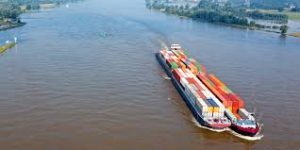
The Chief Economic Advisor (CEA) highlighted the importance of inland waterways in strengthening India’s supply chains and logistics efficiency.
- He stressed that amid disruptions in global shipping routes due to the West Asian conflict 2026, developing internal transport networks is essential for logistics resilience and economic stability.
- Inland Water Transport (IWT) is the most economical mode of freight movement.
- Moving goods via waterways costs approximately Rs 0.25– Rs 0.30 per ton-km, drastically lower than rail (Rs 1.0) and road (Rs 1.5).
- This directly reduces the overall logistics cost for domestic industries, making Indian goods more competitive globally.
- Waterways offer incredible scale for heavy cargo. A single standard 2,000-tonne inland vessel can carry the equivalent of 125 standard trucks.
- This makes it the ideal mode for transporting bulk commodities essential to the economy, such as coal, cement, fertilizers, and food grains.
- India’s road and rail networks are heavily burdened, leading to delayed shipments and higher maintenance costs.
- By absorbing a large share of heavy cargo, waterways alleviate severe congestion on national highways and freight corridors, reducing wear-and-tear on infrastructure and minimizing transit delays.
- As recent geopolitical crises (like the West Asian conflict) have shown, international shipping lanes are vulnerable to massive disruptions and surging freight/insurance costs.
- Inland waterways provide a secure, domestic channel that is completely insulated from these external shocks, ensuring that internal trade continues without interruption.
- Aligning with India’s Panchamrit climate goals, IWT is highly eco-friendly. It consumes 3 to 6 times less energy than road transport and produces a fraction of the greenhouse gas emissions.
- Transitioning supply chains to waterways helps industries reduce their carbon footprint.
- Waterways unlock the logistical potential of landlocked and underdeveloped regions, particularly states like Bihar, Jharkhand, and the Northeast.
- By linking these hinterlands directly to major maritime ports via rivers like the Ganga (National Waterway-1) and Brahmaputra (National Waterway-2), local MSMEs and farmers are seamlessly integrated into national and global supply chains.
- Waterways offer predictable travel times without traffic bottlenecks and have huge expansion potential, as most of India’s 20,000+ km navigable network remains underutilised, requiring minimal land acquisition.
Evolution of India’s Labor Movements:
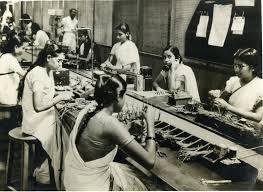
The history of Indian labor movements is a saga of transitioning from colonial “criminal conspiracy” charges to constitutional protections, currently facing new challenges under the Industrial Relations Code, 2020.
- Early Period (1850–1900): During this initial phase of industrialization (textile and jute mills), there were no formal unions. The movement was largely philanthropic, led by social reformers.
- In 1875, SS Bengalee led a protest in Bombay to highlight the poor conditions of women and children in factories.
- NM Lokhande is considered the father of the Indian labor movement. He founded the Bombay Mill-Hands Association (1890). However, this was more of a welfare group than a modern trade union.
- The Factories Act, 1881 was passed to regulate child labor and working hours.
- The period surrounding World War I transformed the movement from welfare-oriented associations to organized political bodies.
- The Madras Labour Union (1918), founded by BP Wadia, is considered India’s first systematic trade union.
- AITUC Formation (1920) was formed to represent India at the International Labour Organization (ILO). Lala Lajpat Rai was its first president.
- In 1921, the Buckingham and Carnatic Mills case exposed the absence of legal protection, as union leaders were penalised for organising workers, treating unions as conspiracies under common law.
- N.M. Joshi pushed for legal safeguards, leading to sustained pressure for legislation.
- The Trade Unions Act, 1926, was a watershed, granting legal recognition to unions and protecting members from civil suits and criminal charges.
- Despite legalisation, colonial authorities imposed repression through measures like the Meerut Conspiracy Case (1929-1933) and restrictive laws such as the Trade Disputes Act, 1929 and Public Safety Bill 1928.
- This created a contradiction between the “letter” (legal protections) and the “spirit” (continued suppression) of labour rights.
- The labour movement became closely linked with the nationalist struggle, with leaders like Lala Lajpat Rai and Jawaharlal Nehru advocating worker mobilisation.
- Splits occurred along ideological lines (Communist vs. Nationalist), leading to the formation of groups like the Indian Federation of Labour (established in 1941 by MN Roy after he split from AITUC due to ideological differences regarding World War II).
- After independence, the movement became deeply fragmented based on political party affiliations. Major labor federations formed were:
- Formed by the Congress party to counter communist influence.
- Hind Mazdoor Sabha (HMS) (1948): Formed by the Socialists like Ashok Mehta, T.S. Ramanujam and G.G. Mehta.
- Bharatiya Mazdoor Sangh (BMS) (1955): Formed by the RSS (Bharatiya Mazdoor Sangh), now India’s largest trade union.
- Centre of Indian Trade Unions (CITU) (1970): Formed as a split from AITUC by the CPI(M).
- Post-Liberalization Era (1991–Present): Increased outsourcing and contractualization have weakened traditional union power in the formal sector.
- As of March 2026, India (Ministry of Labour & Employment) has 12 recognised central trade union organisations.
- In recent years, the government consolidated 29 labor laws into 4 Labor Codes (Code on Wages (2019), Industrial Relations Code (2020), Code on Social Security (2020), and Occupational Safety, Health and Working Conditions (OSH) Code (2020)).
- While aimed at ease of doing business, unions have expressed concerns over the dilution of strike rights and collective bargaining. E.g., while the Industrial Relations Code 2020 retains immunity clauses, it introduces a high 51% support threshold for union recognition and a 60-day notice period for strikes.
- Despite an estimated 23.5 million platform workers by 2030, the new Code remains silent on gig and platform workers, classifying them as “independent contractors” and denying them formal collective bargaining rights.
Santa Marta Climate Conference:

Representatives from over 50 countries, accounting for nearly 50% of global GDP, gathered in Santa Marta, Colombia, for the First International Conference on Transitioning Away from Fossil Fuels.
- The conference was born out of growing frustration with the slow, consensus-bound negotiations of the United Nations Framework Convention on Climate Change (UNFCCC) Conferences of the Parties (CoPs), which have frequently stalled on the issue of fossil fuel phase-out.
- Santa Marta Climate Conference is The First International Conference on Transitioning Away from Fossil Fuels was co-hosted by Colombia and the Netherlands.
- It was conceptualized as a “safe harbour” for a “coalition of the willing” countries ready to take concrete steps to phase out fossil fuels, bypassing the political deadlocks of traditional UN climate summits.
- Objective is to develop practical, national, and international roadmaps to end the use of fossil fuels and shift towards renewable energy systems, aligning trade and finance policies with green transitions.
- There was growing momentum for a Fossil Fuel Non-Proliferation Treaty, especially from Small Island Developing States (SIDS), to address supply-side governance gaps.
- Participants stressed aligning trade, finance, and carbon pricing with green transition goals, including phasing out fossil fuel subsidies, while calling for financial and technical support for developing countries to ensure an equitable shift to zero-carbon pathways.
- France has launched Europe’s first fuel-by-fuel fossil exit roadmap, confirming coal will end by 2030, oil by 2045 and gas by 2050.
70 Years of the Directorate of Enforcement:

The Directorate of Enforcement (ED), established on 1st May 1956, completed its 70 years on 1st May 2026.
- ED is a premier financial investigation agency in India. It operates under the Department of Revenue, Ministry of Finance, and is primarily tasked with enforcing economic laws and fighting financial crimes.
- It is an executive body (non-statutory and non-constitutional) with pan-India jurisdiction, deriving its powers primarily from the Prevention of
- Money Laundering Act (PMLA) and the Foreign Exchange Management Act (FEMA), along with supplementary laws such as the Fugitive Economic Offenders Act, 2018.
- Under the Prevention of Money Laundering Act, 2002 (PMLA), the ED has the authority to investigate the “proceeds of crime,” attach and confiscate property believed to be derived from illegal activities, etc.
- Under the Foreign Exchange Management Act, 1999 (FEMA), the ED investigates contraventions of foreign exchange laws and regulations, such as illegal foreign exchange transactions, hawala dealings, etc.
- Under the Fugitive Economic Offenders Act, 2018 (FEOA), the ED can seize the properties of economic offenders (like high-profile loan defaulters) who have fled the country to avoid prosecution.
- The ED is headed by a Director of Enforcement. It is headquartered in New Delhi. ED has 10 Zonal offices (e.g., Chennai, Kolkata, Chandigarh, etc.), each of which is headed by a Deputy Director and 11 sub-Zonal Offices (e.g., Jaipur, Jalandhar, Srinagar, etc.), each of which is headed by an Assistant Director.
- Officers are drawn from the Indian Revenue Service (IRS), Indian Police Service (IPS), and the agency’s own cadre.
Cell Broadcast System:

The Ministry of Communications has launched the indigenous Cell Broadcast System (CBS), marking a shift in India’s disaster management from a reactive to a proactive framework through its first large-scale nationwide demonstration of capability.
- The system has already been deployed in disaster situations in States like Andhra Pradesh, Odisha, and Uttarakhand, and for events such as the Char Dham Yatra.
- Cell Broadcast is a method of simultaneously sending short messages to multiple mobile phones within a defined geographic area. It was developed in the early 1990s by the European Telecommunications Standards Institute. It was first demonstrated in 1997 in Paris before becoming a global standard for disaster mitigation.
- India is using an SMS-based alert system which is operational across all 36 states and Union Territories.
- It integrated with the Common Alerting Protocol (CAP)-based SACHET platform, allowing alerts to be sent to mobile devices without needing individual phone numbers or internet connectivity.
- SACHET is India’s Integrated Alert System (also known as the National Disaster Alert Platform), developed for real-time dissemination of disaster and emergency warnings (e.g., flash floods, tsunamis, or gas leak).
- It was developed indigenously by the Centre for Development of Telematics (C-DOT) under the Department of Telecommunications (DoT), in partnership with the National Disaster Management Authority (NDMA) and the Ministry of Home Affairs (MHA).
- Messages override silent/do-not-disturb modes, include siren, vibration, and a pop-up message, and support multiple languages (English, Hindi, and regional languages).
- Unlike traditional SMS, CBS is a one-to-many broadcast system that delivers geo-targeted alerts simultaneously to millions of devices within seconds, without requiring phone numbers, user registration, apps, or subscriptions.
- It is unaffected by network congestion, works across 2G to 5G networks, ensures coverage for roaming and last-mile populations, and does not use personal data.
- It strengthens India’s early warning capabilities, supporting the goal of “Alert Citizens, Safe Nation.”
C-DoT has also successfully demonstrated CBS internationally in countries such as Mauritius, Cambodia, El Salvador, and Sri Lanka, aligning with the United Nations “Early Warnings for All” initiative. - India joins over 30 countries, including Japan (J-Alert, 1st to adopt in 2007) and the USA (Wireless Emergency Alerts) in deploying this technology.
Diabetes Mellitus in Children:
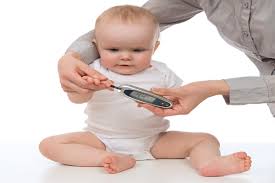
The Ministry of Health and Family Welfare released the Guidance Document on Diabetes Mellitus in Children at the National Summit on Best Practices in Public Healthcare Service Delivery 2026.
- Diabetes mellitus is a chronic metabolic disorder characterized by high blood sugar (hyperglycemia) due to insufficient insulin production (Type 1) or ineffective insulin use (Type 2).
- It causes severe, long-term damage to nerves and blood vessels, requiring lifestyle management and medications.
- Symptoms include frequent urination, extreme thirst, and unexplained weight loss.
- Type 1 diabetes mainly affects children and young individuals and is linked to genetics, while Type 2 diabetes is driven by lifestyle factors like obesity, inactivity, unhealthy diet, along with age and family history.
- Guidance Document on Diabetes Mellitus in Children is a national-level structured approach designed to ensure early detection, proper diagnosis, effective treatment, and lifelong management of diabetes in children.
- It focuses on universal screening (0–18 years), linking community-level identification with treatment at district hospitals and advanced care at medical colleges.
- Promotes awareness of the early warning signs of Type 1 Diabetes: Toilet, Thirsty, Tired, and Thinner.
- The framework also provides a free and comprehensive care package, including insulin therapy, diagnostic services, and monitoring tools, making treatment accessible and affordable.
- By integrating care within the public health system, it ensures continuous follow-up, prevents complications, and strengthens India’s capacity to manage non-communicable diseases (NCDs) among children.
Mission Drishti:

Bengaluru-based space startup GalaxEye successfully launched ‘Mission Drishti’, the world’s first OptoSAR satellite, aboard a SpaceX Falcon 9 rocket.
- Mission Drishti is a cutting-edge, dual-use Earth observation satellite.
- It is uniquely recognized as the world’s first OptoSAR satellite, meaning it integrates two different types of sensors—optical and radar—onto a single operational platform to provide high-clarity, analysis-ready data.
- Organization: Developer: GalaxEye (a Bengaluru-based space-tech startup).
- Facilitated by IN-SPACe (Indian National Space Promotion and Authorization Center).
- Launch Details:
- Launch Vehicle: SpaceX Falcon 9.
- Launch Site: Vandenberg, California, USA.
- Orbit: Sun-synchronous Low Earth Orbit (LEO) at an altitude of approximately 500 km.
- The mission aims to overcome the limitations of traditional Earth observation by providing all-weather, day-and-night imaging. By combining optical and radar data, it seeks to provide decision-grade clarity for global stakeholders in sectors ranging from national security to environmental monitoring.
Key Features:
- OptoSAR Technology: The first satellite globally to combine Electro-Optical (EO) sensors with Synthetic Aperture Radar (SAR). SAR can see through clouds and darkness, while EO provides intuitive visual detail.
- Mass & Size: At 190 kg, it is India’s largest privately developed Earth observation satellite.
- Resolution: Offers a spatial resolution of 1.2 – 3.6 meters, the highest among Indian private players.
- Spectral Bands: Operates across multiple bands including X-Band (SAR), PAN, RGB, NIR, Coastal Blue, and Red Edge.
- Revisit Frequency: The satellite is designed to revisit the same spot every 4 days, ensuring high-frequency monitoring.
- Fused Data Output: It delivers inherently aligned, fused imagery that is analysis-ready, reducing the need for complex post-processing by the user.
Prosopis juliflora:

Kandla (Deendayal) Port in Gujarat is launching a pilot project to convert Prosopis juliflora, an invasive weed, into bio-methanol to produce clean maritime fuel.
- Prosopis juliflora is a hardy, deciduous, thorny shrub or small tree belonging to the Fabaceae family. While originally introduced to combat desertification and provide fuelwood, it has since become one of the most aggressive invasive alien species in arid and semi-arid regions of India.
- It was introduced by the British in the late 19th century (specifically in 1877) to the arid regions of Rajasthan and Gujarat to provide green cover and fuel in desert landscapes.
- It thrives in arid andsemi-arid environments with low rainfall and poor soil quality.
- It is highly salt-tolerant, making it common in coastal areas, salt pans (like the Rann of Kutch), and degraded pasture lands.
- In Gujarat, it has taken over large stretches of the Banni grasslands and areas surrounding the Kandla port.
- It produces a massive quantity of seeds that are dispersed by livestock (cattle and goats) through their droppings.
- Its roots can penetrate up to 50 meters deep to reach groundwater, allowing it to survive extreme droughts.
- The plant releases chemicals into the soil that inhibit the growth of other nearby plants, effectively crowding out native vegetation.
- It possesses sharp, sturdy thorns that protect it from overgrazing.
Implications:
Negative Impacts:
- It destroys biodiversity by replacing indigenous grasses and trees, which reduces the fodder available for local livestock.
- Its deep-reaching roots significantly deplete groundwater levels in already water-stressed regions.
- It turns fertile pastures into impenetrable green deserts where nothing else can grow.
Positive Impacts:
- It is an excellent source of biomass for conversion into syngas and bio-methanol due to its high calorific value.
- Collecting the shrub for industrial use provides income for local communities.
- It has historically been a primary source of cheap fuel and high-quality charcoal for rural households.
CINBAX-II 2026:
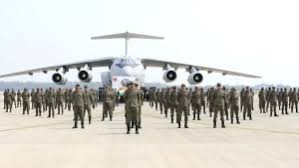
The Indian Army contingent departed, to participate in CINBAX-II 2026, the second edition of the India-Cambodia bilateral military exercise.
- CINBAX-II is a bilateral military exercise between the Indian Army and the Royal Cambodian Army.
- It is conducted under the framework of Chapter VII of the United Nations Mandate, focusing on joint training at the company level for operations in sub-conventional and semi-urban environments.
- Host Nation: Kingdom of Cambodia.
- Techo Sen Phnom Thom Mreas Provincial Royal Cambodian Air Force Training Centre (Camp Basil), Kampong Speu Province.
- Nation involved: India and Cambodia.
- The primary objective of CINBAX-II is to enhance interoperability, coordination, and operational synergy between the two armies. It aims to align their capabilities with the current dynamics of counter-terrorism operations typically encountered by UN peacekeeping forces.
The Citizenship (Amendment) Rules, 2026:
The Union Home Ministry notified the Citizenship (Amendment) Rules, 2026 on May 1, 2026, to modernize the Overseas Citizen of India (OCI) framework.
- The 2026 Amendment is a comprehensive overhaul of the Citizenship Rules, 2009. It transitions the management of OCI status from a hybrid paper-and-ink system to a fully digital framework, introducing electronic OCI (e-OCI) registrations to streamline overseas Indian identity services.
- Authority: Union Ministry of Home Affairs (MHA).
- Aim:
- To phase out duplicative physical paperwork and create a paperless identity ecosystem.
- To tighten norms surrounding dual citizenship and prevent the misuse of travel documents, especially regarding minors.
- To simplify the registration, renunciation, and cancellation processes through a centralized electronic registry.
- Key Features:
- Ban on Dual Passports for Minors: A new proviso to Rule 3 mandates that a minor child cannot hold the passport of any other country at any time while holding an Indian passport.
- Introduction of e-OCI: Applicants can now be issued an electronic OCI registration (Form XXIX) alongside or instead of physical cards.
- Fully Online Applications: All OCI applications, including registration (Form XXVIII), renunciation (Form XXXI), and cancellations, must now be filed electronically via the designated portal (ociservices.gov.in).
- Biometric Integration: Applicants must consent to share biometric data, which will be used for automatic enrollment in Fast Track Immigration Programmes (e-gates) at airports.
- Streamlined Appeals: If an application is rejected, the challenge is now handled by an authority one rank higher than the original decision-maker, ensuring a fair right to be heard.
- Centralized Registry: Records are now maintained digitally in Form XXX, allowing for real-time tracking and deemed cancellation of invalid cards.
Operation WHITE STRIKE:
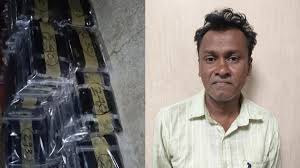
The Operation WHITE STRIKE led to the seizure of 349 kg of high-grade cocaine worth ₹1,745 crore in the Mumbai logistics corridor.
- A large-scale anti-narcotics operation conducted by the Narcotics Control Bureau (NCB) targeting an international cocaine trafficking syndicate operating through India’s logistics networks.
- Aim:
- To dismantle organized narcotics supply chains and disrupt transnational drug networks.
- To implement India’s zero-tolerance policy against drug trafficking through intelligence-driven enforcement.
- Key Features:
- Two-Stage Coordinated Raids: Initial interception in Kalamboli followed by a second major seizure in Bhiwandi warehouses.
- Bottom-to-Top Intelligence Approach: Small consignment tracking led to uncovering a large-scale international syndicate.
- Advanced Concealment Detection: Cocaine hidden in imported machinery cavities with multi-layer packaging, indicating high sophistication.
Tiger Deaths in Kanha Tiger Reserve:
A tigress and her four cubs have died in Kanha Tiger Reserve, with wildlife officials suspecting an outbreak of Canine Distemper Virus (CDV) linked to lung infection.Canine Distemper Virus (CDV) is a highly contagious viral disease affecting carnivores, causing respiratory, gastrointestinal, and neurological symptoms, spreading through direct contact or contaminated materials, often transmitted from domestic or stray dogs to wildlife.Kanha Tiger Reserve is located in Madhya Pradesh and is one of India’s major tiger reserves, established as a national park in 1955 and included under Project Tiger in 1973.It lies in the Maikal range of the Satpura hills and is part of the Central Indian highlands, known for its rich biodiversity.
The reserve has important wildlife corridors connecting it with Pench Tiger Reserve and Achanakmar Tiger Reserve, supporting landscape-level conservation.It is home to key species such as tigers, leopards, barasingha (hard-ground swamp deer), sloth bear and wild dogs. The reserve is credited with the successful conservation of barasingha, which was once on the verge of extinction.
Prasoon Joshi Named Chairman of Prasar Bharati in Media Leadership Shift:
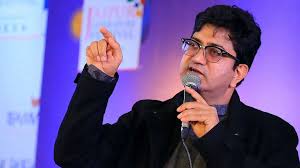
The Government of India has appointed Mr. Prasoon Joshi as the new Chairman of the Prasar Bharati.
- This appointment was announced on 2nd May, 2026 and it can be seen as step towards creativity and innovation into the India’s public broadcasting system.
- He has the strong background in literature, advertising and cinema and his leadership is expected to bring the fresh energy in the digital age.
- The Ministry of Information & Broadcasting has sconfirmed the appointment of Prasoon Joshi.
- And highlighted his diverse creative expertise and deep cultural understanding.
- He will play important role to guide the Prasar Bharati through a transformative phase where the traditional broadcasting meets digital expansion.
- Union Minister Ashwini Vaishnaw has also praised Joshi as a ‘rare creative spirit’ and expressed confidence that his vision will bring renewed purpose and a fresh creative voice to the organization.



