
Today’s Current Affairs: 5th Nov 2026 for UPSC IAS exams, State PSC exams, SSC CGL, State SSC, RRB, Railways, Banking Exam & IBPS, etc
Table of Contents
New AI Models:

The central government has launched the indigenous AI foundational models Eka-1, Dhir 2B and Dhir 5B developed by domestic companies with support under the IndiaAI Mission.
Eka-1:
- It is a new AI model developed by Soket Labs Technology and Research.
- It is a powerful Foundation Model featuring 26.3 billion parameters and trained on approximately 7.5 trillion tokens.
- It demonstrates advanced capabilities, spanning all 22 scheduled Indian languages alongside English.
- It is built as an open, sparse hybrid language model and is designed for math, code, reasoning, and agentic use.
Dhir 2B and Dhir 5B:
- These two are open-source models developed by ZenteiQ AiTech Innovations.
- These models can be deployed as secure, on-premise, multilingual assistants supporting English and 10 Indian languages.
- The models can run on different computing platforms, including GPUs and TPUs.
- Their lightweight architecture also allows on-device deployment on mobile phones without depending on cloud connectivity,
- It enable offline-capable, document-grounded automation, knowledge retrieval, and citizen or enterprise services across defence, government, industrial, and educational sectors particularly in low-connectivity or sensitive environments.
Siri Cattle:
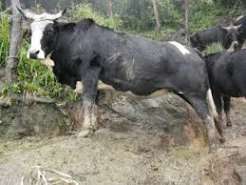
Union Minister of Fisheries, Animal Husbandry and Dairying announced that the Department of Animal Husbandry and Dairying (DAHD), Government of India, will establish a Centre of Excellence for the conservation and development of the indigenous Siri cattle breed in Sikkim.
- Siri Cattle is a dual-purpose cattle breed.
- It is a vital indigenous zebu-derived livestock breed native to the Eastern Himalayan region, primarily found in Sikkim, the Darjeeling hills of West Bengal, and Bhutan.
- It is a medium-sized draught-purpose breed of the hilly region of West Bengal and Sikkim.
- The breed is also known as “Trahbum”.
- The breed is either black or brown with white patches, though totally black or brown animals are also available.
- The hump is cervico-thoracic type with a tuft of hair on it.
- Horns are medium-sized and curved outward, forward and slightly upward with sharp and pointed tips.
- The males are mainly reared for draught purposes in the hilly area, and sometimes they are the only source of draught power.
- The breed produces a very less amount of milk, averaging around 425.8 kg per lactation, with fat percentage varying from 2.8 to 5.5%.
Colletes Inaequalis:
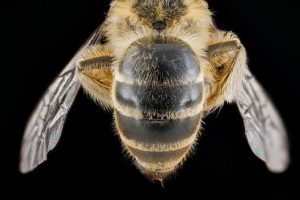
Researchers found that Cellophane bee Colletes inaequalis produces a kind of plastic that also degrades within a year.
- Colletes Inaequalis is a solitary, ground-nesting bee belongs to Colletidae family.
- They pollinate red maple, willow, and apple trees.
- These bees line the inner walls of its nest with a transparent, cellophane-like film, earning it the nickname “cellophane bee.”
- The nest lining of the ground-nesting bee is translucent, flexible, resilient and degrades within a year.
- This cellophane like film is a flexible, translucent material made from polyester and silk.
- The material is produced in a specialized gland, called the Dufour’s gland, that is connected to the bee’s stinger.
- The polyester produced by cellophane bees resembles polyethylene in its molecular packing.
Highlights of the Study:
- The analysis showed that the polyester produced by the cellophane bee has a “semicrystalline” structure, in which amorphous and crystalline regions coexist within a single material.
- The polyester nest material showed impressive degradation in a short amount of time.
- In natural soil, the amount of polyester lining fell from 73% to 40% of the nest by weight within four months.
- By seven months, the linings developed visible cracks, and by 11 months, they became brittle and prone to crumbling.
India Science and Technology Scoreboard : NITI Aayog
The NITI Aayog launched the ‘India Science and Technology (S&T) Scoreboard.
- It is an interactive data platform aimed at mapping the country’s science and innovation ecosystem across states and Union Territories (UTs).
- It enables policymakers to assess performance, identify gaps and compare their progress with other states.
- It is developed by NITI Aayog’s Science and Technology Division.
- It will bring together information on research institutions, publications, patents, start-ups, research funding and state-level policies in one place.
- The platform will provide a national overview of India’s science and technology ecosystem, alongside state-wise profiles and benchmarking.
- Users will be able to compare any two states or UTs, examine their research output and assess their performance across sectors.
- It will also cover 11 priority research areas of national importance, including clean energy, artificial intelligence, semiconductors, critical minerals and agriculture, allowing users to assess research output and compare progress across these sectors.
- The scoreboard will capture data on central, state and private higher education institutions, R&D laboratories, deep-tech startups, Atal Tinkering Labs, and research funding from central, state and private sources.
- For patents, the platform will provide information on applications filed, patent strength, research areas and collaboration between states.
- It will also document state science and technology, startup and innovation policies, along with notable practices that other states can study and adopt.
White Stork : Spotted
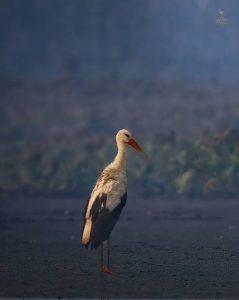
A rare white stork was recently spotted at the Okhla Bird Sanctuary, drawing a steady stream of naturalists, ornithologists, and wildlife photographers to the wetlands.
- White Stork is a large wading bird in the stork family Ciconiidae.
- Scientific Name: Ciconia ciconia
- White storks are found across Europe, Asia Minor, the northern part of Africa, and the Middle East.
- By the winter months, they migrate into tropical regions of Africa, some parts of the Middle East, and the Indian subcontinent.
- They prefer to feed in grassy meadows, agricultural fields, pastures, steppes, savannas, and shallow wetlands, avoiding areas overgrown with tall grass and shrubs.
- They fly with their necks outstretched and legs trailing, utilizing soaring to conserve energy.
- When standing, it measures about 95 to 110 centimetres, and it has a wingspan of around 183 to 217 centimetres.
- The sexes are identical in appearance, except that males are larger than females on average.
- The white stork is easily recognisable by its white plumage, its black wing and shoulder feathers, as well as its long red bill (measuring 14-19 centimetres), and its red legs.
- Life span: Up to 40 years.
- Their diet consists mainly of small animals found in shallow water and fields.
- White storks are gregarious and non-territorial
- Conservation Status:
- IUCN Red List: Least Concern
Okhla Bird Sanctuary:
- It is situated at the entrance of Noida in Gautam Budh Nagar District of Uttar Pradesh.
- It is situated at a point where the Yamuna River enters the state of Uttar Pradesh, leaving the territory of Delhi.
- It is roughly 4 sq.km. in size.
- The most prominent feature of the sanctuary is the large lake created by damming the river.
- It is recognised as an Important Bird and Biodiversity Area (IBA) by BirdLife International.
Delhi Defence Dialogue 2026:

The Union Defence Minister recently addressed the Delhi Defence Dialogue 2026, organised by the Manohar Parrikar Institute for Defence Studies and Analyses (MP-IDSA), in New Delhi recently.
- Delhi Defence Dialogue (DDD) is a flagship platform of the Manohar Parrikar Institute for Defence Studies and Analyses (MP-IDSA) for addressing the multifaceted challenges of defence and security in India.
- Organised annually, the DDD brings together government officials, military leaders, defence experts, industry representatives, and international delegates to engage in constructive dialogue and exchange ideas.
- The inaugural edition of the DDD was held in 2024.
- The platform is designed to discuss the evolving landscape of international security and defence strategies, with a focus on India’s defence.
- DDD serves as a critical forum for addressing the need for a robust defence strategy that not only addresses immediate threats but also anticipates future challenges.
- DDD 2026 is the third edition of the dialogue.
- Location: New Delhi
- Theme: “Defence Reforms, Aatmanirbharta, Collaborations and Exports”
Manohar Parrikar Institute for Defence Studies and Analyses (MP-IDSA):
- It is a non-partisan, autonomous body dedicated to objective research and policy-relevant studies on all aspects of defence, security, and international relations.
- MP-IDSA was established as a registered society in New Delhi on November 11, 1965.
- Its mission is to promote national and international security through the generation and dissemination of knowledge on defence and security-related issues.
- It has a well-qualified multidisciplinary research faculty drawn from academia, defence forces, and the civil services, representing a diversity of views.
- The Institute conducts several national and international conferences every year and regularly holds round tables and workshops on important developments.
- MP-IDSA provides annual training programmes to civilian and military officers of the Government of India.
- Funding: MP-IDSA is funded by the Indian Ministry of Defence. It functions autonomously.
INS Sahyadri: In News

Indian Navy’s stealth frigate INS Sahyadri successfully wrapped up its participation in the India–Republic of Korea Navy (IN–RoKN) Bilateral Exercise off the coast of Busan recently.
- INS Sahyadri (F49) is an indigenously built multi-role guided missile stealth frigate of the Indian Navy.
- It is the third and final ship of the Shivalik Class stealth frigates, which was built by Mazagon Dock Ltd in Mumbai under Project 17.
- The other two ships built under Project 17 were INS Shivalik (F47) and INS Satpura (F48).
- They were India’s first indigenously designed stealth frigates.
- INS Sahyadri was commissioned into the Indian Navy on July 21st, 2012.
- It is a member of the Eastern Fleet of the Indian Navy, which is located in Visakhapatnam.
- It is 468 feet in length and 55 feet in breadth.
- It has a displacement capacity of 6,800 tons.
- It is propelled by two gas turbine engines, which enable it to generate speeds in excess of 30 knots (or over 55 kmph), and two diesel engines for normal cruising speeds.
- It is equipped with cutting-edge weapons and sensors, enabling it to identify and eliminate threats from the air, the surface, and the subsurface.
- It can be equipped with BrahMos anti-ship missiles, Anti-submarine rocket launchers, Barak-1 missiles, and Shtil-1 3S90M missiles.
- It is equipped with advanced electronic warfare capabilities and torpedoes to detect and neutralise enemy submarines.
- It can carry two helicopters-a mix of Dhruv, Sea King, or Kamov-onboard for various missions.
Nahargarh Wildlife Sanctuary:

The Supreme Court recently declined to examine the merits of a challenge concerning the revised boundaries of the Nahargarh Wildlife Sanctuary in Rajasthan.
- Nahargarh Wildlife Sanctuary is located in the Jaipur district of Rajasthan.
- It’s a small sanctuary covering an area of approximately 52.40 sq. km.
- It is situated in the Aravalli range.
- It is named after Nahargarh Fort, a historic fort built in the 18th century by Maharaja Sawai Jai Singh II, the founder of Jaipur.
- It connects ecologically with other forest areas like the Ranthambore Tiger Reserve.
- Within the sanctuary is the Nahargarh Biological Park, which covers 720 hectares and focuses on conservation, including species like Bengal tigers, Asiatic lions, and sloth bears.
- The sanctuary features rugged terrain with hills, valleys, and seasonal streams.
- The sanctuary contains Tropical Dry Deciduous Forests and Tropical Thorn Forests.
- Major trees include dhok, babool, khejri, and ber.
- Common species include the Indian Leopard, Blackbuck, Chinkara (state animal), Indian Wolf, Sloth Bear, Caracal, etc.
- It’s a haven for birdwatchers, with a variety of species, including Sarus Crane, peacocks, owls, and eagles.
- It is also home to reptiles like Indian rock pythons, monitor lizards, and amphibians like frogs and toads.
Teghaza 001 : Meteorite
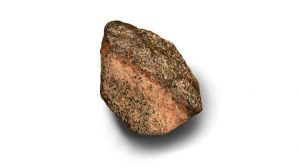
A rose-coloured meteorite discovered in the Sahara Desert in 2022 named Teghaza 001 has turned out to be one of the oldest pieces of Mars ever found on Earth.
- Teghaza 001 is a rose-coloured meteorite discovered in the Sahara Desert in 2022.
- The meteorite was named after the Teghaza salt plain in Mali, where it was discovered.
- It is among roughly 435 Martian meteorites identified on Earth and is considered one of the three most ancient samples of the Red Planet found so far.
- The other two among the three most ancient Martian meteorites found on Earth are ALH84001 and a sample nicknamed Black Beauty.
- The presence of chemical markers indicating that the rock had been in contact with liquid water during its formation and evolution.
- This makes Teghaza 001 a direct witness to an era when Mars was wet and potentially suitable for life to emerge.
- Meteoroids are bits of solid material of different sizes orbiting the Sun.
- Meteors form when meteoroids enter Earth’s atmosphere (or that of another planet, like Mars) at high speed and burn up, the fireballs, or “shooting stars.”
Mayon Volcano: In News

One of the most active volcanoes in the Philippines, Mayon, fired a dark column of ash over thousands of metres into the sky in a “moderately explosive eruption” recently.
- Mayon Volcano is an active volcano located in Albay province on Luzon Island in the Philippines.
- It is a stratovolcano, that is, it is made out of alternating strata of lava and ash and is part of the Ring of Fire in the Pacific Ocean.
- It is located on the eastern side of Luzon, beside the Philippine Trench, which is the convergent boundary where the Philippine Sea Plate is driven under the Philippine Mobile Belt.
- It is the Philippines’ most active volcano.
- It is one of the most symmetrical volcanic cones on Earth.
- Popular with climbers and campers, the volcano is the centre of Mayon Volcano National Park. UNESCO named it an official biosphere reserve in 2016.
Chidambaram Sabanayagar Temple:
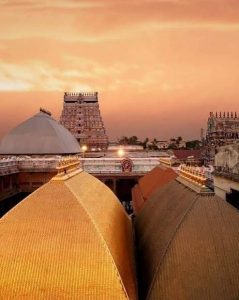
The Madras High Court recently appointed a five-member Board of Management to take charge of the Chidambaram Sabanayagar Temple, citing alleged “maladministration” by the Podhu Dikshitars, a hereditary community of priests who had been entrusted with the temple’s administration by the Supreme Court in 2014.
- The Great Chidambaram Temple, also known as the Thillai Nataraja Temple or Sri Sabanayagar Temple, is a Hindu temple located in the temple town of Chidambaram in the Cuddalore district of Tamil Nadu.
- It is dedicated to Nataraja, the cosmic dance form of Lord Shiva.
- Historical evidence suggests a Shiva shrine existed at the site well before the 7th century AD, when the town was referred to as Thillai.
- The Chola dynasty, who revered Nataraja as their family deity, significantly contributed to the temple’s construction and enhancement during the 10th century.
- It was during this period that the Chola king, Parantaka I, established the temple’s golden roof.
- Notable rulers such as Rajaraja Chola I, Kulothunga Chola I, Kundavai II, the daughter of Rajaraja Chola, and Vikrama Chola made considerable offerings to the shrine during its flourishing era.
- Following the 10th century, the temple underwent various phases of damage, repair, renovation, and expansion throughout the 2nd millennium.
- The majority of the temple’s existing layout, architectural features, and structural elements date back to the late 12th and early 13th centuries, with subsequent additions made in a similar architectural style.
- Over the years, numerous kingdoms, including the Viyanagara Rulers, Madurai Nayakas, Maharaja of Pudukkottai, Sethupathy, and even the British, have made donations to the temple.
- The Podhu Dikshidars, a hereditary community of priests, have been managing the temple for centuries, unlike most of the other famous and historic temples.
- It is a remarkable testament to the brilliance of Chola architecture.
- This site holds considerable scientific significance, as it is positioned at the world’s Magnetic Equator.
- The temple complex is embedded inside four prakarams (courtyards), each surrounded by walls.
- There are nine prominent gopurams that link the various courtyards.
- The innermost structures, including the sanctum and the shrines, are designed with square layouts, and the roof of the sanctum sanctorum is adorned with gold plates.
- The temple’s wall carvings depict all 108 karanas from the Natya Shastra, authored by Bharata Muni, which serve as the foundational postures for Bharatanatyam, a classical Indian dance form.
- The temple comprises five principal Halls or Sabhas: the Kanaka Sabha, the Chit Sabha, the Nritta Sabha, the Deva Sabha, and the Raja Sabha.
Radhanagari Wildlife Sanctuary:
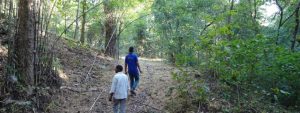
Tourists visiting Maharashtra’s Radhanagari-Dajipur Wildlife Sanctuary recently spotted a male Bengal tiger, marking the first officially documented tiger sighting captured on camera by tourists in the sanctuary.
- Radhanagari Wildlife Sanctuary is located in Maharashtra.
- Nestled in the southern end of the Sahyadri hills in the Western Ghats, it was the former hunting ground of the Maharaja of Kolhapur.
- It was declared as a wildlife sanctuary in 1958 and is the first declared wildlife sanctuary in Maharashtra.
- It was specially created for the conservation of the Indian bison (Gaur).
- The sanctuary is also called ‘Dajipur Wildlife Sanctuary’ and ‘Bison Sanctuary’.
- The rivers that flow across the sanctuary are Bhogavati, Kallamma, Dudhganga, Dirba, and Tulshi, which then join the Krishna River.
- At its heart lies the scenic Radhanagari Dam on the Bhogawati River, which plays a vital role in maintaining the forest ecosystem.
- It contains tropical evergreen forests typical of the northern Western Ghats.
- The main flora found here are Ain, Anjani, Amba, Awala, Bhoma, Bibba, Chandala, Gela, Hirda, Jambul, Jambha, Kinjal, Kumbha, Katak, Nana, Pisa, Umbar, etc.
- The Indian Bison is the flagship species of the area.
- Besides, one can also spot leopards, sloth bears, tigers, barking deer, mouse deer, sambar, giant squirrels, and wild dogs.
- It is also designated as an Important Bird Area by BirdLife International.
- It is home to the rare and globally threatened Nilgiri wood-pigeon, along with Ceylon frogmouth, yellow-browed bulbul, dusky eagle-owl, Malabar grey hornbill, and great pied hornbill, and one of India’s most admired songbirds, the Malabar whistling thrush.
Project 28A : In News

The Ministry of Defence recently signed contracts worth ₹53,866.50 crore with two state-owned shipyards for eight Next Generation Corvettes (NGCs) for the Navy under Project 28A.
- Project 28A is the Indian Navy’s Next Generation Corvettes (NGCs) programme.
- Under the contracts, Garden Reach Shipbuilders & Engineers Limited (GRSE), Kolkata, will construct five corvettes, while Goa Shipyard Limited (GSL) will construct the remaining three.
- It is the first project in which the ships will be indigenously designed by the Indian Navy and constructed by Defence Public Sector Undertakings (DPSUs) selected through a competitive process.
- A corvette in the Indian Navy is a small, fast, and heavily armed warship ranked just below a frigate in size.
- NGCs are designed for multi-role operations, including offensive Ship-to-Ship or Ship-to-Surface Missile Attacks, Anti-Missile Defences, Anti-Submarine Warfare Operations, Escort Duties, Maritime Interdiction Operations (MIO) including Visit Board Search and Seizure, and Local Naval Defence.
- The Indian Navy currently operates 18 to 24 corvettes in active service.
- The platforms will have a highly sophisticated propulsion architecture of a Combined Diesel and Gas turbine with a Cross-Connect gearbox (CODAG-CC), driving two Controllable Pitch Propellers (CPP).
- Their maximum speed will be 26 knots.
- The warships will be fitted with advanced weapons and navigation suites.
- The proposed systems include Medium Range Anti-Ship Missiles, Medium Range Surface-to-Air Missiles (MRSAM) and torpedo tubes.
- The armament suite will also include an OTO Melara 76 mm Super Rapid Gun Mount (SRGM) with the latest upgrade, an AK-630 Close-In Weapon System (CIWS) and 12.7 mm Stabilised Remote-Controlled Guns (SRCGs) integrated with an Electro-Optic-based Fire Control System (EOFCS).
- The sensor suite will include an Electro-Optical Infrared Search and Track (EOIRST) system and a Multi-Function Surveillance, Track, and Guidance Radar (MFSTAR).
- The NGCs will also carry helicopters.