
Today’s Current Affairs: 6th Aug 2026 for UPSC IAS exams, State PSC exams, SSC CGL, State SSC, RRB, Railways, Banking Exam & IBPS, etc
Table of Contents
Blood Falls:
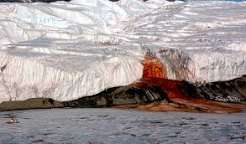
Salty water flowing through Antarctica’s Blood Falls contains a distinct community of marine-specific microorganisms, providing evidence that the brine system beneath the glacier has a marine origin.Microbes in the Blood Falls suggest the brine is composed of ancient seawater that was trapped in a pool beneath the glacier when ocean levels fell and the glacier advanced.
- Blood Falls is a bright red waterfall flowing through Antarctica’s icy landscape.
- It is located at the edge of the Taylor Glacier in Antarctica, where it appears as if blood falls from the mountains made of glaciers.
- The water that flows from Blood Falls comes from an underground reservoir trapped inside the glacier and contains large amounts of iron and salt.
- Tiny cracks and fractures within the glacier provide natural pathways through which iron-enriched salt water can move up.
- Once the water reaches the surface and gets in touch with the oxygen of the atmosphere, iron reacts with oxygen and turns into rust.
- The most mysterious thing about Blood Falls is why liquid water exists in such an extremely cold area.
- It turned out that the water is incredibly salty, several times more than the sea water.
- It prevents the water from freezing because of the low freezing point due to the high concentration of salts.
Nagarjuna Sagar Dam:
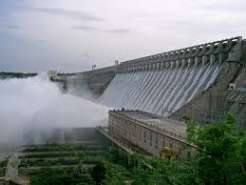
Nagarjuna Sagar, one of the most significant multipurpose irrigation projects in the country, recently completed 59 years of its existence.
- Nagarjuna Sagar Dam is the largest and highest masonry dam in the world built between the Nalgonda district of Telangana and the Guntur district of Andhra Pradesh.
- Built across the Krishna River, it boasts of one of the largest networks of canal systems in the world.
- It derives its name from a nearby hillock and island called Nagarjunakonda, where an ancient Buddhist Guru had once lived.
- The dam has a storage capacity of nearly 11,472 million cubic meters.
- It is one of the earliest projects built in post-independence India for irrigation and hydroelectricity generation.
- The construction of the dam commenced in 1956 and was completed by 1967.
- This dam supports the national grid with its electric power.
- The dam plays a crucial role for irrigation in Telangana and Andhra Pradesh
- As per the provisions of the Andhra Pradesh Reorganisation Act, 2014, the Nagarjunasagar dam is controlled and supervised by Telangana.
HYDERACENE: Indian Patent
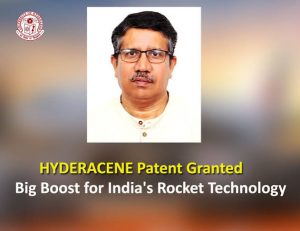
The University of Hyderabad (UoH) recently secured an Indian patent for HYDERACENE, a dual-action material designed specifically for rocket propellants and high-performance defence applications.
- It is a novel polymer-based material developed for use in solid rocket propellants for defence and space applications.
- The innovation was developed by Mutyalanaidu Ganivada, Sourav Jana, and Tushar Jana of the School of Chemistry, with the University of Hyderabad as the patentee.
- The patented material, formally described as Ferrocene Polyethylene Glycidyl Grafted Hydroxyl-Terminated Polybutadiene, was synthesised using ring-opening polymerisation.
- In conventional solid rocket propellants, two critical components are required:
- The Binder: A glue-like polymer that holds all active fuel components together while providing structural integrity.
- The Catalyst: A specialized chemical additive that speeds up and controls the burning rate of the propellant.
- Traditionally, these are two separate materials. HYDERACENE acts as both at the same time—a polymer binder-cum-catalyst.
- This improves long-term stability by preventing the catalyst from separating from the binder over time and enables more controlled and efficient combustion in solid rocket motors.
- Hyderacene has also been developed as an indigenous alternative to Butacene, a commercially used material in aerospace and defence applications.
- BUTACENE is largely imported from European countries.
- Named after the city of Hyderabad, the patented material is designed for use in high-performance rocket propellants and other advanced defence applications requiring controlled burn rates and improved propulsion efficiency.
Hippocampus amandavincentae : New Species Of Seahorse
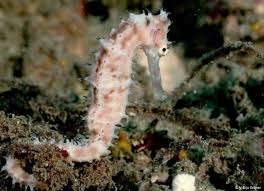
Scientific studies recently identified a new species of seahorse named Hippocampus amandavincentae, which was previously misidentified as Hippocampus histrix.
- Hippocampus amandavincentae is a new species of seahorse.
- It was recorded off the southwest coast of Kerala.
- A seahorse is a marine fish belonging to the genus Hippocampus and related to pipefishes.
- They are found in temperate and tropical waters around the world.
- Typically found in shallow waters with abundant vegetation such as coral reefs, mangroves, seagrass beds, and estuaries.
- They are usually found clinging to plants or corals with their tails.
- They are unique in appearance, with their horselike head, prehensile tail, independently moving eyes, and brood pouch.
- Camouflage : they can change color to blend into their surroundings and avoid danger.
- They are carnivores. They eat small crustaceans and invertebrates.
Hexavalent Vaccine:
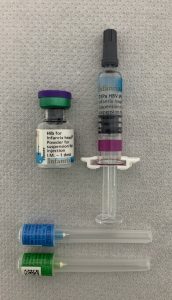
Introducing the hexavalent (six-in-one) vaccine into India’s Universal Immunisation Programme (UIP) could improve the efficiency of the country’s childhood immunisation programme, according to a recent study conducted by the Union Health Ministry.
- Hexavalent Vaccine is a combination vaccine that protects infants against six different diseases with a single injection.
- It combines six different antigens through special manufacturing processes.
- The hexavalent vaccine protects against:
- Diphtheria
- Tetanus
- Pertussis (Whooping Cough)
- Hepatitis B
- Polio
- Haemophilus influenzae type b (Hib) infections
- Hexavalent vaccine could deliver several benefits, including:
- Fewer injections for infants, making vaccination more convenient for children and caregivers.
- Lower cold-chain storage requirements.
- Reduced use of syringes and other vaccination supplies.
- Less time spent by Auxiliary Nurse Midwives (ANMs) administering vaccines and maintaining records.
- Lower workload for cold-chain handlers and vaccine managers.
- Time savings for parents and caregivers during immunisation visits.
Indian Pharmacopoeia Commission: In News
The Indian Pharmacopoeia Commission (IPC) has been recognised as the World Health Organization South-East Asia Regulatory Network (WHO-SEARN) Regional Centre of Excellence in Pharmacovigilance and the Technical Centre in Quality.
- It is an autonomous institution of the Ministry of Health and Family Welfare, Government of India.
- It is created to set standards of drugs in the country.
- Its basic function is to regularly update the standards of drugs commonly required for treatment of diseases prevailing in this region.
- It publishes official documents for improving Quality of Medicines by way of adding new and updating existing monographs in the form of Indian Pharmacopoeia (IP).
- It further promotes rational use of generic medicines by publishing National Formulary of India.
- It prescribes standards for identity, purity and strength of drugs essentially required from the health care perspective of human beings and animals.
- It also provides IP Reference Substances (IPRS) which act as a fingerprint for identification of an article under test and its purity as prescribed in IP.
World Health Organization South-East Asia Regulatory Network:
- It is a collaborative platform established by the World Health Organization (WHO) South-East Asia Regional Office (SEARO) to strengthen regulatory systems across Member States.
- It was established in 2016.
- SEARN has facilitated cooperation among National Regulatory Authorities through knowledge sharing, regulatory convergence, capacity building, and reliance mechanisms.
- The network operates through thematic working groups focusing on key regulatory functions, including quality assurance, pharmacovigilance, clinical trials oversight, regulatory preparedness, and medical device regulation.
India and Lesotho:

India and Lesotho reviewed the full spectrum of their bilateral relationship during the sixth meeting of the India-Lesotho Joint Bilateral Commission for Cooperation (JBCC) held in New Delhi.
- Lesotho is an enclaved nation that is located with the territory of South Africa.
- Capital City: Maseru.
- Geographical Features of Lesotho:
- Mountainous Lesotho has a temperate climate.
- Mountains: Drakensberg Range and Maloti ranges.
- Highest Point: Thabana Ntlenyana
- The Orange River is one of the longest rivers in Africa which rises in the Lesotho Highlands as the Sinqu River.
Licensing Urban Cooperative Banks:
Reserve Bank of India (RBI) Governor announced that the central bank will soon issue draft guidelines for the resumption of on-tap licensing of Urban Cooperative Banks (UCBs).Licensing Urban Cooperative Banks (UCBs) refers to the regulatory authorization granted by the Reserve Bank of India under Section 22 (read with Section 56) of the Banking Regulation Act, 1949. This licence empowers primary cooperative credit societies to conduct banking activities—such as accepting public deposits and granting credit—in urban and semi-urban areas. Aim: To expand sustainable, relationship-based community banking, foster grassroots financial inclusion in urban/semi-urban regions, and allow well-run cooperative credit societies to transition into full-fledged regulated banks.