Today’s Current Affairs: 6th Nov 2026 for UPSC IAS exams, State PSC exams, SSC CGL, State SSC, RRB, Railways, Banking Exam & IBPS, etc
Table of Contents
Prakasam Barrage:
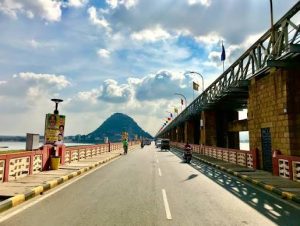
All 70 gates of the Prakasam Barrage were opened recently after heavy rain from Cyclone Murasu in the Krishna basin.
- Prakasam Barrage is a modern regulator and road bridge located at the southern entrance of Vijayawada, Andhra Pradesh.
- It is built across the Krishna River.
- It was constructed between 1954 and 1957 and inaugurated on December 24, 1957.
- It replaced the old Krishna Anicut (built by Sir Arthur Cotton between 1852 and 1855), which suffered a major breach during severe floods in September
- This is one of the earliest major irrigation projects in Southern India.
- It was named after the first Chief Minister of Andhra Pradesh, Tanguturi Prakasam.
- The scheme irrigates nearly one million hectares of land, converting the Krishna delta into a rich granary in Andhra Pradesh.
- This barrage also supplies water to Buckingham Canal, which was constructed as an inland navigation canal initially but later used as an irrigation water supply canal.
- While irrigation is a primary function, the barrage also plays a crucial role in flood control and maintaining ecological balance in the region.
- The structure runs nearly 1223 m and features 70 gates that regulate the flow of water.
- Constructed primarily from locally sourced granite, the barrage exhibits significant thermal mass properties, which help in moderating temperature fluctuations in the surrounding environment.
- The gates are engineered using high-strength steel, providing durability against the dynamic hydraulic forces exerted by the Krishna River.
- The barrage’s design incorporates a reinforced concrete structure that supports a series of sluice gates, allowing for precise control of water levels.
- It has three canals (Bandar canal, Eluru canal, and Ryves canal) that run through the city of Vijayawada, giving it a Venetian look.
- The famous Bhavani Island is situated amidst the backwaters of the barrage.
Disporum kamakhasiense : New Species Of Flowering Plant
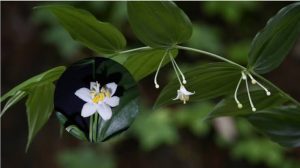
A new species of flowering plant named Disporum kamakhasiense has been recently discovered in the forests of Assam and Meghalaya, adding to the known biodiversity of Northeast India.
- Disporum kamakhasiense is a new species of flowering plant.
- It was recorded at three locations: Garbhanga Reserve Forest in Assam, Laisong in Dima Hasao district, and the Barapani area of Meghalaya.
- The species grows in semi-evergreen forests at elevations ranging from around 200 to 1,100 metres.
- Researchers found it mainly on cliffs beneath bamboo forests, growing alongside other plant species.
- Its scientific name combines references to Kamrupa, the ancient name for Assam, and the Khasi Hills of Meghalaya, reflecting the regions where the plant was first collected.
- It is a perennial herb, belonging to the Colchicaceae family.
- It has several distinguishing characteristics, including its larger size, smooth leaves, and differences in its floral structure, particularly its longer flower stalks and shorter, thicker stamens.
- The plant can grow up to 180 cm, considerably taller than its closest relative, Disporum calcaratum, which generally reaches around 100 cm.
- It has extensively branched stems.
- Its flowers are white and star-shaped, with distinctive straight spurs.
- The leaves are dark green, glossy, and marked by seven prominent parallel veins.
- It flowers between June and July and is expected to bear fruit from July to August.
Gomarda Wildlife Sanctuary:
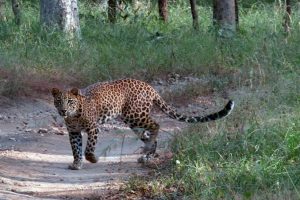
Chhattisgarh will bring back blackbucks to Gomarda Wildlife Sanctuary after more than five decades.
- Gomarda Wildlife Sanctuary is located in Sarangarh Tehsil, Raigarh District of Chhattisgarh.
- It was notified as a wildlife sanctuary in 1975 and takes its name from Gomarda village within its boundary.
- It covers an area of about 278 sq.km.
- The terrain is gently undulating, with numerous boulders and rocks, unfit for cultivation.
- The rivers Laat and Manai flow through the core area, providing a vital year-round water source for wildlife, especially through the dry summer months.
- The vegetation is typical Tropical Dry Deciduous forest that features tall trees, bamboo patches, and open grasslands.
- It sustains a rich mosaic of Sal, Bija, Tendu, and bamboo forests.
- One of the most common species spotted are the various species of deer, including spotted deer and Chinkara.
- Wild buffalos can be found roaming near water sources.
- Other animals include tigers, leopards, Nilgiri, Sambars, Gaurs, Chausingha, Muntjac, Barking Deer, Wild Boar, Sloth Bear, Dhole, or the wild dog, and the jackal.
- Jungle Fowls, Hill Mynas, Wood Peacock, Green Pigeon, Quails, ParrotsStorks, Gray Partridges are popular species of avian fauna in the region.
Blackbuck:
- It is a medium-sized antelope belonging to the family Bovidae.
- Scientific Name: Antilope cervicapra
- It is the sole living member of the genus Antilope.
- It is native to the Indian subcontinent, with approximately 90% of its population currently found in India.
- It primarily inhabits open grasslands, bushlands, scrublands, and dry thorn habitats.
- In India, it is widespread in the states of Rajasthan, Gujarat, Madhya Pradesh, Tamil Nadu, Odisha, and other areas throughout peninsular India.
- It has been declared as the state animal by the governments of Punjab, Haryana, and Andhra Pradesh.
- Blackbucks have slender and elegant bodies.
- It is known for its beautiful spiraling horn Horns are found only in males. They are ringed at the base, twisted in a spiral with up to four turns.
- Males are characterised by dark coats, while females are generally lighter in colour and often lack horns.
- Young males and females are lighter in color, often yellowish-brown.
- They have very good eyesight and are also very fast runners, which comprise their main defense against predators.
- They have pointed and delicate hooves.
- They are gregarious and social animals with herds generally ranging from 5 to 50 animals.
- Conservation Status:
- IUCN Red List: Least Concerned.
India Volatility Index:

India’s stock markets may have extended their winning streak to five consecutive sessions, but the persistence of the volatility index (VIX) around 15 points suggests that investors remain far from reassured.
- India Volatility Index (India VIX) is a crucial metric calculated by the National Stock Exchange (NSE) to measure the market’s anticipation of volatility and fluctuations in the near term.
- Introduced in 2008 by the NSE, it provides insights into market volatility over the next 30 days.
- It is also known as the fear index.
- Unlike price indices like NIFTY, which track the market’s direction based on equity price movements, India VIX focuses solely on volatility.
- India VIX is not based on stock prices like Nifty or other market indices. Instead, it is derived from the order book of Nifty options contracts using the Chicago Board Options Exchange (CBOE) model.
- This model considers:
- Strike Price: The price at which the option can be exercised.
- Market Price: The current price of the Nifty index.
- Time to Expiry: Measured in minutes for precision.
- Risk-Free Interest Rate: Calculated for a tenure of 30-90 days.
- Volatility: The key variable representing market fluctuations.
- A higher India VIX value signals higher market volatility, while a lower value indicates less volatility.
- Significance in Financial Markets:
- Risk Assessment: India VIX enables traders to assess market risks, adjust leverage, and set appropriate stop-loss levels.
- Investment Decision Making: It aids investors in making informed decisions by providing insights into market volatility over the next 30 days.
- Options Trading: Options traders use India VIX as a reliable indicator to determine whether to buy or sell options, depending on market volatility.
- Portfolio Management: Portfolio and mutual fund managers utilise India VIX to optimise their portfolios, choosing between high and low-beta stocks for maximum returns.
- Correlation with Market Indices: India VIX negatively correlates with indices like Nifty, providing additional insights into market movements beyond traditional indices.
INS Brahmaputra: In News

The Indian Navy recently initiated court martial proceedings against two officers for alleged negligence that led to the partial capsizing of guided-missile frigate INS Brahmaputra at the Naval Dockyard in Mumbai in July 2024.
- INS Brahmaputra (F31) is the first indigenously built Brahmaputra-class guided missile frigate of the Indian Navy.
- It was built by Kolkata-based Garden Reach Shipbuilders and Engineers Limited (GRSE).
- It was commissioned into the Indian Navy on April 14, 2000.
- It takes on various roles such as coastal and offshore patrolling, monitoring sea routes, conducting maritime diplomacy, and carrying out counter-terrorism and anti-piracy missions.
- Its crest features a grey, one-horned Indian rhinoceros, which is native to the Brahmaputra valley, set against a brown background with white and blue sea waves.
- The ship has a displacement of 5,300 tonnes, a length of 125 metres, and is 14.4 meters wide.
- Propulsion is via 2 x steam turbines producing 30,000 hp on 2 x shafts below the stern.
- It can reach speeds over 27 knots (about 50 km/h).
- It is equipped with medium- and close-range guns, anti-aircraft weapons, surface-to-surface and surface-to-air missiles, and torpedo launchers.
- It is equipped with a range of sensors for all aspects of maritime warfare and can operate Sea King and Chetak helicopters.
- The ship is manned by a crew of 40 officers and 330 sailors.
Neil Gehrels Swift Observatory:
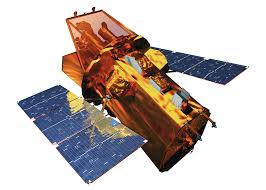
NASA reported that the Neil Gehrels Swift satellite Observatory tumbled out of orbit and burned up in Earth’s atmosphere over Indonesia.
- Neil Gehrels Swift Observatory was launched by National Aeronautics and Space Administration (NASA) in 2004.
- It was aimed to explore the universe’s most powerful explosions, called gamma-ray bursts.
- It is part of NASA’s medium explorer (MIDEX) program and was launched into a low-Earth orbit on a Delta 7320 rocket.
- Objectives:
- Determine the origin of gamma-ray bursts and how the burst evolves and interacts with the surroundings.
- Classify gamma-ray bursts and search for new types.
- Use gamma-ray bursts to study the early universe.
- Perform the first sensitive hard X-ray survey of the sky.
- It was comprised of three instruments namely
- Burst Alert Telescope (BAT): It had large field-of-view and high sensitivity, the BAT detected about 100 GRBs per year, and computes burst positions onboard the satellite with arc-minute positional accuracy.
- X-ray Telescope (XRT): It was able to obtain spectra of GRB afterglows during pointed follow-up observations. The images are used for higher accuracy position localizations, while light curves are used to study flaring and the long-term decay of the X-ray aferglow.
- UV/Optical Telescope (UVOT): The UVOT took images and can obtain spectra (via a grism filter) of GRB afterglows during pointed follow-up observations.
- Since its launch, Swift had also studied hundreds of supernova explosions, star-shredding black holes, stellar X-ray flares, asteroids and comets, contributing to some 7,000 published scientific papers.
Network Anubhav Platform:

The Telecom Regulatory Authority of India (TRAI) launched the Network Anubhav Platform.
- Network Anubhav Platform is a geospatial dashboard that allows consumers to view location-specific network test results and access Do Not Disturb (DND) services through a web interface.
- It was launched by the Telecom Regulatory Authority of India (TRAI).
- It combines consumer test data with its independent drive test results to help consumers compare networks by location and telecom operators identify areas for network improvement.
- User test data comprises of the test results from MySpeed and MyCall apps of TRAI.
- It delivers insights on various network parameters to consumers, service providers and TRAI.
- The platform displays speed indicators based on tests conducted by users in a given area. These include median speeds and values indicating the speeds recorded at or above a specified level in 80 per cent of mobile broadband tests and 90 per cent of fixed broadband tests.
- The portal also provides web access to DND facilities, allowing consumers to register preferences for commercial communications, submit complaints about unsolicited communications and track their status.
Golden Jackal: In News
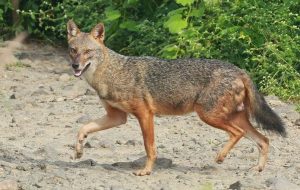
The Tamil Nadu government is taking measures towards conservation of golden jackals which are critical to ensure the ecological balance of the habitats.
- Golden Jackal is also known as the common jackal or reed wolf is a medium-sized wolf-like canid.
- These animals are abundant in valleys and along rivers and their tributaries, canals, lakes, and seashores, but are rare in foothills and low mountains.
- It is mainly found in North and East Africa, Southeastern Europe and South Asia to Burma.
- They are quite widespread across India. Right from the Himalayan foothills, down to the Western Ghats, the Golden Jackal has a wide distribution.
- It is strictly nocturnal in areas inhabited by humans, but may be partly diurnal elsewhere.
- They dig caverns for shelter, or use crevices in rocks, or caverns that were dug by other animals.
- They live in mated pairs and are strictly monogamous.
- They are These opportunistic foragers have a rather diverse diet.
- Conservation Status of Golden Jackal:
- IUCN Red List: Least Concern
- CITES: Appendix III
- Wildlife Protection Act, 1972: Schedule I.
Viability Gap Funding Scheme for Grid-Scale Energy Storage Systems:
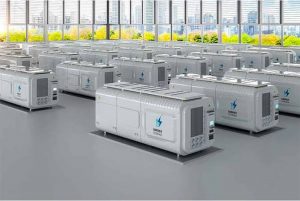
The Union Cabinet has approved the Viability Gap Funding (VGF) Scheme for Development of Grid-Scale Energy Storage Systems, with a total financial support of Rs.14,500 crore.
- Viability Gap Funding Scheme for Grid-Scale Energy Storage Systems scheme aims to support the development of 92 GWh of energy storage capacity across the country.
- Objective is to strengthen India’s domestic energy storage manufacturing ecosystem through demand-side financial support and reduce dependence on imported components.
- The scheme envisages the development of
- 60 GWh of Hydro Pumped Storage Plant (PSP)
- 30 GWh of Battery Energy Storage System (BESS)
- 2 GWh of capacity through alternative energy storage technologies
- Time Period: FY 2026-27 to FY 2030-31.
- Features of Viability Gap Funding Scheme for Grid-Scale Energy Storage Systems
- Allocation Method:
- Energy storage capacity will be allocated through a tariff-based competitive bidding process.
- Public and private sector electricity distribution companies will be eligible for VGF support for BESS and Hydro PSP projects.
- Projects based on alternative energy storage technologies will be implemented by public and private sector entities.
- Domestic Content Requirement (DCR): To promote indigenous manufacturing, BESS projects will be subject to a minimum Domestic Content Requirement (DCR) of 40%.
- Allocation Method:
- It will strengthen India’s power sector infrastructure, facilitating large-scale integration of renewable energy and ensuring reliable, affordable and round-the-clock power supply.
- It will also provide an impetus to domestic manufacturing of battery energy storage systems, reduce import dependence and enhance the country’s long-term energy security.
- The VGF support will help improve the financial viability of these projects.
VISTAR Scheme:
The Union Cabinet approved the ‘Viksit Bharat Initiative for Statistical Transformation, Analytics & Research (VISTAR)’ Scheme.
- VISTAR (Viksit Bharat Initiative for Statistical Transformation, Analytics & Research) is designed to establish a dynamic, real-time and future-ready official statistical architecture for enhanced timeliness, data granularity, interoperability with harmonised and AI ready datasets.
- Time Period: FY 2026-27 to FY 2030-31
- Components of the VISTAR scheme
- Component 1: Comprehensive Statistical Operations and Strengthening of Ecosystem
- MoSPI proposes conducting 59 surveys during the 16th FC cycle, as compared to 43 major surveys conducted previously,
- It will focus on the end-to-end digitalization of statistical processes and embedding Artificial Intelligence and Machine Learning into regular workflows.
- It is planning to release new metrices, including the Headline Index of Services Production, the Index of Unincorporated Sector Enterprises.
- Component 2: Support for Statistical Strengthening (SSS)
Under this component, the Centre will provide funds to State governments to help transform the statistical capabilities of States and Union Territories through a redesigned, deliverable-linked framework. - The vision focuses on building state-level capacity to generate high-quality, granular data at the district and other disaggregated levels, developing indigenous data processing capabilities, and embedding data use cases into localized policymaking.
- MoSPI will provide technical support to scale up generation of district-level estimates and million-plus city level estimates in flagship national surveys (e.g., PLFS, HCES, ASUSE) as well as in compilation of State/District level GDP and State level IIP.
Component 3: Economic Census (EC): MoSPI will undertake the 8th Economic Census (EC) in collaboration with the States and Union Territories in order to obtain granular data and activity details of all the non-farm establishments and workers hired down to the gram panchayat and ward levels.
US Midterm Elections:

In the recently concluded November 2026 US midterm elections, the Democratic Party secured control of both chambers of the US Congress. This sweeping shift in Washington’s political landscape introduces strong legislative checks on the Executive branch and carries significant strategic, economic, and diplomatic implications for India.
- The United States midterm elections are general elections held near the midpoint of a president’s four-year term in office.
- They take place on the Tuesday following the first Monday in November of even-numbered years that do not feature a presidential election (e.g., 2018, 2022, 2026).
- The US Congress: The national legislature is collectively known as the US Congress (comprising both the House and the Senate).
- The US follows a de facto two-party system, dominated by the Republican and Democratic Parties across all three levels of government.
- House of Representatives (Similar to India’s Lok Sabha): This is the lower house of Congress. All 435 voting seats are up for election during midterms.
- Representatives serve two-year terms, meaning their entire tenure is tied to either a presidential or a midterm election cycle.
- Just like the Lok Sabha, its members are directly elected by the public to represent specific population-based constituencies (districts).
- The Senate (Similar to India’s Rajya Sabha): This is the upper house of Congress. Roughly one-third of the 100 Senate seats are contested.
- Senators serve staggered six-year terms, so they do not all face election at the same time. Similar to the Rajya Sabha, it acts as a continuing chamber representing the states.
- However, unlike India’s Rajya Sabha (where seats depend on population), every US state gets exactly two Senators, and they are directly elected by the voters of that state.
2026 Binance Hack:

Binance, the world’s largest cryptocurrency exchange, suffered a massive cyberattack resulting in the loss of approximately USD 6.3 billion in digital assets. Surpassing the USD 1.5 billion Bybit hack of 2025, this incident is now recorded as the single largest cryptocurrency heist in history.
- The breach was executed via spear-phishing. A Binance engineer inadvertently downloaded a malware-laced code repository, compromising their laptop and granting attackers access to Binance’s internal systems and “hot wallets” (internet-connected crypto wallets used for quick transactions).
- Spear phishing is a targeted cyberattack where hackers send personalized, fake messages usually via email, text, or social media to trick a specific individual, group, or company into revealing sensitive data, sending money, or downloading malware.
- The hackers primarily targeted assets on the Ethereum, Bitcoin, Avalanche, and Polygon blockchains.
- Binance mitigated the crisis by deploying its Secure Asset Fund for Users (SAFU), an emergency reserve financed by trading fees alongside its own capital to restore 95% of stolen assets.\
- Authorization of Stablecoins: To address fears of volatile, unbacked cryptos, policymakers should explore the authorization of stablecoins.
“Authorization of Stablecoins” refers to the government creating a legal framework to officially permit and regulate cryptocurrencies that are pegged 1:1 to stable, real-world assets (like fiat currency or gold). - In practice, this means stablecoin issuers would be legally required to maintain transparent, audited reserves matching their token supply, comply with strict Anti-Money Laundering (AML) laws, and operate safely within the formal financial system.
International Day for Biosphere Reserves:
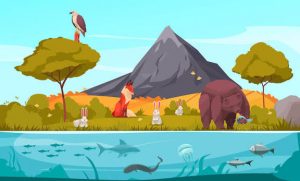
The International Day for Biosphere Reserves, observed annually on 3rd November, highlights the role of these landscapes in biodiversity conservation and sustainable development.
- Biosphere Reserves are areas designated by national governments to conserve biodiversity, ecosystems and genetic resources, while promoting sustainable development and community livelihoods.
- Biosphere Reserves are internationally recognised under UNESCO’s Man and the Biosphere (MAB) Programme, launched in 1971 to improve the relationship between humans and their natural environment.
- National governments nominate sites for inclusion in UNESCO’s World Network of Biosphere Reserves (WNBR).
- UNESCO-recognised Biosphere Reserves undergo a periodic review every 10 years to assess their effectiveness in biodiversity conservation and sustainable development.
- National designation and UNESCO recognition are distinct; not all nationally designated Biosphere Reserves are included in the WNBR.
- They serve as sites for testing and demonstrating sustainable resource management, ecological restoration, scientific research and community-based conservation.
- India is one of the world’s 17 megadiverse countries, accounting for approximately 7–8% of recorded global species despite occupying only 2.4% of Earth’s land area.
- Unlike National Parks and Wildlife Sanctuaries, which primarily emphasise habitat and wildlife protection, Biosphere Reserves integrate conservation with scientific research, sustainable livelihoods and community participation.
- Biosphere Reserve designation does not automatically grant statutory protection to the entire area under the Wildlife (Protection) Act, 1972.
- Core areas may contain legally protected National Parks and Wildlife Sanctuaries, while buffer and transition zones support regulated, conservation-compatible human activities.