
Today’s Current Affairs: 7th May 2026 for UPSC IAS exams, State PSC exams, SSC CGL, State SSC, RRB, Railways, Banking Exam & IBPS, etc
Table of Contents
INS Sindhukesari:
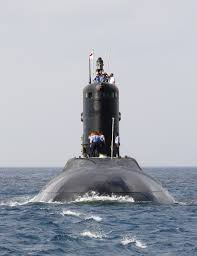
The Indian Navy’s Kilo-class submarine, INS Sindhukesari, recently arrived in Colombo for an Operational Turnaround (OTR).
- INS Sindhukesari is a Kilo-class diesel-electric submarine of the Indian Navy.
- It was commissioned in 1988.
- It was designed as part of Project 877 and built under a contract between Rosvooruzhenie, Russia, and the Ministry of Defence (India).
- It has an operational endurance of up to 45 days.
- It is armed with a combination of torpedoes, anti-ship missiles, and mines, and has been retrofitted to carry advanced Klub/3M-54E cruise missiles.
- The Kilo Class is the NATO designation for a naval diesel-electric attack submarine designed and built by the Soviet Union (now Russia).
- The original version of the vessels were designated Project 877 Paltus (Halibut) in Russia.
- They are mainly intended for anti-shipping and anti-submarine operations in relatively shallow waters.
- The first Kilo Class submarine entered service in the Soviet Navy in 1980, and the vessel continues to be in service in the Russian Navy.
- These submarines are 70-74 meters long. It can travel at a maximum speed of 10-12 knots when surfaced and 17-25 knots when underwater.
- These vessels can carry up to eight surface-to-air missiles and 18 torpedoes or 14 underwater mines.
- Known for extremely low noise levels, earning the nickname “Black Hole” among naval forces.
Tadoba-Andhari Tiger Reserve:
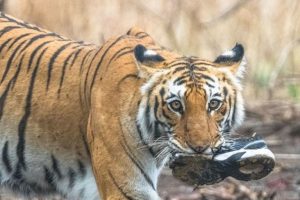
The Tadoba-Andhari Tiger Reserve (TATR) in Maharashtra’s Chandrapur district unveiled vibrant wildlife statistics during its annual ‘Machan Census on Waterholes’.
- It is located in the Chandrapur district in Maharashtra.
- It is the largest and oldest tiger reserve in Maharashtra.
- Established in 1955, the reserve consists of Tadoba National Park and Andhari Wildlife Sanctuary.
- The word ‘Tadoba’ is derived from the name of the God “Tadoba” or “Taru,” which is praised by local tribal people of this region, and “Andhari” is derived from the name of the Andhari River that flows in this area.
- It has corridor linkages with Nagzira-Navegaon and Pench Tiger Reserves within the State.
- There are two lakes and one waterway in the reserve: Tadoba Lake, Kolsa Lake, and the Tadoba River.
- The reserve falls in the central plateau province of the Deccan peninsula, with tropical dry deciduous forests and a typical central Indian faunal assemblage.
- The major tree species are: Teak, Ain, Bamboo, Bija, Dhaoda, Haldu, Salai, Semal and Tendu.
- Along the moist areas, species like Mango, Jamun and Arjun are found. Bamboo (Dendrocalamus strictus) is spread over 40% of the habitat
- Apart from tigers, the reserve is home to Indian leopards, sloth bears, Indian gaur (bison), wild dogs (dholes), striped hyenas, marsh crocodiles, sambar deer, chital (spotted deer), barking deer, and four-horned antelopes (chousingha).
- It is also a birdwatcher’s paradise, with over 250 species of birds, including crested serpent eagles, grey-headed fish eagles, paradise flycatchers, and hornbills.
Vitamin B12 : Report

Researchers report that a specially grown form of the blue-green algae can produce biologically active vitamin B12 at levels comparable to beef, a finding that could reshape how scientists think about sustainable nutrition.
- Vitamin B12 is a water-soluble
- It is also called cobalamin.
- It is a vitamin the body uses to make and support healthy nerve cells.
- It’s also used to make healthy red blood cells and the genetic material inside cells called DNA.
- The human body cannot produce B12 on its own, so it must be obtained through foods high in vitamin B12 or supplements.
- It is naturally found in animal foods such as fish, meat, poultry, eggs, milk, and milk products.
- It is not present in plant foods unless fortified.
- The body stores vitamin B12 in the liver.
- The body can store vitamin B12 for 2 to 5 years, and it can get rid of any excess or unwanted vitamin B12 in the urine.
- Deficiency is most common in people who:
- Are over the age of 50
- Follow a vegetarian or vegan diet
- Have had stomach or intestinal surgery, such as weight loss surgery
- Have digestive system conditions such as celiac disease or Crohn’s disease
- Have pernicious anemia, an autoimmune condition that occurs when your body destroys cells in your stomach that make an intrinsic factor, which is needed to help your body absorb B12 efficiently.
- Low levels of B12 can cause:
- Anemia
- Loss of balance
- Numbness or tingling in the arms and legs
- Weakness
- Dementia due to metabolic causes
Notice to Airmen (NOTAM):

India recently issued a Notice to Airmen (NOTAM) designating a vast stretch of the Bay of Bengal as a danger zone for a long-range missile test.
- Notice to Airmen (NOTAM) also known as Notice to Air Mission, is a notice containing information concerning the establishment, condition, or change in any aeronautical facility, service, procedure, or hazard, the timely knowledge of which is essential to personnel concerned with flight operations.
- In short, a NOTAM is a notification from an official body alerting airspace users to hazards along their route, both in the air and on the ground.
- NOTAMs update pilots about changes in airspace, airports, and equipment that affect aircraft operations.
- NOTAMs are issued by national aviation authorities for a number of reasons, such as:
- Hazards such as air-shows, parachute jumps, and glider or micro-light flying;
- Flights by important people such as heads of state;
- Closed runways, taxiways, etc;
- Unserviceable radio navigational aids;
- Military exercises with resulting airspace restrictions;
- Unserviceable lights on tall obstructions;
- Temporary erection of obstacles near airfields (e.g. cranes).
- For reasons of conciseness and precision, NOTAMs are encoded, although the code is usually sufficiently self-evident to allow the user to identify a hazard.
- NOTAMs are communicated by the issuing agency using the fastest available means to all addressees for whom the information is assessed as being of direct operational significance, and who would not otherwise have at least seven days’ prior notification.
- NOTAMs are typically accessible through online platforms, electronic flight planning tools, and aviation weather services, allowing pilots to conveniently access up-to-date information and make informed decisions regarding their flight activities.
- Pilots who do not review NOTAMs before flight put themselves (and others) in danger.
Project Deepak:
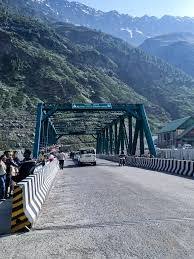
The Project Deepak of Border Roads Organisation (BRO) celebrated its 66th Raising Day at Shimla, Himachal Pradesh.
- Project Deepak was initiated in 1962 by the Border Roads Organisation.
- The project has been instrumental in executing critical infrastructure works in some of the most challenging terrains of the country.
- It’s area of responsibility spanning key districts of Himachal Pradesh including Shimla, Kinnaur, Kullu and Lahaul-Spiti.
- Project Deepak- one of the oldest projects- has also been at the forefront of developing critical infrastructure such as Hindustan-Tibet Road and key stretches of Manali-Leh axis.
- In addition to infrastructure development, this project has demonstrated exceptional commitment towards disaster management and humanitarian assistance.
Border Roads Organisation:
- It is a road construction executive force in India that provides support to the Indian Armed Forces.
- BRO was entirely brought under the Ministry of Defence in 2015.
- It was formed on 7 May 1960 to secure India’s borders and develop infrastructure in remote areas of the north and northeastern states of the country.
- It develops and maintains road networks in India’s border areas and friendly neighboring countries.
- Motto: Shramena Sarvam Sadhyam (everything is achievable through hard work).
Germanium:
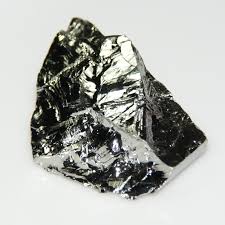
In a major defence-tech breakthrough, Hyderabad based company has developed India’s first germanium-free thermal imaging payload for drones.
- It has the chemical symbol Ge and the atomic number 32.
- It is a silvery-gray metalloid, intermediate in properties between the metals and the nonmetals.
- It has a diamond like crystalline structure, and it is similar in chemical and physical properties to silicon.
- It is stable in air and water and is unaffected by alkalis and acids, except nitric acid.
- It is widely distributed in nature but is too reactive to occur free.
- Germanium ores are rare. They are found in small quantities as the minerals germanite and argyrodite.
- It is extracted as a by-product of zinc production and from coal fly ash.
- It is estimated that 75% of world wide production of germanium is sourced from zinc ores, mainly the zinc sulfide mineral sphalerite, and 25% from coal.
- Its main use is to produce solid-state electronics, semiconductors and fiber optic systems, components for devices such as rectifiers and photocells.
- The major worldwide producer of germanium is China, responsible for around 60% of total production.
- The remaining production of germanium comes from Canada, Finland, Russia, and the United States.
Electronic Gold Receipts:

The National Stock Exchange of India (NSE) launched Electronic Gold Receipts (EGRs) as a new trading segment.
- EGRs are dematerialised securities that represent ownership of physical gold.
- The underlying gold is stored in SEBI-regulated vaults, and investors hold the receipts in their demat accounts — similar to shares or ETFs.
- Vault Manager is a new entity registered by SEBI for providing vaulting services for gold deposited for the purpose of creation of EGR.
- Each EGR is backed by actual gold, ensuring authenticity and standardisation.
- It is operated under SEBI guidelines.
- The process starts with depositing physical gold at accredited vaults, which is then converted into EGR units.
- These units are credited to a demat account and can be traded on the exchange.
- Investors can also convert EGRs back into physical gold, offering flexibility between digital and physical ownership.
- The EGR ecosystem is designed for a wide set of participants, including jewellers, refiners, traders, and retail and institutional investors.
Asian Development Bank: In News
The Asian Development Bank announced a $70 billion programme to expand energy and digital infrastructure across the Asia-Pacific region by 2035.
- Asian Development Bank is a multilateral development bank established on 19th December 1966.
- It is the principal international development finance institution for the Asia-Pacific region.
- It envisions a prosperous, inclusive, resilient, and sustainable Asia and the Pacific, while sustaining its efforts to eradicate extreme poverty in the region.
- Its membership is open to other regional countries and non-regional developed countries that are members of the U.N. or of any of its specialized agencies.
- Members: 69 (50 regional, 19 non-regional).
- Headquarters: Manila, Philippines.
- Governance:
- Board of Governors: One representative from each member country; top policy-making body.
- Board of Directors: Twelve directors manage operations; eight from regional members, four from non-regional members.
- President: Chairs the Board of Directors and manages ADB
- Voting System: Weighted voting based on each country’s capital contribution.
- Five shareholders are Japan and the USA (each with 15.6% of total shares), China (6.4%), India (6.3%), and Australia (5.8%).
- Functions of Asian Development Bank
- Provides Loans: It provides loans and grants to member countries for development projects in infrastructure, social sectors, and environmental sustainability.
- Technical Assistance: It offers technical assistance and advisory services to improve policy-making, governance, and institutional capacity.
- Regional Cooperation: It promotes regional cooperation and integration by funding cross-border projects and encouraging trade and investment.
- Supports private sector: It supports development of private sector by providing financing, guarantees, equity, and mezzanine funds for socially beneficial projects.
Sanjay Gandhi National Park: In News
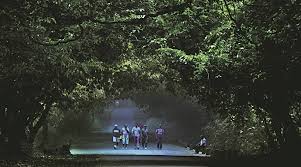
The Maharashtra forest department has held over a proposal to increase the annual ticket rates for the Sanjay Gandhi National Park (SGNP).
- Sanjay Gandhi National Park (SGNP) is located near Borivali in the northern part of Mumbai.
- It is situated partly in the Thane District and in the Mumbai Suburban District of Maharashtra.
- In the early days, the park was known as Krishnagiri National Park. However, in 1974 the name of this park was changed to ‘Borivali National Park’ and in 1981 to ‘Sanjay Gandhi National Park’.
- It is one of the largest parks in the world located within city limits. It forms roughly 20% of Mumbai city’s geographical area.
- The Kanheri Caves in the center of the park were an important Buddhist learning center and pilgrimage site sculpted by Buddhist monks between the 9th and the 1st centuries BCE.
- They were chiseled out of a massive basaltic rock outcropping.
- Caves feature viharas, stupas, prayer halls, and other structures of old-style Buddhist architecture
- There is a Jain Temple with three huge carved idols situated on the way to the caves.
- Besides, the park also has two lakes, namely Tulsi Lake and Vihar Lake, the deer park, the lion safari, and the Samadhi of Mahatma Gandhi.
- Kadamba, Teak, Karanj, Shisham, and species of acacia, Ziziphus, euphorbias, etc. are found in this National Park.
- The most famous of these is the karvi plant, which blooms just once every eight years.
- Leopard, sambar, chital, barking deer, rusty spotted cat, hyena, common palm civet, small Indian civet, Indian crested porcupine, Indian hare, Indian flying fox, common langur, and bonnet macaque.
- The park also boasts 251 species of birds and a large variety of butterflies.
Philippines:
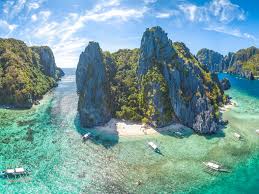
A magnitude-6.0 earthquake struck the central Philippine island of Samar.
- It is an island country of Southeast Asia in the western Pacific Ocean.
- It is surrounded by the South China (north and west); Philippine Sea (east); Celebes Sea (south); and by the Sulu Sea to the (southwest).
- Capital city: Manila
- Geographical Features of Philippines:
- Climate: It majorly consists of tropical and monsoonal type of climate.
- Highest Point: Mount Apo.
- Major Rivers: Cagayan River (Philippines’ longest river), Mindanao, Agusan etc.
- Major Lake: Laguna de Bay
- Volcano: Mayon Volcano, one of the most active in the country. Other volcanoes are Bulusan and Kanlaon.
- Natural resources: Timber, petroleum, nickel, cobalt, silver, gold, salt, copper
- The Philippines is the third-largest producer of geothermal energy globally, after the United States and Indonesia.
Rebalancing India’s Water–Energy–Food Nexus:
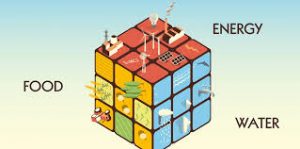
The World Bank in its report “Nourish and Flourish” has warned that global food systems are misaligned with hydrological (water) realities, threatening food security. This concern is reinforced by the International Energy Agency, which highlights how energy shocks can trigger cascading food and water crises.
- For India, a system reliant on subsidised electricity and water-intensive crops has created an unsustainable Water–Energy–Food (WEF) Nexus, posing risks to long-term ecological and food security.
- Water-Energy-Food (WEF) Nexus: The WEF nexus refers to the deeply interconnected nature of our water, energy, and food systems.
- Water for Food: Agriculture is the largest consumer of freshwater in India, accounting for over 85% of total water usage, predominantly extracted from groundwater.
- Energy for Water: Extracting this groundwater requires massive amounts of energy. Agricultural pumping consumes nearly 20% of India’s total electricity.
- Policy-Driven Imbalance: State policies providing free or highly subsidized electricity for agriculture directly incentivize the over-extraction of groundwater to grow water-intensive crops (like paddy and sugarcane) in water-scarce regions (like Punjab and Maharashtra).
Guillermo Cano World Press Freedom Prize 2026:

UNESCO has awarded the 2026 UNESCO/Guillermo Cano World Press Freedom Prize to the Sudanese Journalists Syndicate.
- The UNESCO/Guillermo Cano World Press Freedom Prize is the only UN-recognized award honoring individuals or organizations defending press freedom under difficult conditions.
- Established In: 1997
- Aim:
- To recognize outstanding contributions to the defence and promotion of press freedom globally.
- To honour journalists who demonstrate courage in the face of threats, violence, or repression.
- Key Features:
- Global Recognition: Awarded annually to journalists/organizations worldwide for exceptional commitment to press freedom.
- Independent Jury: Laureate selected by an international panel of media professionals.
- Symbolic Legacy: Named after Guillermo Cano Isaza, assassinated for his fearless journalism.
The Union Cabinet approved a proposal to introduce the Supreme Court (Number of Judges) Amendment Bill, 2026:

This move aims to increase the sanctioned strength of the Supreme Court from 33 to 37 judges (excluding the Chief Justice of India).
- This is a legislative measure to expand the judicial capacity of India’s highest court. By amending the Supreme Court (Number of Judges) Act, 1956, the government increases the maximum number of judges who can be appointed to the bench. With the CJI included, the total sanctioned strength will now rise to 38.
- Constitutional Provision:
- Article 124(1): The Constitution originally mandated a Chief Justice and seven other judges. Crucially, it gave Parliament the power to increase this number by law.
- Consolidated Fund of India: All expenditures related to the salaries, staff, and facilities for these additional judges are charged to the Consolidated Fund of India, ensuring judicial financial independence.
Trans-Neptunian object:
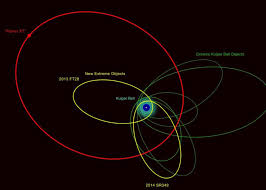
Astronomers have discovered a thin atmosphere on the trans-Neptunian object (612533) 2002 XV93, making it only the second such body after Pluto known to possess one.
- Trans-Neptunian Object: 2002 XV9 is a small, icy celestial body located in the Kuiper Belt, a vast region of the solar system beyond the orbit of Neptune. It is a trans-Neptunian object (TNO) that likely dates back to the dawn of the solar system, approximately 4.5 billion years ago.
- Discovered By:
- The atmosphere was identified through stellar occultation—observing the object as it passed in front of a distant star—using ground-based telescopes in Japan (Kyoto, Nagano, and Fukushima).
- Key Features
- It has a diameter of roughly 310 miles (500 km), making it much smaller than dwarf planets like Pluto or Eris.
- The atmosphere is extremely tenuous—roughly 5 to 10 million times thinner than Earth’s. It is believed to be dominated by methane, nitrogen, or carbon monoxide.
- It follows an elliptical path around the Sun, completing one orbit every 247 years. Its distance from the Sun averages about 39.6 AU (3.7 billion miles).
- Primarily consists of water ice, rock, and organic-rich materials.
- Possible Origin of Atmosphere:
- Gases seeping or venting from the interior through surface cracks (internal supply).
- Temporary gases released following a collision with another smaller object.



